

バイエルンのエリザベートの肖像
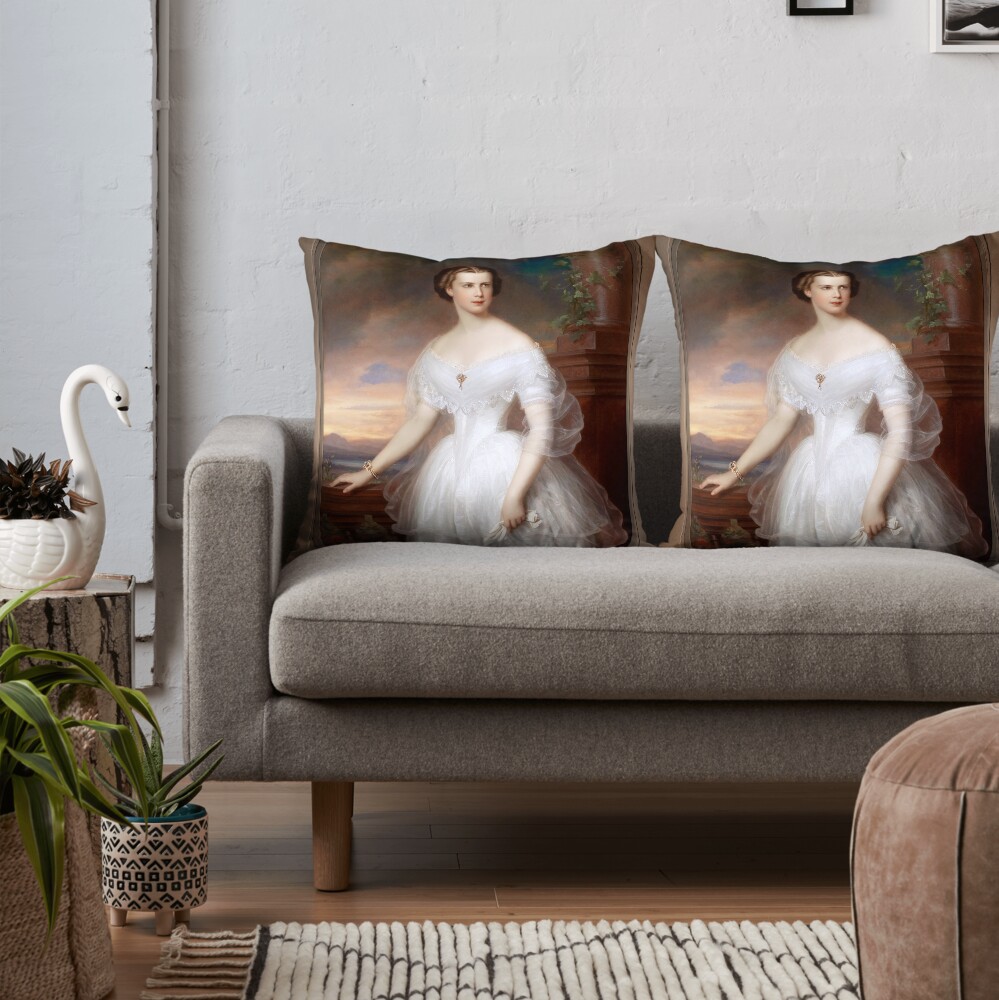
というタイトルの絵の中で、 Portrait of Elisabeth (Kaiserin Elisabeth von Österreich (1837 – 1898)) バイエルン州, オーストリア皇后 (c.1853) and Queen of Hungary by marriage to Emperor Franz Joseph I at the age of 16 years by Austrian painter Franz Schrotzberg (1811 – 1889), we encounter a breathtaking example of 19th-century European portraiture. このアートワーク, celebrated for its meticulous attention to detail and mastery of classical technique, captures Empress Elisabeth, affectionately known as Sisi, in a moment of regal grace and poise. ペインティング, done in oil on canvas, showcases the traditional styles of the era, while highlighting the delicate beauty and elegance of its subject.
目次
主題と構成
これ 美しい肖像画 presents Empress Elisabeth standing, slightly turned to the side, but with her gaze directed outward, subtly engaging the viewer. Elisabeth is dressed in an exquisite white gown, which gently flows from the waist down, accentuating the grandeur of her attire. The soft folds and ruffles of the fabric are meticulously painted, revealing the skillful technique used to depict the delicacy and movement of the material. The gown features intricate lace and ribbon detailing that speak to the refined fashion of the time. The translucent quality of the fabric adds a sense of lightness to the portrayal, enhancing the ethereal quality of the subject.
Elisabeth’s figure is delicate and slender, her posture exuding grace. The soft and rounded lines of her body are emphasized by the subtle, almost imperceptible shading in the painting, giving the figure a sense of lifelike three-dimensionality. 彼女の顔, framed by soft waves of dark hair, radiates a youthful elegance, with her expression conveying both serenity and confidence. ソフト, light complexion of her skin contrasts with the darker tones of the background, further emphasizing her porcelain-like beauty.
Her attire is adorned with a pendant, which hangs gracefully around her neck, drawing attention to the elegance of the neckline. The juxtaposition of her simple yet lavish gown against the opulence of the gold pendant evokes the Empress’s status, combining simplicity with nobility. In one hand, she holds a pair of white gloves, which further adds a sense of refined sophistication to the portrait. 全体的な構成, while formal, is not stiff, but rather exudes an air of effortless grace.
Background and Environment
The background of the painting adds a romanticized sense of grandeur to the portrait. ソフト, blurred landscape stretches across the horizon, with hints of distant mountains and a calm, seemingly infinite sky. The colors of the sky transition from soft blues to warm oranges, suggesting either dawn or dusk. This warm, natural light seems to illuminate the figure of Elisabeth, casting a gentle glow that emphasizes her delicate features. The subtle play of light and shadow throughout the piece contributes to the overall sense of realism and depth.
手前で, the subject stands beside a stone balustrade, adorned with creeping ivy, creating a gentle, natural frame around the Empress. The balustrade’s stonework, while not overtly detailed, provides a soft contrast to the more delicate elements of the composition, such as Elisabeth’s gown and the greenery. The ivy symbolically ties the painting to nature, suggesting the harmony between the Empress’s beauty and the world she inhabits.
Mood and Tone
The mood of the portrait is one of serene dignity. Empress Elisabeth is portrayed not only as a monarch but as a woman of grace and poise, with the softness of her expression and posture indicating a quiet strength. The painting captures a moment in time where her regal status and personal elegance are harmoniously intertwined. The color palette, dominated by soft pastels and warm hues, reinforces this sense of tranquility, with the contrast of darker tones in the background adding a layer of depth and gravitas. The overall tone of the portrait is one of timeless beauty, with an emphasis on the subject’s aristocratic elegance rather than on any external political or emotional drama.
Schrotzberg’s use of light and shadow, particularly around Elisabeth’s face and gown, enhances the realism of the work, but there is an almost dreamlike quality to the way the subject is presented. ソフトの使用, diffused light creates a sense of intimacy, as though the viewer is being granted a private glimpse of the Empress. Despite her formal attire, the delicate presentation suggests an underlying vulnerability beneath the majestic exterior, making the portrait feel personal and relatable.
スタイルとテクニック
Schrotzberg, known for his mastery in portrait painting, uses classical techniques to achieve a sense of realism while infusing the composition with a certain romanticism. The artist’s technique in rendering the gown is remarkable, with its intricate lace details and the soft folds of fabric that seem to move in the air. The facial features of the Empress are painted with great precision, capturing the subtleties of her expression with a soft yet firm hand. Schrotzberg’s skill in using light to bring out the textures of skin, ファブリック, and background further enhances the depth and realism of the piece.
The artist’s brushwork is delicate yet confident, with a focus on smooth transitions between light and shadow. The palette is carefully selected, using shades of white, クリーム, and soft pastels for the gown, contrasted against the deeper, more muted tones in the background. The treatment of the skin tones is soft and lifelike, giving the figure a glow that seems almost ethereal.
The painting’s balanced composition, with Elisabeth positioned in the center, invites the viewer to admire both the figure and the details in the background. Schrotzberg’s approach is both respectful of the Empress’s regal status and sensitive to her personal elegance, creating a harmonious representation of both her public persona and inner grace.
結論
NS バイエルンのエリザベートの肖像, オーストリア皇后 by Franz Schrotzberg is a timeless example of 19th-century portraiture, capturing both the regal stature and the personal elegance of one of history’s most famous monarchs. 細部への細心の注意を通して, masterful use of light and shadow, and a focus on natural beauty, Schrotzberg elevates his subject into a figure of enduring grace and refinement. The portrait remains a poignant testament to the Empress’s lasting legacy, preserving not only her beauty but also the grandeur of the era she represented.
これは、リマスターされたデジタルアートのオールドマスターであり、パブリックドメインの画像を複製したものです。 キャンバスプリントオンライン.
アーティスト略歴の由来 Wikipedia.org
フランツは肖像画家として成功した (彼は一人として始めたわけではありませんが) 19世紀半ばの, 彼はオーストリアのウィーン美術アカデミーで芸術の勉強を始めました。 1825 に 1831; そしてそこにいる間, 奨学金を与えられ、彼の芸術的業績に対して3つの賞を授与されました.
彼が〜だった時 19 歳の時、彼はスロバキアの風景画家カーロイ・マルコ・ザ・エルダーと友達になりました。 (1791 – 1860), フランツの芸術的スタイルに大きな影響を与えた人物. とで 1832 一連の肖像画と神話のシーンで彼の最初の展覧会を行います.
に 1837 彼は勉強するためにイタリアに長期旅行に行った; そしてそこで5年後, でベルギーに行きました 1842; とで 1843 アカデミー オブ ファイン アーツのメンバーになり、パリとロンドンも訪れました。.
彼がいた頃には 39 フランツは、オーストリアのウィーンで最も人気のある女性肖像画家の 1 人になりました。; 貴族の画家でもあった, アカデミーで指導を行った教師だけでなく、.