

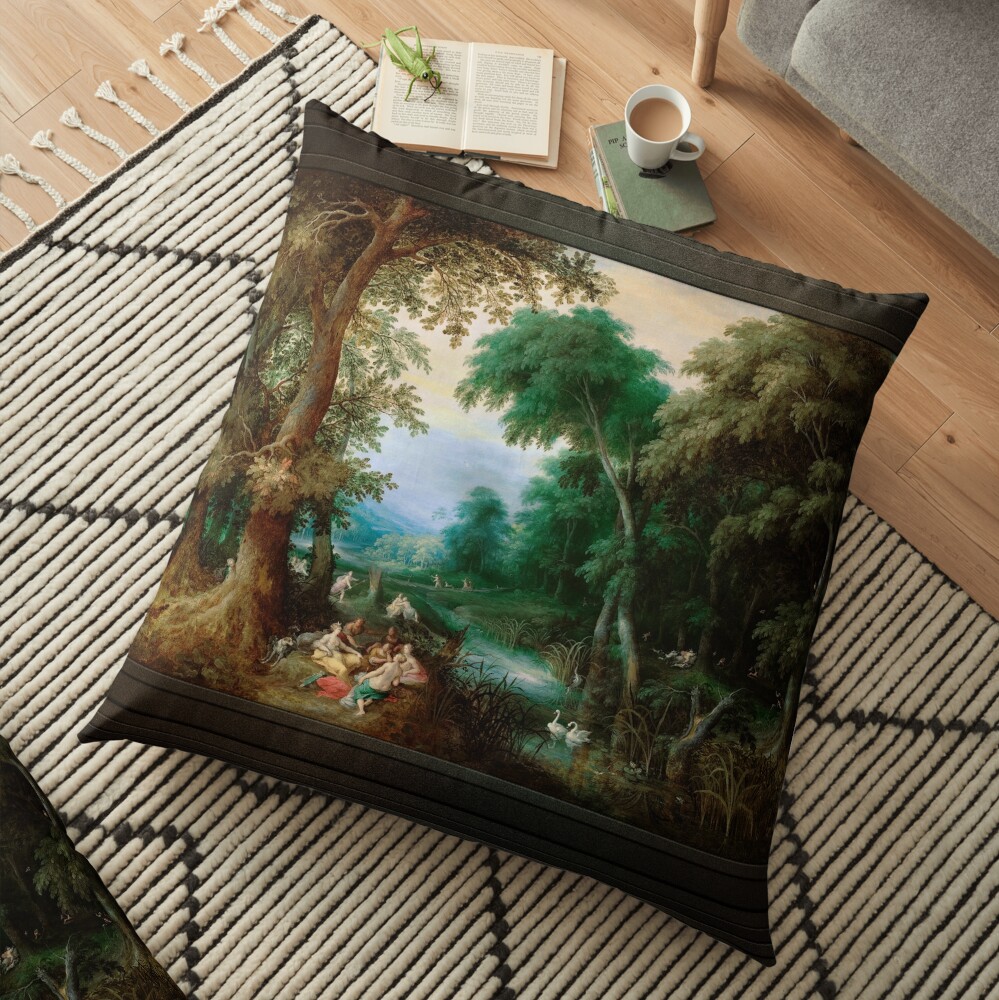
樹木が茂った風景の中のダイアナと彼女のニンフ
“Diana and her Nymphs in a Wooded Landscape” by Frans Francken the Younger (1581-1642)
Frans Francken the Younger’s “Diana and her Nymphs in a Wooded Landscape,” created in the early 17th century, is a remarkable piece of Flemish Baroque art that explores themes of classical mythology, 自然, and the divine feminine. The painting captures a moment from the myth of Diana, the Roman goddess of the hunt, 受胎能力, and the moon.
Accompanied by her nymphs, Diana is portrayed in a serene and idyllic woodland setting, exuding the calm grace of a figure in harmony with nature. This work is emblematic of the Baroque period, showcasing intricate detail, deep contrasts of light and shadow, and a vivid portrayal of lush landscapes. アーティスト, Frans Francken the Younger, a prominent Flemish painter, worked in collaboration with Alexander Keirincx, an expert landscape painter, to bring the natural world to life in exquisite detail.
目次
本題: ダイアナとニンフたち
The central focus of the painting is the goddess Diana, who is depicted in a moment of tranquility as she reclines in a natural, untouched woodland. ダイアナ, traditionally associated with the hunt, is often portrayed in a more dynamic context; しかしながら, in this instance, she is serene, ほとんど瞑想的です, as she rests amidst her nymphs.
The goddess is seen as an idealized figure, clothed in a flowing white robe that contrasts beautifully with the surrounding dark green foliage. Her figure is graceful and elongated, exuding the divine purity often associated with her mythical persona.
Her nymphs, who are her companions and followers, are shown in various poses, engaged in the peaceful activities of their daily lives, such as gathering flowers, bathing, or resting. One nymph kneels by the water, gently touching the surface, while another reclines nearby, enjoying the stillness of the moment. The nymphs’ interaction with Diana and their proximity to the goddess enhances the idea of the sacred feminine and a harmonious relationship with nature.
Landscape and Natural Elements
The landscape itself is lush and enchanting, occupying a large portion of the composition. The dense trees, soft grass, and flowing water create a secluded, almost enchanted atmosphere. The background reveals an open, yet private space where the figures are immersed in nature’s embrace.
This choice of setting highlights the connection between the mythological figures and the natural world, a theme that was common in Baroque art. The trees are rich in texture, with their leaves casting dappled shadows that add depth and vibrancy to the scene.
The body of water, a small stream or pond that runs through the foreground, is gently rippling with the movement of the nymphs, and it reflects the soft light filtering through the trees. Two swans glide peacefully along the water’s surface, embodying the purity and grace that are central to Diana’s symbolism.
The artist’s skillful use of light enhances the scene’s mood, drawing the viewer’s eye to the central figures of Diana and her nymphs while allowing the surrounding landscape to unfold in a rich, atmospheric background.
The choice of a wooded landscape, with its dense trees and lush foliage, further emphasizes the theme of nature as a sanctuary for Diana and her followers. The forest setting serves as both a literal and symbolic representation of Diana’s domain—untamed, sacred, and a space where the goddess and her nymphs are free from the constraints of the human world.
ザ・ムード: Tranquility and Divine Presence
The overall mood of the painting is serene and peaceful. 柔らかい照明, the delicate treatment of the figures, and the harmonious arrangement of the natural elements combine to create a sense of calm. There is no sense of urgency or struggle in the scene; それよりも, the atmosphere is one of timeless tranquility, with the goddess and her nymphs embodying the eternal beauty and harmony of nature.
The use of light and shadow is particularly effective in evoking this mood. The soft light that bathes the figures highlights their serene expressions and the flowing forms of their bodies. 対照的に, the deeper shadows in the surrounding forest suggest a quiet, sacred space, untouched by human hands. This interplay between light and dark, known as chiaroscuro, was a hallmark of Baroque painting and served to deepen the emotional resonance of the scene.
The viewer is invited into a world of divine peace, 時間が静止しているように見える場所, and the forces of nature and mythology are woven together in a perfect balance. ダイアナ, the moon goddess, is portrayed not as a fierce huntress, but as a figure of grace and divine serenity, reinforcing the idea of the goddess as a protector of the natural world and the feminine spirit.
芸術的なスタイル: Baroque and Flemish Influences
“Diana and her Nymphs in a Wooded Landscape” exemplifies the Baroque style, which is known for its dramatic use of light, 豊かな色, and intense emotional expression. The figures are rendered in exquisite detail, with a particular emphasis on the textures of the fabrics, 肌, and foliage. The flowing drapery of Diana’s robe is painted with an almost tactile sense of realism, highlighting the artist’s skill in rendering cloth.
Flemish art, which Francken was a part of, is renowned for its detailed landscapes and use of vibrant color. Alexander Keirincx’s contribution to the landscape is evident in the soft, naturalistic portrayal of the trees, 水, と光. His technique of layering color to create depth in the foliage and water reflects the influence of Flemish traditions, while Francken’s figures bring the mythological narrative to life in a classical style.
構成はバランスが取れており、調和が取れています, with a clear foreground, middle ground, and background, drawing the viewer’s eye deeper into the landscape. The interaction between the figures and their environment is masterfully arranged, with each element contributing to the overall sense of peace and divine presence.
結論
Frans Francken the Younger’s “Diana and her Nymphs in a Wooded Landscape” is a stunning representation of classical mythology and nature, rendered in the rich and detailed style of Flemish Baroque painting. The serene portrayal of Diana and her nymphs invites the viewer into a world of tranquility, where the divine and natural worlds coexist in perfect harmony. The lush woodland setting, 細部への細心の注意, and the mood of peace and serenity make this painting a timeless example of the Baroque period’s fascination with light, 自然, and mythological themes.
Diana and Her Nymphs is a remastered digital art old masters reproduction of a public domain image that is available as a キャンバスプリントオンライン.
このデジタルアート作品は、, Xzendor7 Web サイトにあるすべてのアートワークと同様に、キャンバス プリントを含むさまざまな素材形式でオンラインで購入できます。, アクリルプリント, メタルプリント, 木版, 額入りプリント, ポスター, ロール状のキャンバス プリントとしてさまざまなサイズでご利用いただけます。 12 インチから 72 インチは、実際のアートワークのサイズと、アートを購入するために選択したオンデマンド プリント ショップによって異なります。.
このアートワークは、幅広いメンズおよびウィメンズのアパレルでも利用可能です, マグカップ, トートバッグ, スカーフ, ノートや日記帳、その他多くの室内装飾品.
アーティストについて
以下の情報から派生 Wikipedia.org
Frans Francken The Younger
Frans was born into a family of artist and would become the most well known of the members of his family. He was born to Frans Francken the Elder (a student of Historical Flemish Painter Frans Floris (1519 – 1570)) and Elisabeth Mertens; and his father was one of the most important creators of altar pieces in Flanders.
Frans and his brother Hieronymus Francken II (1578 – 1623), both trained under their father Frans the Elder; and may have received additional training in their uncles workshop Hieronymus Francken I (1540 – 1610), which was located in Paris, フランス.
After completing his training Frans worked in the family workshop, and from there became an independent master in the Antwerp Guild of Saint Luke in 1605; becoming a deacon of the Guild in 1616.
Frans was a diverse painter that created artwork in many different genres; with many of his works being based on historical and biblical figures; and over the years he became a very successful painter and operated a workshop, that produced copies of original compositions.
Alexander Keirincx
Alexander was the son of Matthijs Keirincx and Anna Mason and specialized as a landscape painter, that was known for his woodland scenes with figures, English castles and country houses; and became a master in the Antwerp Guild of St. Luke somewhere between 1618 また 1619.