

Portrait de Madame Badouin
Portrait de Madame Badouin, La fille de l'artiste c1758-60 par le peintre français François Boucher (1703 – 1770); également connu sous le nom de dessinateur, graveur et décorateur dans le style rococo français, était bien connu pour sa somptueuse mythologie, motifs allégoriques et érotiques et était le peintre de la cour de Louis XV et un favori de la marquise de Pompadour.
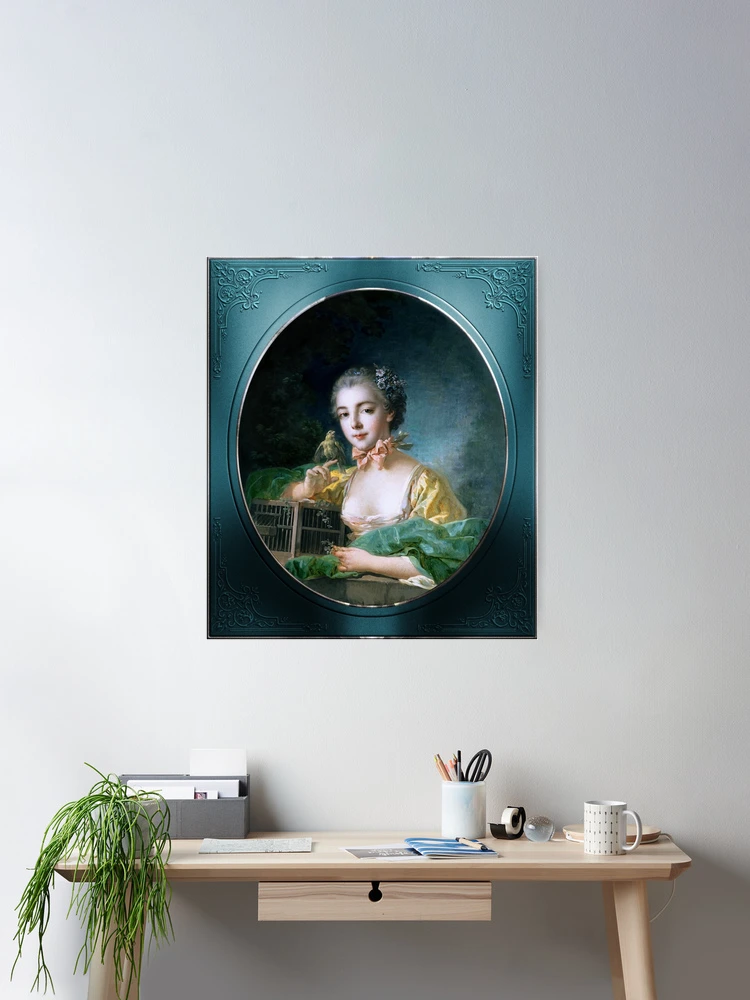
This artwork by the celebrated French Rococo painter François Boucher captures an exquisite moment of elegance and grace. This painting is a prime example of the Rococo style, which flourished in France during the early to mid-18th century, characterized by its lightness, grâce, and use of soft, couleurs pastel.
The subject of the portrait is Madame Badouin, the artist’s daughter, who is depicted with remarkable sensitivity and beauty. Le doux, delicate nature of her features, her youthful countenance, and her serene expression all embody the grace and poise that were idealized in the Rococo period. The portrait has a gentle, intimate quality, inviting the viewer into the subject’s personal space.
Au centre de la composition, Madame Badouin is presented in a three-quarter view, her head slightly turned as if she is caught in a moment of quiet contemplation. Her gaze is directed slightly off to the side, creating an impression of introspection, yet there is a subtle connection with the viewer, as if she is aware of being observed.
Her facial features are rendered with delicate precision: her fair skin is soft and smooth, her lips slightly parted in a demure expression, and her large, expressive eyes reflect a sense of intelligence and calm. The artist has emphasized the softness of her features, using subtle transitions between light and shadow to create a lifelike, almost ethereal appearance.
Madame Badouin’s attire is a masterful representation of the Rococo fashion of the time. She is dressed in an opulent gown of pale yellow and soft green hues, with layers of sheer fabric that flow gracefully around her. The gown’s texture is depicted with meticulous detail, showing the fine, almost weightless nature of the materials.
The artist has captured the flow and drape of the fabric with a sense of fluidity, suggesting the movement of the fabric as the subject sits serenely. A large pink ribbon is tied loosely at her throat, adding a touch of playful color that contrasts with the softness of the gown and further enhances the light, airy quality of the portrait.
Her coiffed hair, which is styled in soft waves and adorned with delicate flowers, is another hallmark of the Rococo period. The careful attention to detail in her hairstyle not only highlights the fashion trends of the time but also adds a sense of natural beauty, as though her appearance is effortlessly graceful. The flowers in her hair seem to symbolize youth and femininity, enhancing the overall sense of delicacy and refinement.
One of the most striking aspects of this portrait is the bird perched on the artist’s daughter’s finger. This small detail plays an important symbolic role in the painting, contributing to the overall theme of innocence and natural beauty.

The bird, with its muted plumage, contrasts with the lushness of the surrounding landscape and the softness of Madame Badouin’s attire. It also suggests a connection to nature, a recurring theme in Rococo art, which often celebrated the beauty of the natural world, the pastoral, and the idealized version of life in harmony with nature.
The background of the painting is equally carefully constructed. Derrière la silhouette, a dark, lush landscape unfolds, with trees and foliage softly blurring into the distance. L'utilisation d'un riche, muted green palette creates an almost dreamlike effect, enhancing the ethereal mood of the portrait.
This natural setting not only contrasts with the softness of the figure but also symbolizes a connection between Madame Badouin and the world around her. The painter’s skillful rendering of light and shadow creates depth and atmosphere, giving the scene a tranquil, almost timeless quality.
The overall mood of the portrait is one of calm elegance. Les couleurs sont douces et harmonieuses, with pastel shades predominating in both the subject’s attire and the background. The figure is illuminated in such a way that the face and hands are gently highlighted, creating a subtle focal point that draws the viewer’s attention to the subject’s expression and demeanor. There is a serene quality to the painting, one that evokes the idealized virtues of youth, beauté, and grace that were central to the Rococo aesthetic.
François Boucher’s technique in this painting is exemplary of his mastery of the Rococo style. His brushwork is fluid and refined, créer un doux, luminous texture that enhances the delicate nature of the subject. His use of light and color is equally sophisticated, with the artist skillfully capturing the interplay of natural light and shadow on Madame Badouin’s face and clothing. The soft transitions between colors and the subtle blending of tones demonstrate Boucher’s expertise in creating a smooth, finition polie.
En conclusion, François Boucher’s “Portrait of Madame Badouin, The Artist’s Daughter” is a stunning example of Rococo portraiture, where the subject’s beauty, grâce, and connection to nature are captured with sensitivity and elegance. La palette douce, delicate detailing, and serene mood of the painting convey the idealized qualities of youth and femininity that were highly valued during the Rococo period. A travers ce portrait, Boucher not only immortalizes his daughter but also provides a glimpse into the Rococo vision of beauty and refinement.
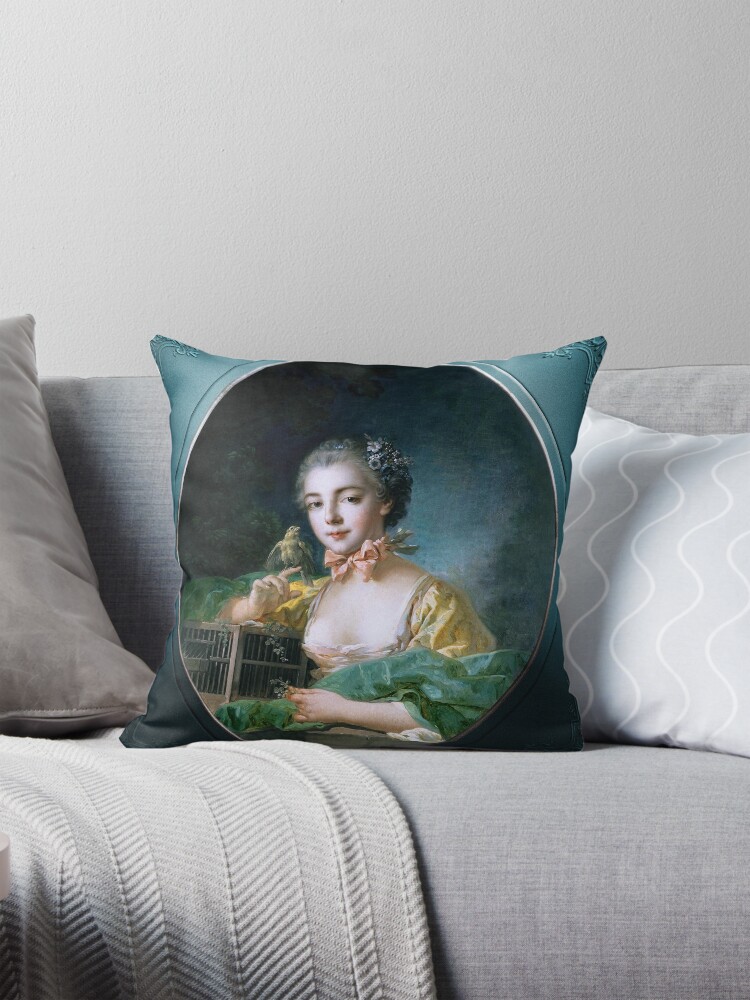
Le portrait de Madame Badouin est une reproduction de maîtres anciens d'art numérique retouchée d'une image du domaine public.
Informations ci-dessous dérivées de Wikipedia.org
Originaire de Paris, Boucher était le fils d'un peintre moins connu Nicolas Boucher, qui lui a donné sa première formation artistique. À l'âge de dix-sept ans, un tableau de Boucher a été admiré par le peintre François Lemoyne. Lemoyne nomma plus tard Boucher son apprenti, mais après seulement trois mois, il est allé travailler pour le graveur Jean-François Cars.
Dans 1720, il a remporté le Grand Prix élite de Rome pour la peinture, mais n'a saisi l'occasion conséquente d'étudier en Italie que cinq ans plus tard, due to financial problems at the Académie royale de peinture et de sculpture.[1] À son retour des études en Italie, il a été admis à l'Académie de peinture et de sculpture refondée sur 24 novembre 1731. His morceau de réception (pièce de réception) était son Rinaldo et Armida de 1734.
Boucher a épousé Marie-Jeanne Buzeau en 1733. Le couple a eu trois enfants ensemble. Boucher est devenu membre du corps professoral en 1734 et sa carrière s'est accélérée à partir de ce moment, car il a été promu professeur puis recteur de l'Académie, devenir inspecteur à la Manufacture Royale des Gobelins et enfin Premier Peintre du Roi (Premier peintre du roi) dans 1765. Portrait de Marie-Louise O’Murphy c. 1752
Boucher est décédé le 30 Mai 1770 dans son Paris natal. Son nom, avec celle de sa patronne Madame de Pompadour, était devenu synonyme du style rococo français, amenant les frères Goncourt à écrire: “Boucher fait partie de ces hommes qui représentent le goût d'un siècle, qui expriment, personnifiez-le et incarnez-le.”
Boucher est célèbre pour dire que la nature est “trop verte et mal éclairée” (trop vert et mal éclairé).
Boucher était associé au graveur de pierres précieuses Jacques Guay, à qui il a appris à dessiner. Il a également encadré le peintre morave-autrichien Martin Ferdinand Quadal ainsi que le peintre néoclassique Jacques-Louis David dans 1767.[4] Plus tard, Boucher a réalisé une série de dessins d'œuvres de Guay que Madame de Pompadour a ensuite gravées et distribuées sous forme de volume joliment relié à des courtisans privilégiés.