

Portrett af frú Badouin
Portrett af frú Badouin, The Artist's Daughter c1758-60 eftir franska málarann Francois Boucher (1703 – 1770); einnig þekktur sem teiknari, leturgröftur og skreytari í frönskum rókókóstíl, var vel þekktur fyrir stórkostlega goðsagnafræði sína, allegórísk og erótísk myndefni og var dómmálari Lúðvíks XV og í uppáhaldi hjá Marquise de Pompadour.
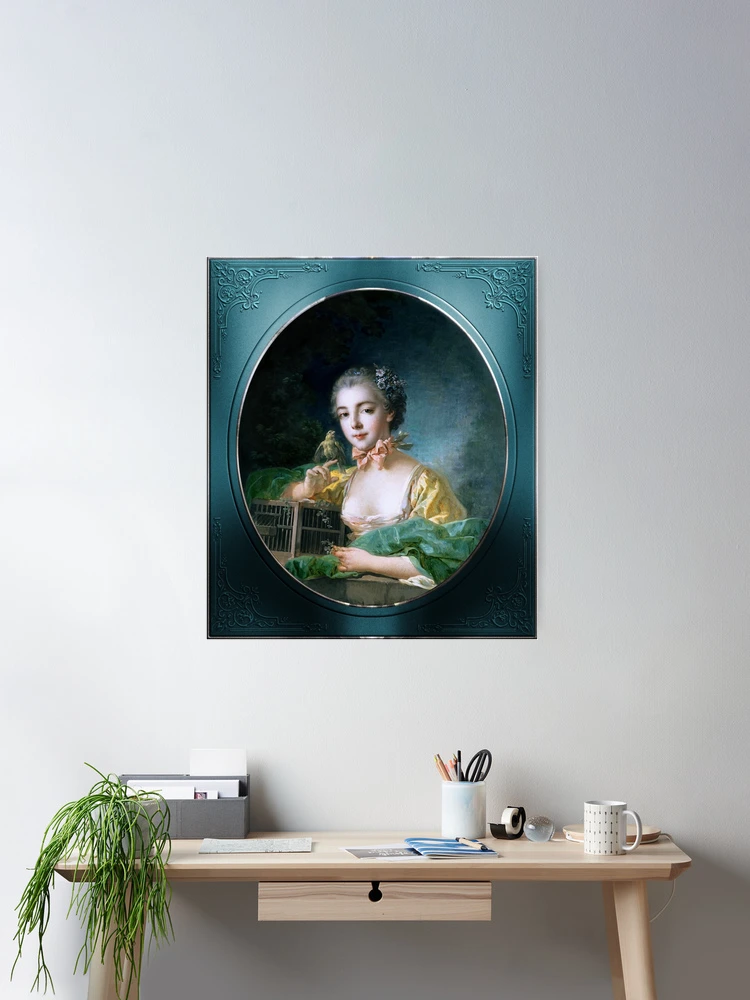
This artwork by the celebrated French Rococo painter François Boucher captures an exquisite moment of elegance and grace. This painting is a prime example of the Rococo style, which flourished in France during the early to mid-18th century, characterized by its lightness, Grace, and use of soft, pastel colors.
The subject of the portrait is Madame Badouin, the artist’s daughter, who is depicted with remarkable sensitivity and beauty. Mjúkt, delicate nature of her features, her youthful countenance, and her serene expression all embody the grace and poise that were idealized in the Rococo period. The portrait has a gentle, intimate quality, inviting the viewer into the subject’s personal space.
Í miðju tónverksins, Madame Badouin is presented in a three-quarter view, her head slightly turned as if she is caught in a moment of quiet contemplation. Her gaze is directed slightly off to the side, creating an impression of introspection, yet there is a subtle connection with the viewer, as if she is aware of being observed.
Her facial features are rendered with delicate precision: her fair skin is soft and smooth, her lips slightly parted in a demure expression, and her large, expressive eyes reflect a sense of intelligence and calm. The artist has emphasized the softness of her features, using subtle transitions between light and shadow to create a lifelike, næstum himnesk útlit.
Madame Badouin’s attire is a masterful representation of the Rococo fashion of the time. She is dressed in an opulent gown of pale yellow and soft green hues, with layers of sheer fabric that flow gracefully around her. The gown’s texture is depicted with meticulous detail, showing the fine, almost weightless nature of the materials.
The artist has captured the flow and drape of the fabric with a sense of fluidity, suggesting the movement of the fabric as the subject sits serenely. A large pink ribbon is tied loosely at her throat, adding a touch of playful color that contrasts with the softness of the gown and further enhances the light, airy quality of the portrait.
Her coiffed hair, which is styled in soft waves and adorned with delicate flowers, is another hallmark of the Rococo period. The careful attention to detail in her hairstyle not only highlights the fashion trends of the time but also adds a sense of natural beauty, as though her appearance is effortlessly graceful. The flowers in her hair seem to symbolize youth and femininity, enhancing the overall sense of delicacy and refinement.
One of the most striking aspects of this portrait is the bird perched on the artist’s daughter’s finger. This small detail plays an important symbolic role in the painting, contributing to the overall theme of innocence and natural beauty.

The bird, with its muted plumage, contrasts with the lushness of the surrounding landscape and the softness of Madame Badouin’s attire. It also suggests a connection to nature, a recurring theme in Rococo art, which often celebrated the beauty of the natural world, the pastoral, and the idealized version of life in harmony with nature.
The background of the painting is equally carefully constructed. Á bak við myndina, a dark, lush landscape unfolds, with trees and foliage softly blurring into the distance. The use of a rich, muted green palette creates an almost dreamlike effect, enhancing the ethereal mood of the portrait.
This natural setting not only contrasts with the softness of the figure but also symbolizes a connection between Madame Badouin and the world around her. The painter’s skillful rendering of light and shadow creates depth and atmosphere, giving the scene a tranquil, almost timeless quality.
The overall mood of the portrait is one of calm elegance. The colors are soft and harmonious, with pastel shades predominating in both the subject’s attire and the background. The figure is illuminated in such a way that the face and hands are gently highlighted, creating a subtle focal point that draws the viewer’s attention to the subject’s expression and demeanor. There is a serene quality to the painting, one that evokes the idealized virtues of youth, fegurð, and grace that were central to the Rococo aesthetic.
François Boucher’s technique in this painting is exemplary of his mastery of the Rococo style. His brushwork is fluid and refined, creating a soft, luminous texture that enhances the delicate nature of the subject. His use of light and color is equally sophisticated, with the artist skillfully capturing the interplay of natural light and shadow on Madame Badouin’s face and clothing. The soft transitions between colors and the subtle blending of tones demonstrate Boucher’s expertise in creating a smooth, fáður áferð.
Að lokum, François Boucher “Portrait of Madame Badouin, The Artist’s Daughter” is a stunning example of Rococo portraiture, where the subject’s beauty, Grace, and connection to nature are captured with sensitivity and elegance. The soft palette, delicate detailing, and serene mood of the painting convey the idealized qualities of youth and femininity that were highly valued during the Rococo period. Í gegnum þessa mynd, Boucher not only immortalizes his daughter but also provides a glimpse into the Rococo vision of beauty and refinement.
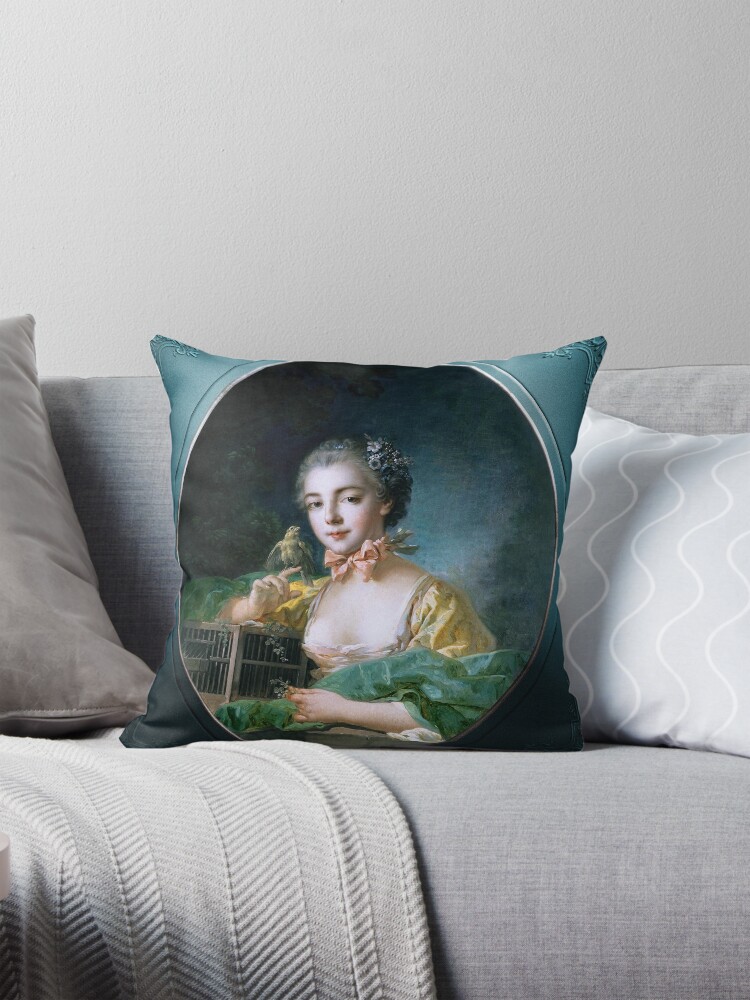
Portrait Of Madame Badouin is a retouched digital art old masters reproduction of a public domain image.
Upplýsingar hér að neðan fengnar af Wikipedia.org
Innfæddur í París, Boucher var sonur minna þekkts málara Nicolas Boucher, sem veitti honum sína fyrstu listþjálfun. Á sautján ára aldri, málverk eftir Boucher var dáð af málaranum François Lemoyne. Lemoyne skipaði síðar Boucher sem lærling sinn, en eftir aðeins þrjá mánuði, hann fór að vinna hjá leturgröftaranum Jean-François Cars.
Í 1720, hann vann Elite Grand Prix de Rome fyrir málverk, en nýtti ekki tækifærið til að stunda nám á Ítalíu fyrr en fimm árum síðar, vegna fjárhagsvanda í Konunglegu málara- og höggmyndarakademíunni.[1] Þegar hann kom heim frá námi á Ítalíu fékk hann inngöngu í endurreista Académie de peinture et de sculpture á 24 nóvember 1731. Móttökustykkið hans (móttökustykki) var Rinaldo hans og Armida af 1734.
Boucher giftist Marie-Jeanne Buzeau árið 1733. Þau hjón eignuðust þrjú börn saman. Boucher varð deildarmeðlimur í 1734 og ferill hans hraðaði frá þessum tímapunkti þar sem hann var gerður prófessor þá rektor akademíunnar, verða eftirlitsmaður hjá Royal Gobelins Manufactory og loks forsætisráðherra Peintre du Roi (Fyrsti málari konungsins) inn 1765. Portrett af Marie-Louise O'Murphy c. 1752
Boucher lést á 30 maí 1770 í heimalandi sínu París. Nafn hans, ásamt verndara hans Madame de Pompadour, var orðið samheiti við franskan rókókóstíl, leiddi Goncourt bræður til að skrifa: “Boucher er einn af þessum mönnum sem tákna smekk aldar, sem tjá, persónugera það og setja það inn.”
Boucher er frægur fyrir að segja að náttúran sé það “of grænt og illa lýst” (of grænt og illa lýst).
Boucher var tengdur gimsteinagrafaranum Jacques Guay, sem hann kenndi að teikna. Hann leiðbeindi einnig moravísk-austurríska málarann Martin Ferdinand Quadal sem og nýklassíska málarann Jacques-Louis David í 1767.[4] Seinna, Boucher gerði röð teikninga af verkum eftir Guay sem frú de Pompadour greypti síðan út og dreifði sem myndarlega innbundnu bindi til hylli hirðmanna.