

Portrait of Maria Alexeevna Matavtina
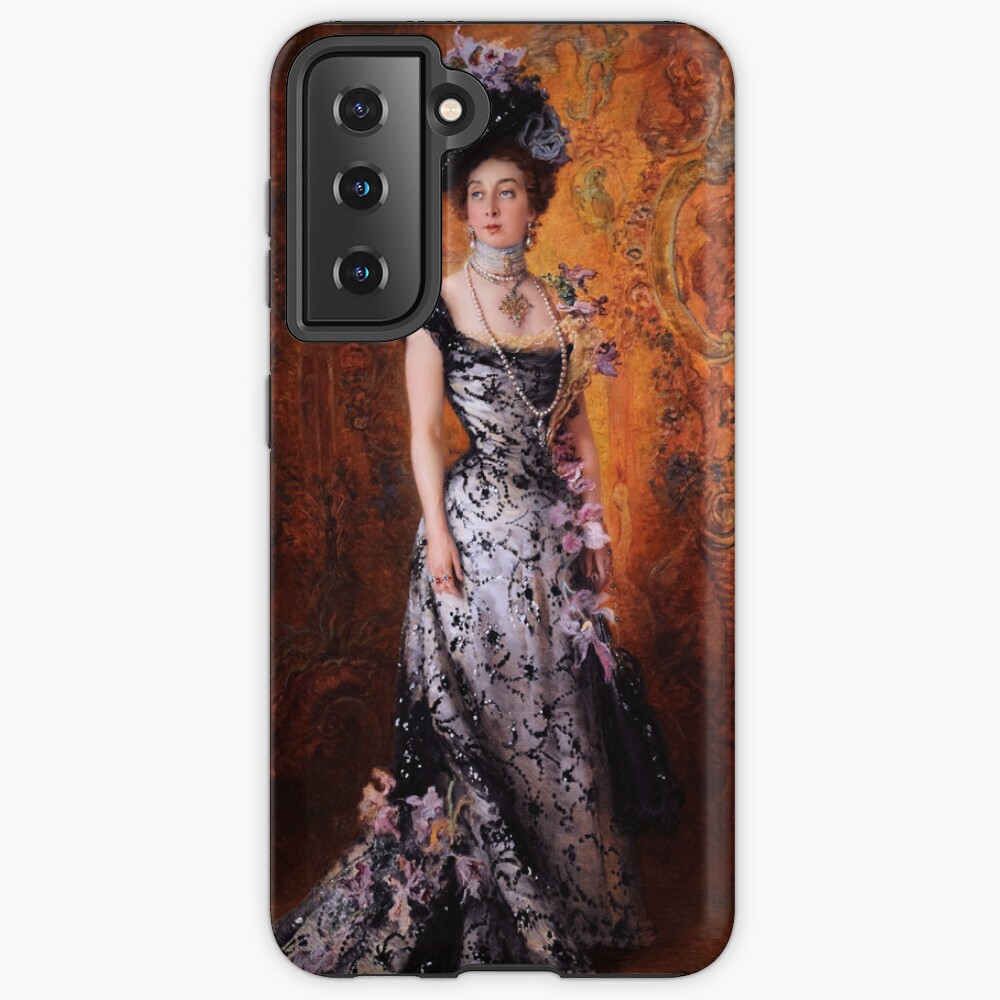
Portrait of Makovsky’s Third Wife Maria Alexeevna Matavtina (1869-1919) c1900 by Konstantin Makovsky (1839 – 1915); spezialisiert auf russische historische Gemälde, die einen idealisierten Blick auf das russische Leben in den vergangenen Jahrhunderten zeigen.
Einführung
Das “Portrait of Maria Alexeevna Matavtina” by Konstantin Makovsky is an exquisite example of late 19th-century Russian portraiture. Painted around the turn of the 20th century, this artwork portrays Makovsky’s third wife, Maria Alexeevna Matavtina, in a sumptuous gown against a backdrop of warm, opulent colors. The portrait reveals not only the refined beauty of the subject but also Makovsky’s exceptional skill in capturing the grace, Eleganz, and grandeur of Russian aristocracy during the Imperial era.
Inhaltsverzeichnis
Das Thema: Maria Alexeevna Matavtina
The portrait centers on Maria Alexeevna Matavtina, who was the third wife of renowned Russian artist Konstantin Makovsky. Geboren in 1869, Maria became an influential figure in the Russian artistic and cultural circles of the late 19th and early 20th centuries. Known for her poised and refined demeanor, she is depicted in the portrait as a symbol of aristocratic grace and beauty. Her gentle expression conveys a sense of serenity and dignity, offering the viewer a glimpse into the life of Russian nobility during this period. Maria’s attire and accessories, as well as her posture, exude the confidence and sophistication expected of women of her social standing.
The Style and Technique
Makovsky’s work is celebrated for its realistic portrayal of his subjects, blending academic tradition with the Russian fascination for opulence and grandeur. The artist’s technique is a fine example of Russian realism, focusing on intricate details and the creation of a lifelike representation of his subjects. The brushwork in the portrait is meticulous and refined, especially in the rendering of Maria’s luxurious gown, the pearls draped across her neck, and the fine details of her jewelry. The texture of her gown, which appears to be made from satin or silk, is rendered with remarkable precision, highlighting the rich fabrics and the skillful use of light and shadow to suggest depth.
The background of the portrait is painted in a warm palette of oranges, Browns, und Gold, creating a sense of intimacy and luxury. Die Farben harmonieren harmonisch, enhancing the subject’s presence in the painting. The warm tones of the backdrop serve to emphasize the elegance and poise of Maria, further highlighting her position within the elite class of Russian society.
The Attire and Accessories
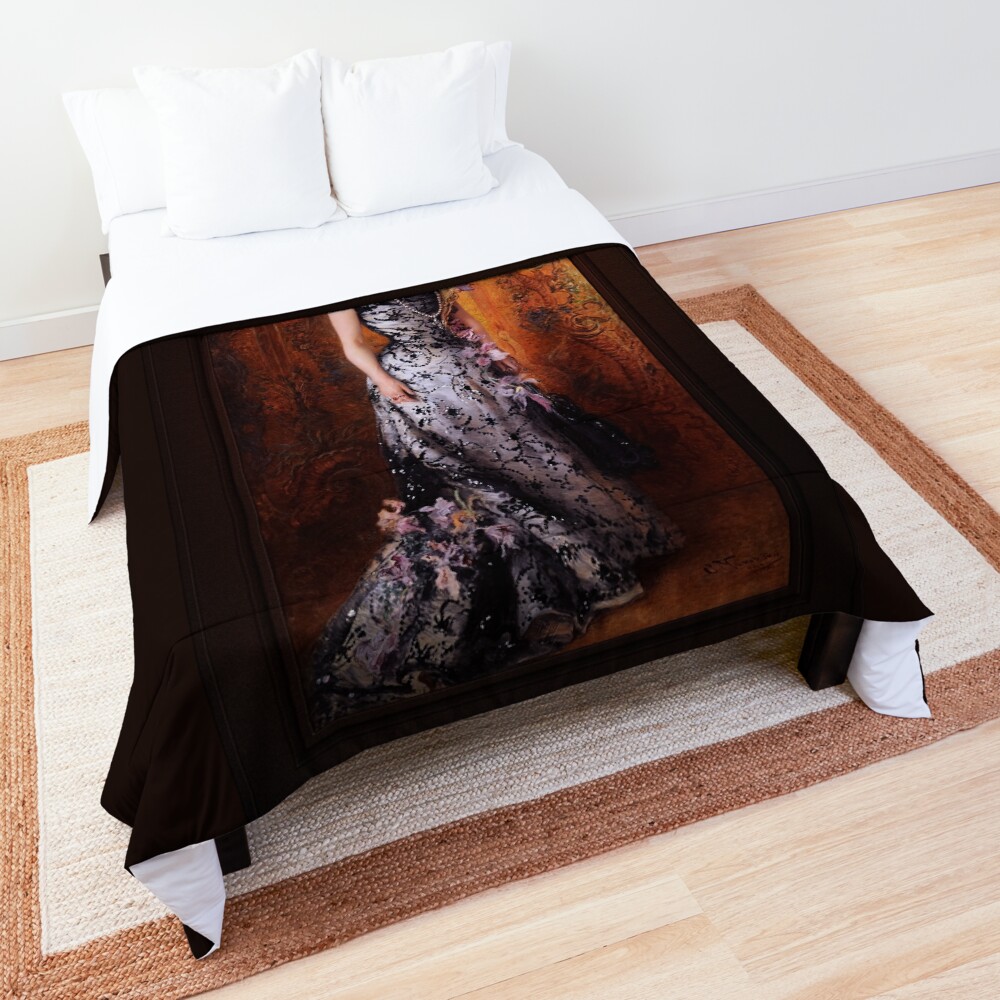
Maria’s gown is one of the most striking features of the portrait. Die Tiefe, dark colors of the dress, accentuated with subtle light reflections, suggest a luxurious fabric like satin or velvet, offering a rich contrast to the lighter tones of her skin. The gown’s intricate black lace details, especially along the bodice and sleeves, are skillfully depicted, showcasing Makovsky’s attention to texture and his mastery of rendering fabric. The lace patterns evoke an air of formality and class, befitting a member of the Russian aristocracy.
Maria wears a lavish array of pearls and jewelry, including a pearl necklace that cascades elegantly around her neck. A large star-shaped brooch, likely of gold or silver, adorns her chest, drawing attention to her upper body and serving as a focal point in the composition. Ihre Haare, styled in an intricate updo, is accessorized with a delicate floral arrangement, featuring shades of violet, adding a touch of softness to the overall look. These details not only speak to the high social status of the subject but also highlight the fashionable trends of the period.
Die Einstellung und der Hintergrund
The background of the portrait is a harmonious blend of warm, erdige Töne. A subtle floral pattern emerges from the textured surface, creating a sense of richness without distracting from the central figure. The organic motifs in the background are reminiscent of the decorative arts of the time, possibly inspired by the Rococo or Neoclassical influences that were popular in Russian interiors. The golden hues give the painting a sense of warmth, making Maria the undeniable focal point of the composition.
The background’s richness contrasts beautifully with the subject’s refined and poised figure. Die Einstellung, although not overly detailed, evokes the luxurious world of Russian nobility, providing a fitting context for the subject’s elegant attire and aristocratic presence. The overall mood of the piece is one of intimate grandeur, where the viewer is invited to witness the opulence of Russian society through the lens of a poised and sophisticated aristocrat.
The Mood and Tone
Die Stimmung des Porträts ist heiter und nachdenklich, with an air of aristocratic dignity. Maria’s expression is calm and composed, her posture exuding grace and confidence. Das Weiche, almost wistful look in her eyes suggests a deeper introspection, lending the portrait an emotional depth that contrasts with the grandeur of her attire. This emotional resonance adds complexity to the piece, offering more than just a visual portrayal of wealth and status.
The painting evokes a sense of nostalgia for the opulence and refinement of the Russian Imperial era. It serves as a historical artifact that captures not only the fashion and style of the time but also the societal values and norms that governed the lives of the Russian aristocracy. The combination of the subject’s regal bearing, the lush textures of her gown, and the warm, inviting background creates an atmosphere of refinement and sophistication.
Abschluss
Makovsky’s “Portrait of Maria Alexeevna Matavtina” is a stunning example of Russian portraiture at the turn of the 20th century. It showcases the artist’s ability to blend realism with a sense of grandeur, capturing the subject’s beauty and the luxurious lifestyle of Russian nobility. The detailed depiction of Maria’s attire, Zubehör, and the background of the painting invites the viewer into a world of opulence and aristocratic grace. Through this portrait, Makovsky immortalizes not only his beloved wife but also the rich cultural and artistic heritage of late Imperial Russia.
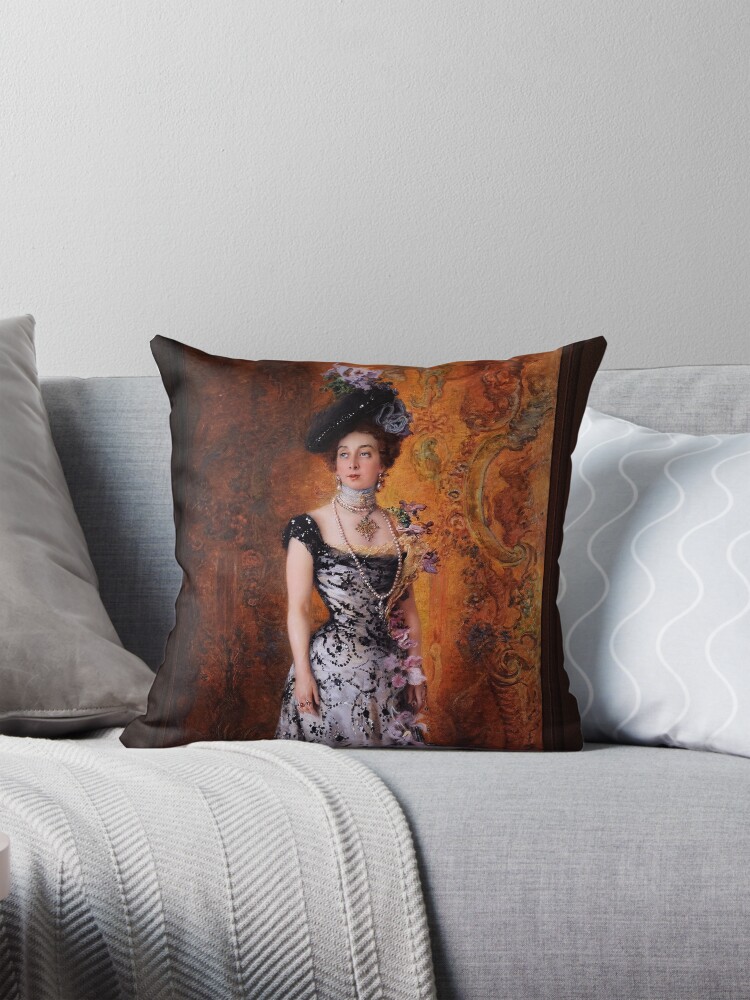
Portrait of Maria Alexeevna Matavtina is a remastered digital art old masters reproduction of a public domain image that is available as a Leinwanddruck online.
Über den Künstler
Info unten abgeleitet von Wikipedia.org
Konstantin Makovsky war ein einflussreicher russischer Maler, verbunden mit der “Peredwischniki (Wanderer)”. Viele seiner historischen Gemälde, wie „Beneath the Crown“. (1889) auch bekannt als The Russian Bride’s Attire und Before the Wedding, zeigte eine idealisierte Sicht auf das russische Leben früherer Jahrhunderte. Er gilt oft als Vertreter der akademischen Kunst.
Konstantin Makovsky wurde in Moskau geboren. Sein Vater war der russische Kunstfigur und Amateurmaler, Jegor Iwanowitsch Makowski. Seine Mutter war Komponistin, und sie hoffte, dass ihr Sohn eines Tages in ihre Fußstapfen treten würde. Seine jüngeren Brüder Vladimir und Nikolay sowie seine Schwester Alexandra wurden ebenfalls Maler.
Im 1851 Makovsky trat in die Moskauer Malerschule ein, Bildhauerei und Architektur, wo er der beste Student wurde, ganz einfach alle verfügbaren Auszeichnungen erhalten. Seine Lehrer waren Karl Bryullov und Vasily Tropinin. Makovskys Neigungen zur Romantik und zu dekorativen Effekten lassen sich durch den Einfluss von Bryullov erklären.
Obwohl Kunst seine Leidenschaft war, Er dachte auch darüber nach, was seine Mutter von ihm gewollt hatte. Er machte sich auf die Suche nach Komponisten, auf die er sich beziehen konnte, und ging zunächst nach Frankreich. Vor, Er war schon immer ein Liebhaber klassischer Musik gewesen, und habe mir viele Stücke angehört. Er wünschte oft, er könnte die Melodie ändern, oder Stil einiger von ihnen, um sie angenehmer zu machen. Später in seinem Leben wurde es wahr.
Im 1858 Makovsky trat in die Kaiserliche Akademie der Künste in Sankt Petersburg ein. Von 1860 Er nahm an den Ausstellungen der Akademie mit Gemälden wie „Die Heilung von Blinden“ teil (1860) und Agenten des falschen Dmitry töten den Sohn von Boris Godunov (1862). Im 1863 Makovsky und dreizehn andere Studenten protestierten gegen die Vergabe von Themen aus der skandinavischen Mythologie durch die Akademie im Wettbewerb um die Große Goldmedaille der Akademie; alle verließen die Akademie ohne formelles Diplom.
Makovsky wurde Mitglied einer Genossenschaft (artel) von Künstlern unter der Leitung von Ivan Kramskoi, Typischerweise produziert er Wanderers-Gemälde über das Alltagsleben (Witwe 1865, Heringsverkäufer 1867, usw.). Von 1870 Er war Gründungsmitglied der Society for Travelling Art Exhibitions und arbeitete weiterhin an Gemälden zum Thema Alltag. Er stellte seine Werke sowohl auf den Academia-Ausstellungen als auch auf den Wanderkunstausstellungen der Wanderers aus.
Nach Reisen nach Ägypten und Serbien Mitte der 1870er Jahre kam es zu einer bedeutenden Stiländerung. Seine Interessen wechselten von sozialen und psychologischen Problemen zu künstlerischen Problemen von Farben und Formen.
In den 1880er Jahren wurde er ein gefragter Autor von Porträts und historischen Gemälden. Auf der Weltausstellung von 1889 in Paris erhielt er die Große Goldmedaille für sein Gemälde „Tod von Iwan dem Schrecklichen“., Das Urteil von Paris, und Dämon und Tamara. Er war einer der am meisten geschätzten und bestbezahlten russischen Künstler seiner Zeit. Viele demokratische Kritiker hielten ihn für einen Abtrünnigen der Wanderers’ Ideale, produzieren (wie Henryk Siemiradzki) auffällige, aber oberflächliche Werke, während andere ihn als Vorläufer des russischen Impressionismus betrachten.
Makovsky wurde getötet 1915 als seine Pferdekutsche in Sankt Petersburg von einer elektrischen Straßenbahn erfasst wurde.