

Portrait of Maria Alexeevna Matavtina
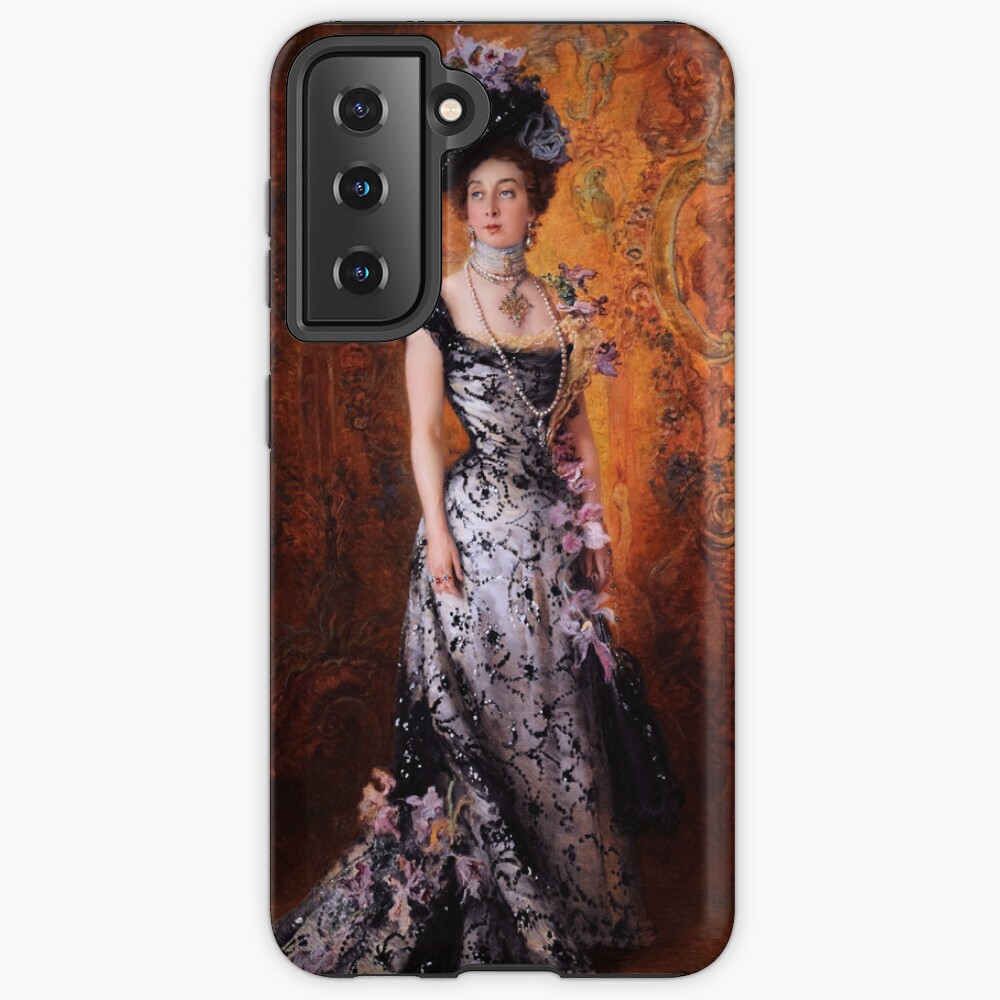
Portrait of Makovsky’s Third Wife Maria Alexeevna Matavtina (1869-1919) c1900 by Konstantin Makovsky (1839 – 1915); spesjalisearre yn Russyske Histoaryske skilderijen dy't in idealisearre werjefte fan it Russyske libben yn 'e ôfrûne ieuwen sjen litte.
Ynlieding
De “Portrait of Maria Alexeevna Matavtina” by Konstantin Makovsky is an exquisite example of late 19th-century Russian portraiture. Painted around the turn of the 20th century, this artwork portrays Makovsky’s third wife, Maria Alexeevna Matavtina, in a sumptuous gown against a backdrop of warm, opulent colors. The portrait reveals not only the refined beauty of the subject but also Makovsky’s exceptional skill in capturing the grace, sierlikens, and grandeur of Russian aristocracy during the Imperial era.
Ynhâldsopjefte
It ûnderwerp: Maria Alexeevna Matavtina
The portrait centers on Maria Alexeevna Matavtina, who was the third wife of renowned Russian artist Konstantin Makovsky. Berne yn 1869, Maria became an influential figure in the Russian artistic and cultural circles of the late 19th and early 20th centuries. Known for her poised and refined demeanor, she is depicted in the portrait as a symbol of aristocratic grace and beauty. Her gentle expression conveys a sense of serenity and dignity, offering the viewer a glimpse into the life of Russian nobility during this period. Maria’s attire and accessories, as well as her posture, exude the confidence and sophistication expected of women of her social standing.
De styl en technyk
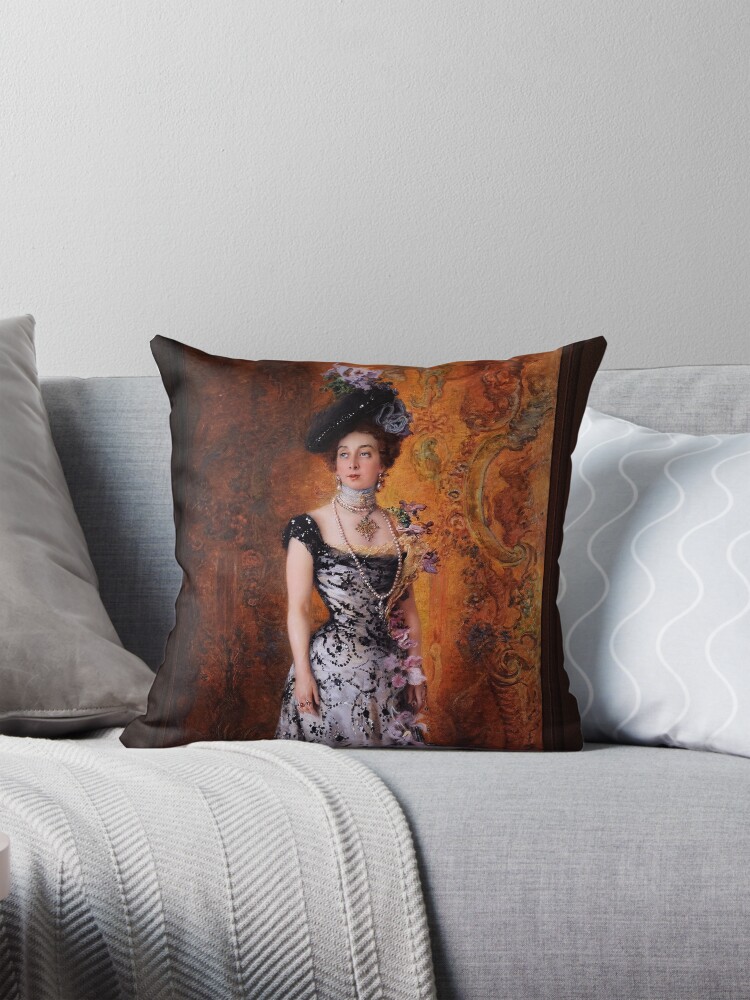
Makovsky’s work is celebrated for its realistic portrayal of his subjects, blending academic tradition with the Russian fascination for opulence and grandeur. The artist’s technique is a fine example of Russian realism, focusing on intricate details and the creation of a lifelike representation of his subjects. The brushwork in the portrait is meticulous and refined, especially in the rendering of Maria’s luxurious gown, the pearls draped across her neck, and the fine details of her jewelry. The texture of her gown, which appears to be made from satin or silk, is rendered with remarkable precision, highlighting the rich fabrics and the skillful use of light and shadow to suggest depth.
The background of the portrait is painted in a warm palette of oranges, brún, en gouden, creating a sense of intimacy and luxury. The colors blend harmoniously, enhancing the subject’s presence in the painting. The warm tones of the backdrop serve to emphasize the elegance and poise of Maria, further highlighting her position within the elite class of Russian society.
De klean en accessoires
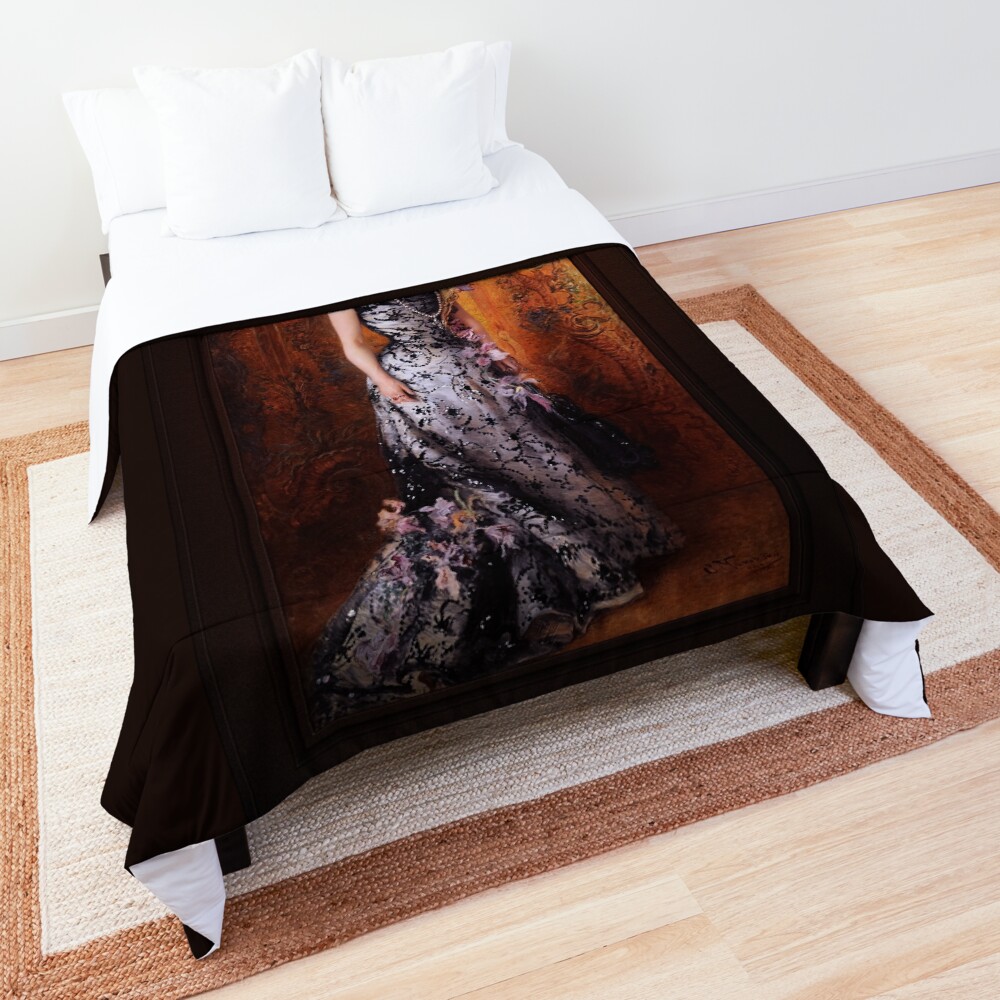
Maria’s gown is one of the most striking features of the portrait. De djipte, dark colors of the dress, accentuated with subtle light reflections, suggest a luxurious fabric like satin or velvet, offering a rich contrast to the lighter tones of her skin. The gown’s intricate black lace details, especially along the bodice and sleeves, are skillfully depicted, showcasing Makovsky’s attention to texture and his mastery of rendering fabric. The lace patterns evoke an air of formality and class, befitting a member of the Russian aristocracy.
Maria wears a lavish array of pearls and jewelry, including a pearl necklace that cascades elegantly around her neck. A large star-shaped brooch, likely of gold or silver, adorns her chest, drawing attention to her upper body and serving as a focal point in the composition. Har hier, styled in an intricate updo, is accessorized with a delicate floral arrangement, featuring shades of violet, adding a touch of softness to the overall look. These details not only speak to the high social status of the subject but also highlight the fashionable trends of the period.
De ynstelling en eftergrûn
The background of the portrait is a harmonious blend of warm, ierdske toanen. A subtle floral pattern emerges from the textured surface, creating a sense of richness without distracting from the central figure. The organic motifs in the background are reminiscent of the decorative arts of the time, possibly inspired by the Rococo or Neoclassical influences that were popular in Russian interiors. The golden hues give the painting a sense of warmth, making Maria the undeniable focal point of the composition.
The background’s richness contrasts beautifully with the subject’s refined and poised figure. De ynstelling, although not overly detailed, evokes the luxurious world of Russian nobility, providing a fitting context for the subject’s elegant attire and aristocratic presence. The overall mood of the piece is one of intimate grandeur, where the viewer is invited to witness the opulence of Russian society through the lens of a poised and sophisticated aristocrat.
The Mood and Tone
The mood of the portrait is serene and contemplative, with an air of aristocratic dignity. Maria’s expression is calm and composed, her posture exuding grace and confidence. De sêfte, almost wistful look in her eyes suggests a deeper introspection, lending the portrait an emotional depth that contrasts with the grandeur of her attire. This emotional resonance adds complexity to the piece, offering more than just a visual portrayal of wealth and status.
The painting evokes a sense of nostalgia for the opulence and refinement of the Russian Imperial era. It serves as a historical artifact that captures not only the fashion and style of the time but also the societal values and norms that governed the lives of the Russian aristocracy. The combination of the subject’s regal bearing, the lush textures of her gown, and the warm, inviting background creates an atmosphere of refinement and sophistication.
Konklúzje
Makovsky’s “Portrait of Maria Alexeevna Matavtina” is a stunning example of Russian portraiture at the turn of the 20th century. It showcases the artist’s ability to blend realism with a sense of grandeur, capturing the subject’s beauty and the luxurious lifestyle of Russian nobility. The detailed depiction of Maria’s attire, accessoires, and the background of the painting invites the viewer into a world of opulence and aristocratic grace. Through this portrait, Makovsky immortalizes not only his beloved wife but also the rich cultural and artistic heritage of late Imperial Russia.
Portrait of Maria Alexeevna Matavtina is a remastered digital art old masters reproduction of a public domain image that is available as a canvas print online.
Oer The Artist
Info hjirûnder ôflaat fan Wikipedia.org
Konstantin Makovsky wie in ynfloedrike Russyske skilder, oansletten by de “Peredvizhniki (Swalkers)”. In protte fan syn histoaryske skilderijen, lykas Beneath the Crown (1889) ek bekend as The Russian Bride's Attire en Before the Wedding, toande in idealisearre werjefte fan it Russyske libben fan eardere ieuwen. Hy wurdt faak beskôge as in fertsjintwurdiger fan akademyske keunst.
Konstantin Makovsky waard berne yn Moskou. Syn heit wie de Russyske keunstfiguer en amateurskilder, Yegor Ivanovich Makovsky. Syn mem wie in komponist, en hja hope dat har soan ienris yn har fuotstappen folgje soe. Syn jongere bruorren Vladimir en Nikolay en syn suster Alexandra waarden ek skilders.
Yn 1851 Makovsky gie yn 'e Moskouske Skilderijskoalle, Skulptuer en arsjitektuer wêr't hy de topstudint waard, maklik krije alle beskikbere prizen. Syn leararen wiene Karl Bryullov en Vasily Tropinin. Makovsky syn oanstriid ta romantyk en dekorative effekten kin ferklearre wurde troch de ynfloed fan Bryullov.
Hoewol't keunst wie syn passy, hy betocht ek hwat syn mem him dwaen woe. Hy sette ôf om komponisten te sykjen dêr't er nei ferwize koe, en gie earst nei Frankryk. Foar, hy hie altyd in leafhawwer fan klassike muzyk west, en harke nei in protte stikken. Hy woe faaks dat er de tune feroarje koe, of styl fan guon fan harren om se nofliker te meitsjen. Letter yn syn libben kaam it wier.
Yn 1858 Makovsky gie nei de Keizerlike Akademy fan Keunsten yn Sint Petersburch. Fan 1860 hy die mei oan de útstallings fan de Akademy mei skilderijen lykas Curing of the Blind (1860) en Agents of the False Dmitry deadzje de soan fan Boris Godunov (1862). Yn 1863 Makovsky en trettjin oare studinten holden in protest tsjin de ynstelling fan 'e Akademy fan ûnderwerpen út Skandinavyske mytology yn' e konkurrinsje foar de Large Gold Medal of Academia; allegear ferlieten de akademy sûnder in formeel diploma.
Makovsky waard lid fan in koöperaasje (artel) fan keunstners ûnder lieding fan Ivan Kramskoi, typysk produsearje Wanderers skilderijen op it deistich libben (Widdo 1865, Hjerringferkeaper 1867, ensfh.). Fan 1870 hy wie in oprjochter fan de Society for Travelling Art Exhibitions en bleau te wurkjen oan skilderijen wijd oan it deistich libben. Hy eksposearre syn wurk by sawol de Academia-eksposysjes as de Travelling Art Exhibitions of the Wanderers.
In wichtige feroaring yn syn styl barde nei it reizgjen nei Egypte en Servje yn 'e midden fan' e jierren '70. Syn ynteresses feroare fan sosjale en psychologyske problemen nei de artistike problemen fan kleuren en foarm.
Yn de jierren 1880 waard hy in modieuze skriuwer fan portretten en histoaryske skilderijen. Op de Wrâldtentoanstelling fan 1889 yn Parys krige er de Grutte Gouden Medalje foar syn skilderijen Death of Ivan the Terrible, It oardiel fan Parys, en Demon en Tamara. Hy wie ien fan 'e meast wurdearre en heech betelle Russyske keunstners fan' e tiid. In protte demokratyske kritisy beskôgen him as in renegaat fan 'e Wanderers’ idealen, produsearje (lykas Henryk Siemiradzki) opfallende mar ûndjippe wurken, wylst oaren him sjogge as in foarrinner fan it Russyske ympresjonisme.
Makovsky waard fermoarde yn 1915 doe't syn hynstekoets rekke waard troch in elektryske tram yn Sint-Petersburch.