

Portrait of Maria Alexeevna Matavtina
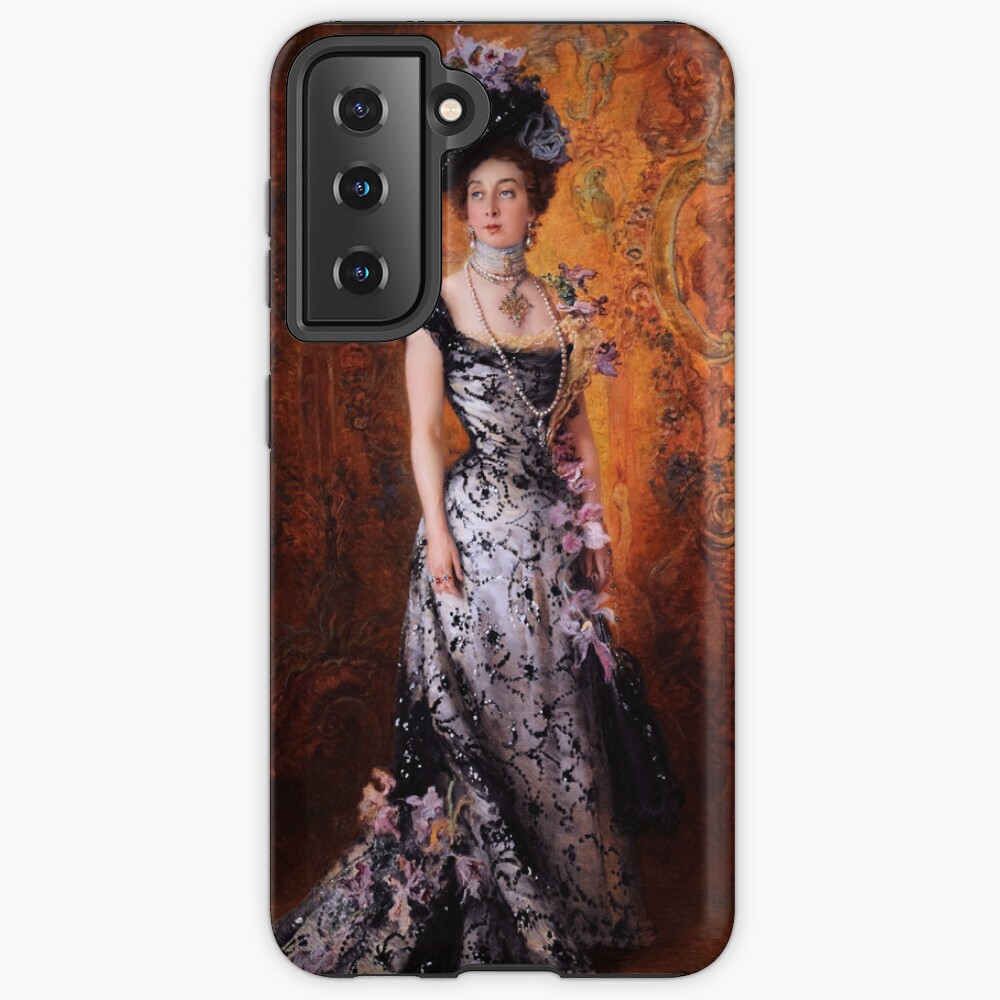
Portrait of Makovsky’s Third Wife Maria Alexeevna Matavtina (1869-1919) c1900 by コンスタンチン・マコフスキー (1839 – 1915); 過去数世紀のロシアの生活の理想的な見方を示すロシアの歴史絵画を専門としています.
導入
NS “Portrait of Maria Alexeevna Matavtina” by Konstantin Makovsky is an exquisite example of late 19th-century Russian portraiture. Painted around the turn of the 20th century, this artwork portrays Makovsky’s third wife, Maria Alexeevna Matavtina, in a sumptuous gown against a backdrop of warm, opulent colors. The portrait reveals not only the refined beauty of the subject but also Makovsky’s exceptional skill in capturing the grace, 優雅, and grandeur of Russian aristocracy during the Imperial era.
目次
主題: Maria Alexeevna Matavtina
肖像画はマリア・アレクセーエヴナ・マタヴティナを中心にしている, 有名なロシアの芸術家コンスタンチン・マコフスキーの3番目の妻でした。. で生まれた 1869, マリアは、19 世紀後半から 20 世紀初頭のロシアの芸術界および文化界において影響力のある人物となりました。. 落ち着きと洗練された態度で知られる, 彼女は貴族の優雅さと美しさの象徴として肖像画に描かれています。. 穏やかな表情からは、落ち着きと気品が感じられます, この時代のロシア貴族の生活を垣間見ることができる. マリアの衣装とアクセサリー, 彼女の姿勢も同様に, exude the confidence and sophistication expected of women of her social standing.
スタイルとテクニック
Makovsky’s work is celebrated for its realistic portrayal of his subjects, blending academic tradition with the Russian fascination for opulence and grandeur. The artist’s technique is a fine example of Russian realism, focusing on intricate details and the creation of a lifelike representation of his subjects. The brushwork in the portrait is meticulous and refined, especially in the rendering of Maria’s luxurious gown, the pearls draped across her neck, and the fine details of her jewelry. The texture of her gown, which appears to be made from satin or silk, is rendered with remarkable precision, highlighting the rich fabrics and the skillful use of light and shadow to suggest depth.
The background of the portrait is painted in a warm palette of oranges, 茶色, そして金, creating a sense of intimacy and luxury. The colors blend harmoniously, enhancing the subject’s presence in the painting. The warm tones of the backdrop serve to emphasize the elegance and poise of Maria, further highlighting her position within the elite class of Russian society.
服装とアクセサリー
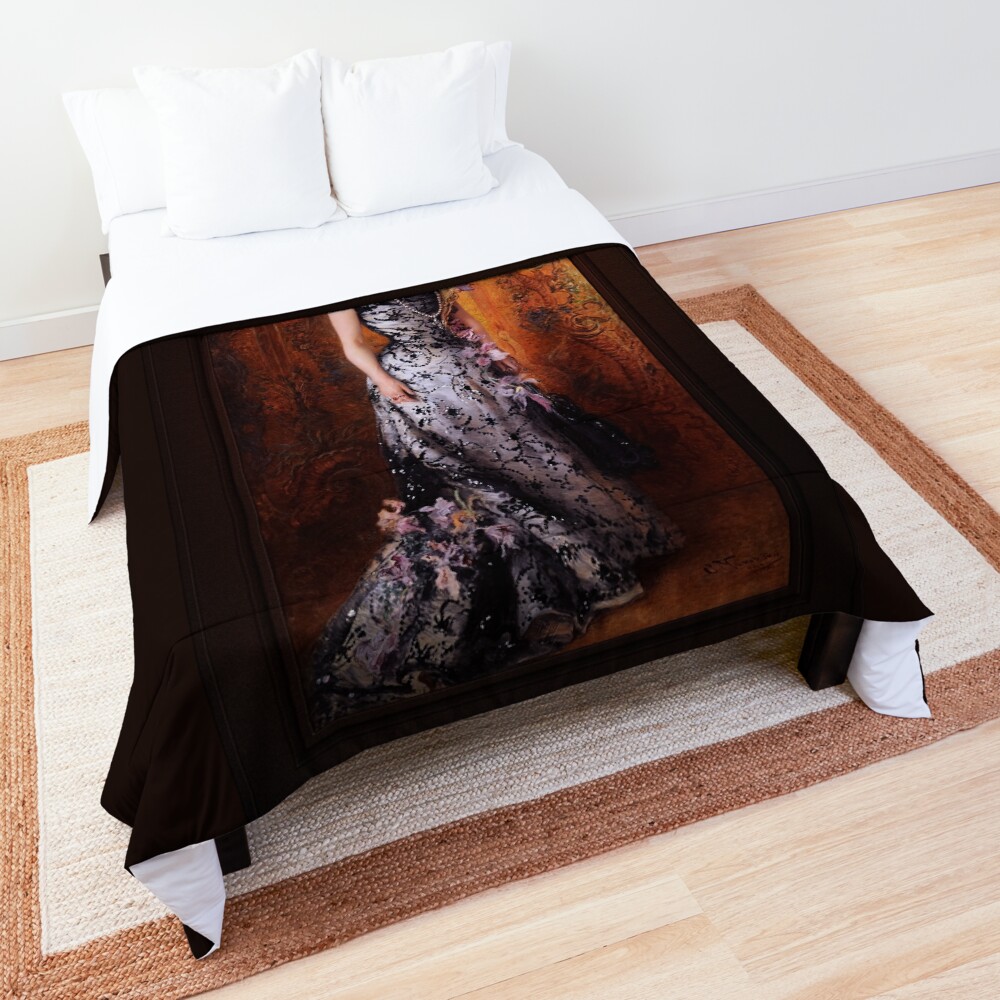
Maria’s gown is one of the most striking features of the portrait. 深い, dark colors of the dress, accentuated with subtle light reflections, suggest a luxurious fabric like satin or velvet, offering a rich contrast to the lighter tones of her skin. The gown’s intricate black lace details, especially along the bodice and sleeves, are skillfully depicted, showcasing Makovsky’s attention to texture and his mastery of rendering fabric. The lace patterns evoke an air of formality and class, befitting a member of the Russian aristocracy.
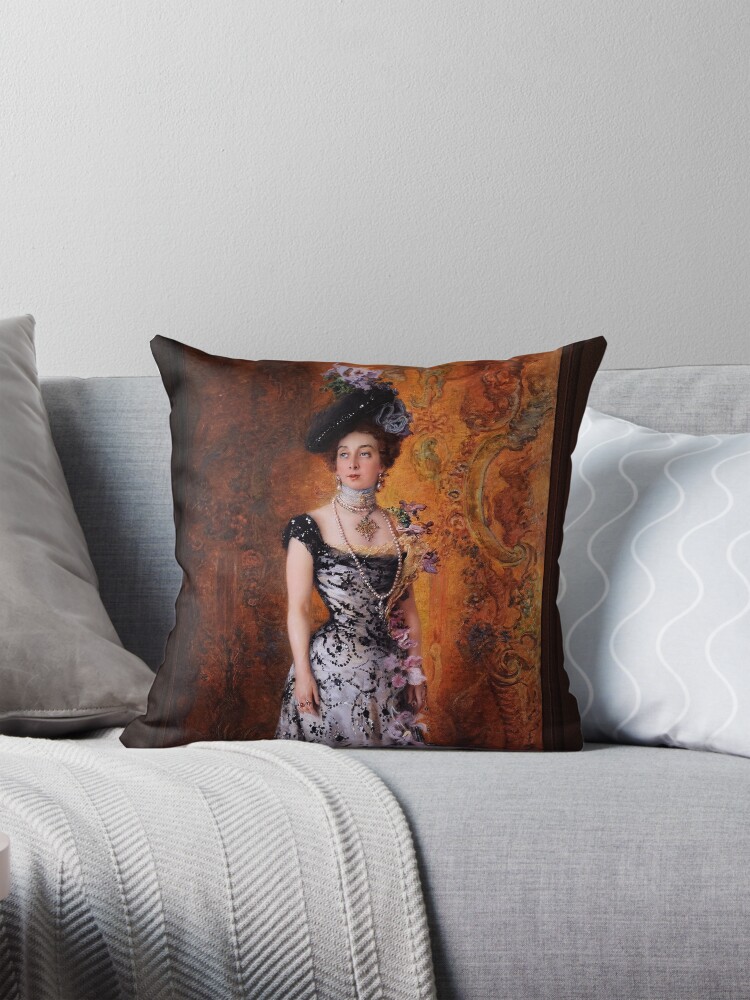
Maria wears a lavish array of pearls and jewelry, including a pearl necklace that cascades elegantly around her neck. A large star-shaped brooch, likely of gold or silver, adorns her chest, drawing attention to her upper body and serving as a focal point in the composition. 彼女の髪, styled in an intricate updo, is accessorized with a delicate floral arrangement, featuring shades of violet, adding a touch of softness to the overall look. These details not only speak to the high social status of the subject but also highlight the fashionable trends of the period.
設定と背景
The background of the portrait is a harmonious blend of warm, 素朴なトーン. A subtle floral pattern emerges from the textured surface, creating a sense of richness without distracting from the central figure. The organic motifs in the background are reminiscent of the decorative arts of the time, possibly inspired by the Rococo or Neoclassical influences that were popular in Russian interiors. The golden hues give the painting a sense of warmth, making Maria the undeniable focal point of the composition.
The background’s richness contrasts beautifully with the subject’s refined and poised figure. 設定, although not overly detailed, evokes the luxurious world of Russian nobility, providing a fitting context for the subject’s elegant attire and aristocratic presence. 作品全体の雰囲気は親密な壮大さの一つです, 観客は、落ち着きと洗練された貴族のレンズを通して、ロシア社会の豊かさを目撃することになります。.
ムードとトーン
肖像画の雰囲気は穏やかで瞑想的です, 貴族のような威厳を持った雰囲気で. マリアさんの表情は穏やかで落ち着いています, 彼女の姿勢には優雅さと自信がにじみ出ている. ソフト, 彼女の目にはほとんど物悲しい表情があり、より深い内省を示唆している, 彼女の服装の壮大さとは対照的に、肖像画に感情的な深みを与えています。. この感情的な共鳴が作品に複雑さを加えます, 富や地位を視覚的に描写するだけではありません.
この絵はロシア帝国時代の豪華さと洗練さへの郷愁を呼び起こします。. It serves as a historical artifact that captures not only the fashion and style of the time but also the societal values and norms that governed the lives of the Russian aristocracy. The combination of the subject’s regal bearing, the lush textures of her gown, そして暖かい, inviting background creates an atmosphere of refinement and sophistication.
結論
Makovsky’s “Portrait of Maria Alexeevna Matavtina” is a stunning example of Russian portraiture at the turn of the 20th century. It showcases the artist’s ability to blend realism with a sense of grandeur, capturing the subject’s beauty and the luxurious lifestyle of Russian nobility. The detailed depiction of Maria’s attire, アクセサリー, and the background of the painting invites the viewer into a world of opulence and aristocratic grace. Through this portrait, Makovsky immortalizes not only his beloved wife but also the rich cultural and artistic heritage of late Imperial Russia.
Portrait of Maria Alexeevna Matavtina is a remastered digital art old masters reproduction of a public domain image that is available as a キャンバスプリントオンライン.
アーティストについて
以下の情報から派生 Wikipedia.org
コンスタンチン・マコフスキーは影響力のあるロシアの画家でした, と提携している “ペレドヴィジニキ (放浪者)”. 彼の歴史画の多くは, 王冠の下など (1889) ロシアの花嫁の服装および結婚式前としても知られています, 前世紀のロシアの生活の理想的な見方を示した. 彼はしばしばアカデミックアートの代表と見なされます.
コンスタンチン・マコフスキーはモスクワで生まれました. 彼の父はロシアの芸術家であり、アマチュアの画家でした, エゴール・イワノビッチ・マコフスキー. 彼の母親は作曲家でした, そして彼女は息子がいつか彼女の足跡をたどることを望んでいた. 彼の弟のウラジミールとニコライ、そして彼の妹のアレクサンドラも画家になりました.
に 1851 マコフスキーはモスクワ絵画学校に入学しました, 彼がトップの学生になった彫刻と建築, 利用可能なすべての賞を簡単に取得. 彼の教師はカール・ブリューロフとヴァシーリー・トロピニンでした. マコフスキーのロマン主義と装飾的効果への傾向は、ブリュロフの影響によって説明できます。.
芸術は彼の情熱でしたが、, 彼はまた、母親が彼に何をしてほしかったのかを考えました. 彼は参考にできる作曲家を探し始めた, そして初めてフランスへ行きました. 前に, 彼はいつもクラシック音楽の愛好家だった, そしてたくさんの作品を聴きました. 彼は曲調を変えられたらいいのにとよく思った, または、それらをより楽しくするためにそれらのいくつかのスタイルを変更する. 後年、それは現実となった.
に 1858 マコフスキーはサンクトペテルブルクの帝国芸術アカデミーに入学した. から 1860 彼はアカデミーの展覧会に『Curing of the Blind』などの絵画で参加した。 (1860) そして偽ドミトリーの工作員がボリス・ゴドゥノフの息子を殺害 (1862). に 1863 マコフスキーと他の13人の学生は、アカデミーが学術界の大きな金メダルを争うコンテストでスカンジナビア神話を題材に設定したことに対して抗議活動を行った。; 全員が正式な卒業証書を持たずにアカデミーを去った.
マコフスキーは協同組合の会員になった (アルテル) イヴァン・クラムスコイ率いるアーティストたちの, 通常、日常生活を題材としたワンダラーズの絵画を制作しています (未亡人 1865, ニシン売り 1867, 等). から 1870 彼は巡回美術展協会の創設メンバーであり、日常生活に特化した絵画に取り組み続けました。. 彼はアカデミア展と放浪者の巡回美術展の両方で作品を展示しました。.
彼のスタイルに大きな変化が生じたのは、1870 年代半ばにエジプトとセルビアを旅行した後です。. 彼の興味は社会的および心理的問題から色と形の芸術的問題に変わりました.
1880 年代に、彼は肖像画や歴史絵画の流行の作家になりました。. の万国博覧会で 1889 パリでは、イワン雷帝の死を描いた作品で大きな金メダルを受賞しました。, パリスの審判, そしてデーモンとタマラ. 彼は当時最も高く評価され、高収入を得ていたロシアの芸術家の一人でした。. 多くの民主主義批評家は彼をワンダラーズの反逆者とみなしていた’ 理想, 生産する (ヘンリク・シェミラツキのように) 印象的だが浅い作品, 彼をロシア印象派の先駆者と見る人もいる.
マコフスキーが殺害されたのは、 1915 サンクトペテルブルクで彼の馬車が路面電車にはねられたとき.