

The Bathing Pool c1753
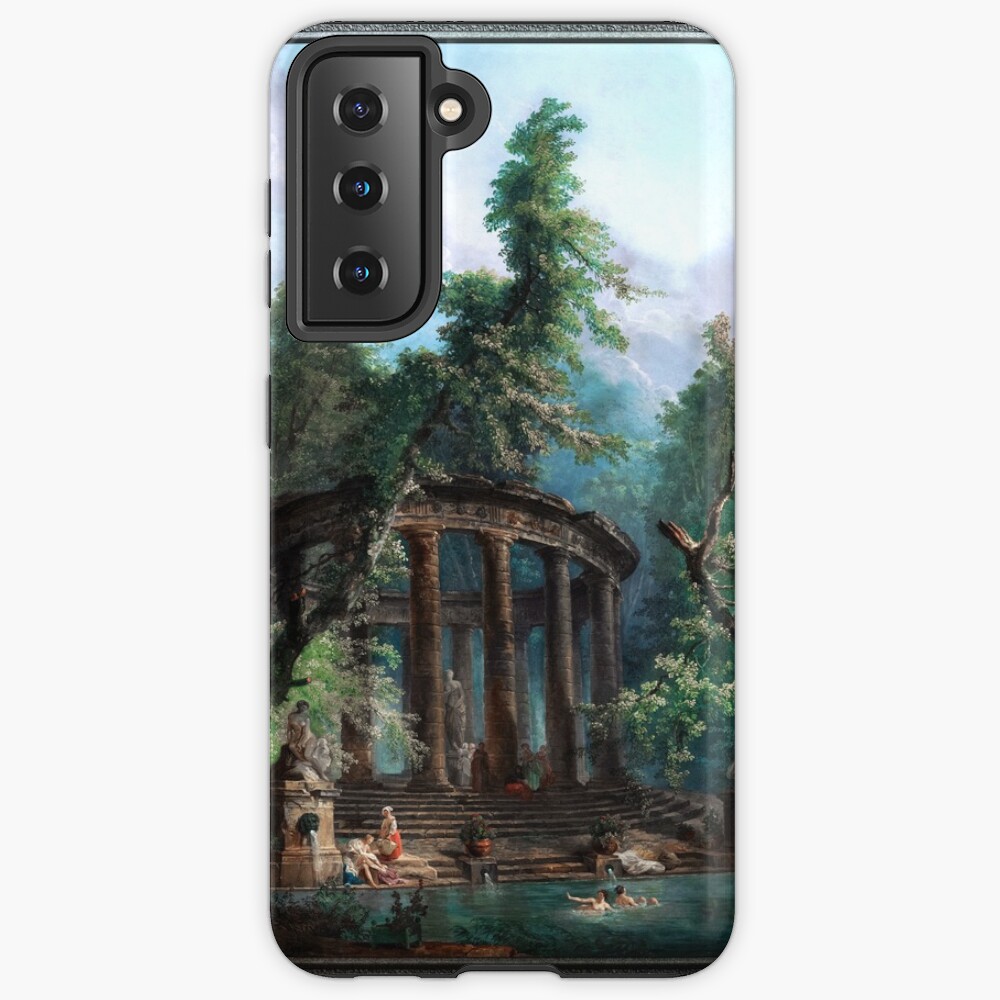
“水浴,” に作成されました 1753 有名なフランスの画家による ユベール・ロバート (1733 – 1808), showcases the artist’s mastery of architectural ruins and the romanticized nature of Classical antiquity. Robert, an esteemed artist of the Rococo and Neoclassical periods, has painted a tranquil yet vibrant scene that captivates the viewer with its harmonious blend of natural beauty and classical structures. The painting features a classical Roman bathhouse partially overtaken by nature, surrounded by lush greenery, and populated with figures engaged in leisurely activities. The scene evokes an atmosphere of serenity, nostalgia, そして時代を超えたエレガンス, a hallmark of Robert’s style, which often celebrated the contrast between human achievement and the inevitable encroachment of nature.

目次
設定: Classical Ruins and Lush Greenery
の設定 “水浴” is an idyllic and somewhat melancholic portrayal of a Roman ruin. 手前で, a circular colonnade, composed of imposing stone pillars, frames the scene. These columns, 時間とともに風化した, are still strong but bear the marks of age, with ivy creeping up their surfaces and tree branches intertwining through their spaces. The columns support a domed structure, hinting at a once grandiose building now abandoned and reclaimed by nature. The structure’s deterioration is made more poignant by the overgrowth of greenery, emphasizing the passage of time and the impermanence of even the greatest human creations.
Behind the bathhouse, the landscape is verdant and rich with plant life, with trees, bushes, and flowering vines spilling over the stonework. The dense foliage brings an air of quiet abundance, a peaceful backdrop to the figures within the pool. Nature’s dominance over the crumbling architecture adds to the romanticized ruin theme that Robert so often explored in his works.
The background extends to a distant, ethereal sky, painted with soft hues of blue and white clouds, creating a sense of openness and tranquility. This harmonious union between the decaying human-made structure and the flourishing natural world is a reflection of Robert’s deep fascination with the sublime beauty of nature and its ability to reclaim what was once built by mankind.
数字: Leisure and Graceful Activity
絵の前景には, several figures are depicted in relaxed poses, participating in various leisurely activities typical of an ancient bathing ritual. A group of women is seen bathing in the tranquil waters of a pool, their forms partially submerged. これらの数字, rendered with grace and elegance, evoke the classical ideal of beauty, each draped in flowing garments.
One of the women, seated by the edge of the pool, appears to be drying herself, while another stands by the water’s edge, looking serenely into the distance. The artist has paid meticulous attention to the details of their clothing, with the fabrics of their garments capturing the soft play of light and shadow.
Their leisurely actions contribute to the mood of relaxation and harmony in the scene, reinforcing the theme of tranquility. A nearby male figure, possibly a servant or attendant, is visible as well, gently assisting one of the women or perhaps preparing to enter the pool. His presence adds a human touch to the scene, grounding the viewer’s experience in a sense of historical realism while still maintaining the ethereal quality of the painting.
The figures in “水浴” embody the Rococo style’s emphasis on grace, 動き, そして美しさ, though Robert subtly infuses them with a more contemplative air than is typically seen in the exuberant works of the period. The poses of the figures are not overtly theatrical, but rather relaxed and serene, emphasizing the calm and leisurely nature of the scene. Their interactions with one another suggest a sense of communal ease, as if in a private retreat or haven where time itself slows.
素材と技法: Classical Precision Meets Romantic Atmosphere
Hubert Robert’s technical skill is evident in the execution of both the architectural elements and the natural surroundings. The precision of the columns and the detailed rendering of the stonework contrasts with the softer, more fluid treatment of the foliage and water.
The artist’s technique is particularly effective in conveying the interplay of light and shadow, which is vital in creating the depth and realism of the scene. ソフト, diffused light that bathes the entire landscape lends an ethereal glow to the pool and figures, highlighting their forms and contributing to the peaceful ambiance of the painting.
Robert’s use of perspective is subtle but effective. The way the colonnade and the surrounding landscape recede into the distance creates a sense of expansive space. The ruins seem to stretch out before the viewer, inviting them into this almost dreamlike world of classical antiquity.
The colors are soft and harmonious, with light blues and greens predominating the palette, further enhancing the calm, idyllic mood. The coolness of the water, the verdant tones of the trees, and the muted stonework come together to create a visually cohesive and calming composition.
気分とテーマ: 自然, Time, and Transience
の気分 “水浴” それは静かな熟考の一つです. It evokes a sense of nostalgia for a past age while also suggesting the inevitability of time’s passage. The ruins, once a symbol of human achievement, now stand in quiet ruin, overtaken by nature. This sense of impermanence is tempered, しかしながら, by the serenity of the figures and the landscape, which suggests that, while human endeavors may fade, nature continues in its timeless cycle.
The theme of the painting revolves around the relationship between humanity, 自然, そして時間の経過. The pool and its surroundings are not merely an architectural space but a metaphor for the fleeting nature of human civilization, contrasted with the eternal quality of nature. The figures in the scene represent a moment in time, but their activity is timeless, a serene reflection of a world that has endured beyond the human presence.
The Bathing Pool は、パブリック ドメインの画像を修正したデジタル アートの古いマスター作品であり、画像としてオンラインで購入できます。 ロールドキャンバスプリント.
アーティスト略歴
以下の情報から派生 ウィキペディア
ユベール・ロバートはパリで生まれました 1733. 彼の父, ニコラス・ロバート, フランソワ・ジョセフ・ド・ショワズールに仕えていました, ロレーヌ出身の主要な外交官、マーキス・ド・ステインビル. 若いロバートは、のナバラ大学でイエズス会で勉強を終えました。 1751 そして彫刻家ミシェル・アンジュ・スロッツのアトリエに入り、彼は彼にデザインと展望を教えましたが、彼に絵画に目を向けるように勧めました. に 1754 彼はエティエンヌ・フランソワ・ド・ショワズールの列車でローマに向けて出発しました, 父親の雇用主の息子, フランス大使に任命され、ルイ15世の外務大臣になる予定だった 1758.
彼は完全に11年間ローマで過ごしました, 驚くべき時間の長さ; ローマのフランスアカデミーでの若い芸術家の公邸がなくなった後, 彼はサンノン修道院のような愛好家を訪問するために彼が制作した作品によって彼自身を支えました, 4月にロバートをナポリに連れて行った人 1760 ポンペイの遺跡を訪問する. マリニー侯爵, BâtimentsduRoiのディレクターは、ナトワールに対応して彼の発展に遅れをとっていませんでした, フランスアカデミーのディレクター, 年金受給者に屋外でスケッチするように促した人, 自然から: ロバートは促す必要はありませんでした; 彼のスケッチブックからの図面は彼の旅行を記録しています: ヴィラデステ, カプラローラ.
ローマのリペタ港の眺め, NS. 1766, 架空の港の隣に古代ローマのパンテオンを示しています
古代ローマの遺跡と彼の時代の生活との対比は、彼の鋭い関心を刺激しました. 彼はしばらくの間、パニーニのスタジオで働いていました, その影響は、ルーヴル美術館の廃墟の想像上の眺めで見ることができます (図). ロバートはピラネージのサークルの若いアーティストの会社で彼の時間を過ごしました, ロマンチックに生い茂った廃墟のカプリッチョが彼に大きな影響を与えたため、彼はロバート・デ・ルインズというニックネームを獲得しました。[2] 彼がローマで集めたスケッチやドローイングのアルバムは、彼が彼のキャリアを通して絵画に取り組んだモチーフを彼に提供しました.