

Portrait of Maria Alexeevna Matavtina
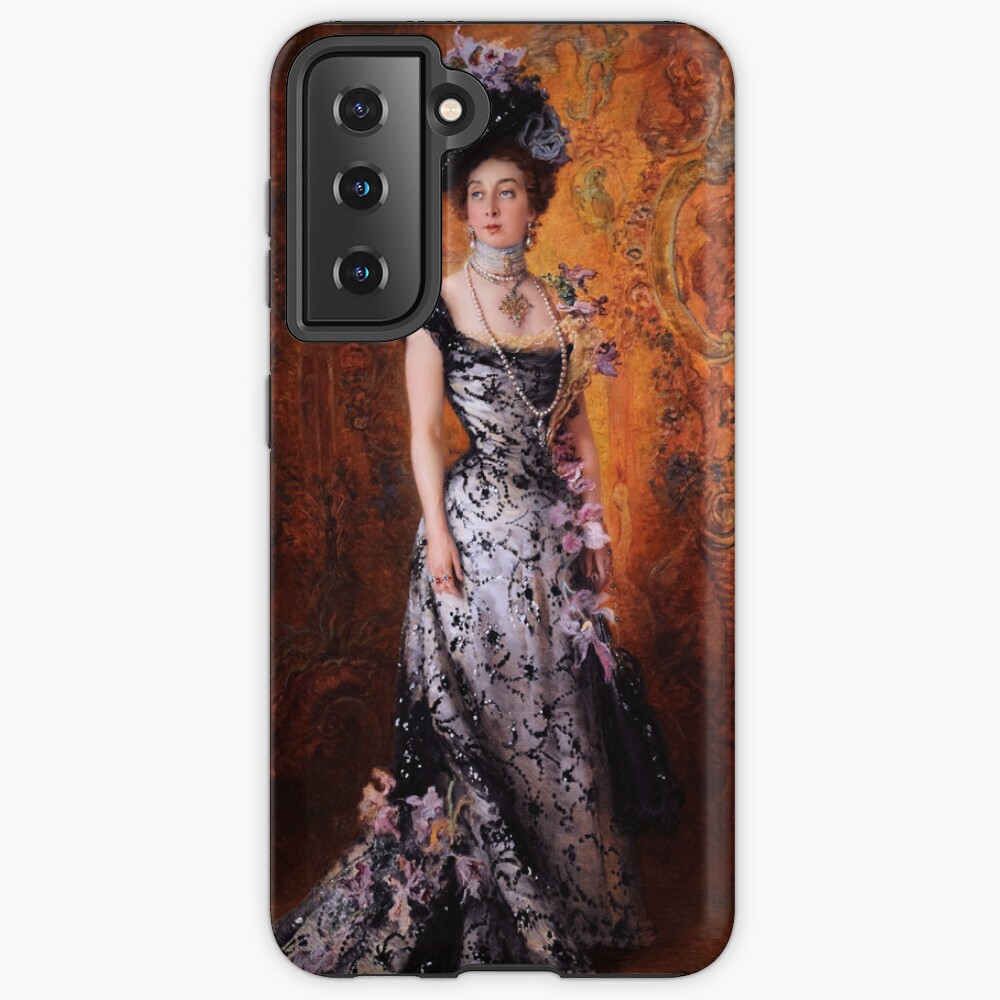
Portrait of Makovsky’s Third Wife Maria Alexeevna Matavtina (1869-1919) c1900 by Konstantin Makovsky (1839 – 1915); spezialiséiert op russesch historesch Biller déi eng idealiséiert Vue op russesch Liewen an de leschte Joerhonnerte weisen.
Aféierung
Den “Portrait of Maria Alexeevna Matavtina” by Konstantin Makovsky is an exquisite example of late 19th-century Russian portraiture. Painted around the turn of the 20th century, this artwork portrays Makovsky’s third wife, Maria Alexeevna Matavtina, in a sumptuous gown against a backdrop of warm, opulent colors. The portrait reveals not only the refined beauty of the subject but also Makovsky’s exceptional skill in capturing the grace, eleganzwannen, and grandeur of Russian aristocracy during the Imperial era.
Inhaltsverzeechnes
D'Sujet: Maria Alexeevna Matavtina
The portrait centers on Maria Alexeevna Matavtina, who was the third wife of renowned Russian artist Konstantin Makovsky. Gebuer zu 1869, Maria became an influential figure in the Russian artistic and cultural circles of the late 19th and early 20th centuries. Known for her poised and refined demeanor, she is depicted in the portrait as a symbol of aristocratic grace and beauty. Her gentle expression conveys a sense of serenity and dignity, offering the viewer a glimpse into the life of Russian nobility during this period. Maria’s attire and accessories, as well as her posture, exude the confidence and sophistication expected of women of her social standing.
Stil an Technik
Makovsky’s work is celebrated for its realistic portrayal of his subjects, blending academic tradition with the Russian fascination for opulence and grandeur. The artist’s technique is a fine example of Russian realism, focusing on intricate details and the creation of a lifelike representation of his subjects. The brushwork in the portrait is meticulous and refined, especially in the rendering of Maria’s luxurious gown, the pearls draped across her neck, and the fine details of her jewelry. The texture of her gown, which appears to be made from satin or silk, is rendered with remarkable precision, highlighting the rich fabrics and the skillful use of light and shadow to suggest depth.
The background of the portrait is painted in a warm palette of oranges, Brobloseplanz, an Gold, creating a sense of intimacy and luxury. The colors blend harmoniously, enhancing the subject’s presence in the painting. The warm tones of the backdrop serve to emphasize the elegance and poise of Maria, further highlighting her position within the elite class of Russian society.
The Attire and Accessories
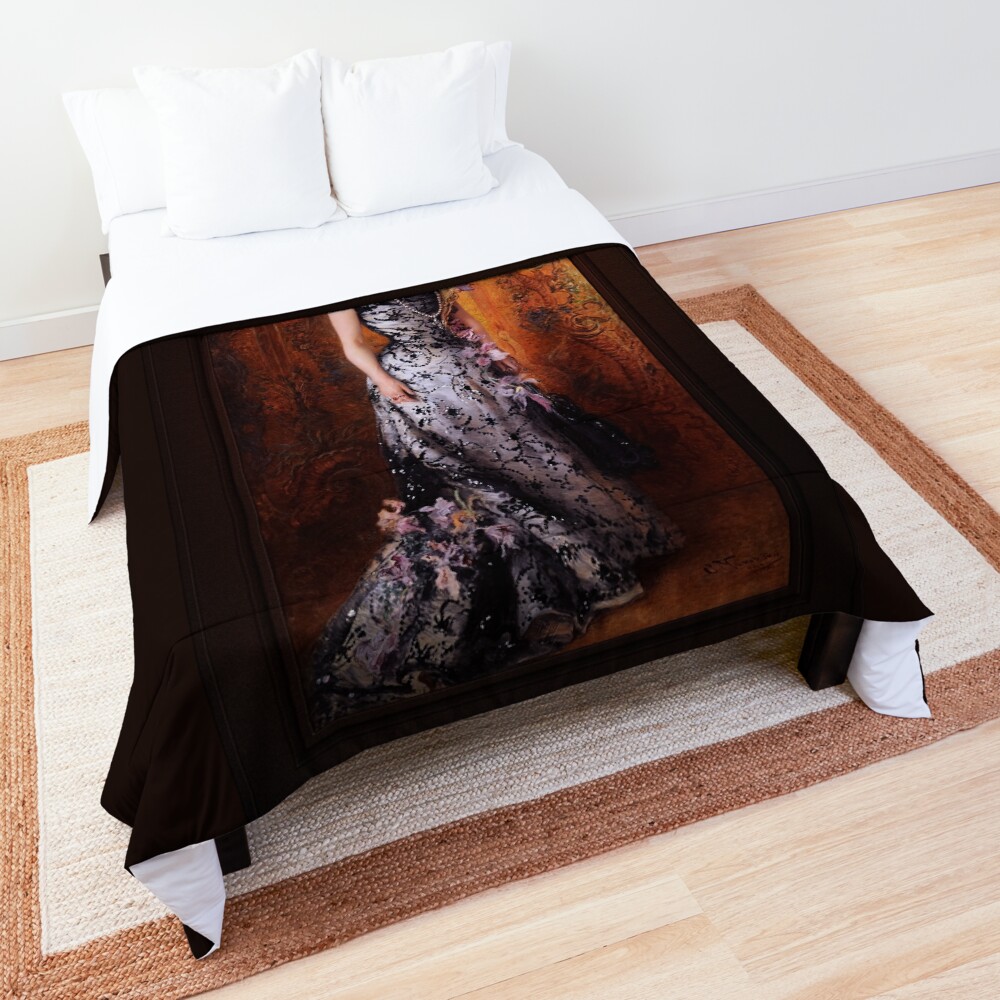
Maria’s gown is one of the most striking features of the portrait. Déi déif, dark colors of the dress, accentuated with subtle light reflections, suggest a luxurious fabric like satin or velvet, offering a rich contrast to the lighter tones of her skin. The gown’s intricate black lace details, especially along the bodice and sleeves, are skillfully depicted, showcasing Makovsky’s attention to texture and his mastery of rendering fabric. The lace patterns evoke an air of formality and class, befitting a member of the Russian aristocracy.
Maria wears a lavish array of pearls and jewelry, including a pearl necklace that cascades elegantly around her neck. A large star-shaped brooch, likely of gold or silver, adorns her chest, drawing attention to her upper body and serving as a focal point in the composition. Hir Hoer, styled in an intricate updo, is accessorized with a delicate floral arrangement, featuring shades of violet, adding a touch of softness to the overall look. These details not only speak to the high social status of the subject but also highlight the fashionable trends of the period.
D'Astellung an den Hannergrond
The background of the portrait is a harmonious blend of warm, earthy tones. A subtle floral pattern emerges from the textured surface, creating a sense of richness without distracting from the central figure. The organic motifs in the background are reminiscent of the decorative arts of the time, possibly inspired by the Rococo or Neoclassical influences that were popular in Russian interiors. The golden hues give the painting a sense of warmth, making Maria the undeniable focal point of the composition.
The background’s richness contrasts beautifully with the subject’s refined and poised figure. De Kader, although not overly detailed, evokes the luxurious world of Russian nobility, providing a fitting context for the subject’s elegant attire and aristocratic presence. The overall mood of the piece is one of intimate grandeur, where the viewer is invited to witness the opulence of Russian society through the lens of a poised and sophisticated aristocrat.
The Mood and Tone
The mood of the portrait is serene and contemplative, with an air of aristocratic dignity. Maria’s expression is calm and composed, her posture exuding grace and confidence. Der mëller, almost wistful look in her eyes suggests a deeper introspection, lending the portrait an emotional depth that contrasts with the grandeur of her attire. This emotional resonance adds complexity to the piece, offering more than just a visual portrayal of wealth and status.
The painting evokes a sense of nostalgia for the opulence and refinement of the Russian Imperial era. It serves as a historical artifact that captures not only the fashion and style of the time but also the societal values and norms that governed the lives of the Russian aristocracy. The combination of the subject’s regal bearing, the lush textures of her gown, and the warm, inviting background creates an atmosphere of refinement and sophistication.
Conclusioun
Makovsky’s “Portrait of Maria Alexeevna Matavtina” is a stunning example of Russian portraiture at the turn of the 20th century. It showcases the artist’s ability to blend realism with a sense of grandeur, capturing the subject’s beauty and the luxurious lifestyle of Russian nobility. The detailed depiction of Maria’s attire, Accessoiren, and the background of the painting invites the viewer into a world of opulence and aristocratic grace. Duerch dëse Portrait, Makovsky immortalizes not only his beloved wife but also the rich cultural and artistic heritage of late Imperial Russia.
Portrait of Maria Alexeevna Matavtina is a remastered digital art old masters reproduction of a public domain image that is available as a Leinwandprint online.
Iwwer de Kënschtler
Info drënner ofgeleet vun Wikipedia.org
Konstantin Makovsky war en aflossräiche russesche Moler, affiliéiert mat der “Pededvizhniki (Wanderers)”. Vill vu sengen historesche Biller, wéi ënner der Kroun (1889) och bekannt als de russesche Bride's Distire a virun der Hochzäit, huet eng idealized Vue vun russesch Liewen vun virdrun Joerhonnerte gewisen. Hie gëtt dacks als Vertrieder vun der akademescher Konscht ugesinn.
Konstantin Makovsky war zu Moskau gebuer. Säi Papp war eng russesch Konschtfigur an Amateurmoler, Yegor Ivanovich Makovsky. Seng Mamm war eng Komponist, a si huet gehofft, datt hire Jong enges Daags an hire Schrëtt géif goen. Seng jéngere Bridder Vladimir an Nikolay a seng Schwëster Alexandra sinn och Moler ginn.
An 1851 Makovsky koum an der Moskauer School of Painting, Skulptur an Architektur wou hien den Top Student gouf, einfach all verfügbar Auszeechnunge kréien. Seng Enseignanten waren Karl Bryullov a Vasily Tropinin. Dem Makovsky seng Neigungen op Romantiker an dekorativ Effekter kënnen duerch den Afloss vum Bryullov erkläert ginn.
Och wann d'Konscht seng Passioun war, Hien huet och als seng Mamm geduecht fir hien ze maachen. Hien huet opgestallt fir no Komponeren ze kucken, déi hie konnt verweisen, an d'éischt a Frankräich gaang. Virum Éden, Hien war ëmmer e klassesche Musekswuer, an op vill Stécker gelauschtert. Hien huet dacks gewënscht datt hien de Melodie ännert, oder e bësse vun hinnen fir se méi agreabel ze maachen. Spéider a sengem Liewen ass et richteg komm.
An 1858 De Makovsky koumen déi immectional Academy vun Arts zu Saint Petersburg. Vun 1860 Hien huet un der Ausstellungen vun der Academie mat Biller mat de Ligener vun der Blann gemaach (1860) an Agenten vun der falscher Dommheet ëmbréngen de Jong vum Boris Gëtterov (1862). An 1863 Makovsky an drësseg aner Studenten déi e Protest géint d'Akademie vun den Astellunge vu Skandinavian Mythologie an der Konkural Medademie sinn; All lénks d'Akademie ouni formell Diplom.
De Makovsky gouf Member vun enger Co-Operativ (Aochel) vu Kënschtler gefouert vum Ivan Kramerkoi, typesch wanderen Wandstrahlen am Alldag ze produzéieren (Wäit amgaang 1865, Herring-Verkeefer 1867, etc.). Vun 1870 Hie war e Grënnungsmember vun der Gesellschaft fir Reesendercher ze reesen an weider op d'Biller ze schaffen. Hien huet seng Wierker op béide Akademien Ausstellungen an d'Reesend Konschtausstellungen vun den Wanderer.
Eng bedeitend Ännerung a sengem Stil ass opgetrueden nodeems Dir op Egypten a Serbien an der Mëtt-1870er sidd. Seng Interessen geännert vu sozialen a psychologesche Probleemer op déi artistesch Probleemer vu Faarwen a Form.
An den 1880er koum hien e modeschen Autor fir Portraiten an historesch Biller. Op der Welt vun der Welt 1889 zu Paräis krut hien déi grouss Goldmedail fir säi Faarwen Doud vum Ivan dee schrecklechen, D'Uerteel vu Paräis, an Demon an den Tamara. Hie war ee vun de meescht appréciéiert an héich bezuelte russesch Kënschtler vun der Zäit. Vill Demokratesch Kritiker hunn hien als AnneGade vun den Wanderer gemaach’ Idealen, produzéierens (Wéi Henryk Siemiradzki) schloen awer flaach Wierker, Wärend anerer him als Virleefer vum russeschen Androck gesinn.
De Makovsky gouf ëmbruecht 1915 Wann säi Päerdsziedekuerer vun engem elektresche Tram op Saint Petersburg getraff gouf.