

Portrait of Mlle Lange as Danae: A Neoclassical Reverie
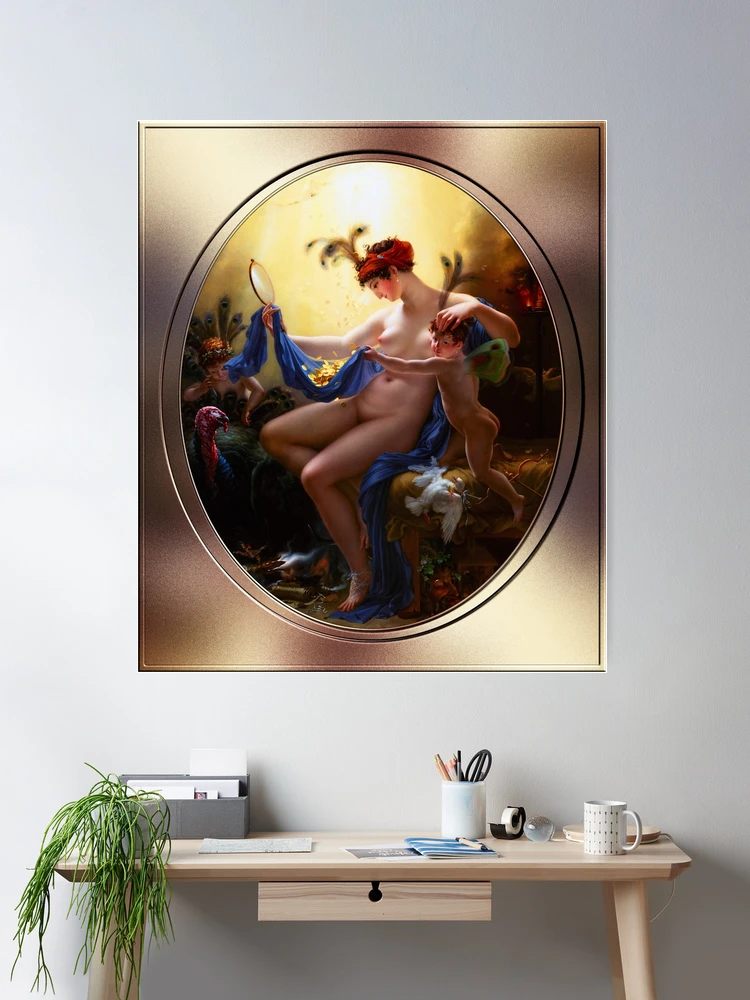
Anne-Louis Girodet de Roussy-Trioson’s “Portrait of Mlle Lange as Danae,” pintat al voltant 1799, is a captivating example of late Neoclassicism infused with Romantic sensibilities. The work resides within an oval frame, immediately establishing a sense of intimacy and contained narrative. It depicts the mythological figure Danae, known in Greek legend for being impregnated by Zeus who descended upon her as golden rain. Girodet’s interpretation moves beyond simple illustration; it’s a carefully constructed tableau exploring themes of beauty, transformation, and the interplay between the mortal and divine realms. The painting is currently held within the collection of the Musée du Louvre, París.
Taula de continguts
Estructura compositiva & Framing
The oval format itself is significant. It evokes the shape of a looking glass or mirror, subtly hinting at Danae’s self-reflection and vanity, but also alluding to the act of seeing and being seen – a key element in portraiture. The composition is densely packed with figures and symbolic elements, creating a rich visual experience. Danae occupies the central space, her form bathed in an ethereal light emanating from above.
This light source isn’t merely illuminating; it’s actively shaping the scene, highlighting Danae’s skin and drawing attention to the golden shower that is implied within the upper portion of the painting. The surrounding figures – putti (cherubic infants) and a dove – contribute to the overall atmosphere of mythological fantasy.
Danae: Xifra & Poseu
Mlle. Lange, the model for this portrait, embodies Danae with an arresting combination of vulnerability and composure. She is depicted seated on a draped cushion, partially covered by a blue cloth that reveals her upper body. Her pose is relaxed yet graceful; she leans slightly forward, holding a hand mirror to examine herself.
This gesture introduces a layer of introspection and self-awareness into the mythological narrative. The mirror isn’t merely an accessory; it acts as a portal, reflecting not just Danae’s physical appearance but also hinting at the transformative power that is about to befall her. La seva expressió és serena, almost contemplative, suggesting a quiet acceptance of her fate.
Symbolic Elements & Mythology
The painting is replete with symbolic details drawn from Greek mythology and Neoclassical artistic conventions. The golden rain, though not explicitly depicted as individual droplets, is suggested by the radiant light emanating from above and the scattered gold coins at Danae’s feet. These coins represent Zeus’s transformation into a shower of gold, fulfilling the prophecy that she would conceive a child through divine intervention.
The putti flanking Danae are playful yet watchful, their presence reinforcing the sense of a fantastical realm. One holds a peacock feather, a symbol often associated with Juno, the jealous wife of Zeus, adding an element of potential conflict and foreshadowing. A dove, traditionally representing peace and purity, rests near her feet, perhaps signifying hope or divine favor. The lush foliage in the background further enhances the idyllic setting, creating a sense of secluded paradise.
Paleta de colors & Il·luminació
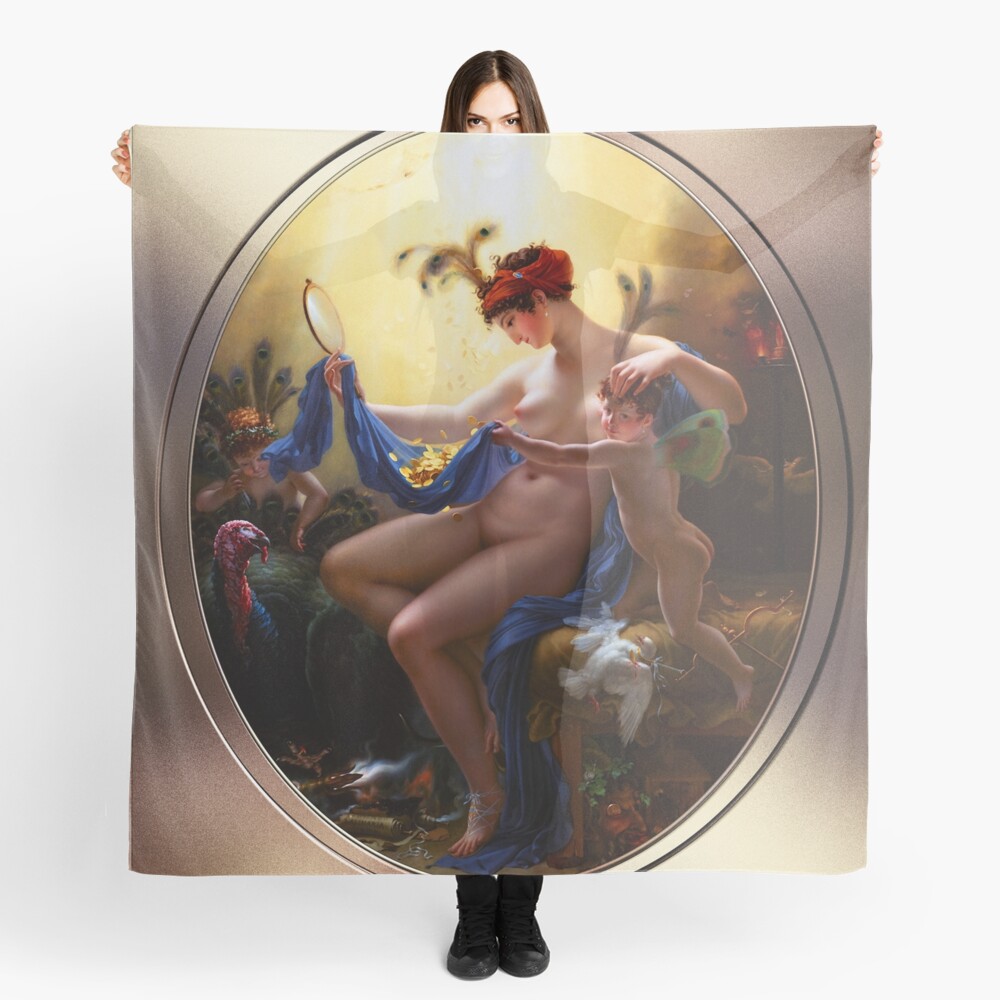
Girodet’s masterful use of color contributes significantly to the painting’s impact. The dominant palette is warm and luminous, with soft yellows, ors, and creams dominating the upper portion of the canvas. These colors evoke a sense of divine radiance and otherworldly beauty. En canvi, the lower section features cooler tones – blues, verd, and browns – which ground the scene in a more earthly realm.
The lighting is dramatic and carefully controlled; it’s not naturalistic but rather serves to highlight key elements and create a mood of reverie. The chiaroscuro effect (the use of strong contrasts between light and dark) emphasizes Danae’s form and draws the viewer’s eye towards her face, convertint-la en el punt focal innegable de la composició.
Neoclassical & Romantic Influences
“Retrat de la Srta. Lange com Danae” exemplifies the transition from strict Neoclassicism to the emerging Romantic style prevalent in late 18th-century France. While adhering to Neoclassical principles such as idealized forms and classical subject matter, Girodet introduces elements that foreshadow Romanticism – a heightened emotionality, a focus on individual experience, and an appreciation for the sublime.
The dramatic lighting, the lush background, and the introspective gaze of Danae all contribute to this shift in artistic sensibility. The painting is not merely a depiction of a mythological scene; it’s a psychological portrait that explores themes of beauty, fate, and transformation with remarkable depth and nuance.
Sobre l'obra d'art
Aquest retrat satíric de la senyoreta Lange, una actriu talentosa de l'època, coneguda per la seva bellesa i rics amants; va ser creat per Girodet, quan es va negar a pagar-li un retrat que li va encarregar.
Retrat de la Srta. Lange com Danae és el segon retrat que li va fer amb ira, que la representa com la Dànae mitològic (de l'antiga Grècia), filla i única filla del rei Acrisi d'Argos i de la seva dona, la reina Eurídice; com un vanidoso, dona adúltera i avaresa.
Es mostra atrapant amb avarícia les monedes d'or que se li plouen (l'or representa a Zeus, mentre es transformava en una pluja d'or); alhora que mostra un gall dindi gran i grassonet que porta un anell de noces, que representa un home amb qui es va casar per la seva riquesa i estatura.
També es poden veure coloms que semblen haver estat torturats, i un cap d'home sota el seu llit amb una moneda d'or a l'ull (potser és un dels seus rics amants).
Artista Bio de Wikipedia.org
Girodet va ser un pintor francès i deixeble de Jacques-Louis David, que va participar en el primer moviment romàntic incloent elements d'erotisme a les seves pintures. Girodet és recordat pel seu estil precís i clar i per les seves pintures de membres de la família napoleònica.
Girodet va néixer a Montargis. Els seus dos pares van morir quan ell era un jove adult. La cura de la seva herència i l'educació recaia en el seu tutor, un metge destacat anomenat Benoît-François Trioson, “senyores-metges”, que després el va adoptar. Els dos homes es van mantenir a prop al llarg de la seva vida i Girodet va agafar el cognom Trioson 1812.
A l'escola primer va estudiar arquitectura i va fer una carrera militar. Va canviar a l'estudi de pintura amb un professor anomenat Luquin i després va entrar a l'escola de Jacques-Louis David..
A l'edat de 22 va competir amb èxit pel Prix de Rome amb una pintura de la Història de Josep i els seus germans.
Des de 1789 a 1793 va viure a Itàlia i mentre estava a Roma va pintar els seus Hipòcrates refusant les presents d'Artaxerxes i Endimió-dormant. (ara al Louvre), una obra que li va guanyar un gran reconeixement al Saló de 1793 i es va assegurar la seva reputació com a pintor destacat de l'escola francesa.
Un cop va tornar a França, Girodet va pintar molts retrats, incloent alguns dels membres de la família Bonaparte. En 1806, en competició amb els sabins de David, va exposar la seva escena Flood (Louvre), que va ser guardonat amb el premi decennal.
En 1808 va produir la rendició de Viena i Atala au tomb, una obra que va guanyar una immensa popularitat, per la seva afortunada elecció del tema, La novel·la Atala de François-René de Chateaubriand, publicat per primera vegada a 1801; i el seu notable allunyament de la teatralitat de la manera habitual de Girodet. Tornaria al seu estil teatral a La Révolte du Caire (1810).
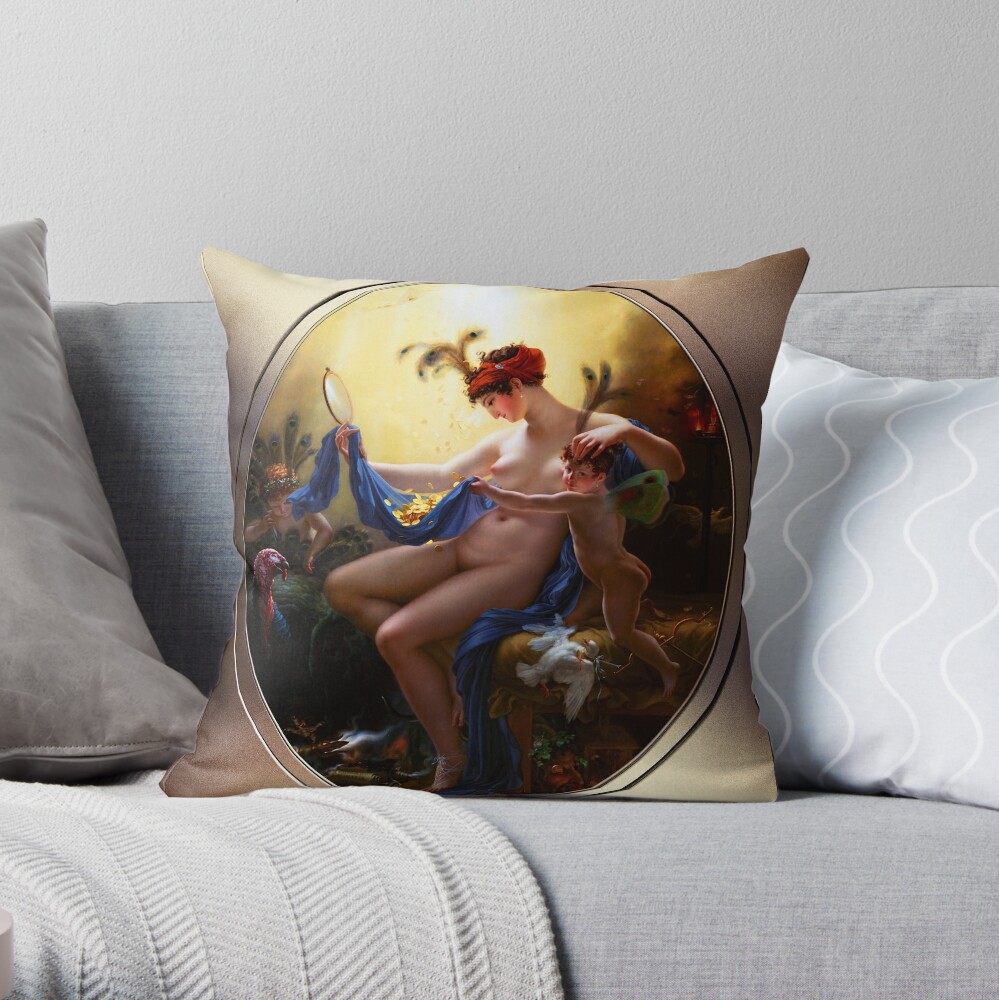
Retrat de la Srta. Lange as Danae és una reproducció retocada d'antics mestres d'art digital d'una imatge de domini públic que està disponible en línia com a acrílic, tela, estampat de metall i fusta.