

Portrait of Mlle Lange as Danae: A Neoclassical Reverie
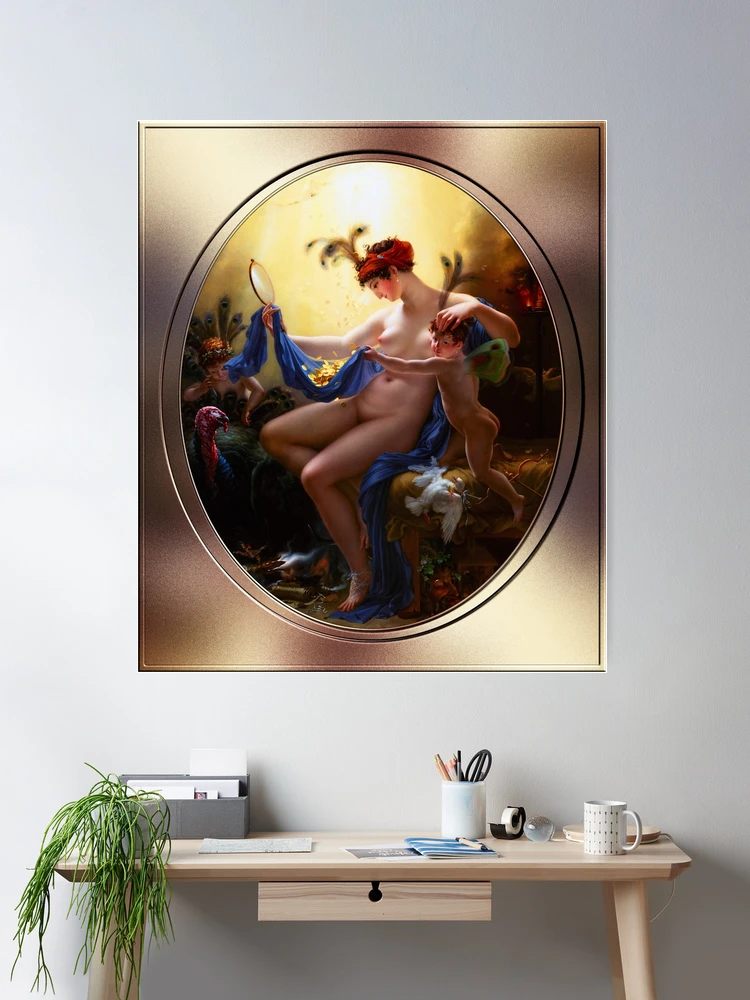
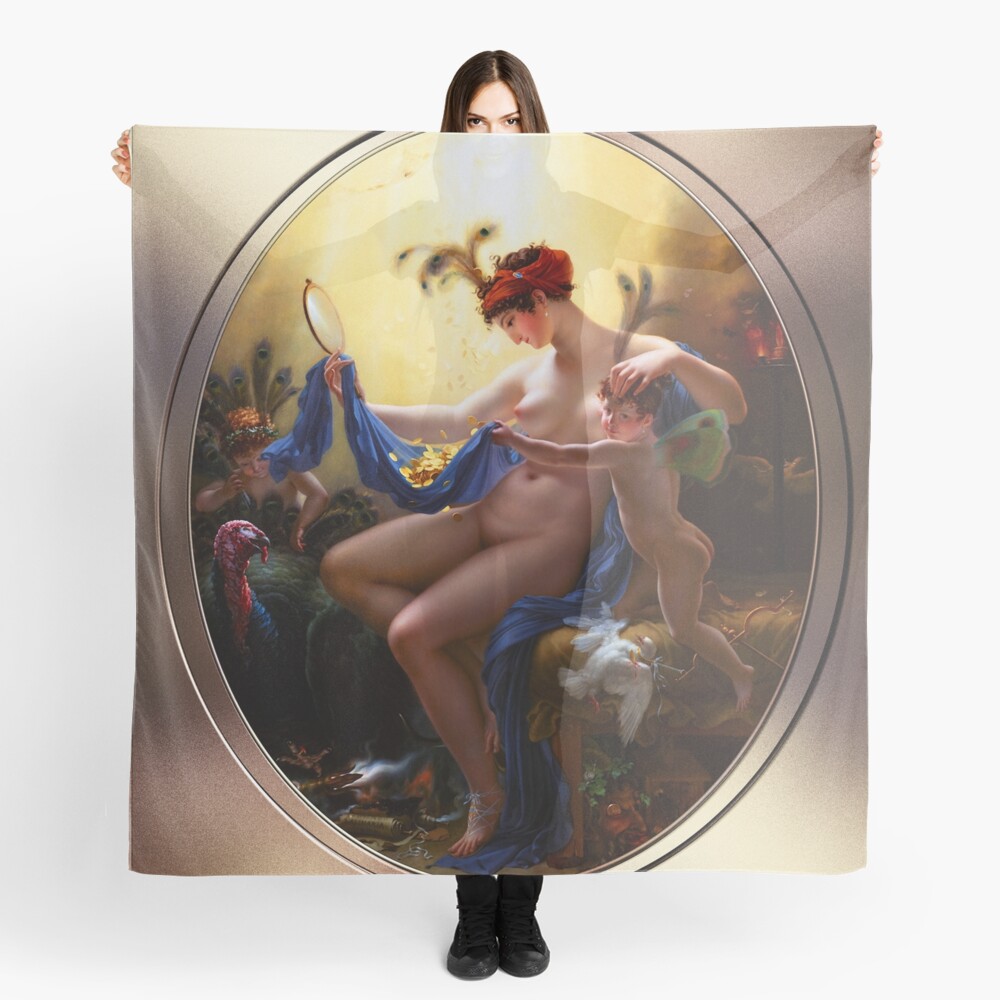
Anne-Louis Girodet de Roussy-Trioson'S “Portrait of Mlle Lange as Danae,” herumgemalt 1799, is a captivating example of late Neoclassicism infused with Romantic sensibilities. The work resides within an oval frame, immediately establishing a sense of intimacy and contained narrative. It depicts the mythological figure Danae, known in Greek legend for being impregnated by Zeus who descended upon her as golden rain. Girodet’s interpretation moves beyond simple illustration; it’s a carefully constructed tableau exploring themes of beauty, Transformation, and the interplay between the mortal and divine realms. The painting is currently held within the collection of the Musée du Louvre, Paris.
Inhaltsverzeichnis
Kompositionsstruktur & Rahmen
The oval format itself is significant. It evokes the shape of a looking glass or mirror, subtly hinting at Danae’s self-reflection and vanity, but also alluding to the act of seeing and being seen – a key element in portraiture. The composition is densely packed with figures and symbolic elements, creating a rich visual experience. Danae occupies the central space, her form bathed in an ethereal light emanating from above.
This light source isn’t merely illuminating; it’s actively shaping the scene, highlighting Danae’s skin and drawing attention to the golden shower that is implied within the upper portion of the painting. The surrounding figures – putti (Cherubische Säuglinge) and a dove – contribute to the overall atmosphere of mythological fantasy.
Danae: Figur & Pose
Vermissen. Lange, the model for this portrait, embodies Danae with an arresting combination of vulnerability and composure. She is depicted seated on a draped cushion, partially covered by a blue cloth that reveals her upper body. Her pose is relaxed yet graceful; sie beugt sich leicht nach vorne, holding a hand mirror to examine herself.
This gesture introduces a layer of introspection and self-awareness into the mythological narrative. The mirror isn’t merely an accessory; it acts as a portal, reflecting not just Danae’s physical appearance but also hinting at the transformative power that is about to befall her. Her expression is serene, almost contemplative, suggesting a quiet acceptance of her fate.
Symbolic Elements & Mythology
The painting is replete with symbolic details drawn from Greek mythology and Neoclassical artistic conventions. The golden rain, though not explicitly depicted as individual droplets, is suggested by the radiant light emanating from above and the scattered gold coins at Danae’s feet. These coins represent Zeus’s transformation into a shower of gold, fulfilling the prophecy that she would conceive a child through divine intervention.
The putti flanking Danae are playful yet watchful, their presence reinforcing the sense of a fantastical realm. One holds a peacock feather, a symbol often associated with Juno, the jealous wife of Zeus, adding an element of potential conflict and foreshadowing. A dove, traditionally representing peace and purity, rests near her feet, perhaps signifying hope or divine favor. The lush foliage in the background further enhances the idyllic setting, creating a sense of secluded paradise.
Farbpalette & Beleuchtung
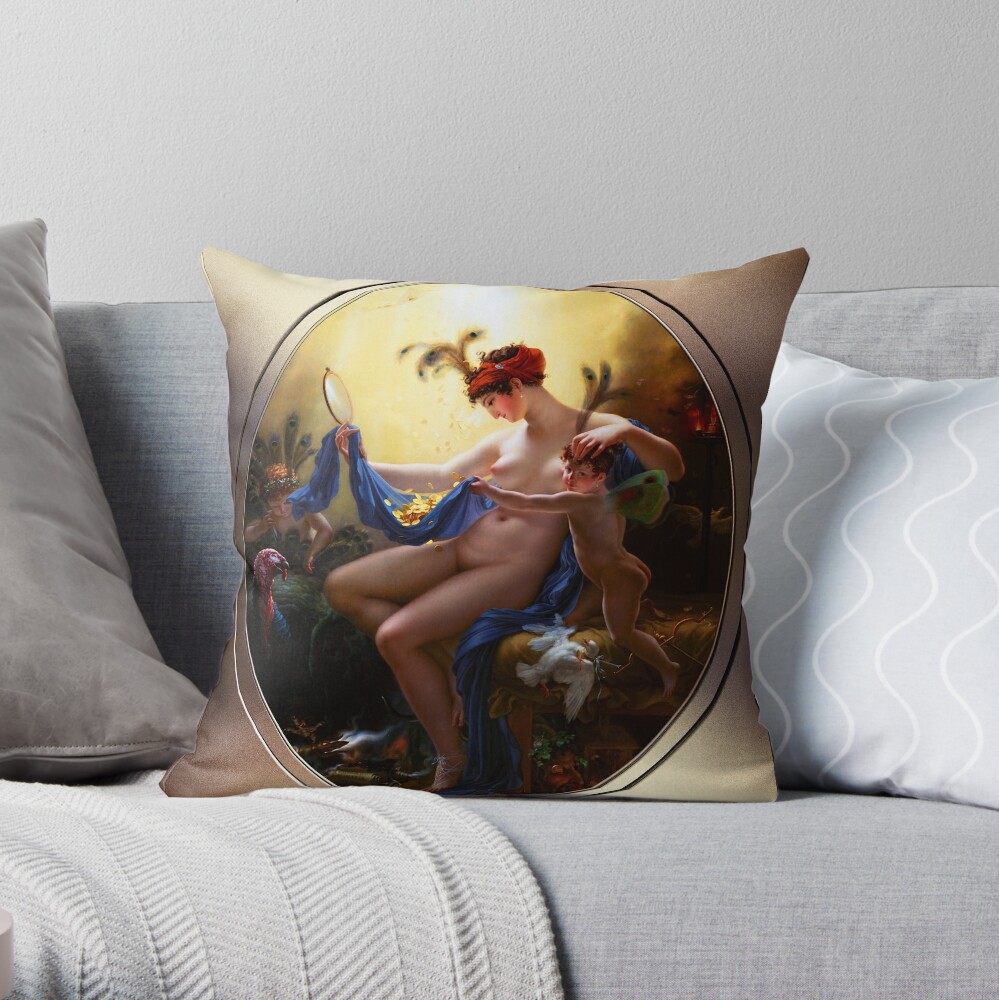
Girodet’s masterful use of color contributes significantly to the painting’s impact. The dominant palette is warm and luminous, with soft yellows, Gold, and creams dominating the upper portion of the canvas. These colors evoke a sense of divine radiance and otherworldly beauty. Im Gegensatz, the lower section features cooler tones – blues, Grüns, and browns – which ground the scene in a more earthly realm.
The lighting is dramatic and carefully controlled; it’s not naturalistic but rather serves to highlight key elements and create a mood of reverie. The chiaroscuro effect (the use of strong contrasts between light and dark) emphasizes Danae’s form and draws the viewer’s eye towards her face, making her the undeniable focal point of the composition.
Neoklassizistisch & Romantic Influences
“Porträt von Fräulein. Lange as Danae” exemplifies the transition from strict Neoclassicism to the emerging Romantic style prevalent in late 18th-century France. While adhering to Neoclassical principles such as idealized forms and classical subject matter, Girodet introduces elements that foreshadow Romanticism – a heightened emotionality, a focus on individual experience, and an appreciation for the sublime.
The dramatic lighting, the lush background, and the introspective gaze of Danae all contribute to this shift in artistic sensibility. The painting is not merely a depiction of a mythological scene; it’s a psychological portrait that explores themes of beauty, fate, and transformation with remarkable depth and nuance.
Über das Kunstwerk
Dieses satirische Porträt von Frau Lange, eine talentierte Schauspielerin der Zeit, bekannt für ihre Schönheit und wohlhabenden Liebhaber; wurde von Girodet erstellt, als sie sich weigerte, ihn für ein Porträt von ihr zu bezahlen, das sie in Auftrag gab.
Porträt von Fräulein. Lange as Danae is the second portrait he made of her in anger, which depicts her as the mythological Danaë (des alten Griechenland), die Tochter und das einzige Kind von König Acrisius von Argos und seiner Frau Königin Eurydike; als eitel, ehebrecherische und geizige Frau.
Sie wird gezeigt, wie sie gierig Goldmünzen fängt, die über sie geworfen werden (Das Gold repräsentiert Zeus, als er sich in einen goldenen Schauer verwandelte); während auch ein großer praller Truthahn zeigt, der einen Ehering trägt, Das ist ein Mann, den sie wegen seines Reichtums und seiner Statur geheiratet hat.
Man kann auch Tauben sehen, die gefoltert worden zu sein scheinen, und ein Kopf eines Mannes unter ihrem Bett mit einer Goldmünze im Auge (Vielleicht ist es einer ihrer reichen Liebhaber).
Künstler Bio von Wikipedia.org
Girodet war ein französischer Maler und Schüler von Jacques-Louis David, der an der frühromantischen Bewegung teilnahm, indem er Elemente der Erotik in seine Bilder einfügte. Girodet ist bekannt für seinen präzisen und klaren Stil und für seine Gemälde von Mitgliedern der napoleonischen Familie.
Girodet wurde in Montargis . geboren. Seine beiden Eltern starben, als er ein junger Erwachsener war. Die Sorge um sein Erbe und seine Ausbildung fiel seinem Vormund zu, ein prominenter Arzt namens Benoît-François Trioson, “Damen-Ärztin”, wer hat ihn später adoptiert. Die beiden Männer blieben ihr ganzes Leben lang eng verbunden und Girodet nahm den Nachnamen Trioson an 1812.
In der Schule studierte er zunächst Architektur und schlug eine militärische Laufbahn ein. Er wechselte zum Studium der Malerei bei einem Lehrer namens Luquin und trat dann in die Schule von Jacques-Louis David ein.
Im Alter von 22 mit einem Gemälde der Geschichte von Joseph und seinen Brüdern konkurrierte er erfolgreich um den Prix de Rome.
Von 1789 zu 1793 er lebte in Italien und malte während seines Aufenthalts in Rom seine Hippocrate refusant les present d’Artaxerxes und Endymion-dormant (jetzt im Louvre), eine Arbeit, die ihm große Anerkennung auf dem Salon von 1793 und sicherte sich seinen Ruf als führender Maler der französischen Schule.
Als er nach Frankreich zurückkehrte, Girodet hat viele Porträts gemalt, darunter einige Mitglieder der Familie Bonaparte. Im 1806, im Wettbewerb mit den Sabines von David, er stellte seine Flutszene aus (Louvre), die mit dem zehnjährigen Preis ausgezeichnet wurde.
Im 1808 er produzierte die Kapitulation Wiens und Atala au tomb, ein Werk, das immense Popularität erlangte, durch seine glückliche Themenwahl, François-René de Chateaubriands Roman Atala, zuerst veröffentlicht in 1801; und seine bemerkenswerte Abkehr von der Theatralik von Girodets üblicher Manier. In La Révolte du Caire . kehrte er zu seinem Theaterstil zurück (1810).
Porträt von Fräulein. Lange as Danae is a retouched digital art old masters reproduction of a public domain image that is available online as an Acryl-, Leinwand, metal and wood print.