

Portrait of Mlle Lange as Danae: A Neoclassical Reverie
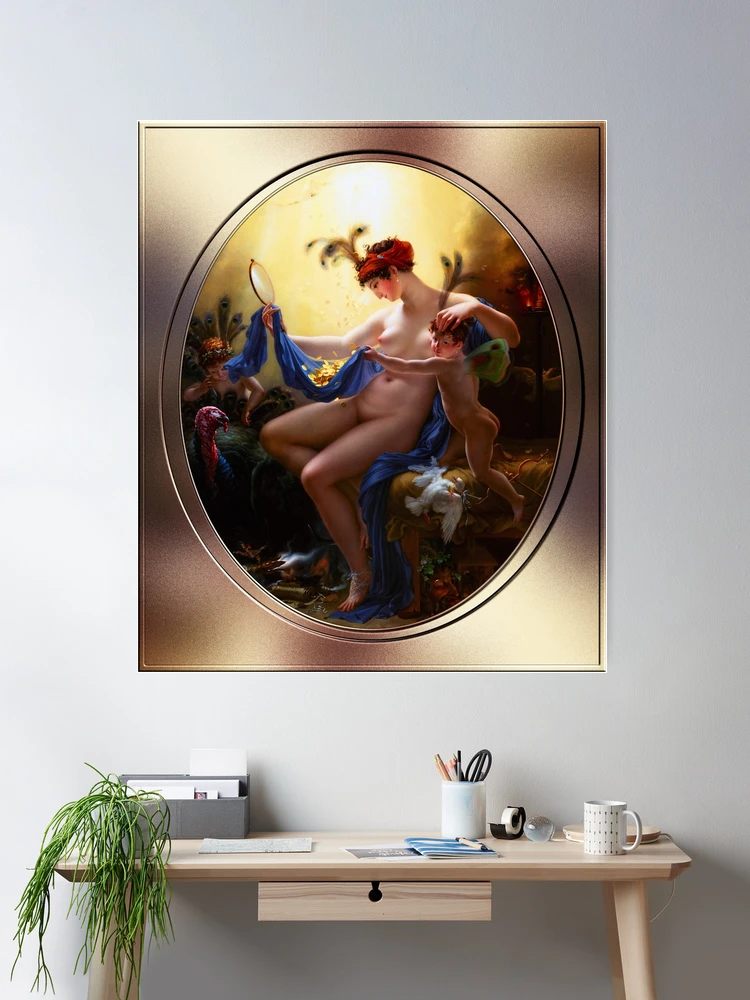
Anne-Louis Girodet de Roussy-Trioson’s “Portrait of Mlle Lange as Danae,” maalattu ympärille 1799, is a captivating example of late Neoclassicism infused with Romantic sensibilities. The work resides within an oval frame, immediately establishing a sense of intimacy and contained narrative. It depicts the mythological figure Danae, known in Greek legend for being impregnated by Zeus who descended upon her as golden rain. Girodet’s interpretation moves beyond simple illustration; it’s a carefully constructed tableau exploring themes of beauty, muunnos, and the interplay between the mortal and divine realms. The painting is currently held within the collection of the Musée du Louvre, Pariisi.
Sisällysluettelo
Koostumusrakenne & Framing
The oval format itself is significant. It evokes the shape of a looking glass or mirror, subtly hinting at Danae’s self-reflection and vanity, but also alluding to the act of seeing and being seen – a key element in portraiture. The composition is densely packed with figures and symbolic elements, creating a rich visual experience. Danae occupies the central space, her form bathed in an ethereal light emanating from above.
This light source isn’t merely illuminating; it’s actively shaping the scene, highlighting Danae’s skin and drawing attention to the golden shower that is implied within the upper portion of the painting. The surrounding figures – putti (cherubic infants) and a dove – contribute to the overall atmosphere of mythological fantasy.
Danae: Figure & Aiheuttaa
neiti. Kaipaus, the model for this portrait, embodies Danae with an arresting combination of vulnerability and composure. She is depicted seated on a draped cushion, partially covered by a blue cloth that reveals her upper body. Her pose is relaxed yet graceful; she leans slightly forward, holding a hand mirror to examine herself.
This gesture introduces a layer of introspection and self-awareness into the mythological narrative. The mirror isn’t merely an accessory; it acts as a portal, reflecting not just Danae’s physical appearance but also hinting at the transformative power that is about to befall her. Hänen ilmaisunsa on rauhallinen, almost contemplative, suggesting a quiet acceptance of her fate.
Symboliset elementit & Mythology
The painting is replete with symbolic details drawn from Greek mythology and Neoclassical artistic conventions. The golden rain, though not explicitly depicted as individual droplets, is suggested by the radiant light emanating from above and the scattered gold coins at Danae’s feet. These coins represent Zeus’s transformation into a shower of gold, fulfilling the prophecy that she would conceive a child through divine intervention.
The putti flanking Danae are playful yet watchful, their presence reinforcing the sense of a fantastical realm. One holds a peacock feather, a symbol often associated with Juno, the jealous wife of Zeus, adding an element of potential conflict and foreshadowing. A dove, traditionally representing peace and purity, rests near her feet, perhaps signifying hope or divine favor. The lush foliage in the background further enhances the idyllic setting, creating a sense of secluded paradise.
Värivalikoima & Valaistus
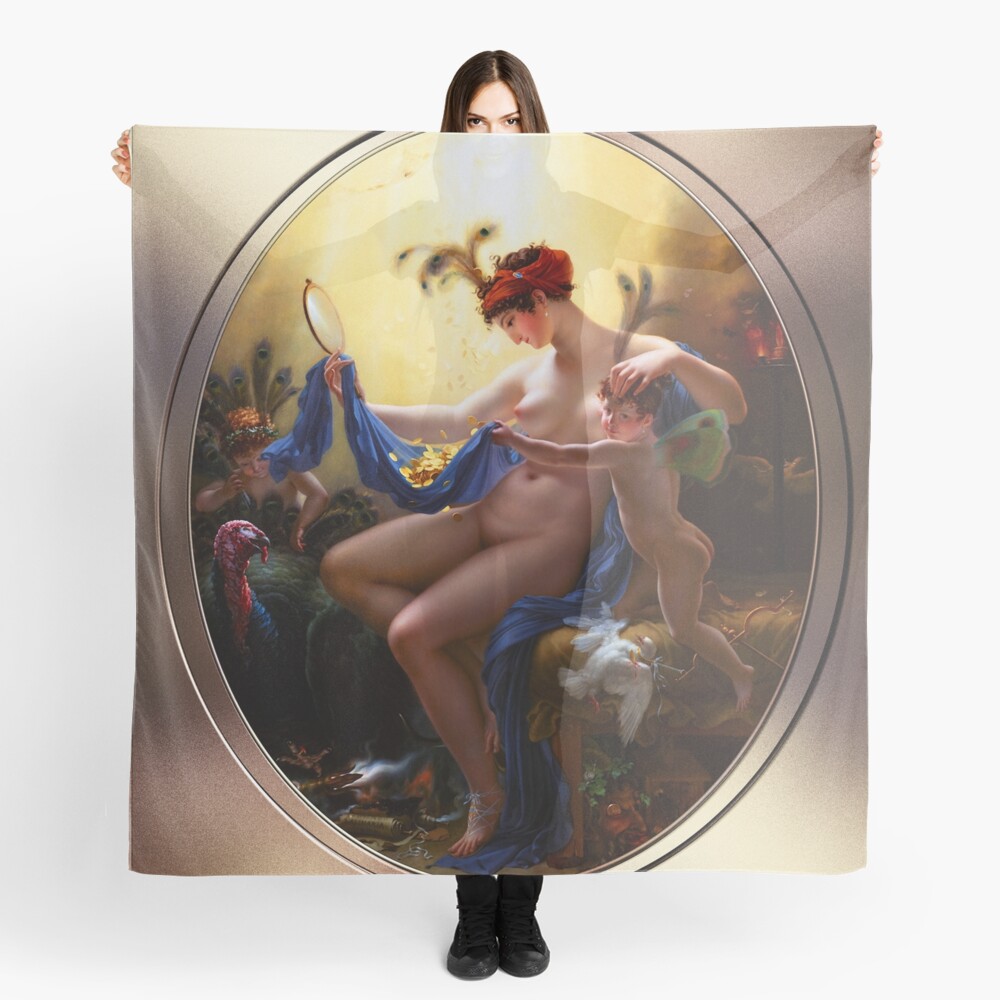
Girodet’s masterful use of color contributes significantly to the painting’s impact. The dominant palette is warm and luminous, with soft yellows, kultaa, and creams dominating the upper portion of the canvas. These colors evoke a sense of divine radiance and otherworldly beauty. Verrattuna, the lower section features cooler tones – blues, vihreät, and browns – which ground the scene in a more earthly realm.
The lighting is dramatic and carefully controlled; it’s not naturalistic but rather serves to highlight key elements and create a mood of reverie. The chiaroscuro effect (the use of strong contrasts between light and dark) emphasizes Danae’s form and draws the viewer’s eye towards her face, making her the undeniable focal point of the composition.
Uusklassinen & Romantic Influences
“Neiti muotokuva. Lange hahmona Danae” exemplifies the transition from strict Neoclassicism to the emerging Romantic style prevalent in late 18th-century France. While adhering to Neoclassical principles such as idealized forms and classical subject matter, Girodet introduces elements that foreshadow Romanticism – a heightened emotionality, a focus on individual experience, and an appreciation for the sublime.
The dramatic lighting, the lush background, and the introspective gaze of Danae all contribute to this shift in artistic sensibility. The painting is not merely a depiction of a mythological scene; it’s a psychological portrait that explores themes of beauty, kohtalo, and transformation with remarkable depth and nuance.
Tietoja Taideteoksesta
Tämä satiirinen muotokuva Miss Langesta, tuon ajan lahjakas näyttelijä, tunnettu kauneudestaan ja rikkaista rakastajistaan; on Girodetin luoma, kun hän kieltäytyi maksamasta hänelle tilaamastaan muotokuvasta.
Neiti muotokuva. Lange Danaena on toinen muotokuva, jonka hän teki hänestä vihaisena, joka kuvaa häntä mytologisena Danaëna (muinaisesta Kreikasta), Argosin kuninkaan Akrisioksen ja hänen vaimonsa kuningatar Eurydiken tytär ja ainoa lapsi; turhaan, aviorikos ja ahne nainen.
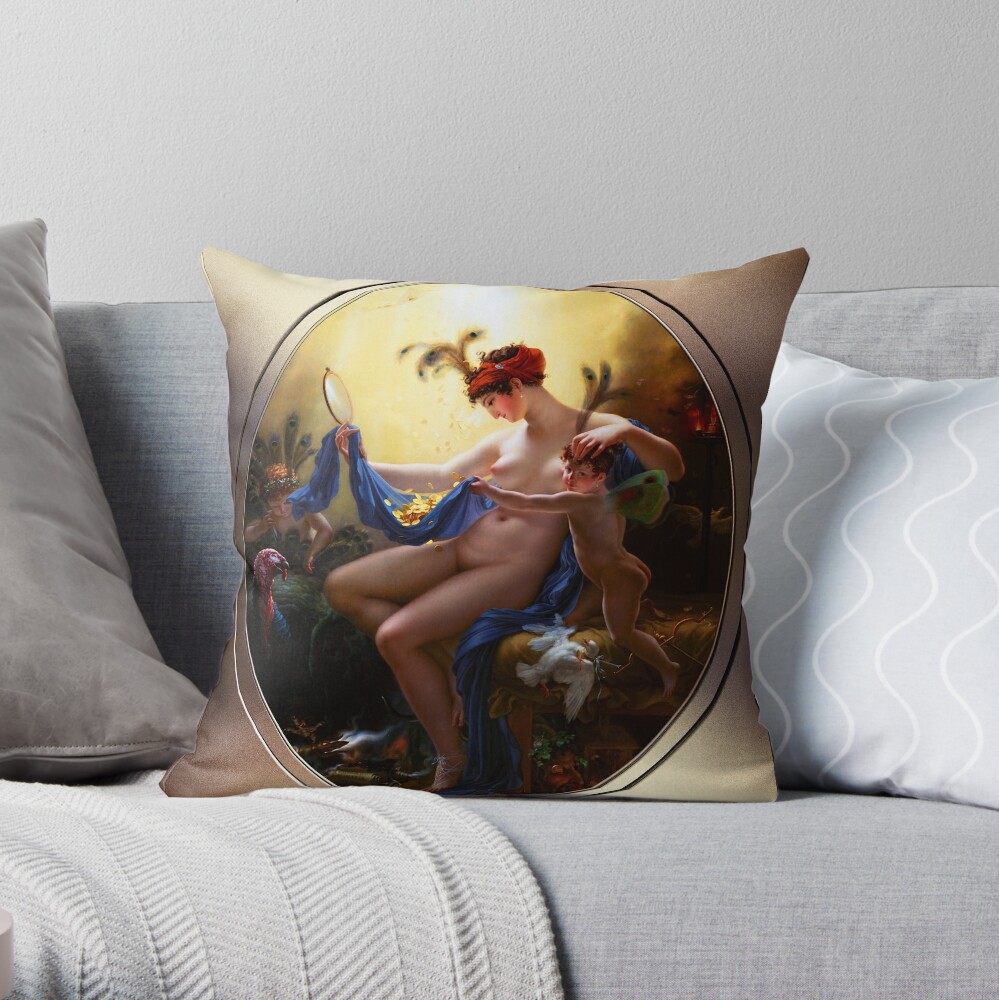
Hänelle näytetään ahneesti kiinni kultarahoja, jotka suihkutetaan hänen päälleen (kulta edustaa Zeusta, kun hän muutti itsensä kultaksi); näyttäen samalla myös suuren täyteläisen kalkkunan, jolla on vihkisormus, joka edustaa miestä, jonka hän meni naimisiin vaurautensa ja kunniansa vuoksi.
Voidaan myös nähdä kyyhkysiä, jotka näyttävät olevan kidutettuja, ja miehen pää sängyn alla, kultakolikko silmässä (ehkä se on yksi hänen rikkaista rakastajistaan).
Taiteilija bio Wikipedia.org
Girodet oli ranskalainen taidemaalari ja Jacques-Louis Davidin oppilas, joka osallistui varhaiseen romanttiseen liikkeeseen sisällyttämällä maalauksiinsa eroottisia elementtejä. Girodet muistetaan tarkasta ja selkeästä tyylistään sekä maalauksistaan Napoleonin perheen jäsenistä.
Girodet syntyi Montargisissa. Molemmat hänen vanhempansa kuolivat, kun hän oli nuori aikuinen. Hänen perintönsä ja koulutuksensa hoiti hänen huoltajansa, merkittävä lääkäri nimeltä Benoît-François Trioson, “hyvät lääkärit”, joka myöhemmin adoptoi hänet. Kaksi miestä pysyivät lähellä koko elämänsä ja Girodet otti sukunimen Trioson 1812.
Koulussa hän opiskeli ensin arkkitehtuuria ja jatkoi armeijan uraa. Hän muutti opiskelemaan maalausta Luquinin opettajan alaisuudessa ja tuli sitten Jacques-Louis Davidin kouluun.
Iässä 22 hän kilpaili menestyksekkäästi Prix de Roomassa maalauksella Joosefin ja hänen veljiensä tarinasta.
Alkaen 1789 että 1793 hän asui Italiassa ja maalasi Roomassa Hippokrateen kieltäytyneitä les present d’Artaxerxes- ja Endymion-dormant -lahjoja (nyt Louvressa), teos, joka sai hänelle suuren suosion Salonissa 1793 ja varmisti maineensa ranskalaisen koulun johtavana taidemaalarina.
Kerran hän palasi Ranskaan, Girodet maalasi monia muotokuvia, mukaan lukien jotkut Bonaparte -perheen jäsenet. Sisään 1806, kilpailevat Daavidin sabiinien kanssa, hän esitteli Flood -kohtauksensa (Louvre), joka sai vuosikymmenen palkinnon.
Sisään 1808 hän tuotti Wienin antautumisen ja Atala au haudan, teos, joka sai valtavan suosion, onnellisella aihevalinnallaan, François-René de Chateaubriandin romaani Atala, julkaistu ensimmäisen kerran vuonna 1801; ja sen huomattava poikkeama Girodetin tavanomaisen teatraalisuudesta. Hän palasi teatterityyliinsä La Révolte du Cairessa (1810).
Neiti muotokuva. Lange as Danae is a retouched digital art old masters reproduction of a public domain image that is available online as an akryyli, kangas, metalli- ja puuprintti.