

Portrait of Mlle Lange as Danae: A Neoclassical Reverie
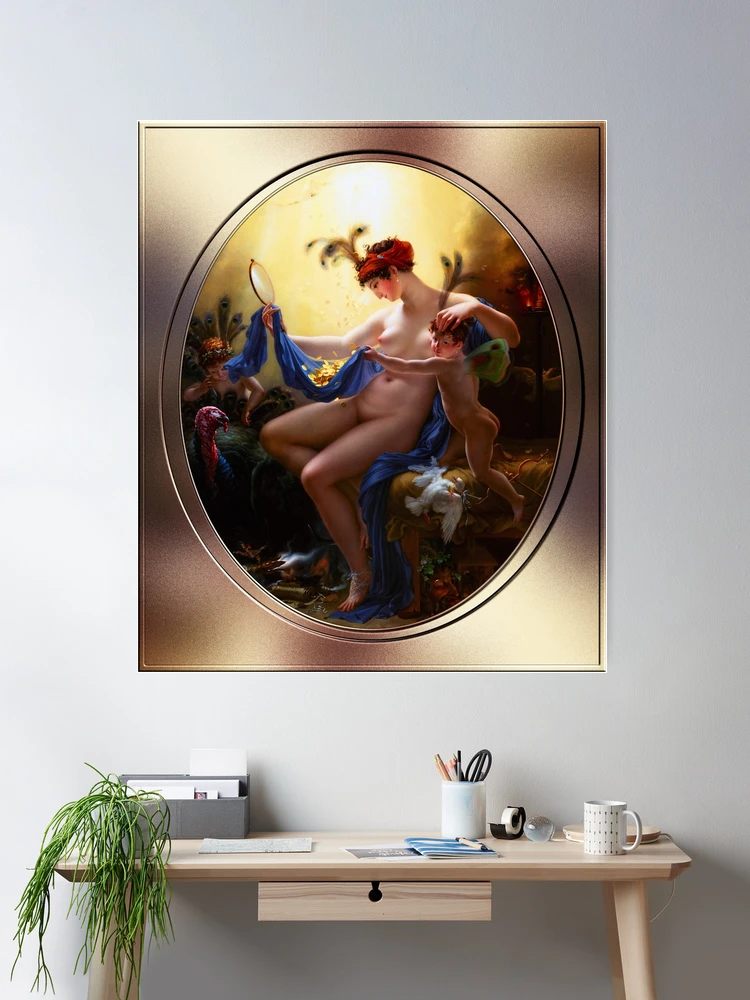
Anna-Louis Gireet de Roussy-Trioson's “Portrait of Mlle Lange as Danae,” air a pheantadh mun cuairt 1799, is a captivating example of late Neoclassicism infused with Romantic sensibilities. The work resides within an oval frame, immediately establishing a sense of intimacy and contained narrative. It depicts the mythological figure Danae, known in Greek legend for being impregnated by Zeus who descended upon her as golden rain. Girodet’s interpretation moves beyond simple illustration; it’s a carefully constructed tableau exploring themes of beauty, cruth-atharrachadh, and the interplay between the mortal and divine realms. The painting is currently held within the collection of the Musée du Louvre, Paris.
Clàr-innse
Structar co-dhùnaidh & Framing
The oval format itself is significant. It evokes the shape of a looking glass or mirror, subtly hinting at Danae’s self-reflection and vanity, but also alluding to the act of seeing and being seen – a key element in portraiture. The composition is densely packed with figures and symbolic elements, creating a rich visual experience. Danae occupies the central space, her form bathed in an ethereal light emanating from above.
This light source isn’t merely illuminating; it’s actively shaping the scene, highlighting Danae’s skin and drawing attention to the golden shower that is implied within the upper portion of the painting. The surrounding figures – putti (cherubic infants) and a dove – contribute to the overall atmosphere of mythological fantasy.
Danae: Figear & Pose
Mlle. Langa, the model for this portrait, embodies Danae with an arresting combination of vulnerability and composure. She is depicted seated on a draped cushion, partially covered by a blue cloth that reveals her upper body. Her pose is relaxed yet graceful; she leans slightly forward, holding a hand mirror to examine herself.
This gesture introduces a layer of introspection and self-awareness into the mythological narrative. The mirror isn’t merely an accessory; it acts as a portal, reflecting not just Danae’s physical appearance but also hinting at the transformative power that is about to befall her. Is e an abairt aice Seerne, cha mhòr smaoineachail, suggesting a quiet acceptance of her fate.
Eileamaidean samhlachail & Mythology
The painting is replete with symbolic details drawn from Greek mythology and Neoclassical artistic conventions. The golden rain, though not explicitly depicted as individual droplets, is suggested by the radiant light emanating from above and the scattered gold coins at Danae’s feet. These coins represent Zeus’s transformation into a shower of gold, fulfilling the prophecy that she would conceive a child through divine intervention.
The putti flanking Danae are playful yet watchful, their presence reinforcing the sense of a fantastical realm. One holds a peacock feather, a symbol often associated with Juno, the jealous wife of Zeus, adding an element of potential conflict and foreshadowing. A dove, traditionally representing peace and purity, rests near her feet, perhaps signifying hope or divine favor. The lush foliage in the background further enhances the idyllic setting, creating a sense of secluded paradise.
Palet dath & Solais
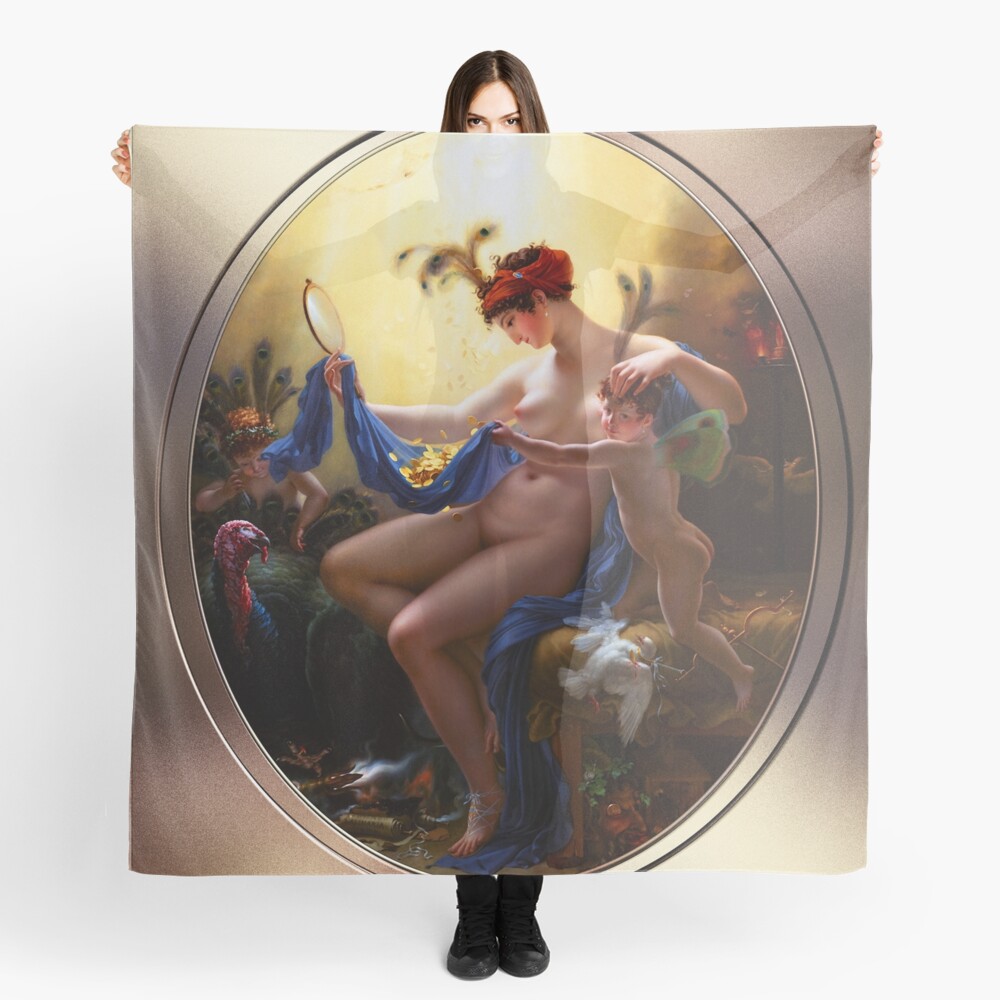
Girodet’s masterful use of color contributes significantly to the painting’s impact. The dominant palette is warm and luminous, with soft yellows, òir, and creams dominating the upper portion of the canvas. These colors evoke a sense of divine radiance and otherworldly beauty. Air an làimh eile, the lower section features cooler tones – blues, greens, and browns – which ground the scene in a more earthly realm.
The lighting is dramatic and carefully controlled; it’s not naturalistic but rather serves to highlight key elements and create a mood of reverie. The chiaroscuro effect (the use of strong contrasts between light and dark) emphasizes Danae’s form and draws the viewer’s eye towards her face, ga dhèanamh na mheadhan gun teagamh anns an sgrìobhadh.
Neo-chlasaigeach & Romantic Influences
“Dealbh de Miss. Lange as Danae” exemplifies the transition from strict Neoclassicism to the emerging Romantic style prevalent in late 18th-century France. While adhering to Neoclassical principles such as idealized forms and classical subject matter, Girodet introduces elements that foreshadow Romanticism – a heightened emotionality, a focus on individual experience, and an appreciation for the sublime.
An solas dràmadach, the lush background, and the introspective gaze of Danae all contribute to this shift in artistic sensibility. The painting is not merely a depiction of a mythological scene; it’s a psychological portrait that explores themes of beauty, fate, and transformation with remarkable depth and nuance.
Mun obair ealain
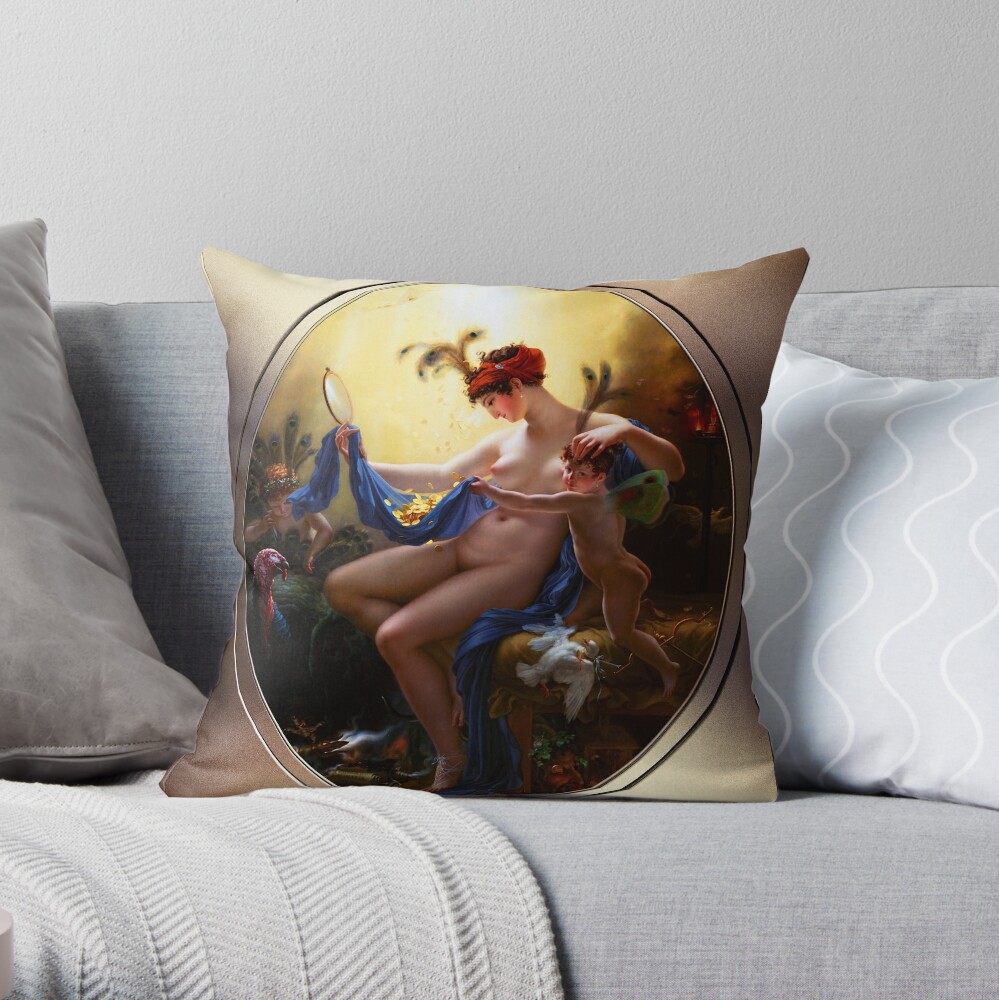
This satirical portrait of Miss Lange, a talented actress of the time, known for her beauty and wealthy lovers; was created by Girodet, when she refused to pay him for a portrait of her that she commissioned.
Dealbh de Miss. Lange as Danae is the second portrait he made of her in anger, which depicts her as the mythological Danaë (of ancient Greece), the daughter and only child of King Acrisius of Argos and his wife Queen Eurydice; as a vain, adulterous and avaricious woman.
She is shown greedily catching gold coins that are showered upon her (the gold represents Zeus, as he transformed himself into a shower of gold); while also showing a large plump turkey wearing a wedding ring, which represents a man she married for his wealth and stature.
One can also see doves that appear to have been tortured, and a head of a man underneath her bed with a gold coin in its eye (maybe it’s one of her wealthy lovers).
Neach-ealain Bios bho Wikipedia.org
Bha Girodet na pheantair Frangach agus na sgoilear aig Jacques-Louis David, a ghabh pàirt anns a’ ghluasad romansach tràth le bhith a’ toirt a-steach eileamaidean de eroticism anns na dealbhan aige. Tha Girodet air a chuimhneachadh airson a stoidhle shoilleir agus shoilleir agus airson na dealbhan aige de bhuill den teaghlach Napoleon.
Rugadh Girodet ann am Montargis. Bhàsaich an dithis phàrant nuair a bha e na inbheach òg. Thuit cùram a oighreachd agus a fhoghlam air a neach-gleidhidh, lighiche ainmeil leis an t-ainm Benoît-François Trioson, “mnathan-dotair”, a ghabh ris an dèidh sin. Dh’ fhan an dithis dlùth fad am beatha agus thug Girodet an sloinneadh Trioson a-steach 1812.
Anns an sgoil rinn e sgrùdadh air ailtireachd an toiseach agus lean e dreuchd armailteach. Dh'atharraich e gu bhith a 'sgrùdadh peantadh fo thidsear leis an ainm Luquin agus an uairsin chaidh e a-steach do sgoil Jacques-Louis David.
Aig aois 22 bha e soirbheachail a’ farpais airson an Prix de Rome le dealbh de Sgeul Iòsaph agus a bhràithrean.
Bho 1789 gu 1793 bha e a’ fuireach anns an Eadailt agus fhad ‘s a bha e san Ròimh pheant e an Hippocrate refusant les presents d’Artaxerxes agus Endymion-dormant (a-nis anns an Louvre), obair a choisinn cliù dha ann an Salon na 1793 agus choisinn e cliù dha mar phrìomh pheantair anns an sgoil Fhrangach.
Aon uair 's gun do thill e dhan Fhraing, Pheant Girodet mòran dhealbhan, nam measg cuid de bhuill teaghlach Bonaparte. Ann an 1806, ann an co-fharpais ri Sabines Dhaibhidh, sheall e a shealladh tuiltean (Louvre), a fhuair an duais deich bliadhna.
Ann an 1808 thug e a-mach Gèilleadh Vienna agus Atala don uaigh, obair a choisinn mòr-chòrdte, le a roghainn fortanach de chuspair, An nobhail aig François-René de Chateaubriand Atala, fhoillseachadh an toiseach ann an 1801; agus an imeachd iongantach aige bho theatar dòigh àbhaisteach Girodet. Bhiodh e a’ tilleadh chun stoidhle theatar aige ann an La Révolte du Caire (1810).
Dealbh de Miss. Lange as Danae is a retouched digital art old masters reproduction of a public domain image that is available online as an acrylic, canabhas, clò-bhualadh meatailt agus fiodha.