

Pygmalion A' gabhail tlachd air an iomhaigh aige: Sealladh Rococo air Gràdh Ealain
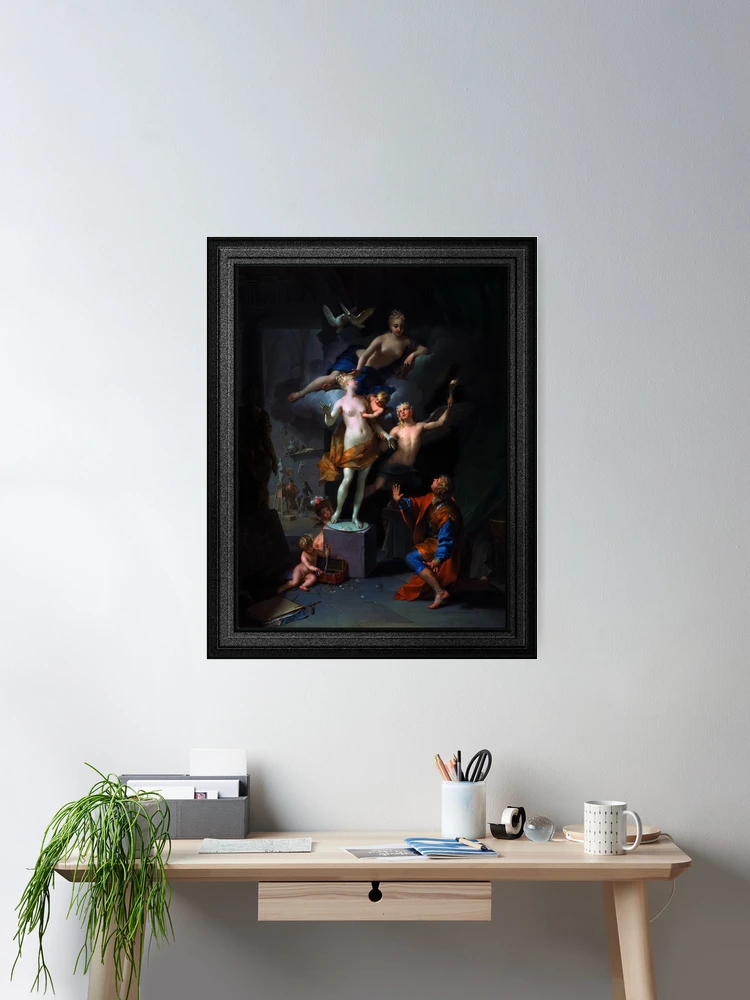
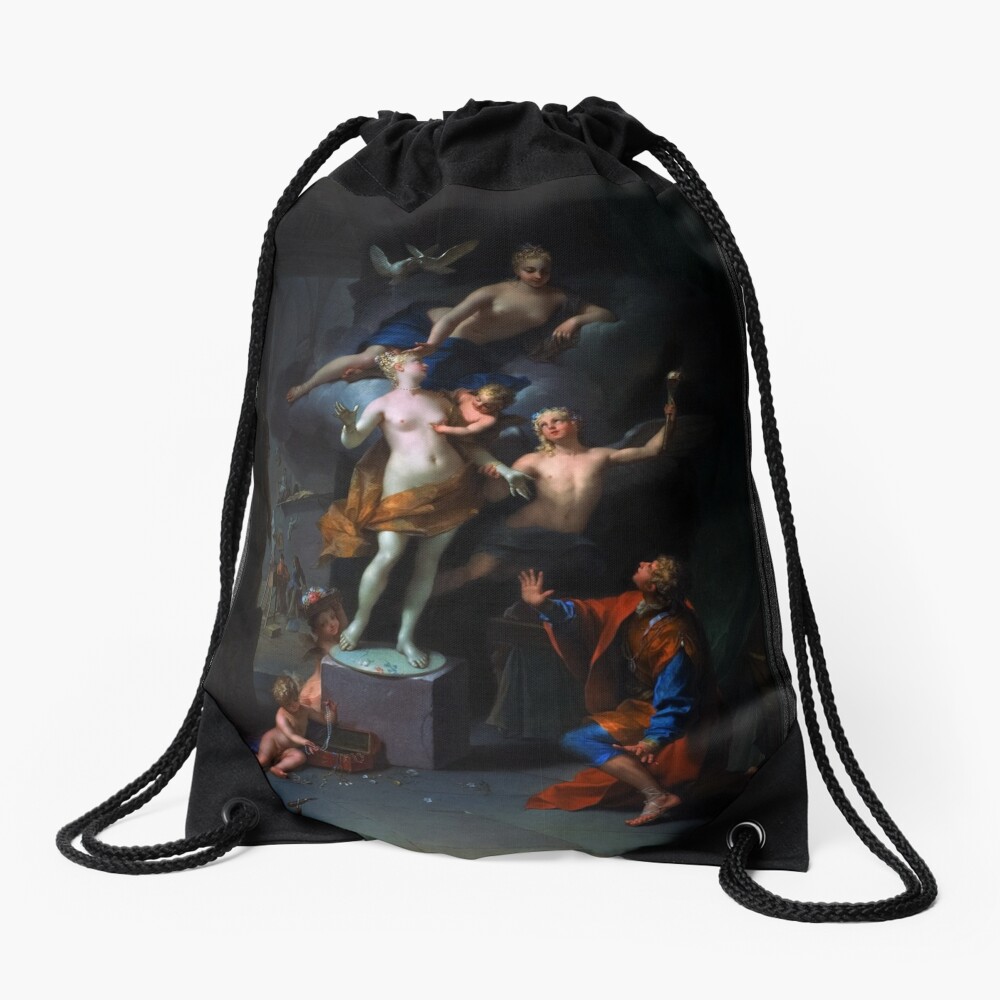
Pygmalion A’ dèanamh adhradh air an ìomhaigh aige c1717 leis a’ pheantair Frangach Jean Raoux (1677 – 1734), na obair tarraingeach a’ toirt a-steach spiorad àm Rococo. Tha an dealbh a’ sealltainn sgeul miotasach Pygmalion, snaidheadair Cipireach a thuiteas ann an gaol leis an ìomhaigh a shnaigh e. Chan e dìreach dealbh de bheul-aithris a th’ anns an t-sealladh seo; tha e na chlàr air a thogail gu faiceallach a’ sgrùdadh cuspairean cruthachadh ealain, miann, agus eadar-theachd Dhè, air a thoirt seachad tro mheasgachadh sònraichte Raoux de theatar agus mion-fhiosrachadh fìnealta. Tha an obair an-dràsta ann an cruinneachadh an Musée des Beaux-Arts de Strasbourg.
Clàr-innse
Structar co-dhùnaidh & Sruth aithris
The composition unfolds with a dynamic energy that draws the viewer into the scene. Pygmalion, positioned centrally, kneels before his statue, his gaze fixed upon her with an expression of profound adoration. The statue itself is presented as a young woman, partially draped in fabric, revealing a graceful form. She appears to be awakening, her eyes closed and a gentle smile playing on her lips. Above them both, Venus, ban-dia gaol, descends from the clouds, accompanied by doves – symbols of affection and divine blessing. The arrangement isn’t static; it suggests a moment of transition, a pivotal point in Pygmalion’s story where his creation is imbued with life.
The lower portion of the painting features a bustling workshop setting. Several putti (cherubic figures) are engaged in various activities: one examines a toolbox, another holds a hammer and chisel, while others scatter coins – perhaps representing payment for artistic labor or symbolic offerings to the gods. This detail provides context, grounding the mythological narrative within the tangible world of an artist’s studio. The inclusion of these smaller figures adds depth and visual interest, preventing the scene from feeling overly solemn or detached.
Stoidhle ealain & Teicneòlas
Raoux’s style is firmly rooted in Rococo aesthetics. Characterized by its lightness, eireachdas, and playful sensuality, this artistic movement prioritized decorative beauty over strict realism. The painting showcases these qualities through its soft color palette dominated by warm tones of ochre, ròs, and cream, contrasted with the deeper blues and browns of the background. Raoux’s brushwork is fluid and delicate, creating a sense of shimmering light and texture. He skillfully employs chiaroscuro, using dramatic contrasts between light and shadow to highlight key figures and create a theatrical atmosphere. The overall effect is one of refined beauty and graceful movement.
Tha aire an neach-ealain gu mion-fhiosrachadh ri fhaicinn ann an dèanamh aodach, tònaichean craiceann, and architectural elements. The folds of Pygmalion’s robe and the statue’s drapery are meticulously depicted, adding realism and visual interest. Mar an ceudna, the expressions on the faces of the figures – from Pygmalion’s rapturous gaze to Venus’ benevolent smile – convey a range of emotions that enhance the narrative impact.
Samhlachadh & Mìneachadh
Seachad air a bòidhchead uachdar, “Pygmalion Adoring His Statue” is rich in symbolic meaning. The statue represents not only physical beauty but also artistic perfection and the power of human creativity. Pygmalion’s adoration symbolizes the artist’s deep connection to his work, a passionate devotion that transcends mere craftsmanship. Venus’ descent signifies divine intervention – the goddess bestowing life upon the inanimate creation, fulfilling Pygmalion’s desire. The doves represent love and fertility, further reinforcing the theme of transformation and renewal.
The putti in the workshop serve as allegorical figures representing artistic labor and inspiration. Their presence underscores the idea that creativity is a collaborative process, requiring skill, dedication, and perhaps even divine guidance. The scattered coins could symbolize both the financial rewards of art and the offerings made to the muses – the goddesses who inspire artists.
Co-theacs & Dìleab
Jean Raoux was a prominent French painter known for his mythological scenes, dealbhan, and decorative works. He was influenced by earlier masters like Rubens and Van Dyck, but he developed his own distinctive style characterized by its elegance, theatricality, and Rococo sensibility. “Pygmalion Adoring His Statue” is considered one of Raoux’s most significant works, exemplifying his ability to blend mythological narratives with the aesthetic ideals of the Rococo period. The painting reflects a broader cultural fascination with classical mythology during the 18th century, as well as an appreciation for artistic creation and beauty. It remains a testament to Raoux’s skill as a painter and his contribution to the development of French art.
Neach-ealain bi a thàinig bho Wikipedia.org
Às deidh an cùrsa trèanaidh àbhaisteach, thàinig Jean Raoux gu bhith na bhall den Acadamaidh ann an 1717 mar pheantair eachdraidheil.
Bha a chliù air a bhith air a stèidheachadh roimhe seo leis na sgeadachaidhean cliùiteach a chaidh a chuir gu bàs rè na trì bliadhna aige san Eadailt air lùchairt Giustiniani Solini ann am Venice, agus le cuid de dhealbhan easel, Ceithir Aoisean an Duine (Gailearaidh Nàiseanta), air a choimiseanadh leis an grand prior of Vendôme.
Don chlas mu dheireadh seo de chuspair thug Raoux e fhèin seachad, diùltadh dealbhan a pheantadh ach a-mhàin ann an caractar.
Tha an liosta de na h-obraichean aige na shreath fhada de sheata de na Ràithean, nan Uairean, de na h-Eileamaidean, no de na seallaidhean èibhinn agus gaisgeil sin anns an riochdachadh air an deach a thoirt thairis gu mòr leis a ’cho-fharpaiseach as òige aige Watteau.
Às deidh dha fuireach ann an Sasainn (1720) bha e a ’fuireach mòran san Teampall, far an do sgeadachadh e grunn sheòmraichean. Chaochail e ann am Paris ann an 1734. B ’e na sgoilearan ab’ fheàrr aige Chevalier agus Montdidier. Chaidh na h-obraichean aige a ghràbhaladh gu mòr le Poilly, Moyreau, Dupuis,agus feadhainn eile.
Is e seo seann mhaighstirean cadail ath-chuairteachaidh air ath-shuidheachadh ìomhaigh fearann poblach a tha ri cheannach mar wall decor canvas art print online.