

Portrait of Princess Charlotte of Belgium
Portrait of Princess Charlotte of Belgium (1840 – 1927) c1845 by German Painter Franz Xaver Winterhalter (1805 – 1873); older brother of German painter Hermann Fidel Winterhalter (1808 – 1891), is known for his portraits of mid nineteenth century royalty.
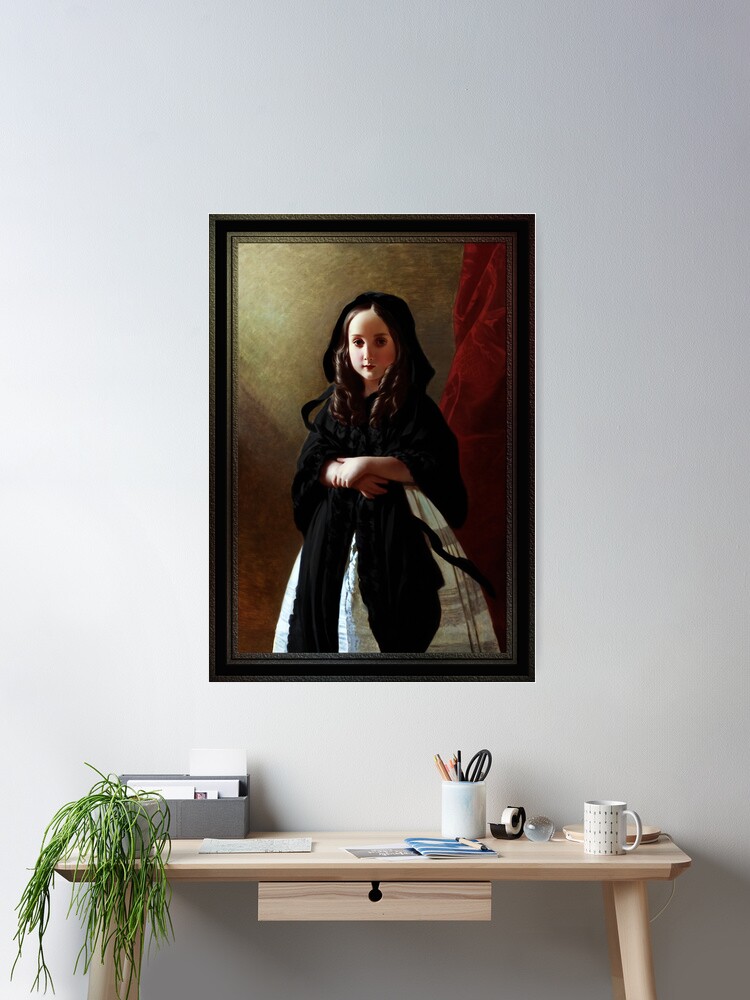
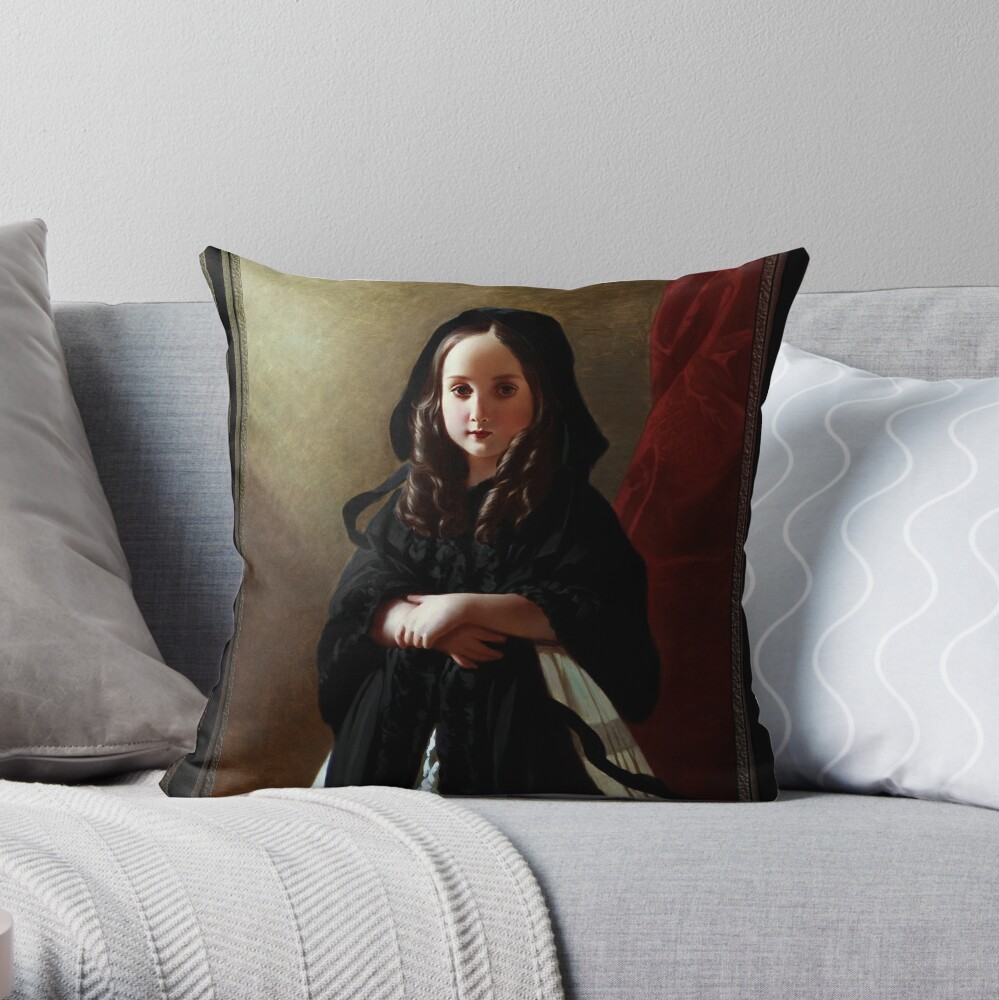
This is a Portrait of Belgikako Charlotte printzesa as a young girl 5 urteak (I have another retouched artwork of her when she was 2 years of age on the site as well – use the link above); she is wearing a black hooded cloak of a white dress with with large horizontal stripes running around it.
Her long beautiful brown hair is partially revealed from under the cloak as she is illuminated by the light that is coming from her right side at a high angle with a large red velvet drape to the left behind her, as an accent piece.
This Portrait of Princess Charlotte of Belgium is a retouched digital art old masters reproduction of a public domain image, eta Xzendor7 webgunean aurki daitezkeen artelan guztietan bezala sarean erosteko eskuragarri dago hainbat material formatutan, mihise inprimatuak barne., estanpatu akrilikoak, metal estanpatuak, egur estanpatuak, marko estanpatuak, kartelak, eta gisa ijetzitako mihise inprimatuak hainbat tamainatan 12 zentimetroetara 72 inches depending on the size of the actual artwork and the print on demand shop you choose to buy the art from..
Informazioa Behean Deribatua Wikipedia.org
Franz Xaver Winterhalter Menzenschwand herrixka txikian jaio zen, (Sankt Blasienen parte da gaur egun), Alemaniako Oihan Beltzean, Badengo Hautetsian, on 20 Apirila 1805. Fidel Winterhalterren seigarren semea izan zen (1773–1863), herriko baserritar eta erretxin ekoizlea, eta bere emaztea Eva Meyer (1765–1838), aspaldiko Menzenschwand familia bateko kidea.
Bere aita nekazari jatorrikoa zen eta eragin handia izan zuen bere bizitzan. Zortzi anai-arrebetatik, lauk bakarrik bizirik atera ziren haurtzaroan. Bere bizitzan zehar Franz Xaver-ek bere familiarengandik oso hurbil egon zen, Bere anaia Hermann-i bereziki (1808–1891), margolaria ere izan zena.
San Beneditarren monasterio batean eskolan ibili ondoren. Blasien, Winterhalterrek Menzenschwand utzi zuen 1818 urterekin 13 to study drawing and engraving.[4] Karl Ludwig Schüler-en tailerrean marrazkilari eta litografo gisa trebatu zen (1785–1852) Friburgoko Breisgaun. In 1823, urterekin 18, Munichera joan zen, von Eichtal baroi industrialak bultzatuta (1775–1850).
In 1825, Ludwig I.ak beka bat eman zion, Badengo Duke Handia (1763–1830) eta Municheko Arte Akademian ikasketak hasi zituen Peter von Corneliusekin (1783–1867), zeinaren metodo akademikoek deseroso jartzen zuten. Winterhalterrek mentore atseginagoa aurkitu zuen Joseph Karl Stieler erretratugile modan (1781–1858). Denbora horretan, bere buruari eutsi zion litografo gisa lanean.
Winterhalter epailearen zirkuluetan sartu zen sartu zenean 1828 marrazki-maisu bihurtu zen Badeneko Sophie Margravine, at Karlsruhe.[6] Alemania hegoaldetik haratago ezartzeko aukera iritsi zen 1832 Italiara bidaiatu ahal izan zuenean, 1833–1834, Badengo Leopoldo Duke Handiaren laguntzarekin.
Erroman Louis Léopold Robert-en moduko genero erromantiko eszenak konposatu zituen eta Frantziako Akademiako zuzendariaren zirkuluari lotu zitzaion., Horazio Vernet. Karlsruhera itzultzean Badengo Leopoldo Duke Handiaren eta bere emaztearen erretratuak egin zituen, eta gorte handi-dukaleko margolari izendatu zuten.
Hala ere, he left Baden to move to France, non bere genero italiar eszenak Il dolce Farniente oharra erakarri zuen Salon of 1836. Il Decameron a year later was also praised; both paintings are academic compositions in the style of Raphael. Aretoan 1838 Wagrameko printzearen erretratua erakutsi zuen bere alaba gaztearekin.
His career as a portrait painter was soon secured when in the same year he painted Louise Marie of Orleans, Belgikako erregina, eta bere semea. Ziurrenik koadro honen bitartez Winterhalterrek Bi Sizilietako Maria Amalia-ren berri izan zuen, Frantsesen erregina, Belgikako erreginaren ama.