

Elikadura Denbora
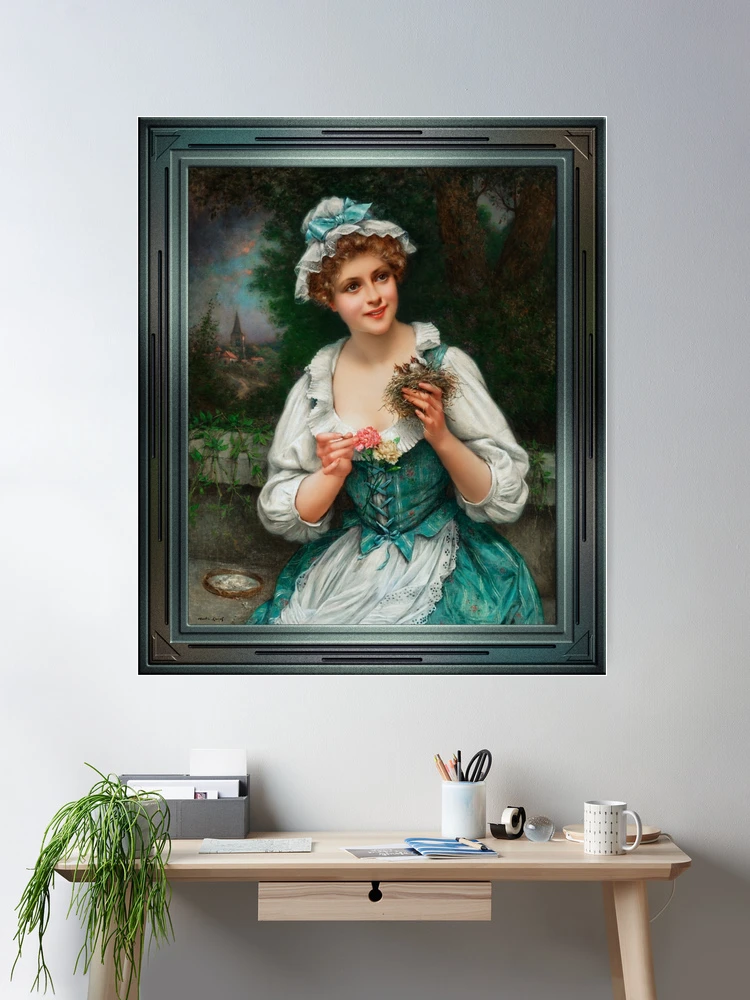
“Elikadura Denbora,” mendearen amaieran margotutako artista frantses ospetsuak François Martin-Kavel (1861 – 1931), errealismoaren elementuak erromantizismoaren leuntasunarekin maisuki nahasten dituen eszena liluragarri eta lasaia da. Martin-Kavelen lanak gazteriaren gaiak aztertzen ditu maiz, izadi, eta etxeko bizitza, eta pieza hau ez da salbuespena. Margolanak emakume gazte bat erretratatzen du pastoral batean, lorategi edo zelai oparo batean zutik, astiro-astiro eusten dion habia txori txikiekin. Artistak naturarekin duen elkarrekintza samurra jasotzen du, lasaitasun giroa sorraraziz, lañotasun, eta gizakiaren eta ingurumenaren arteko harmonia.
Edukien taula
Gai nagusia: Emakumea eta bere naturarekin duen lotura
Erdiko irudia “Elikadura Denbora” is a young woman, dressed in a period-specific, delicate ensemble. She wears a light turquoise gown, adorned with lace trimmings and a satin ribbon, which adds texture and a sense of femininity. Her white blouse with ruffled sleeves contrasts beautifully with the soft, muted colors of the gown. The details of the dress reveal the artist’s careful attention to fabric texture, creating a sense of realism in the way the light interacts with the fabric. Bere buruan, she wears a white lace bonnet, which is elegantly tied with a soft blue ribbon, further enhancing her gentle appearance.
Bere eskuetan, the woman cradles a small bird’s nest, a significant object within the composition. The nest, filled with small birds, bizitza berria sinbolizatzen du, lañotasun, eta elikatzea. Bizitzaren izaera ziklikoaren eta mundu naturalaren eta gizakiaren arteko loturaren ikur indartsua da. Habia eusten duenean bere ukitu delikatuak errespetu eta zaintza sakona erakusten du joera dituen izakiekiko. Txoriak, ardatz nagusia ez bada ere, eszenaren parte dira, momentuko samurtasuna eta artistak gizakiak naturarekin duen elkarreraginaren inguruko esplorazio tematikoa azpimarratuz.
Objektuak: Habia, Loreak, eta Ikur gehigarriak
Habia ez da atrezzo bat soilik artelanean, baina bizitzaren eta zaintzaren sinbolo zentrala. Barruan dauden txori txikiak emakumearen elikadura jasotzen ari direla dirudi, emakume figuraren hazkuntza-eginkizuna azpimarratuz. Habia bere bularraren kontra jartzen da, non ia haur bat bezala sehaskatuta dagoela dirudi. This act of care and feeding is also mirrored by the woman’s other hand, which gently holds a pink flower, possibly a rose or carnation. The flower adds a touch of color to the scene and reinforces the motif of life, edertasuna, eta elikatzea. It suggests a subtle connection to nature, with the woman herself acting as a bridge between the natural and human worlds.
The background of the painting includes a glimpse of a distant landscape, possibly a garden or meadow, shrouded in a soft, muted haze. The figures in the distance could be indicative of a nearby town or village, though they are not the main focus. This distant view adds depth and perspective to the painting, grounding the more intimate scene in a broader natural setting. The juxtaposition of the small-scale, delicate interaction in the foreground against the larger, more expansive natural landscape amplifies the idea that the harmony of the human world is inextricably linked to nature.
Lurra: A Quiet Garden or Pastoral Setting
The scene is set outdoors, possibly in a garden or a lush, green pasture, as evidenced by the vibrant foliage and the gentle roll of the landscape in the background. The garden is likely a symbol of tranquility and beauty, providing a natural, peaceful environment in which the central character can engage with nature. Argia, which filters through the leaves of trees in the background, bathes the scene in a warm glow, further enhancing the serenity and calmness of the moment. The artist uses subtle, natural lighting to highlight the key elements of the composition, giving the painting an ethereal quality.
The terrain is rich in color, with green hues predominating the background and surrounding foliage. The play of light and shadow creates a soft, ia ametsezko giroa, inviting the viewer to imagine themselves in this peaceful, bucolic setting. The scene evokes a sense of timelessness, suggesting that moments like these, where humanity is in harmony with nature, are universal and unchanging.
Estilo, Gai, and Mood of the Artwork
François Martin-Kavel’s style in “Elikadura Denbora” is rooted in realism, with a touch of romanticism that infuses the scene with an idealized beauty. The meticulous rendering of fabric, argia, and textures demonstrates the artist’s skill in capturing the intricate details of his subjects. Biguna, almost blurred rendering of the background, with the gentle portrayal of the young woman, creates a contrast that enhances the clarity and focus on the central figure.
The theme of the painting revolves around nurturing, lañotasun, and the close relationship between humans and nature. The young woman’s caring interaction with the nest of birds signifies an idealized version of femininity and motherhood, which was often celebrated in the art of the time. The scene is not just a representation of a woman’s role in nature, but also a reflection of an era where the connection between humanity and the environment was revered. This harmonious relationship is what sets the mood of the painting—calm, lasai, and gently idealized.
The mood is undeniably peaceful and joyful, conveying a sense of happiness derived from simple, natural acts. The woman’s expression is serene and content, and her posture suggests both gentleness and strength. She is not merely a passive figure in this scene; she actively engages with the birds, suggesting that she is a part of the natural cycle, fostering life and growth.
Bukaera
“Elikadura Denbora” by François Martin-Kavel is a stunning example of 19th-century French realism blended with romantic elements. The painting captures a serene and intimate moment of human interaction with nature, highlighting themes of nurturing, intzamen, and the beauty of the natural world. Through meticulous attention to detail and a masterful use of light and texture, Martin-Kavel evokes a timeless mood that invites the viewer to pause and reflect on the delicate balance between humanity and nature.
Hau arte digitala ukituta dagoen domeinu publikoko irudi baten erreprodukzioa da.
Bio artista honetatik eratorria Artnet.com
François Martin-Kavel genero margolari frantsesa izan zen, emakume gazte ederren erretratu idealizatuengatik ezaguna dena, maiz jantzi exotikoekin edo biluzteko egoera ziligarrietan irudikatzen zuena.
Martin-Kavelek sarritan margotu zituen emakumezkoen erretratuak ehun hondo ilunez inguratutako konposizio zentratuetan., eta antzerkian argiztatuta fokuak maketa distiratsuak balira bezala.
Nahiz eta François ezaguna izan bere emakumezkoen erretratu ezagunengatik, bere bodegoietako lore artelanengatik eta paisaia margoengatik ere ezaguna zen; eta ohiko erakusketari izan zen Salon des Artistes Français-en.
Apaindegiko kide gisa, urtean egindako ekarpen artistikoengatik domina bat eman zioten 1881.