

Portret fan prinses Charlotte fan Belgje
Portret fan prinses Charlotte fan Belgje (1840 – 1927) c1845 troch Dútske skilder Franz Xaver Winterhalter (1805 – 1873); âldere broer fan de Dútske skilder Hermann Fidel Winterhalter (1808 – 1891), is bekend om syn portretten fan 'e midden fan' e njoggentjinde ieuske royalty.
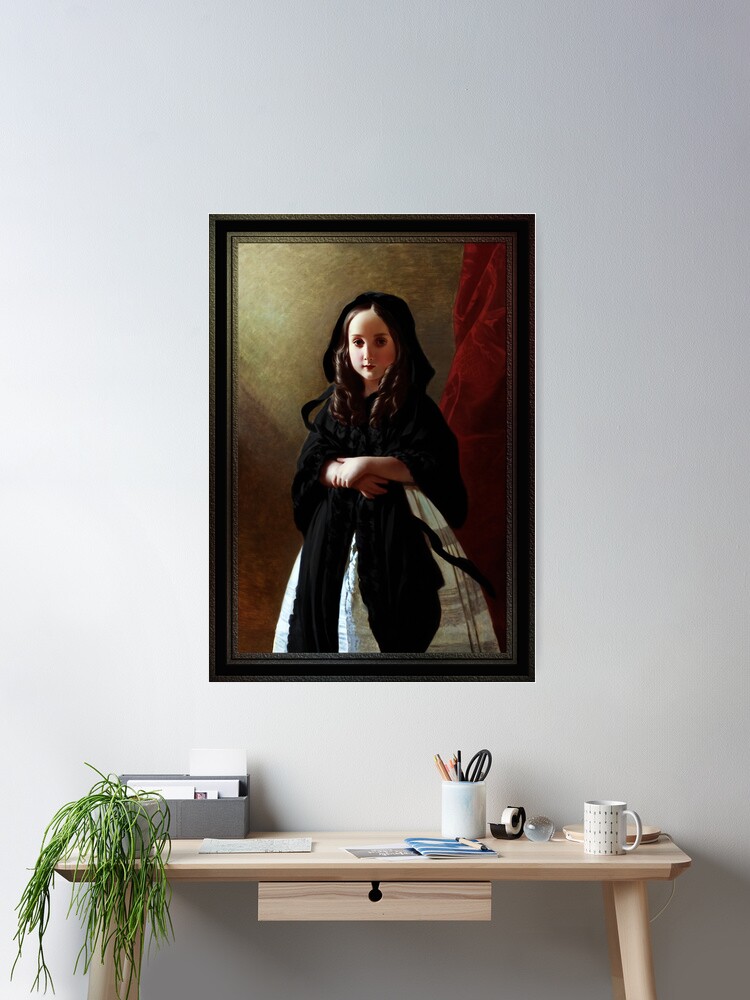
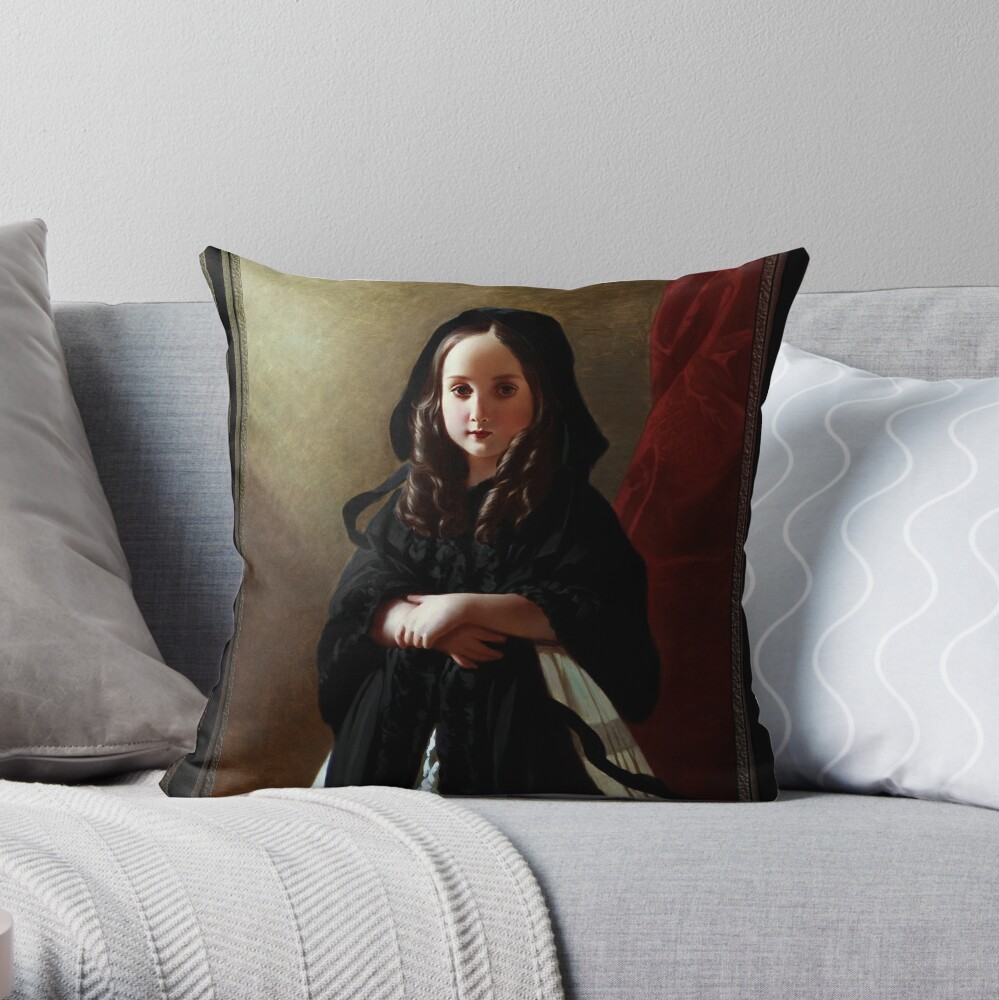
Dit is in portret fan Prinses Charlotte fan Belgje as jong famke 5 jier âld (Ik haw in oar retouched keunstwurk fan har doe't se wie 2 jierren fan leeftyd ek op 'e side – brûk de link hjirboppe); se hat in swarte kapmantel oan fan in wite jurk mei der mei grutte horizontale strepen omhinne rinne.
Har lange moaie brune hier wurdt foar in part iepenbiere ûnder de mantel as se wurdt ferljochte troch it ljocht dat komt fan har rjochterkant op in hege hoeke mei in grutte reade fluwelen drape nei lofts efter har, as aksintstik.
Dit portret fan prinses Charlotte fan Belgje is in retouchearre reproduksje fan âlde masters fan digitale keunst fan in ôfbylding yn it iepenbier domein, en lykas mei al it keunstwurk dat te finen is op 'e Xzendor7-webside is online te keap yn in ferskaat oan materiaalformaten, ynklusyf canvasprints, acryl prints, metalen prints, hout prints, framed prints, posters, en as rôle canvas prints yn in ferskaat oan maten út 12 inches oan 72 inch ôfhinklik fan de grutte fan it eigentlike keunstwurk en de print-on-demand winkel wêrfan jo kieze om de keunst te keapjen..
Info hjirûnder ôflaat fan Wikipedia.org
Franz Xaver Winterhalter waard berne yn it lytse doarp Menzenschwand, (no diel fan Sankt Blasien), yn it Dútske Swarte Wâld yn it Electoraat fan Baden, op 20 april 1805. Hy wie it sechsde bern fan Fidel Winterhalter (1773–1863), in boer en harsprodusint yn it doarp, en syn frou Eva Meyer (1765–1838), in lid fan in lang fêstige Menzenschwand famylje.
Syn heit wie fan boer en wie in machtige ynfloed yn syn libben. Fan de acht bruorren en susters, mar fjouwer oerlibbe de bernetiid. Syn hiele libben bleau Franz Xaver tige ticht by syn famylje, benammen oan syn broer Hermann (1808–1891), dy't ek skilder wie.
Nei it bywenjen fan skoalle yn in Benediktiner kleaster yn St. Blasien, Winterhalter liet Menzenschwand yn 1818 yn de âldens fan 13 tekenjen en gravearjen te bestudearjen.[4] Hy studearre op as tekener en lithograaf yn it atelier fan Karl Ludwig Schüler (1785–1852) yn Freiburg im Breisgau. Yn 1823, yn de âldens fan 18, hy gie nei München, sponsore troch de yndustrieel baron von Eichtal (1775–1850).
Yn 1825, hy krige in stipendium fan Ludwig I, gruthartoch fan Baden (1763–1830) en begûn in stúdzje oan de Akademy fan Keunsten yn München by Peter von Cornelius (1783–1867), waans akademyske metoaden him ûngemaklik makken. Winterhalter fûn in nofliker mentor yn 'e modieuze portrettist Joseph Karl Stieler (1781–1858). Yn dizze tiid, hy stipe himsels oan it wurk as litograaf.
Winterhalter kaam yn rjochtssirkels doe't yn 1828 hy waard tekenmaster fan Sophie Margravine fan Baden, te Karlsruhe.[6] Syn kâns om him bûten súdlik Dútslân te fêstigjen kaam binnen 1832 doe't er nei Itaalje reizgje koe, 1833–1834, mei de stipe fan gruthartoch Leopold fan Baden.
Yn Rome komponearre er romantyske sjenrescènes op 'e wize fan Louis Leopold Robert en hechte er him ta oan 'e rûnte fan 'e direkteur fan 'e Frânske Akademy, Horace Vernet. By syn weromkomst yn Karlsruhe skildere er portretten fan de gruthartoch Leopold fan Baden en syn frou, en waard beneamd ta skilder oan it gruthertoglike hof.
Dochs, hy ferliet Baden om nei Frankryk te ferhúzjen, dêr't syn Italjaanske sjenre sêne Il dolce Farniente luts oanjefte by de Salon fan 1836. Il Decameron in jier letter waard ek priizge; beide skilderijen binne akademyske komposysjes yn 'e styl fan Rafael. Yn de Salon fan 1838 hy stelde in portret út fan de Prins fan Wagram mei syn jonge dochter.
Syn karriêre as portretskilder wie al gau feilich doe't er yn datselde jier Louise Marie fan Orleans skildere, Keninginne fan de Belgen, en har soan. It wie nei alle gedachten troch dit skilderij dat Winterhalter ûnder de oandacht kaam fan Maria Amalia fan de Twa Sisyljes, Keninginne fan it Frânsk, mem fan de keninginne fan de Belgen.