

Portrait of Young Beauty with Pearls
Konstverk med titeln Portrait of Young Beauty with Pearls was created by the French painter Théodore Fantin-Latour (1805 – 1872), an artist renowned for his ability to capture the essence of elegance and delicate beauty in his portraits. The painting showcases a young woman, redo och lugn, adorned with pearls and soft pink hues, which reflect the opulence of the period. It speaks to the neoclassical ideals of beauty, capturing the grace of femininity during the early 19th century. Fantin-Latour’s mastery in the depiction of textiles, facial expression, and light contrasts establishes this piece as one that transcends time, offering a glimpse into the luxurious and refined lifestyle of the era.
Innehållsförteckning
Huvudämne: En ung skönhet
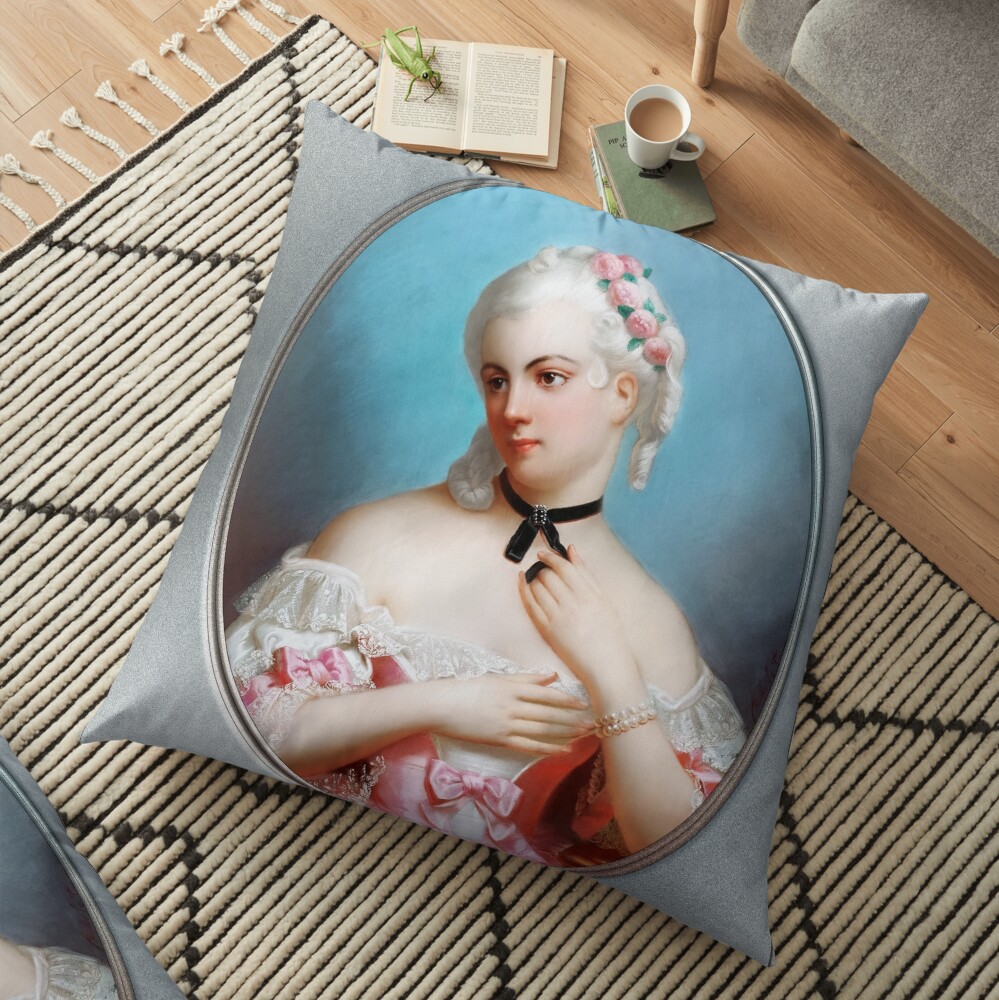
Målningens centrala figur är en ung kvinna, avbildad i en mjuk, ändå sammansatt pose. Hon stirrar åt sidan med en kontemplativ blick, hennes uttryck milda men fängslande. Hennes ansiktsdrag är delikat återgivna, med slät hud, höga kindben, och läppar som antyder både oskuld och en stilla styrka. Hennes ungdomliga hy är upplyst av ett mjukt ljus som faller på hennes ansikte, förstärker hennes känsliga skönhet.
Hennes hår är stylat i en elegant updo, med lockar och vändningar som ramar in hennes ansikte, accentueras av rosa rosor utspridda i hennes lås. Denna subtila blommiga touch förstärker hennes femininitet och grace. De mjuka lockarna i hennes hår, tillsammans med den milda upplysningen av hennes ansikte, bidra till porträttets övergripande delikata och eteriska kvalitet. Färgpaletten vald av Fantin-Latour — främst mjuka rosa, vita, och blekblå – hjälper till att framkalla en känsla av renhet och förfining.
Clothing and Accessories
The young woman is dressed in a lavish gown of pale pink, with lace accents around the neckline and sleeves. The gown’s fabric appears light and soft, almost as if it is billowing gently in the breeze, creating a sense of movement within the otherwise still portrait. The use of lace detailing around her shoulders and neckline not only adds depth to the texture of the gown but also contributes to the overall luxurious tone of the painting. A black ribbon tied around her neck, possibly indicating a choker, adds contrast to the soft hues of the gown, grounding the figure with a more subtle, almost somber touch.
Her accessories include a string of pearls that rests gracefully around her neck. The pearls shine with a soft iridescence, their lustrous sheen playing against the muted background and the soft pink tones of her gown. The pearls symbolize wealth, förfining, and social status, reflecting the high-class society of the era in which this portrait was created. The inclusion of the pearls adds to the overall feeling of elegance, reinforcing the notion that the woman in the portrait is not only beautiful but also a person of stature within her society.
Bakgrund och komposition
The background of the portrait is painted in a soft gradient of pale blue, providing a serene and almost dreamlike atmosphere that emphasizes the central subject. The faintness of the background directs the viewer’s attention solely to the figure, allowing her delicate features and attire to take center stage. Det subtila spelet av ljus och skugga ger djup till porträttet, ger den en känsla av dimensionalitet samtidigt som fokus på den unga skönheten bibehålls.
Den ovala ramen som omger målningen är ett typiskt val för porträtt av denna period. Ramen är utsmyckad men inte alltför genomarbetad, som kompletterar ämnets enkelhet och eleganta. Användningen av mjuk, dämpade färger i bakgrunden gör att kvinnans klänning och accessoarer sticker ut, gör henne till den odelade fokuspunkten i kompositionen.
Stil och teknik
Fantin-Latours stil är rotad i den neoklassiska traditionen, som försökte efterlikna dygderna hos antik grekisk och romersk konst. Målningen speglar detta i sin idealisering av den kvinnliga formen och betoningen på harmoni och proportion. His technique is characterized by meticulous attention to detail, speciellt vid återgivning av texturer såsom spetsen på klänningen, pärlorna, och hudens mjukhet. Konstnärens förmåga att fånga texturen av tyg och mjukheten i kvinnans hud skapar en påtaglig, nästan verklighetstrogen kvalitet på porträttet.
Smidigheten i penseln och den subtila blandningen av färger indikerar en hög nivå av teknisk skicklighet. Målaren använder ljus och skugga effektivt, ger figuren en känsla av volym och skapar en kontrast som framhäver de mjuka konturerna av kvinnans ansikte och kropp. Fantin-Latours förmåga att balansera den detaljerade återgivningen av motivet med en mer subtil, atmosfärisk bakgrund resulterar i ett porträtt som är både raffinerat och intimt.
Humör och tema
The overall mood of the painting is one of elegance and serenity. The subject’s composed expression and delicate features create a sense of calm, while the soft color palette and refined details of her attire evoke a feeling of opulence and grace. The use of pearls as a key accessory ties into the theme of wealth and social status, reinforcing the notion that the woman depicted is not just a beauty but a person of importance in her society.
The theme of beauty, both external and internal, is explored through the careful portrayal of the woman’s features. Her contemplative expression suggests that there is more to her than just physical allure; she carries herself with dignity, embodying the virtues of the period. The overall elegance of the composition suggests that she is a woman of high social standing, living within the refined world of French aristocracy.
Lite konstverksinformation
This portrait is assumed to be that of Princess Louise Élisabeth of France (1727 – 1759) the eldest daughter of King Louis XV of France and Maria Leszczyńska and the elder twin of Anne Henriette de France; but compared to all the other paintings made of these sisters, I do not see how this possible.
Portrait of Young Beauty with Pearls is a remastered digital art old masters reproduction of a public domain image that is available as a canvastavla online.
Konstnärsbio
Theodore was a pastel painter of portraits and studied in the workshop of the French Portrait Painter Benjamin Rolland (1777 – 1855), who was a student of the celebrated Neoclassic French Painter Jacques-Louis David (1748 – 1825) och anses vara den framstående målaren i sin tid.
Under inflytande av Rolland, Theodore behärskade färdigheterna att måla, ritning och formrendering; och skulle ställa ut sina konstverk regelbundet på Salongen fr.o.m 1842 till 1866.
Hans son Henri Fantin-Latour född i 1836 var också en välkänd och respekterad målare av stillebenbilder och porträtt; och hans far gav honom sina första konstlektioner vid tio års ålder, efter att ha erkänt sin talang för konst.