

Psyche c1786
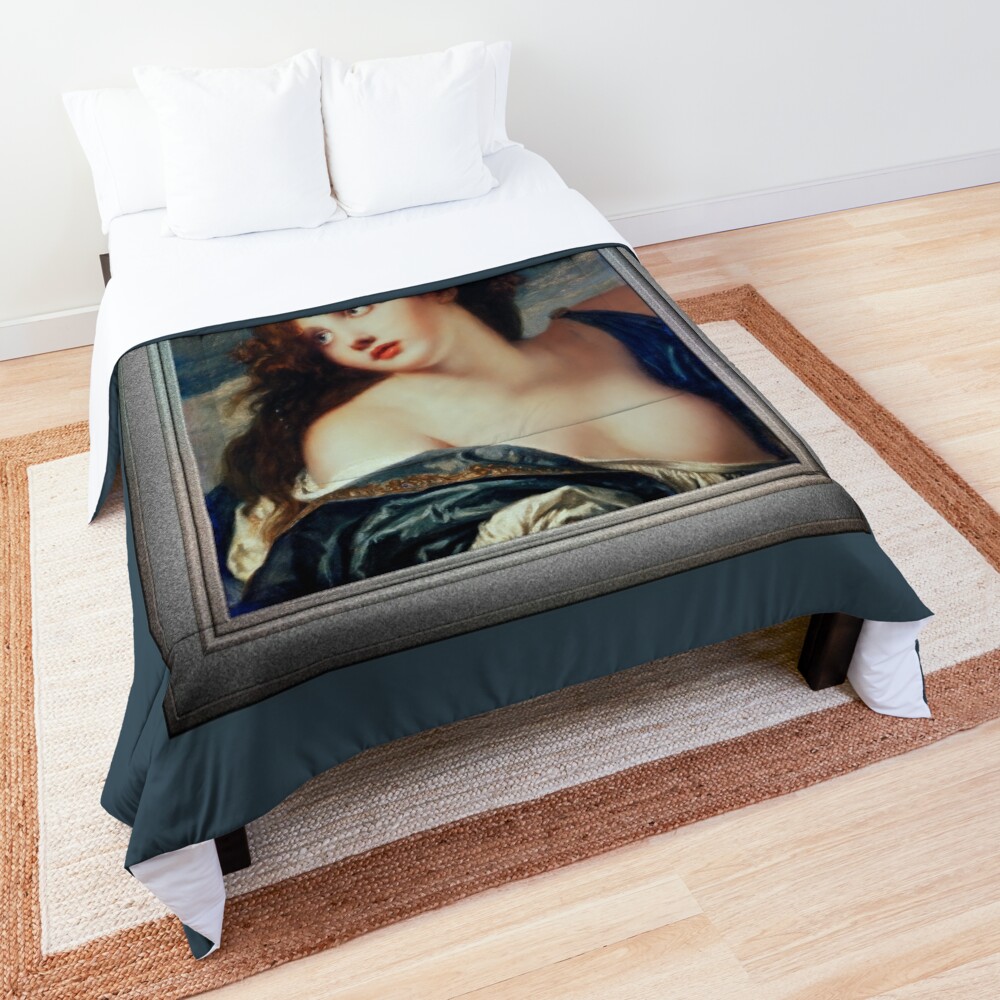
제목의 작품 프시케 ~에서 1786, 프랑스 화가에 의해 만들어졌습니다 장 바티스트 그뢰즈 (1725 – 1805), depicts an emotional and intimate moment in mythological storytelling. This painting captures the mythical figure Psyche in a delicate and poignant portrayal, showcasing Greuze’s mastery of light, 조직, 감정적 깊이. 이 작품에서, Greuze uses soft hues and detailed expressions to bring to life the timeless myth of Psyche, a mortal woman whose beauty was so extraordinary that it led her into a series of trials that ultimately resulted in her becoming immortal.
목차
주요 주제: Psyche’s Emotional Expression
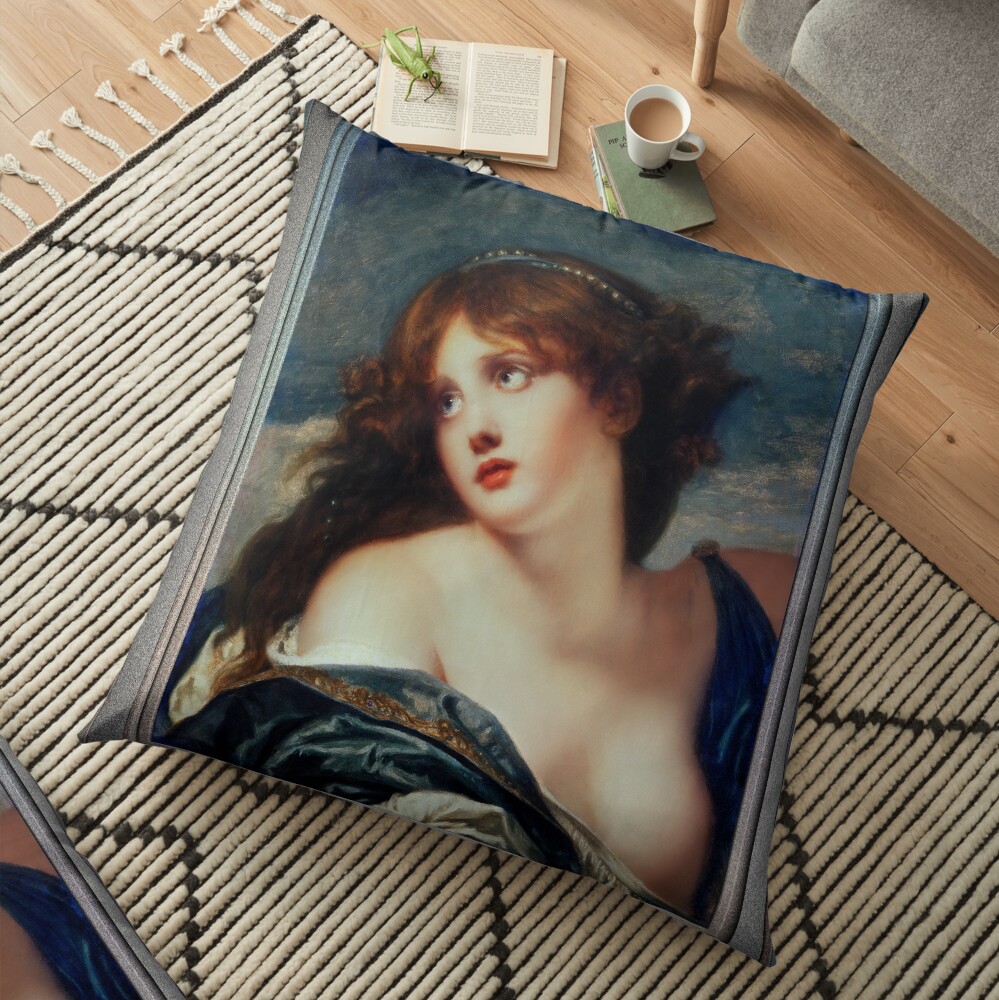
Psyche is the central figure of the composition, rendered with grace and sensuality. She is portrayed in a moment of quiet contemplation, her eyes gazing upward with an expression that reflects both vulnerability and longing. Her delicate features—rounded cheeks, soft lips, and large, expressive eyes—are painted with such fine detail that they evoke a sense of realism, almost lifelike in their intensity. This is characteristic of Greuze’s style, where he excelled in capturing human emotion with a remarkable sense of tenderness and psychological depth.
Psyche’s long, flowing hair is styled in loose curls that cascade over her shoulders, adding to her ethereal and delicate appearance. A pearl headband adorns her hair, symbolizing both her beauty and her connection to the divine. The way her hair is painted suggests movement, as though caught in a gentle breeze. The artist’s attention to such fine details not only enhances her beauty but also reinforces the dreamlike quality of the scene.
The Clothing and Materials
Psyche is dressed in a lavish garment of blue and gold. The fabric flows elegantly around her shoulders and neck, rendered with Greuze’s characteristic skill at depicting textures. The deep blue of the robe contrasts beautifully with the soft white of her exposed skin, creating a striking visual balance. The robe is adorned with golden trims, which enhance its luxurious appearance, symbolizing the celestial and divine nature of Psyche herself. Greuze’s treatment of the fabric is particularly noteworthy, with light and shadow playing across the material in such a way that it almost seems tangible, as though the viewer could reach out and touch the smoothness of the silk.
The fine texture of the fabric serves as a metaphor for the vulnerability and fragility of Psyche’s character, amplifying her emotional turmoil. 의류, with its soft folds and the shimmering sheen of the material, adds a layer of complexity to the emotional tone of the painting. The robe’s rich colors and sumptuous fabric reflect Psyche’s dual nature—both mortal and divine, human and otherworldly.
배경과 설정
The background of the painting is a soft, atmospheric blend of cool blues and whites. It lacks any overt detail, but it works to emphasize Psyche’s figure. The simple, almost abstract background contrasts with the highly detailed foreground, focusing the viewer’s attention entirely on the subject. This technique reflects Greuze’s ability to create intimacy within his compositions, drawing the viewer into the emotional state of the subject without distraction.
The sky-like backdrop also evokes the idea of vastness and infinity, suggesting the mythological setting from which Psyche originates. The gentle gradients of color create a sense of space and airiness, 그림의 몽환적인 분위기를 더해주는. Psyche’s figure appears almost suspended in space, as though she is caught in a moment between earth and the heavens.
스타일과 기술
Jean-Baptiste Greuze was known for his ability to capture human emotion through his mastery of light and shadow, as well as his use of soft, harmonious colors. 에 프시케, the artist’s use of soft, glowing light on the figure’s face creates a sense of naturalism, drawing attention to the emotional expression of the subject. The light falls gently on Psyche’s skin, highlighting her delicate features while creating a contrast with the darker tones of her hair and clothing. This use of light and shadow is not just a stylistic choice but serves to emphasize the psychological depth of the painting, imbuing Psyche with a sense of inner conflict and longing.
Greuze’s technique in handling the human form is another striking element of this work. The artist captures the natural curves of Psyche’s body with fluid lines, giving her an air of graceful motion even though she is seated in stillness. The folds of her robe, the movement of her hair, and the nuanced expression on her face all combine to create a portrait that is both emotionally compelling and visually arresting.
분위기와 테마
분위기 프시케 is one of wistful longing and quiet contemplation. The expression on Psyche’s face suggests a deep emotional turmoil, possibly related to the trials and tribulations she faces in the myth. There is a sense of sadness and resignation in her gaze, as though she is caught between hope and despair. The artist captures this emotional complexity through his careful rendering of her facial expression and posture, conveying a sense of vulnerability that resonates deeply with the viewer.
The theme of the painting—Psyche’s journey from mortal to divine—adds layers of meaning to the artwork. The mythological tale of Psyche and her eventual union with Cupid, 사랑의 신, is one of transformation, 사랑, 그리고 희생. Greuze’s portrayal of Psyche’s emotional state hints at the internal conflict she faces as she navigates these challenges. 이 작업에서, Greuze does not focus on the grandiose or heroic elements of the myth but rather on the human, emotional aspect of the character, making the figure of Psyche relatable and deeply human.
결론
Psyche c1786 by Jean-Baptiste Greuze is a masterpiece that captures both the beauty and the emotional depth of its mythological subject. Through his delicate rendering of Psyche’s form, expressive face, and elegant attire, Greuze has created a timeless portrayal of a woman caught between the mortal and divine worlds. The emotional resonance of the painting, combined with its technical mastery, places this work among the finest examples of Greuze’s career and offers a powerful exploration of human emotion within the context of classical mythology.
이것은 공개 도메인 이미지의 리마스터링된 디지털 아트 올드 마스터 복제입니다. Boucher는 Guay의 작품으로 일련의 그림을 그리고 Madame de Pompadour가 조각하여 호의를 받는 궁정에게 잘 묶인 책으로 배포했습니다..
이 디지털 아트 창작, Xzendor7 웹사이트에서 찾을 수 있는 모든 예술 작품과 마찬가지로 캔버스 인쇄를 포함한 다양한 재료 형식으로 온라인에서 구매할 수 있습니다., 아크릴 프린트, 금속 지문, 목판화, 액자 인쇄, 포스터, 그리고 압연 캔버스로 다양한 크기로 인쇄됩니다. 12 인치에 72 실제 작품의 크기와 작품을 구매하기로 선택한 주문형 인쇄소에 따라 인치.
이 작품은 다양한 남성복과 여성복에서도 볼 수 있습니다., 머그, 토트백, 스카프, 노트북, 저널 및 다양한 홈 데코 제품.
아티스트 소개
아래 정보는 NGA.gov
장은 투르뉘에서 태어났다., 프랑스 1725 아주 어린 나이에 자신의 재능을 알아본 기와장인의 여섯째 아들로; 그를 리옹으로 보낸다, 프랑스 초상화가 Charles Grandon과 함께 공부하는 프랑스 (1691 – 1762).
대략 나이에 30 그는 리옹을 떠났다, 그리고 파리를 여행했다., 프랑스 Académie royale de peinture et de sculpture 또는 Royal Academy of Painting and Sculpture에서 공부; Ancien Régime 후반기에 당시 프랑스 최고의 예술 기관이었습니다. (구 제도 ~1500 ~ 1789), 에서 폐지될 때까지 1793 프랑스 혁명 동안.
1760년대와 1770년대에 매우 재능 있고 매우 성공적이었지만, Marquise de Pompadour와 같은 후원자가 있습니다. (1721 – 1764), 러시아 황후 캐서린 2세 (아르 자형. 1762 – 1796), 그리고 La Live de Jully의 Ange Laurent (1725 – 1779); 그의 반항적 인 성격과 아카데미 및 살롱 관계자들과의 갈등은 그의 불행임을 증명할 것입니다.; 특히 Anne Marie Babuty와의 결혼 이후 1759; 그에게 재앙이 될 것입니다, 그녀는 그의 학생 및 보모들과 다양한 일을 한 것으로 알려졌습니다., 이로 인해 그는 소득 손실과 대중의 굴욕감을 느꼈습니다..
결혼이 끝났을 때 34 몇 년 후 그의 아내는 상당한 합의금을 받았습니다., 그로 인해 그는 심각한 재정난에 빠졌고 사망할 때까지 1805 세의 나이에 80 그는 거의 파산했다.