

Ribbons and Lace c1902
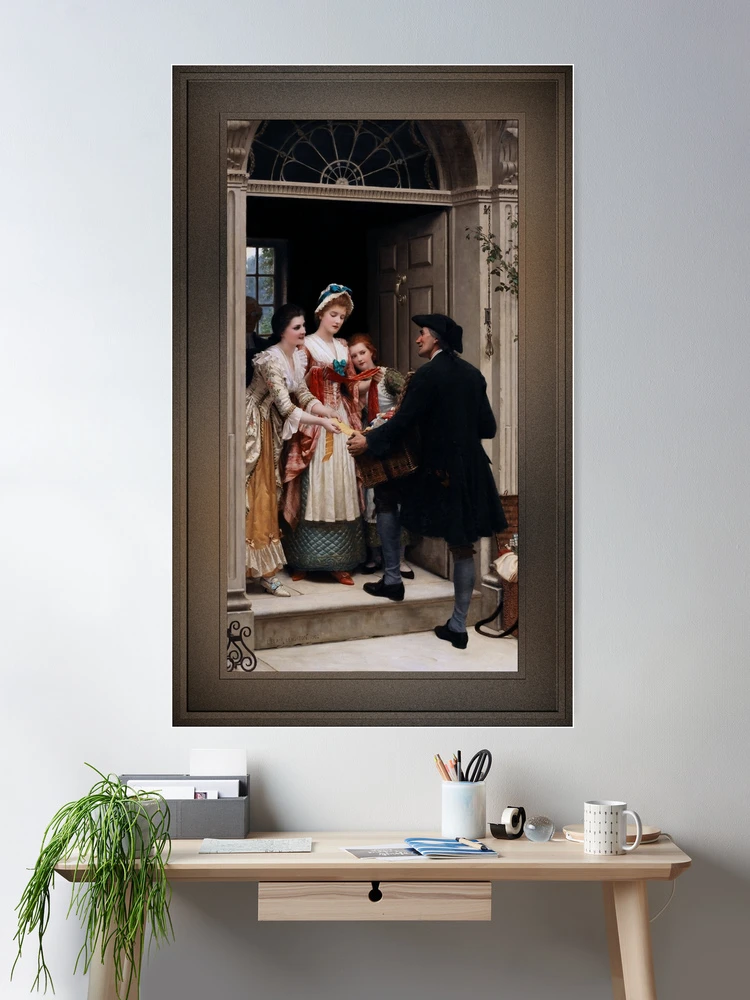
“Ribbons and Lace,” erstallt an 1902 by British artist Edmund Blair Leighton (1852 – 1922), is a fine example of late Victorian Genre Molerei that epitomizes the elegance and charm of the period. Leighton, known for his skillful depictions of historical and romantic scenes, masterfully captures a moment of refined grace in this work. The painting centers on a group of three women engaged in a moment of social interaction on the doorstep of a grand building. D'Opmierksamkeet vum Kënschtler op Detailer, the richness of textures, and the graceful portrayal of his subjects reflect his deep understanding of the human form and his romantic interpretation of everyday moments.
Inhaltsverzeechnes
Haaptwiel a Zesummesetzung
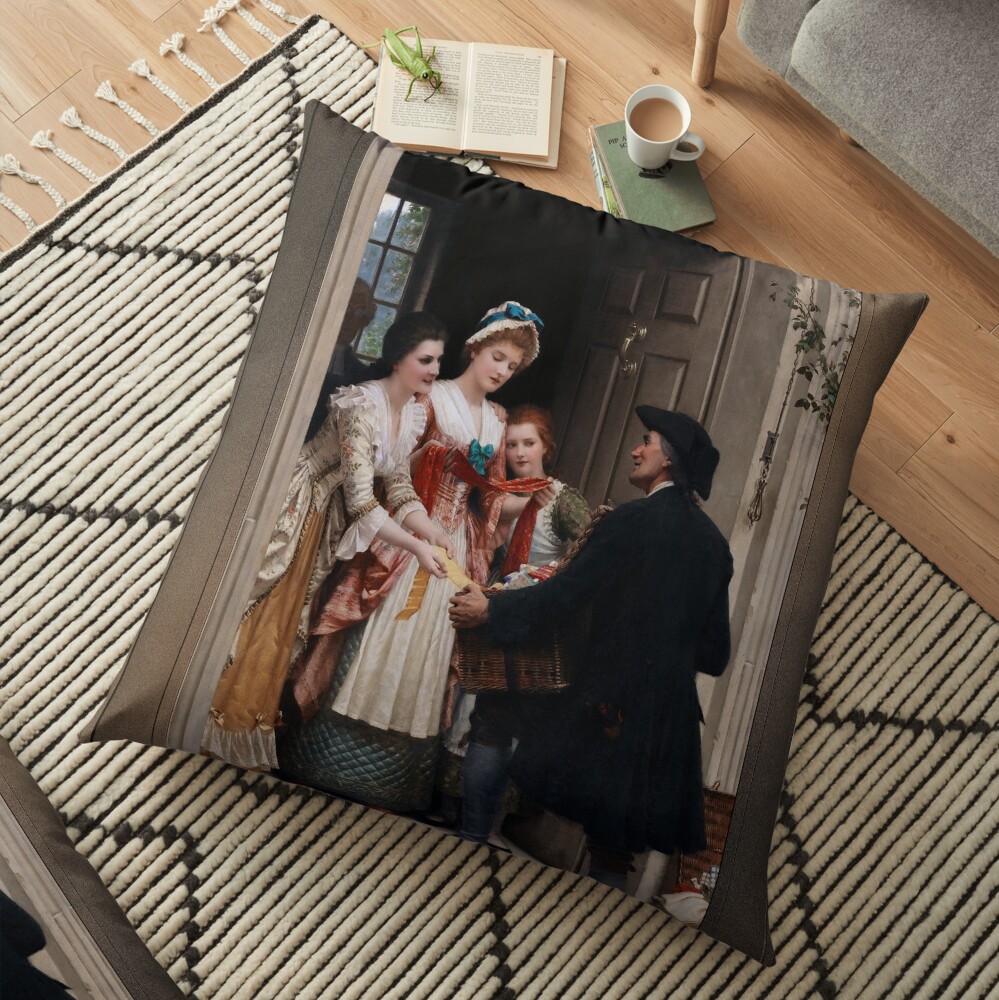
De Brennpunkt vum Konschtwierk ass d'Interaktioun tëscht de Fraen an engem Mann virun der Dier. D'Szen ass an engem eleganten a raffinéierten Interieur gesat, suggeréiert de soziale Status vun de Personnagen. Déi dräi Fraen, an iwwerflësseg Kleedung aus dem 18. Joerhonnert gekleet, sinn virun der Dier positionéiert, jidderee mat komplizéierte Spëtz a Bänner dekoréiert, déi souwuel Weiblechkeet an de fashionable Stil vun der Ära symboliséieren. Déi zentral Figur ass eng Fra an engem wäisse Kleed mat engem roude Schnëtt, e Kuerf vum Mann ze kréien. Hir Haltung proposéiert eng gnädeg Unerkennung, während déi zwou aner Fraen, op hir Säit positionéiert, beobachten d'Interaktioun.
De Mann, bei der Entrée stinn, hält e Wicker Kuerf mat verschiddene Wueren gefëllt, vläicht e Cadeau oder Offer. Seng Kleedung reflektéiert d'Moud vun der Period fir Männer, mat engem Mantel an Hutt dat, Wärend formell, behalen e Gefill vu Praktikitéit. Säi Gesiicht ass liicht Richtung Betrachter gedréint, den Androck vu häerzlechen Engagement ze ginn, obwuel seng Opmierksamkeet haaptsächlech op d'Fra konzentréiert ass mat där hien interagéiert. D'Figur vum Figur, liicht gebéit, füügt zum allgemenge Sënn vu Respekt a Veruechtung, typesch am 19. Joerhonnert Geriicht a sozialen Austausch.
Kader an Ëmwelt
De Kader vun “Ribbons and Lace” dréit bedeitend zur Stëmmung vum Stéck bäi. D'Dier ass eng grouss architektonesch Feature, mat Sailen a komplizéierten Detailer ronderëm d'Entrée. Déi dekoréiert Fënster iwwer der Dier suggeréiert d'Opulenz vum Gebai an déi héich sozial Klass vu sengen Awunner. Déi baussenzeg Landschaft ass liicht ze gesinn duerch déi oppen Dier, Hiweiser op e gutt gehalene Gaart oder Terrainen typesch fir räich Immobilien während der Period.
Den Interieur, nëmmen deelweis siichtbar, Hiweiser op weider Räichtum, mat luxuriéise Draperien a gedämpftem Liichtfilter duerch d'Dier. D'Benotzung vun natierleche Liicht, duerch d'Dier a Fënster gefiltert, bascht d'Szen an engem waarme Glanz, léinen e Gefill vu Rou an Harmonie un der Atmosphär. D'Liicht spillt eng entscheedend Roll fir d'Stofftexturen vun de Fraekleeder an déi delikat Feature vun hire Gesiichter ze markéieren.
Objeten an Detailer
All Objet an der Szen gouf suergfälteg plazéiert fir zur Gesamtnarrativ an Ambiance bäizedroen. Dem Mann säi Kuerf ass zentral am Austausch, symboliséiert e Geschenk oder Offer, wärend d'Bänner an d'Spëtze, déi d'Fraekleedung dekoréieren, e Gefill vu Gentilitéit a Raffinesséierung suggeréieren. Dës Elementer ënnersträichen de soziale Status vun de Fraen, deenen hir fashionable Kleeder an Opmierksamkeet op Detailer Räich a Verfeinerung bedeiten.
D'architektonesch Detailer vun der Dier, mat senge delikaten Ausschnëtter a flotten Linnen, e Frame kreéieren deen d'Opmierksamkeet vum Betrachter visuell op d'Figuren guidéiert. Dës Detailer ginn duerch déi mëll gespigelt, luxuriéise Stoffer vun de Fraen gedroe, dorënner déi delikat Spëtz ronderëm d'Kante vun hire Kleeder an déi glat, fléissend Bänner, déi d'Konturen vun hire Figuren ënnersträichen. D'Texturen vun der Kleeder, d'Gläichheet vum Kuerf, an déi mëll Schatten vum Interieur bäidroe fir déi räich taktile Qualitéit vum Bild.
Thema a Stëmmung
D'Thema vum Bild ass ee vun sanft Hausliewen a sozial Interaktioun. Et reflektéiert déi raffinéiert, gemittlechen Tempo vun der ieweschter Klass Gesellschaft am fréie 20. Joerhonnert, e Moment vun héiflechen Austausch erfaassen. D'Interaktioun tëscht dem Mann an de Fraen proposéiert e Gefill vu Proprietéit, wärend de Kader eng Welt vu Gnod an Eleganz erënnert. D'Stëmmung vum Bild ass roueg a wierdeg, ouni Sënn vun Dringendes oder Desaccord. D'Figure si komponéiert a kontrolléiert, eng Welt suggeréieren wou sozial Normen respektéiert ginn, an Interaktioune sinn gemooss an héiflech.
D'Benotzung vu Liicht a Schatten verbessert d'Rou, invitéierend Atmosphär, wärend déi mëll Faarwen vun der Fraekleedung an déi architektonesch Detailer e Gefill vun Harmonie kreéieren. Et gëtt keng sichtbar Spannung oder Desaccord, nëmmen de rouege Floss vun der Interaktioun tëscht de Figuren. Dës Stëmmung invitéiert den Zuschauer an eng Welt vu raffinéierter Schéinheet ze trëppelen, wou Konscht, Moud, a sozial personaliséiert Mëschung nahtlos.
Styl an Technik
Leighton Stil an “Ribbons and Lace” ass charakteristesch vun der akademescher Traditioun, konzentréieren op historesche Realismus an Opmierksamkeet op Detailer. D'Molerei beschäftegt eng mëll, bal dreemlech Qualitéit duerch d'Benotzung vu Liicht, wat d'Delikatesse vun de Figuren an hir Ëmgéigend ënnersträicht. Dem Kënschtler seng technesch Expertise ass evident a senger Rendering vu Stofftexturen, vun de Spëtzekleeder a Bänner op d'Fraekleeder bis zum Glat, blénkeg Uewerfläch vum Kuerf.
Dem Leighton seng Opmierksamkeet op anatomesch Detailer an d'Drapéierung vum Stoff reflektéiert seng Meeschterschaft vu Portraiten a säin déiwe Verständnis vu mënschlecher Form a Bewegung. D'Kleedung vun de Figuren ass mat ustrengender Genauegkeet duergestallt, mat individuellen Falten a Falten, déi d'Gewiicht an d'Textur vun de Materialien suggeréieren. D'Benotzung vu Schatten a Liicht fir d'Formen ze verbesseren an Déift an der Zesummesetzung ze kreéieren weist weider dem Leighton seng Fäegkeet fir d'natierlech Schéinheet vu senge Sujeten ze erfassen..
Conclusioun
“Ribbons and Lace” vum Edmund Blair Leighton ass e beandrockend Beispill vu spéide Victorian Genremolerei, e delikate Moment vum sozialen Austausch an engem raffinéierte festzehalen, elegant Kader. Duerch seng virsiichteg Opmierksamkeet op Detailer a Meeschter um Liicht, Leighton schaaft eng roueg, harmonesch Atmosphär, déi e Gefill vun Nostalgie fir eng Ära vu Gnod an Zivilitéit erënnert. D'Bild ass exquisite Porträtatioun vu Stofftexturen, komplizéiert architektonesch Fonctiounen, a wierdeg sozial Interaktioun reflektéiert dem Kënschtler säin déiwe Verständnis vu sengem Thema a seng Fäegkeet fir eng Welt vu Schéinheet z'erwächen., eleganzwannen, a Charme.
Dëst ass eng remastered digital Konscht al Master Reproduktioun vun engem Public Domain Bild dat als verfügbar ass Leinwandprint online.
Kënschtler Bio
Informatioun Ënnen Ofgeleet Vun Wikipedia.org
Den Edmund gouf mam Caroline Leighton gebuer (née Boosey) a Kënschtler Charles Blair Leighton (1823 – 1855) September zu London England 21, 1852; a gouf op der University College School gebilt, déi hien am Alter vun 15 fir en Téi Händler ze schaffen.
Well hien en Intérêt fir Konscht hat an et wollt studéieren; hien huet sech op South Kensington ageschriwwen an huet owes ugefaang Lektioun ze huelen; a vun do besicht Heatherley d'Schoul zu Newman Street, London.
Wéi hien war 21 Joer ass hien an d'Royal Academy of Arts gaang, déi gegrënnt gouf an 1768; a géif spéider seng éischt Konschtkommissioun kréien fir Monochrom Illustratiounen fir Cassell's Magazine a säi Book of British Ballads ze maachen.
Hien huet seng éischt Molerei mam Titel ausgestallt: E Feeler am Titel an 1874 an der Royal Academy, déi him verdéngt 200 Pond; a géif seng Wierker jäerlech fir déi nächst Ausstellung 40 Joer op der Royal Academy bis 1920.
Den Edmund war e Kënschtler, dee vill Opmierksamkeet op Detailer bezuelt huet an héich fäerdeg dekorativ historesch Konschtwierker produzéiert huet, déi romantiséiert Szene vu Ridderlechkeet a Fraen a mëttelalterleche Kleedung huet, dat hat grouss populär Appel.