

Ripplin Rythm
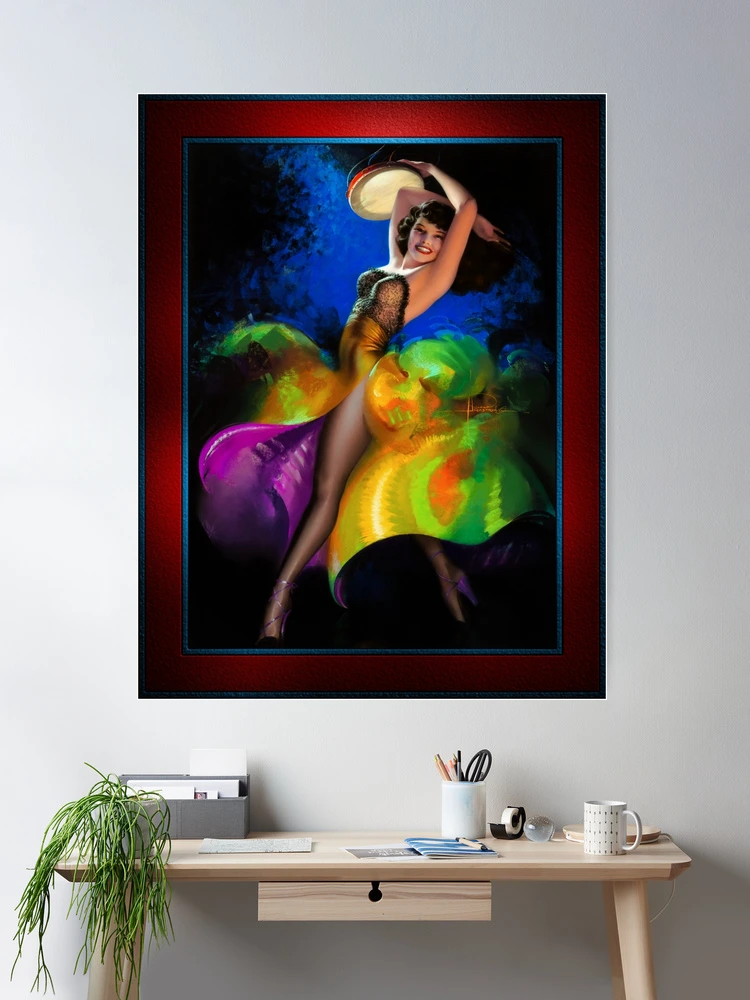
“Ripplin Rhythm,” created by the renowned American artist Rolf Armstrong (1889 – 1960), stands as a testament to the vibrant beauty of pin-up art during the mid-20th century. Armstrong, a prominent figure in the golden era of American commercial art, expertly merges movement, koloro, and emotion within this piece, offering a glimpse into the glamour and sensuality that defined the era.
Naskita en 1889, Armstrong’s work was marked by a mastery of light and color, making his images highly sought after in advertisements, illustrations, kaj belartoj. He utilized a unique blend of techniques that brought dynamism to his subjects, kaj “Ripplin Rhythm” encapsulates this with its fluid and energetic portrayal of a woman in motion.
Enhavtabelo
Ĉefa temo: The Vibrant Dancer
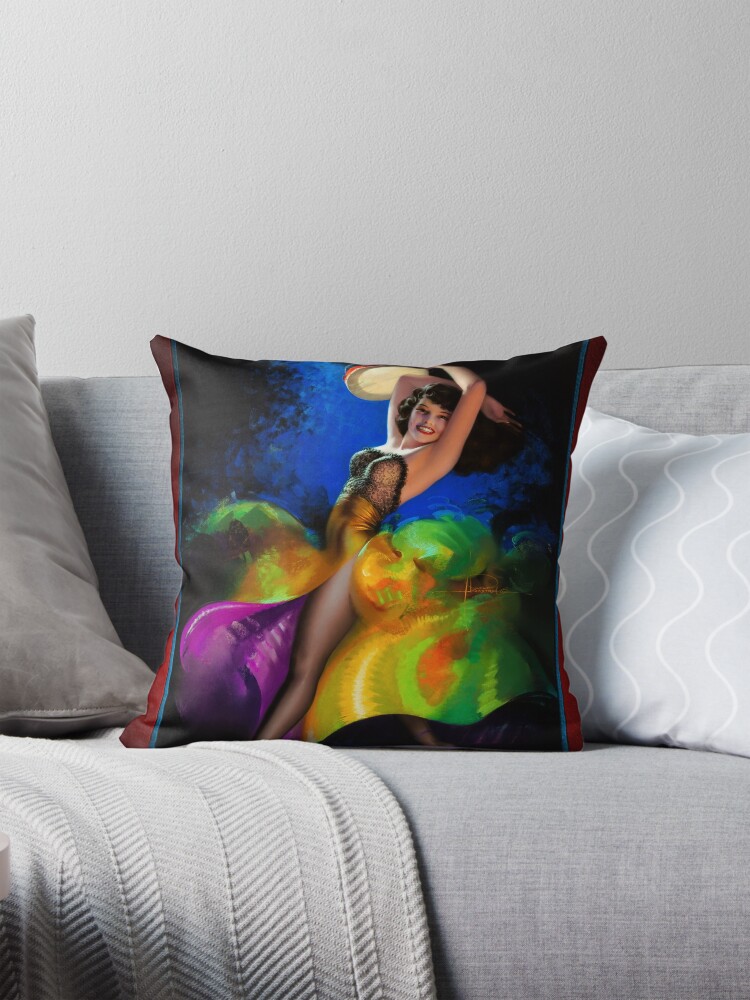
En la koro de “Ripplin Rhythm” is a captivating depiction of a dancer in mid-performance. La temo, a woman, exudes confidence and joy as she spins gracefully, her flowing dress rippling around her body like the waves of an ocean. The dancer’s attire is a burst of color, with swirling shades of green, Flava, and purple creating a striking contrast against the deep blue background.
The woman’s posture is elegant yet exuberant, her arms raised in a celebratory gesture as she holds a tambourine above her head. Her face radiates happiness, a wide smile revealing her playful spirit. Armstrong has captured not only her motion but also her essence, making her appear as though she is alive with energy and rhythm.
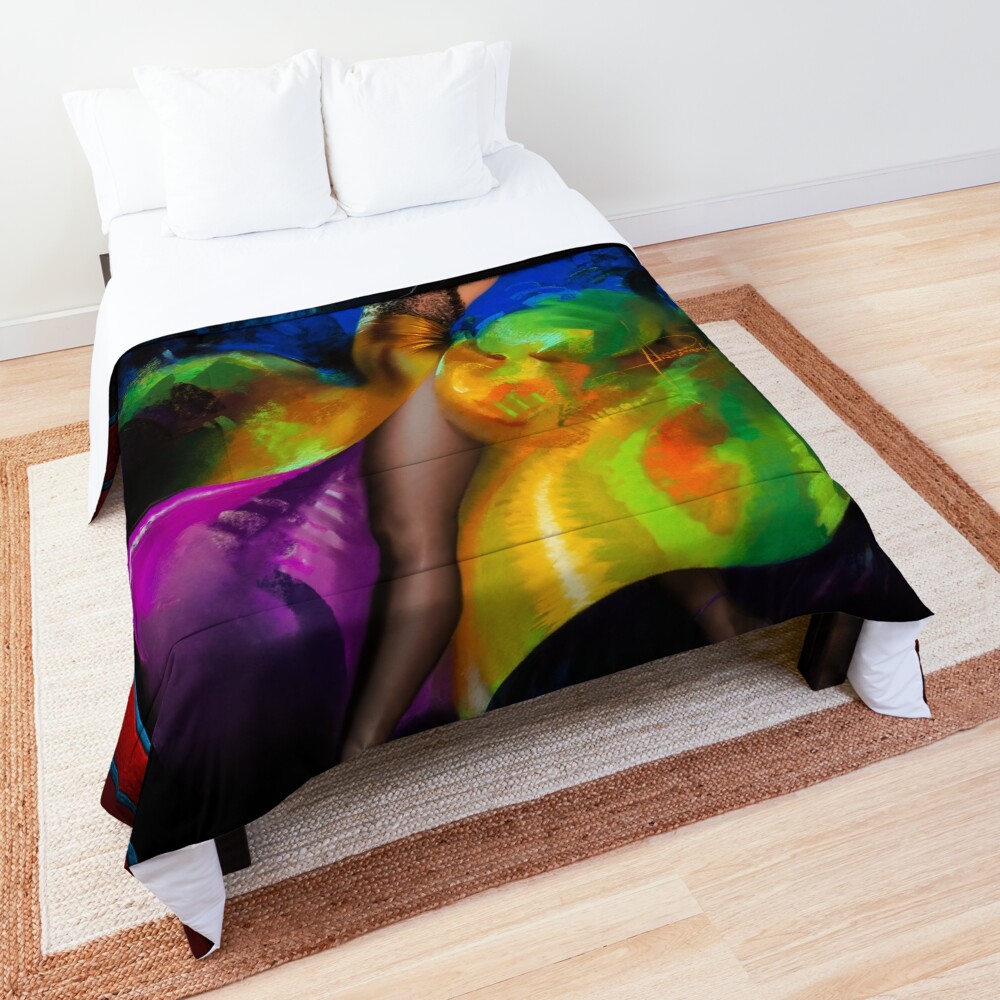
The woman’s vibrant costume, designed to reflect the rhythm of her movements, is a fusion of bold colors. The soft metallic sheen of her golden bodice catches the light, enhancing the dynamic flow of her skirt. Armstrong’s use of color in this piece is masterful, with each hue seemingly chosen to emphasize the woman’s graceful spinning and the lively atmosphere of her performance. The skirt, which flares out around her like an explosive flower, ripples with energy, suggesting the dancer’s movement and the pulse of the music she is engaged with.
The Objects: Tambourine and Flowing Garments
The tambourine held by the dancer is a key object in the painting, not only because it symbolizes the musical rhythm she embodies but also because it ties the composition together. The tambourine’s small yet intricate form contrasts the large, swirling mass of the dancer’s gown, yet it maintains a presence that complements the overall movement within the scene.
The circular shape of the tambourine subtly mirrors the curves and flow of her garments, creating a visual harmony between the two. This object, while seemingly simple, amplifies the sense of rhythm and dance in the composition.
The cascading layers of the dancer’s gown are another vital aspect of the work. Armstrong’s skillful handling of fabric and texture brings the dress to life, with each fold and curve appearing as if it is caught mid-movement. La robo, with its vibrant, rippling folds, seems to echo the fluidity of the dancer’s form. The luxurious colors and glossy textures of the skirt create a feeling of both elegance and freedom, enhancing the theme of lively celebration.
Tereno: The Colorful Background
La fono de “Ripplin Rhythm” is one of the key elements that contribute to the piece’s overall mood. A deep blue hue forms the backdrop, providing a striking contrast to the warm colors of the dancer’s attire. This color choice highlights the subject and makes her appear as if she is emerging from a dreamlike or fantastical environment.
Armstrong uses the swirling shapes and dark tones in the background to evoke movement and rhythm, as if the air itself is alive with the same energy that drives the dancer. The fluidity of the colors in the background suggests motion, blending with the dancer’s own movements, creating a seamless connection between subject and environment.
Stilo: Art Deco and Glamour
“Ripplin Rhythm” is a quintessential example of Armstrong’s signature style, which draws heavily from Art Deco influences. The streamlined elegance of the figure, the dynamic compositions, and the use of bold, contrasting colors all reflect the Art Deco movement, which was characterized by its celebration of modernity, lukso, kaj glamour.
La glata, graceful lines of the dancer’s body and the geometric shapes within the composition convey a sense of sophistication and energy that are central to the Art Deco aesthetic. Samtempe, the work also embodies the exuberance and glamour of the pin-up style, which Armstrong helped define. His portrayal of women was not only sensual but celebratory, kaj “Ripplin Rhythm” is a perfect example of this, as it captures a moment of joyous self-expression.
The dancer’s radiant smile and energetic pose speak to the optimistic and carefree mood of the era. Armstrong’s work is imbued with a sense of youthful vitality, and this painting exemplifies the vibrant energy of American culture during the 1940s. It reflects a time of confidence and joy, set against the backdrop of a world on the cusp of dramatic change.
Temo kaj Humoro: Celebration of Movement and Music
La temo de “Ripplin Rhythm” is centered around the celebration of movement, muziko, and femininity. Armstrong captures the essence of dance as an expression of joy and liberation, highlighting the dynamism and beauty of the human form in motion.
The artist has skillfully conveyed the idea that rhythm is not just a sound but a force that can be seen and felt in the movements of the body. The dancer’s bright smile and the lively swirl of her dress communicate a sense of freedom, playfulness, and enthusiasm, making the painting feel like an invitation to partake in the celebration.
The overall mood of the artwork is one of joy and excitement. Armstrong’s use of color and form conveys a sense of lightness and exuberance, and the dancer herself appears to be in the midst of a joyous performance, lost in the music and her own movement. The piece encapsulates a spirit of happiness, optimismo, and youthful vitality, evoking a time when life seemed to be filled with endless possibilities.
Konkludo
“Ripplin Rhythm” by Rolf Armstrong is more than just a beautiful portrait of a woman in motion; it is a vibrant celebration of life, koloro, and music. The dynamic composition, bold use of color, and joyful expression of the dancer all contribute to a sense of energy and rhythm that makes the painting come alive. Armstrong’s mastery of movement and his ability to capture the spirit of an era make this work a timeless example of American art. Through the use of elegant forms, flowing garments, and vibrant hues, Armstrong successfully conveys the joy of dance, the celebration of femininity, and the power of music to inspire movement and expression.
The Enchantress is a retouched digital art old masters reproduction of a public domain image.
Artisto Bio de Vikipedio.org
Rolf Armstrong estis naskita John Scott Armstrong en Bay City, Miĉigano en aprilo 21, 1889, al Rikardo kaj Harriet (Scott) Armstrong. Lia patro posedis la Boy-Line Fire Boat Company, kiu inkludis vicon de pasaĝerŝipoj. Kelkaj estis deplojitaj en Ĉikago por uzo ĉe la Ĉikaga Monda Foiro tie en 1893.
Tamen, la komerco kaj familio de la patro luktis, kaj la familia bieneto estis perdita al ekzekucio. En 1899, la familio translokiĝis al Detrojto, Miĉigano. La patro de Rolf mortis en 1903, kaj jaron poste li kaj lia patrino translokiĝis al Seatlo, Vaŝingtono, sekvante la paŝojn de sia plej maljuna frato, Vilhelmo, kiu translokiĝis tien unu jaron pli frue. Nuntempe la artaj interesoj de Rolf aperis al pli ol partatempa plezuro.
Li moviĝis al Ĉikago en 1908, kie li poste studis ĉe la Artinstituto. Li tiam daŭriĝis al New York, kie li studis kun Robert Henri. Post vojaĝo al Parizo en 1919 studi ĉe la Académie Julian, li revenis al New York kaj establis studion. En 1921 li iris al Minneapolis por studi kalendarproduktadon ĉe Brown & Bigelow.
Dum la 1920-aj kaj 1930-aj jaroj, lia laboro aperis sur multaj partituro, same kiel sur la kovriloj de multaj revuoj, plej fame por filmfanrevuoj kiel Photoplay kaj Screenland. Lia laboro plejparte konsistas el virinoj; Mary Pickford, beboj danieloj, kaj Greta Garbo estas nur kelkaj el la multnombraj kiujn li pentris.
La laboro de Armstrong por la Bilda Revizio estis plejparte respondeca por tiu revuo atingante eldonkvanton de pli ol du milionoj de 1926. Unu jaron poste, li estis la plej bone vendata kalendarartisto ĉe Brown & Bigelow. En 1930, RCA dungis lin por pentri pin-ups por reklami iliajn produktojn, kaj en 1933 la Thomas D. Murphy Calendar Company subskribis lin por produkti serion de pentraĵoj por ilia linio.
En marto 1940, Juvelaj Floroj, knabino el Lumberton, Norda Karolino, sendis bildon de ŝi al Armstrong en respondo al anonco kiun li metis en la New York Times. Armstrong, 50 tiutempe, estis bazita ĉe la Hotelo des Artistoj sur Okcidenta 67-a Strato en Manhatano poste 1939, kaj serĉis novajn modelojn.
Li invitis Florojn por intervjuo. En marto 25, 1940, Floroj komencis modeligi por Armstrong. Ilia profesia kunlaboro kaj amikeco daŭris dum du jardekoj. La unua pentraĵo, titolita “Kiel mi fartas?”, laŭdire ĉar Floroj, nekutima al modelado, plurfoje demandis Armstrong “Kiel mi fartas?” dum la modeliga sesio, unue estis publikigita post kiam 2-a Mondmilito komenciĝis.
Ĝi estis Bruna & La plej vendita kalendaro de Bigelow por 1942 en tempo kiam la firmao vendis milionojn da kalendaroj en Ameriko, kaj ĝi iĝis unu el la plej reproduktitaj bildoj de Armstrong. Floroj estis popularaj ĉe amerikaj soldatoj dum 2-a Mondmilito, el kiuj kelkaj sendis al ŝi leterojn proponante geedziĝon. La kalendaroj kaj siluetoj de Armstrong de Floroj estis kopiitaj sur bombaviadiloj kaj aliaj aviadiloj kiel nazartaĵo kaj pentritaj sur tankgvatturetoj..
Ŝi fariĝis tiel konata dum la milito, kvankam pli kiel fama vizaĝo ol laŭnome, ke letero de soldato adresita simple kiel “Juvelaj Floroj, Novjorko” estis transdonita ĝuste. Por multaj usonaj soldatoj eksterlande, ŝi reprezentis la “Kial Ni Batalas” spirito. U.S. Prezidanto Franklin D. La registaro de Roosevelt rekrutis ŝin por helpi antaŭenigi militobligaciojn.
La januaro 1, 1945 eldono de TIME revuo inkludis Armstrong's “Tosto de la Urbo” pentraĵo de Floroj en artikolo pri Kalendara Arto. La artikolo notis ke kalendaroj kun “knabinaj pentraĵoj” estis “multe aĉetite de fandejoj, maŝinbutikoj, komercistoj de aŭtomataj provizoj.”
Floroj edziĝis en 1946. Ŝi kaj ŝia edzo vivis en pluraj lokoj dum li provis kelkajn komercajn entreprenojn, inkluzive de Laguna Beach, Kalifornio, Greenville, Suda Karolino, Reno, Nevado, kie ŝi laŭdire laboris kiel kartkomercisto por tempo, kaj Novjorko. Laŭ Michael Wooldridge, kunaŭtoro de Pin up Dreams: La Ŝikeca Arto de Rolf Armstrong, Armstrong vokis ŝin kelkajn fojojn dum la periodo kiam ŝi sekvis sian edzon de loko al loko, por provi persvadi ŝin reveni al Novjorko kaj modelo por li.
Ŝia modeliga kariero finiĝis kun la morto de Armstrong en 1960. Li lasis grandan parton de sia persona riĉaĵo al Floroj. Entute, Armstrong kreis ĉirkaŭ kvindek ĝis sesdek verkojn uzante Florojn kiel la modelon.
Rolf Armstrong mortis en 1960 sur la insulo Oahuo, Havajo kiel unu el la plej bonaj “pin-up” artistoj de la unua duono de la dudeka jarcento.