

Ripplin Rythm
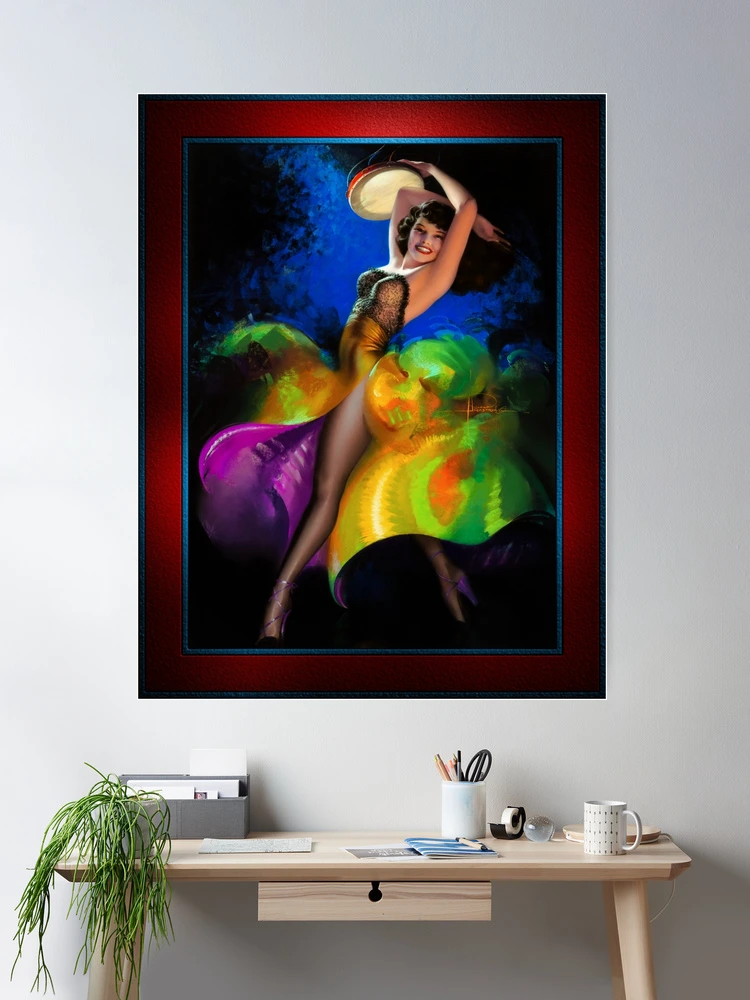
“Ripplin Rhythm,” created by the renowned American artist Rolf Armstrong (1889 – 1960), stands as a testament to the vibrant beauty of pin-up art during the mid-20th century. Armstrong, a prominent figure in the golden era of American commercial art, expertly merges movement, väri-, and emotion within this piece, offering a glimpse into the glamour and sensuality that defined the era.
Syntynyt vuonna 1889, Armstrong’s work was marked by a mastery of light and color, making his images highly sought after in advertisements, illustrations, and fine art. He utilized a unique blend of techniques that brought dynamism to his subjects, ja “Ripplin Rhythm” encapsulates this with its fluid and energetic portrayal of a woman in motion.
Sisällysluettelo
Pääaihe: The Vibrant Dancer
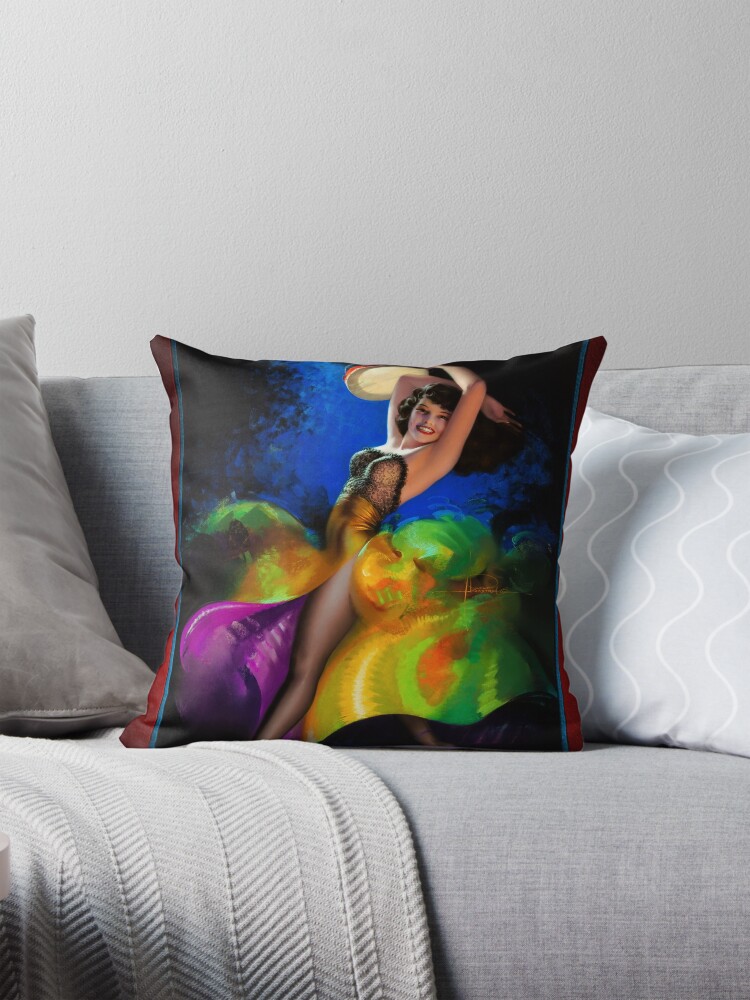
Ytimessä “Ripplin Rhythm” is a captivating depiction of a dancer in mid-performance. Aihe, a woman, exudes confidence and joy as she spins gracefully, her flowing dress rippling around her body like the waves of an ocean. The dancer’s attire is a burst of color, with swirling shades of green, keltainen, and purple creating a striking contrast against the deep blue background.
The woman’s posture is elegant yet exuberant, her arms raised in a celebratory gesture as she holds a tambourine above her head. Her face radiates happiness, a wide smile revealing her playful spirit. Armstrong has captured not only her motion but also her essence, making her appear as though she is alive with energy and rhythm.
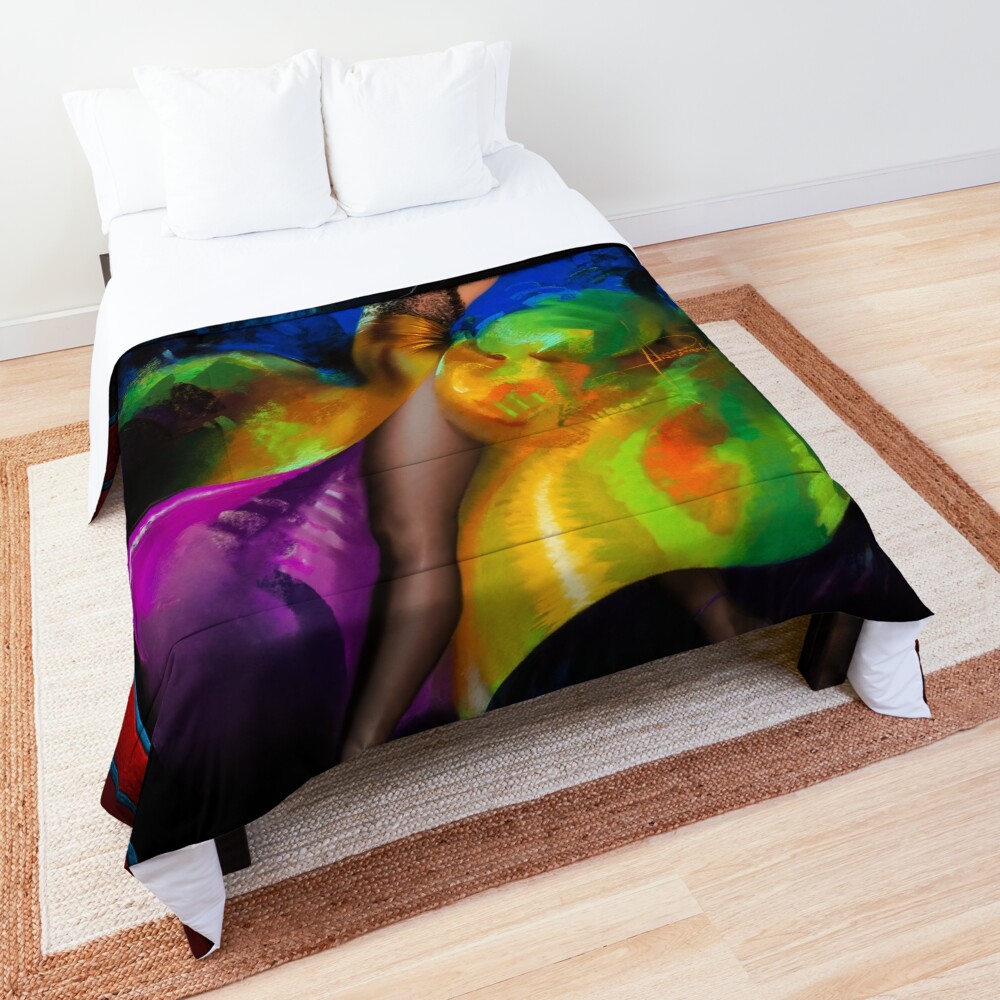
The woman’s vibrant costume, designed to reflect the rhythm of her movements, is a fusion of bold colors. The soft metallic sheen of her golden bodice catches the light, enhancing the dynamic flow of her skirt. Armstrong’s use of color in this piece is masterful, with each hue seemingly chosen to emphasize the woman’s graceful spinning and the lively atmosphere of her performance. The skirt, which flares out around her like an explosive flower, ripples with energy, suggesting the dancer’s movement and the pulse of the music she is engaged with.
The Objects: Tambourine and Flowing Garments
The tambourine held by the dancer is a key object in the painting, not only because it symbolizes the musical rhythm she embodies but also because it ties the composition together. The tambourine’s small yet intricate form contrasts the large, swirling mass of the dancer’s gown, yet it maintains a presence that complements the overall movement within the scene.
The circular shape of the tambourine subtly mirrors the curves and flow of her garments, creating a visual harmony between the two. This object, while seemingly simple, amplifies the sense of rhythm and dance in the composition.
The cascading layers of the dancer’s gown are another vital aspect of the work. Armstrong’s skillful handling of fabric and texture brings the dress to life, with each fold and curve appearing as if it is caught mid-movement. Puku, with its vibrant, rippling folds, seems to echo the fluidity of the dancer’s form. The luxurious colors and glossy textures of the skirt create a feeling of both elegance and freedom, enhancing the theme of lively celebration.
Maasto: The Colorful Background
Taustaa “Ripplin Rhythm” is one of the key elements that contribute to the piece’s overall mood. A deep blue hue forms the backdrop, providing a striking contrast to the warm colors of the dancer’s attire. This color choice highlights the subject and makes her appear as if she is emerging from a dreamlike or fantastical environment.
Armstrong uses the swirling shapes and dark tones in the background to evoke movement and rhythm, as if the air itself is alive with the same energy that drives the dancer. The fluidity of the colors in the background suggests motion, blending with the dancer’s own movements, creating a seamless connection between subject and environment.
Tyyli: Art Deco and Glamour
“Ripplin Rhythm” is a quintessential example of Armstrong’s signature style, which draws heavily from Art Deco influences. The streamlined elegance of the figure, the dynamic compositions, and the use of bold, contrasting colors all reflect the Art Deco movement, which was characterized by its celebration of modernity, ylellisyys, and glamour.
Sileä, graceful lines of the dancer’s body and the geometric shapes within the composition convey a sense of sophistication and energy that are central to the Art Deco aesthetic. Samaan aikaan, the work also embodies the exuberance and glamour of the pin-up style, which Armstrong helped define. His portrayal of women was not only sensual but celebratory, ja “Ripplin Rhythm” is a perfect example of this, as it captures a moment of joyous self-expression.
The dancer’s radiant smile and energetic pose speak to the optimistic and carefree mood of the era. Armstrong’s work is imbued with a sense of youthful vitality, and this painting exemplifies the vibrant energy of American culture during the 1940s. It reflects a time of confidence and joy, set against the backdrop of a world on the cusp of dramatic change.
Teema ja mieliala: Celebration of Movement and Music
Teemana “Ripplin Rhythm” is centered around the celebration of movement, musiikkia, ja naisellisuus. Armstrong captures the essence of dance as an expression of joy and liberation, highlighting the dynamism and beauty of the human form in motion.
The artist has skillfully conveyed the idea that rhythm is not just a sound but a force that can be seen and felt in the movements of the body. The dancer’s bright smile and the lively swirl of her dress communicate a sense of freedom, playfulness, and enthusiasm, making the painting feel like an invitation to partake in the celebration.
The overall mood of the artwork is one of joy and excitement. Armstrong’s use of color and form conveys a sense of lightness and exuberance, and the dancer herself appears to be in the midst of a joyous performance, lost in the music and her own movement. The piece encapsulates a spirit of happiness, optimism, and youthful vitality, evoking a time when life seemed to be filled with endless possibilities.
Johtopäätös
“Ripplin Rhythm” by Rolf Armstrong is more than just a beautiful portrait of a woman in motion; it is a vibrant celebration of life, väri-, and music. The dynamic composition, bold use of color, and joyful expression of the dancer all contribute to a sense of energy and rhythm that makes the painting come alive. Armstrong’s mastery of movement and his ability to capture the spirit of an era make this work a timeless example of American art. Through the use of elegant forms, flowing garments, and vibrant hues, Armstrong successfully conveys the joy of dance, the celebration of femininity, and the power of music to inspire movement and expression.
The Enchantress on retusoitu digitaalisen taiteen vanhojen mestarien kopio julkisesta kuvasta.
Taiteilija bio Wikipedia.org
Rolf Armstrong syntyi John Scott Armstrongina Bay Cityssä, Michiganissa huhtikuussa 21, 1889, Richardille ja Harrietille (Scott) Armstrong. Hänen isänsä omisti Boy-Line Fire Boat Companyn, joka sisälsi rivin matkustaja -aluksia. Jotkut lähetettiin Chicagoon käytettäväksi siellä Chicagon maailmannäyttelyssä 1893.
kuitenkin, isän liike ja perhe olivat vaikeuksissa, ja perheen kotitila menetettiin sulkemiseen. Sisään 1899, perhe muutti Detroitiin, Michigan. Rolfin isä kuoli vuonna 1903, ja vuotta myöhemmin hän ja hänen äitinsä muuttivat Seattleen, Washington, vanhimman veljensä jalanjälkiä seuraten, William, joka oli muuttanut sinne vuosi sitten. Tähän mennessä Rolfin taiteelliset kiinnostuksen kohteet olivat nousseet enemmän kuin osa-aikaiseksi iloksi.
Hän muutti Chicagoon vuonna 1908, jossa hän opiskeli myöhemmin Taideinstituutissa. Sitten hän lähti New Yorkiin, jossa hän opiskeli Robert Henrin kanssa. Pariisin matkan jälkeen 1919 opiskelemaan Académie Julianissa, hän palasi New Yorkiin ja perusti studion. Sisään 1921 hän meni Minneapolisiin opiskelemaan kalenterituotantoa Brownissa & Bigelow.
1920- ja 1930 -luvuilla, hänen teoksensa ilmestyi monille nuotille, samoin kuin monien aikakauslehtien kansissa, tunnetuimpia elokuvafanilehdistä, kuten Photoplay ja Screenland. Hänen työnsä koostuu pääasiassa naisista; Mary Pickford, Bebe Daniels, ja Greta Garbo ovat vain muutamia hänen maalaamistaan lukuisista.
Armstrongin työ Pictorial Review -lehdessä oli suurelta osin vastuussa siitä, että aikakauslehti saavutti yli kahden miljoonan levyn 1926. Vuotta myöhemmin, hän oli Brownin myydyin kalenteritaiteilija & Bigelow. Sisään 1930, RCA palkkasi hänet maalaamaan pin-up-tuotteita mainostaakseen tuotteitaan, ja sisään 1933 Thomas D.. Murphy Calendar Company allekirjoitti hänet tuottamaan sarjan maalauksia heidän linjalleen.
Maaliskuussa 1940, Korukukat, tyttö Lumbertonista, Pohjois-Carolina, lähetti kuvan itsestään Armstrongille vastauksena mainokseen, jonka hän oli sijoittanut New York Timesiin. Armstrong, 50 tällä hetkellä, on toiminut Hotel des Artistesissa Manhattanin West 67th Streetillä 1939, ja etsinyt uusia malleja.
Hän kutsui Flowersin haastatteluun. Maaliskuussa 25, 1940, Kukat alkoivat mallintaa Armstrongille. Heidän ammatillinen yhteistyönsä ja ystävyytensä kesti kaksi vuosikymmentä. Ensimmäinen maalaus, otsikko “Miten minulla menee?”, kuulemma koska Kukat, käyttämätön mallinnukseen, kysyi Armstrongia toistuvasti “Miten minulla menee?” mallinnuksen aikana, julkaistiin ensimmäisen kerran toisen maailmansodan alkamisen jälkeen.
Se oli Brown & Bigelowin myydyin kalenteri 1942 aikana, jolloin yhtiö myi miljoonia kalentereita Amerikassa, ja siitä tuli yksi Armstrongin eniten toistetuista kuvista. Kukat olivat suosittuja amerikkalaisten sotilaiden keskuudessa toisen maailmansodan aikana, Jotkut heistä lähettivät hänelle kirjeitä ehdottaen avioliittoa. Armstrongin kalenterit ja kukkien siluetit kopioitiin pommikoneisiin ja muihin lentokoneisiin nenätaideteoksi ja maalattiin panssaritorneihin.
Hänestä tuli niin tunnettu sodan aikana, vaikkakin enemmän kuuluisina kasvoina kuin nimellä, että huoltomiehen kirje, joka osoitettiin yksinkertaisesti nimellä “Korukukat, New York City” toimitettiin oikein. Monille amerikkalaisille sotilaille ulkomailla, hän edusti “Miksi Taistelemme” henki. MEILLE. Presidentti Franklin D. Rooseveltin hallitus värväsi hänet auttamaan edistämään sotavelkakirjoja.
Tammikuu 1, 1945 TIME-lehden painos sisälsi Armstrongin “Kaupungin malja” Kukkien maalaus kalenteritaidetta käsittelevässä artikkelissa. Artikkelissa todettiin, että kalenterit “tyttöjen maalauksia” olivat “valimot ovat ostaneet paljon, konepajat, autotarvikkeiden jälleenmyyjät.”
Kukat menivät naimisiin 1946. Hän ja hänen miehensä asuivat useissa paikoissa, kun hän yritti useita yrityshankkeita, mukaan lukien Laguna Beach, Kalifornia, Greenville, Etelä-Carolina, Reno, Nevada, jossa hän kuulemma työskenteli jonkin aikaa korttikauppiaana, ja New York City. Michael Wooldridgen mukaan, Pin up Dreamsin yhteiskirjoittaja: Rolf Armstrongin glamour-taide, Armstrong soitti hänelle useita kertoja aikana, kun hän seurasi miestään paikasta toiseen, yrittää saada hänet palaamaan New Yorkiin ja mallina hänelle.
Hänen mallin uransa päättyi Armstrongin kuolemaan vuonna 1960. Hän jätti suuren osan henkilökohtaisesta varallisuudestaan Kukille. Yhteensä, Armstrong loi noin viisikymmentä kuusikymmentä teosta käyttäen kukkia mallina.
Rolf Armstrong kuoli vuonna 1960 Oahun saarella, Havaiji yhtenä parhaista “pin-up” 1900 -luvun ensimmäisen puoliskon taiteilijoita.