

Satiini ruusu
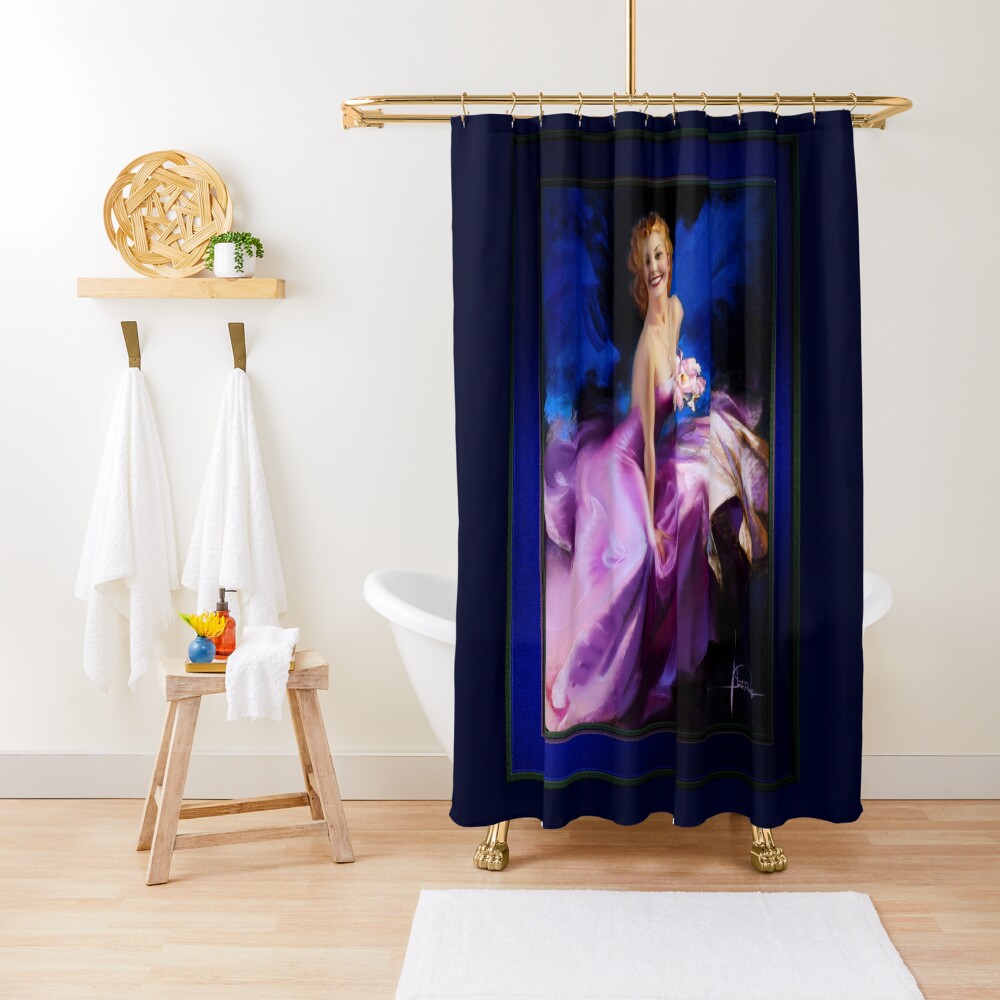
“Satiini ruusu” (1930), painted by the renowned American artist Rolf Armstrong (1889-1960), is an exemplary piece of early 20th-century American portraiture. Known for his luminous depictions of women in fashionable attire, Armstrong’s work captures a sense of beauty and elegance that resonates with the spirit of the Jazz Age and the Art Deco period. In this particular piece, Armstrong presents an image of femininity and grace, illustrating the intricate details of a woman in a soft, satin gown.
Sisällysluettelo
Pääaihe
“Satiini ruusu” is a young woman poised gracefully, her figure rendered with a delicate balance of light and shadow. She is the embodiment of youthful beauty, wearing a gown that flows and ripples around her in soft waves. Puku, primarily a lavender satin, gleams in the light, its smooth fabric accentuated by folds and creases that give it a rich, almost tactile quality. Armstrong’s mastery of texture is evident in his treatment of the satin fabric, which shimmers with the soft sheen that is characteristic of this luxurious material.
Tyyli, Tekniikka, and Medium
The woman’s face is full of vitality, exuding joy and warmth. Her smile is subtle but confident, and her eyes are directed toward the viewer, establishing a sense of direct engagement. Hänen pehmeä, wavy blonde hair frames her face in an effortless, yet elegant manner. The roses she holds in her right hand, delicately grasped, add a touch of romance and softness to the composition, their pale pink petals mirroring the delicate hues of the gown. Armstrong’s use of flowers is not just ornamental; they symbolize beauty, naisellisuus, ja armo, further emphasizing the overall theme of the painting.
The background of the piece is richly colored with abstract brushstrokes that suggest a dreamy, melkein eteerinen laatu. The deep blue tones of the background contrast with the soft, lighter shades of the woman’s gown, helping her figure to stand out as the central focus. This contrast between the warm lavender tones of the figure and the cool blues of the background creates a sense of depth and dimension, which enhances the realism of the portrait. The soft gradations of color contribute to the overall serene atmosphere of the work, where the light seems to caress the surface of the satin fabric, further enhancing the mood of elegance.
Objects and Composition
The composition is tightly focused on the figure, capturing her in a moment of serene joy. Armstrong’s decision to leave the background somewhat abstract and blurred directs the viewer’s attention entirely to the subject. This emphasis on the figure over the surroundings is a characteristic feature of many of Armstrong’s works, where the human form is celebrated in its natural beauty.
Armstrong’s style in “Satiini ruusu” exemplifies his signature technique of blending realism with a certain idealized quality. The portraiture is not merely a representation of a woman but rather an exploration of beauty, eleganssi, ja armo. The artist’s use of light and shadow is subtle yet effective, highlighting the contours of the woman’s face and the folds of her gown in a way that gives the painting a sense of dimensionality. Armstrong’s skill in capturing fabric, erityisesti, is unparalleled, and the way the satin gown appears to catch and reflect the light gives it a fluid, almost living quality.
Teema ja mieliala
Teemana “Satiini ruusu” is deeply rooted in the early 20th century’s appreciation for beauty and fashion, reflecting the cultural preoccupations of the time. The 1930s was an era that celebrated glamour, hienostuneisuus, and modern femininity, and Armstrong’s work is an embodiment of these ideals. The use of satin fabric, the emphasis on luxurious textures, and the delicate portrayal of a young woman’s radiant beauty all speak to the high regard for elegance that permeated the social and artistic landscapes of the time.
The mood of the painting is one of warmth and serenity. The woman’s gentle smile, the soft folds of her gown, and the serene blue backdrop create an atmosphere of calm elegance. There is a sense of intimacy in the work, as if the viewer is being invited into a private moment with the subject, who stands before us in a poised yet approachable manner. The artist does not present her as an unattainable ideal but as a woman of grace and dignity, who radiates an inner beauty as much as the external qualities the painting depicts.
Johtopäätös
Materiaalien suhteen, Armstrong employed traditional oil paints, using the medium to build up layers of color that add depth and texture to the scene. The painting’s surface, rich in color and form, highlights Armstrong’s ability to create smooth, almost luminescent textures, particularly in the depiction of fabric and skin. The piece is framed in a classical style, with a rich blue border that complements the tones of the background and further enhances the visual impact of the work.
Satin Rose is a remastered digital art old masters reproduction of a public domain image that is available as a canvas, acrylic and metalliprintti verkossa.
Taiteilija Bio on johdettu Wikipedia.org
Rolf Armstrong syntyi John Scott Armstrongina Bay Cityssä, Michiganissa huhtikuussa 21, 1889, Richardille ja Harrietille (Scott) Armstrong. Hänen isänsä omisti Boy-Line Fire Boat Companyn, joka sisälsi rivin matkustaja -aluksia. Jotkut lähetettiin Chicagoon käytettäväksi siellä Chicagon maailmannäyttelyssä 1893.
kuitenkin, isän liike ja perhe olivat vaikeuksissa, ja perheen kotitila menetettiin sulkemiseen. Sisään 1899, perhe muutti Detroitiin, Michigan. Rolfin isä kuoli vuonna 1903, ja vuotta myöhemmin hän ja hänen äitinsä muuttivat Seattleen, Washington, vanhimman veljensä jalanjälkiä seuraten, William, joka oli muuttanut sinne vuosi sitten. Tähän mennessä Rolfin taiteelliset kiinnostuksen kohteet olivat nousseet enemmän kuin osa-aikaiseksi iloksi.
Hän muutti Chicagoon vuonna 1908, jossa hän opiskeli myöhemmin Taideinstituutissa. Sitten hän lähti New Yorkiin, jossa hän opiskeli Robert Henrin kanssa. Pariisin matkan jälkeen 1919 opiskelemaan Académie Julianissa, hän palasi New Yorkiin ja perusti studion. Sisään 1921 hän meni Minneapolisiin opiskelemaan kalenterituotantoa Brownissa & Bigelow.
1920- ja 1930 -luvuilla, hänen teoksensa ilmestyi monille nuotille, samoin kuin monien aikakauslehtien kansissa, tunnetuimpia elokuvafanilehdistä, kuten Photoplay ja Screenland. Hänen työnsä koostuu pääasiassa naisista; Mary Pickford, Bebe Daniels, ja Greta Garbo ovat vain muutamia hänen maalaamistaan lukuisista.
Armstrongin työ Pictorial Review -lehdessä oli suurelta osin vastuussa siitä, että aikakauslehti saavutti yli kahden miljoonan levyn 1926. Vuotta myöhemmin, hän oli Brownin myydyin kalenteritaiteilija & Bigelow. Sisään 1930, RCA palkkasi hänet maalaamaan pin-up-tuotteita mainostaakseen tuotteitaan, ja sisään 1933 Thomas D.. Murphy Calendar Company allekirjoitti hänet tuottamaan sarjan maalauksia heidän linjalleen.
Maaliskuussa 1940, Korukukat, tyttö Lumbertonista, Pohjois-Carolina, lähetti kuvan itsestään Armstrongille vastauksena mainokseen, jonka hän oli sijoittanut New York Timesiin. Armstrong, 50 tällä hetkellä, on toiminut Hotel des Artistesissa Manhattanin West 67th Streetillä 1939, ja etsinyt uusia malleja.
Hän kutsui Flowersin haastatteluun. Maaliskuussa 25, 1940, Kukat alkoivat mallintaa Armstrongille. Heidän ammatillinen yhteistyönsä ja ystävyytensä kesti kaksi vuosikymmentä. Ensimmäinen maalaus, otsikko “Miten minulla menee?”, kuulemma koska Kukat, käyttämätön mallinnukseen, kysyi Armstrongia toistuvasti “Miten minulla menee?” mallinnuksen aikana, julkaistiin ensimmäisen kerran toisen maailmansodan alkamisen jälkeen.
Se oli Brown & Bigelowin myydyin kalenteri 1942 aikana, jolloin yhtiö myi miljoonia kalentereita Amerikassa, ja siitä tuli yksi Armstrongin eniten toistetuista kuvista. Kukat olivat suosittuja amerikkalaisten sotilaiden keskuudessa toisen maailmansodan aikana, Jotkut heistä lähettivät hänelle kirjeitä ehdottaen avioliittoa. Armstrongin kalenterit ja kukkien siluetit kopioitiin pommikoneisiin ja muihin lentokoneisiin nenätaideteoksi ja maalattiin panssaritorneihin.
Hänestä tuli niin tunnettu sodan aikana, vaikkakin enemmän kuuluisina kasvoina kuin nimellä, että huoltomiehen kirje, joka osoitettiin yksinkertaisesti nimellä “Korukukat, New York City” toimitettiin oikein. Monille amerikkalaisille sotilaille ulkomailla, hän edusti “Miksi Taistelemme” henki. MEILLE. Presidentti Franklin D. Rooseveltin hallitus värväsi hänet auttamaan edistämään sotavelkakirjoja.
Tammikuu 1, 1945 TIME-lehden painos sisälsi Armstrongin “Kaupungin malja” Kukkien maalaus kalenteritaidetta käsittelevässä artikkelissa. Artikkelissa todettiin, että kalenterit “tyttöjen maalauksia” olivat “valimot ovat ostaneet paljon, konepajat, autotarvikkeiden jälleenmyyjät.”
Kukat menivät naimisiin 1946. Hän ja hänen miehensä asuivat useissa paikoissa, kun hän yritti useita yrityshankkeita, mukaan lukien Laguna Beach, Kalifornia, Greenville, Etelä-Carolina, Reno, Nevada, jossa hän kuulemma työskenteli jonkin aikaa korttikauppiaana, ja New York City. Michael Wooldridgen mukaan, Pin up Dreamsin yhteiskirjoittaja: Rolf Armstrongin glamour-taide, Armstrong soitti hänelle useita kertoja aikana, kun hän seurasi miestään paikasta toiseen, yrittää saada hänet palaamaan New Yorkiin ja mallina hänelle.
Hänen mallin uransa päättyi Armstrongin kuolemaan vuonna 1960. Hän jätti suuren osan henkilökohtaisesta varallisuudestaan Kukille. Yhteensä, Armstrong loi noin viisikymmentä kuusikymmentä teosta käyttäen kukkia mallina.
Rolf Armstrong kuoli vuonna 1960 Oahun saarella, Havaiji yhtenä parhaista “pin-up” 1900 -luvun ensimmäisen puoliskon taiteilijoita.