

Ripplin Rythm
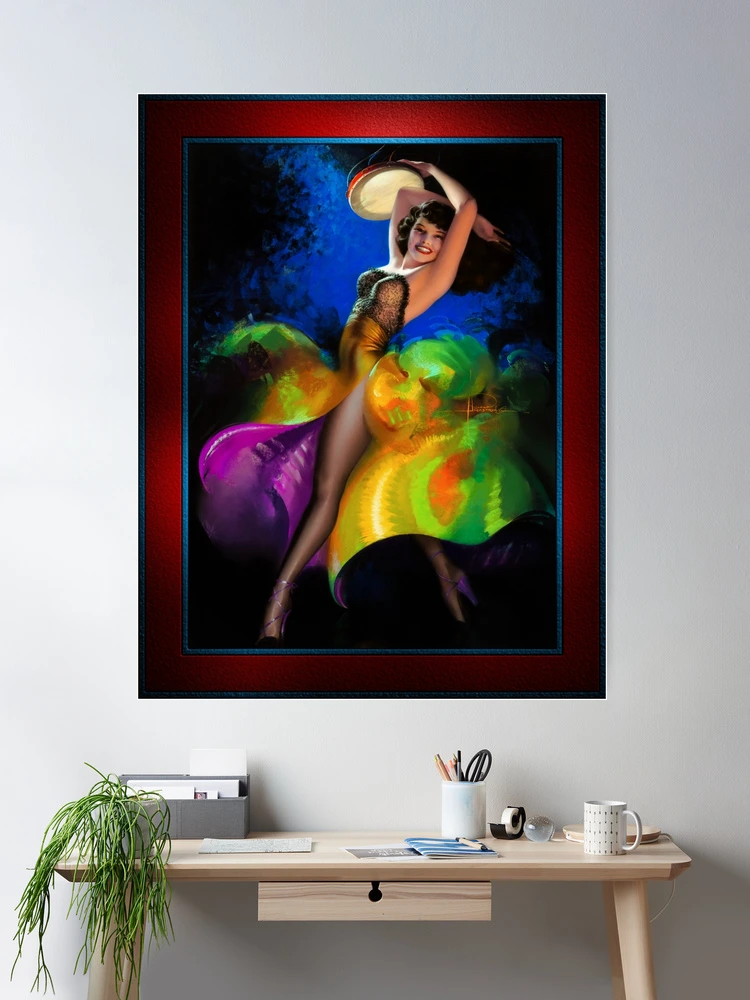
“Ripplin Rhythm,” created by the renowned American artist Rolf Armstrong (1889 – 1960), stands as a testament to the vibrant beauty of pin-up art during the mid-20th century. Armstrong, a prominent figure in the golden era of American commercial art, expertly merges movement, kolor, and emotion within this piece, offering a glimpse into the glamour and sensuality that defined the era.
Urodzony w 1889, Armstrong’s work was marked by a mastery of light and color, making his images highly sought after in advertisements, illustrations, i sztuki piękne. He utilized a unique blend of techniques that brought dynamism to his subjects, i “Ripplin Rhythm” encapsulates this with its fluid and energetic portrayal of a woman in motion.
Spis treści
Główny temat: The Vibrant Dancer
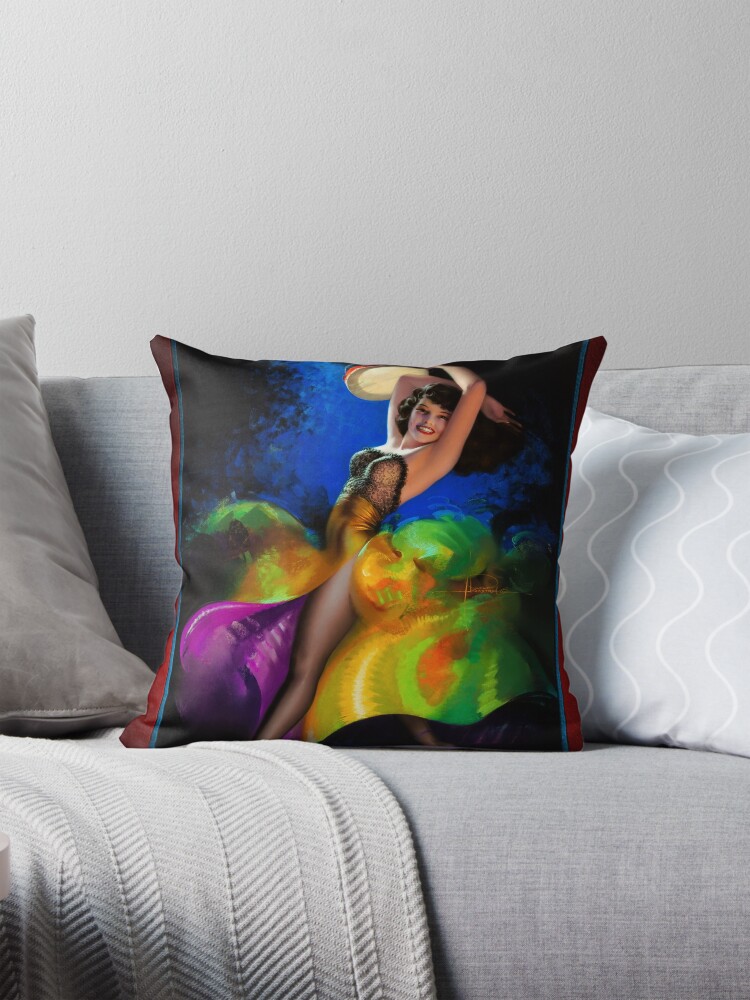
W sercu “Ripplin Rhythm” is a captivating depiction of a dancer in mid-performance. Temat, a woman, exudes confidence and joy as she spins gracefully, her flowing dress rippling around her body like the waves of an ocean. The dancer’s attire is a burst of color, with swirling shades of green, żółty, and purple creating a striking contrast against the deep blue background.
The woman’s posture is elegant yet exuberant, her arms raised in a celebratory gesture as she holds a tambourine above her head. Her face radiates happiness, a wide smile revealing her playful spirit. Armstrong has captured not only her motion but also her essence, making her appear as though she is alive with energy and rhythm.
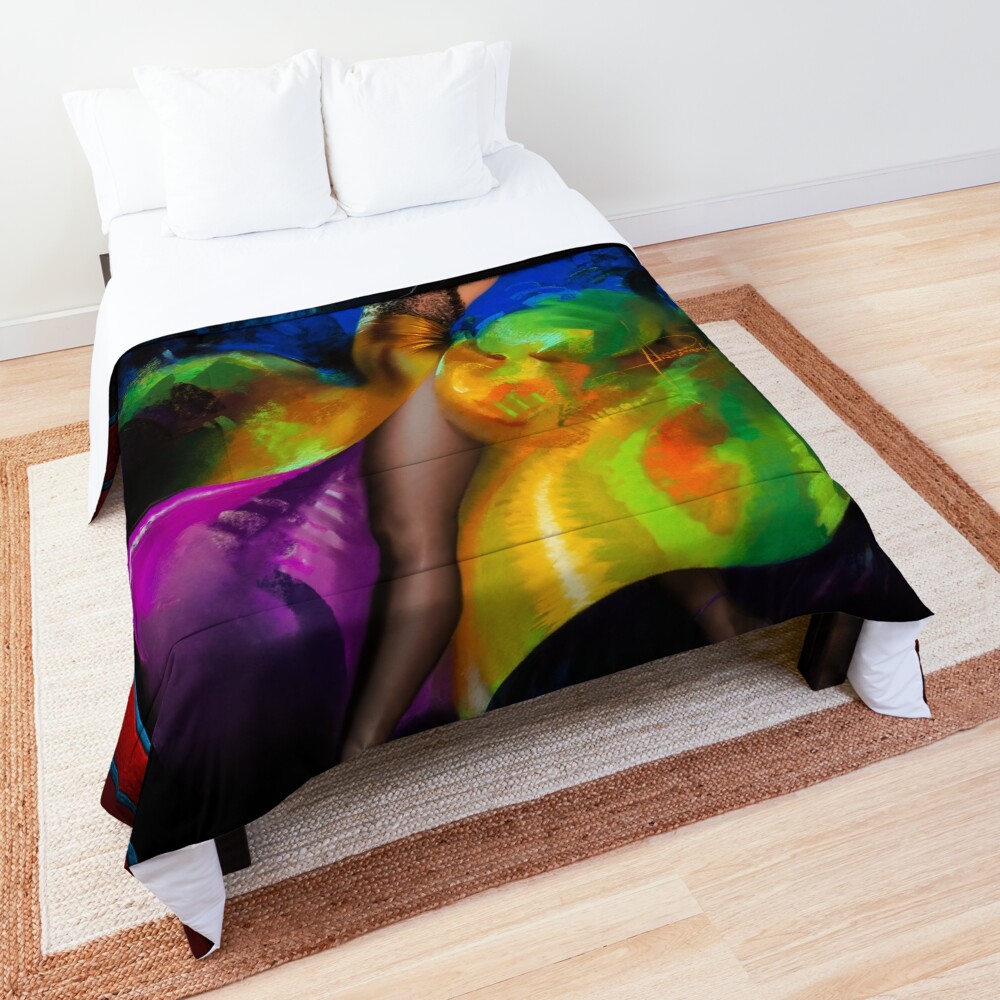
The woman’s vibrant costume, designed to reflect the rhythm of her movements, is a fusion of bold colors. The soft metallic sheen of her golden bodice catches the light, enhancing the dynamic flow of her skirt. Armstrong’s use of color in this piece is masterful, with each hue seemingly chosen to emphasize the woman’s graceful spinning and the lively atmosphere of her performance. The skirt, which flares out around her like an explosive flower, ripples with energy, suggesting the dancer’s movement and the pulse of the music she is engaged with.
The Objects: Tambourine and Flowing Garments
The tambourine held by the dancer is a key object in the painting, not only because it symbolizes the musical rhythm she embodies but also because it ties the composition together. The tambourine’s small yet intricate form contrasts the large, swirling mass of the dancer’s gown, yet it maintains a presence that complements the overall movement within the scene.
The circular shape of the tambourine subtly mirrors the curves and flow of her garments, creating a visual harmony between the two. This object, while seemingly simple, amplifies the sense of rhythm and dance in the composition.
The cascading layers of the dancer’s gown are another vital aspect of the work. Armstrong’s skillful handling of fabric and texture brings the dress to life, with each fold and curve appearing as if it is caught mid-movement. Suknia, with its vibrant, rippling folds, seems to echo the fluidity of the dancer’s form. The luxurious colors and glossy textures of the skirt create a feeling of both elegance and freedom, enhancing the theme of lively celebration.
Teren: The Colorful Background
Tło “Ripplin Rhythm” is one of the key elements that contribute to the piece’s overall mood. A deep blue hue forms the backdrop, providing a striking contrast to the warm colors of the dancer’s attire. This color choice highlights the subject and makes her appear as if she is emerging from a dreamlike or fantastical environment.
Armstrong uses the swirling shapes and dark tones in the background to evoke movement and rhythm, as if the air itself is alive with the same energy that drives the dancer. The fluidity of the colors in the background suggests motion, blending with the dancer’s own movements, creating a seamless connection between subject and environment.
Styl: Art Deco and Glamour
“Ripplin Rhythm” is a quintessential example of Armstrong’s signature style, which draws heavily from Art Deco influences. The streamlined elegance of the figure, the dynamic compositions, and the use of bold, contrasting colors all reflect the Art Deco movement, which was characterized by its celebration of modernity, luksus, i przepych.
Gładka, graceful lines of the dancer’s body and the geometric shapes within the composition convey a sense of sophistication and energy that are central to the Art Deco aesthetic. Naraz, the work also embodies the exuberance and glamour of the pin-up style, which Armstrong helped define. His portrayal of women was not only sensual but celebratory, i “Ripplin Rhythm” is a perfect example of this, as it captures a moment of joyous self-expression.
The dancer’s radiant smile and energetic pose speak to the optimistic and carefree mood of the era. Armstrong’s work is imbued with a sense of youthful vitality, and this painting exemplifies the vibrant energy of American culture during the 1940s. It reflects a time of confidence and joy, set against the backdrop of a world on the cusp of dramatic change.
Temat i nastrój: Celebration of Movement and Music
Temat “Ripplin Rhythm” is centered around the celebration of movement, muzyka, and femininity. Armstrong captures the essence of dance as an expression of joy and liberation, highlighting the dynamism and beauty of the human form in motion.
The artist has skillfully conveyed the idea that rhythm is not just a sound but a force that can be seen and felt in the movements of the body. The dancer’s bright smile and the lively swirl of her dress communicate a sense of freedom, playfulness, and enthusiasm, making the painting feel like an invitation to partake in the celebration.
The overall mood of the artwork is one of joy and excitement. Armstrong’s use of color and form conveys a sense of lightness and exuberance, and the dancer herself appears to be in the midst of a joyous performance, lost in the music and her own movement. The piece encapsulates a spirit of happiness, optimism, and youthful vitality, evoking a time when life seemed to be filled with endless possibilities.
Wniosek
“Ripplin Rhythm” by Rolf Armstrong is more than just a beautiful portrait of a woman in motion; it is a vibrant celebration of life, kolor, and music. The dynamic composition, bold use of color, and joyful expression of the dancer all contribute to a sense of energy and rhythm that makes the painting come alive. Armstrong’s mastery of movement and his ability to capture the spirit of an era make this work a timeless example of American art. Through the use of elegant forms, flowing garments, and vibrant hues, Armstrong successfully conveys the joy of dance, the celebration of femininity, and the power of music to inspire movement and expression.
The Enchantress is a retouched digital art old masters reproduction of a public domain image.
Bio artysty z Wikipedia.org
Rolf Armstrong urodził się jako John Scott Armstrong w Bay City, Michigan w kwietniu 21, 1889, do Richarda i Harriet (Scott) Armstrong. Jego ojciec był właścicielem firmy Boy-Line Fire Boat Company, który obejmował linię statków pasażerskich. Niektóre zostały rozmieszczone w Chicago do użytku na tamtejszych Światowych Targach w Chicago 1893.
jednak, firma i rodzina ojca borykały się z problemami, a gospodarstwo rodzinne zostało utracone w wyniku przejęcia. W 1899, rodzina przeniosła się do Detroit, Michigan. Ojciec Rolfa zmarł w r 1903, a rok później on i jego matka przeprowadzili się do Seattle, Waszyngton, podążając śladami starszego brata, Williama, który przeprowadził się tam rok wcześniej. Do tej pory artystyczne zainteresowania Rolfa przekształciły się w coś więcej niż przyjemność w niepełnym wymiarze godzin.
Przeniósł się do Chicago w r 1908, gdzie później studiował w Instytucie Sztuki. Następnie udał się do Nowego Jorku, gdzie studiował u Roberta Henriego. Po wycieczce do Paryża w r 1919 studiować w Académie Julian, wrócił do Nowego Jorku i założył studio. W 1921 udał się do Minneapolis, aby studiować produkcję kalendarzy w Brown & Bigelow.
W latach 20. i 30. XX wieku, jego prace pojawiły się na wielu utworach nutowych, a także na okładkach wielu magazynów, najbardziej znane z magazynów dla fanów filmu, takich jak Photoplay i Screenland. Jego praca składa się głównie z kobiet; Mary Pickford, kochanie Daniels, a Greta Garbo to tylko kilka z wielu, które namalował.
Praca Armstronga dla Pictorial Review była w dużej mierze odpowiedzialna za to, że magazyn ten osiągnął nakład przekraczający dwa miliony dolarów 1926. Rok później, był najlepiej sprzedającym się artystą kalendarza w Brown & Bigelow. W 1930, RCA zatrudniła go do malowania pin-upów, aby reklamować swoje produkty, i w 1933 Thomas D. Firma Murphy Calendar Company podpisała z nim kontrakt na wykonanie serii obrazów dla ich linii.
W marcu 1940, Klejnotowe Kwiaty, dziewczyna z Lumberton, Karolina Północna, wysłała swoje zdjęcie do Armstronga w odpowiedzi na ogłoszenie, które umieścił w New York Times. Armstrong, 50 wtedy, od tego czasu mieszkał w Hotel des Artistes przy West 67th Street na Manhattanie 1939, i szukałem nowych modeli.
Zaprosił Kwiaty na rozmowę. W marcu 25, 1940, Flowers zaczęła pracować jako modelka dla Armstronga. Ich zawodowa współpraca i przyjaźń trwała dwie dekady. Pierwszy obraz, pod tytulem “Jak się mam?”, podobno bo Kwiaty, nieprzyzwyczajony do modelarstwa, wielokrotnie pytał Armstronga “Jak się mam?” podczas sesji modelek, ukazała się po raz pierwszy po wybuchu II wojny światowej.
To był Brown & Najlepiej sprzedający się kalendarz Bigelow dla 1942 w czasie, gdy firma sprzedała miliony kalendarzy w Ameryce, i stał się jednym z najczęściej reprodukowanych obrazów Armstronga. Kwiaty były popularne wśród amerykańskich żołnierzy podczas II wojny światowej, niektórzy z nich wysłali jej listy z propozycją małżeństwa. Kalendarze Armstronga i sylwetki Kwiatów zostały skopiowane na bombowce i inne samoloty jako grafika nosa i namalowane na wieżyczkach czołgów.
Stała się tak znana w czasie wojny, chociaż bardziej jako znana twarz niż z imienia, że list serwisanta zaadresowany po prostu jako “Klejnotowe Kwiaty, Nowy Jork” została dostarczona prawidłowo. Dla wielu amerykańskich żołnierzy za granicą, ona reprezentowała “Dlaczego walczymy” duch. NAS. Prezydent Franklin D. Rząd Roosevelta zwerbował ją do pomocy w promowaniu obligacji wojennych.
Styczeń 1, 1945 wydanie magazynu TIME zawierało Armstronga “Toast Miasta” obraz Kwiatów w artykule o sztuce kalendarza. W artykule zauważono, że kalendarze z “obrazy dziewczyny” był “kupowane w dużych ilościach przez odlewnie, sklepy z maszynami, dilerzy zaopatrzeniowi samochodowi.”
Kwiaty wzięły ślub 1946. Ona i jej mąż mieszkali w kilku miejscach, podczas gdy on próbował wielu przedsięwzięć biznesowych, w tym Laguna Beach, Kalifornia, Greenville, Karolina Południowa, Reno, Nevada, gdzie podobno przez pewien czas pracowała jako sprzedawca kart, i Nowy Jork. Według Michaela Wooldridge'a, współautorka Pin up Dreams: Sztuka glamour Rolfa Armstronga, Armstrong dzwonił do niej kilka razy w okresie, gdy podążała za mężem z miejsca na miejsce, spróbować przekonać ją, by wróciła do Nowego Jorku i była dla niego modelką.
Jej kariera modelki zakończyła się wraz ze śmiercią Armstronga 1960. Pozostawił dużą część swojego osobistego majątku Flowers. Razem, Armstrong stworzył około pięćdziesięciu do sześćdziesięciu prac, używając Kwiatów jako modelu.
Rolf Armstrong zmarł w 1960 na wyspie Oahu, Hawaje jako jedne z najlepszych “szpilka” artyści pierwszej połowy XX wieku.