

Ripplin Rythm
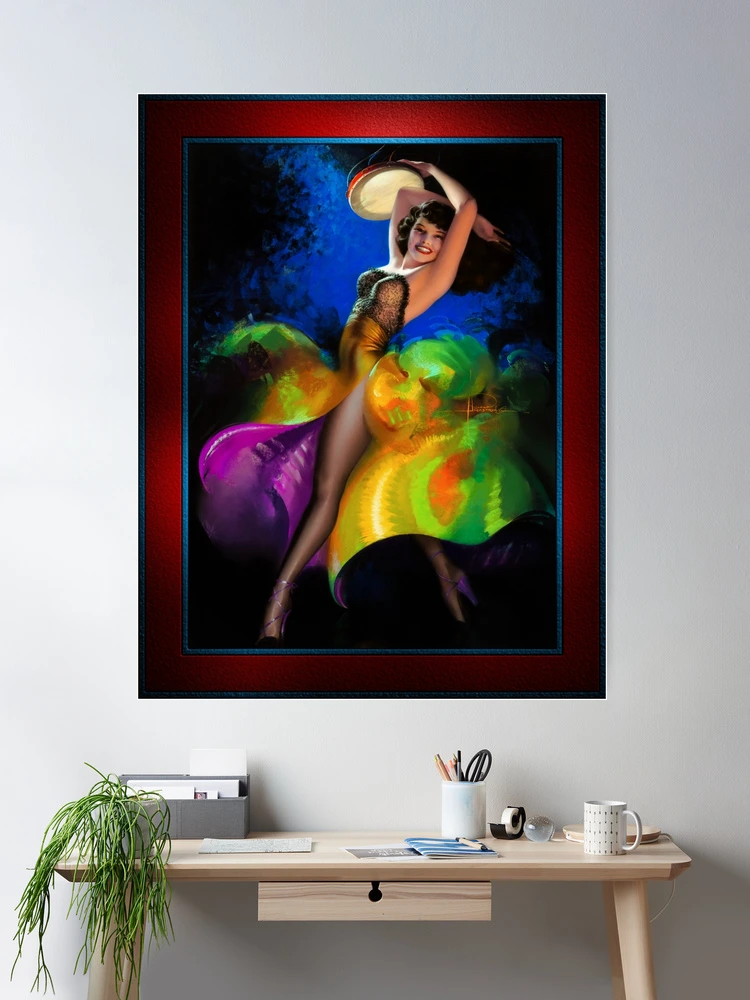
“Ripplin Rhythm,” created by the renowned American artist Rolf Armstrong (1889 – 1960), stands as a testament to the vibrant beauty of pin-up art during the mid-20th century. Armstrong, a prominent figure in the golden era of American commercial art, expertly merges movement, Färg, and emotion within this piece, offering a glimpse into the glamour and sensuality that defined the era.
Född i 1889, Armstrong’s work was marked by a mastery of light and color, making his images highly sought after in advertisements, illustrations, and fine art. He utilized a unique blend of techniques that brought dynamism to his subjects, och “Ripplin Rhythm” encapsulates this with its fluid and energetic portrayal of a woman in motion.
Innehållsförteckning
Huvudämne: The Vibrant Dancer
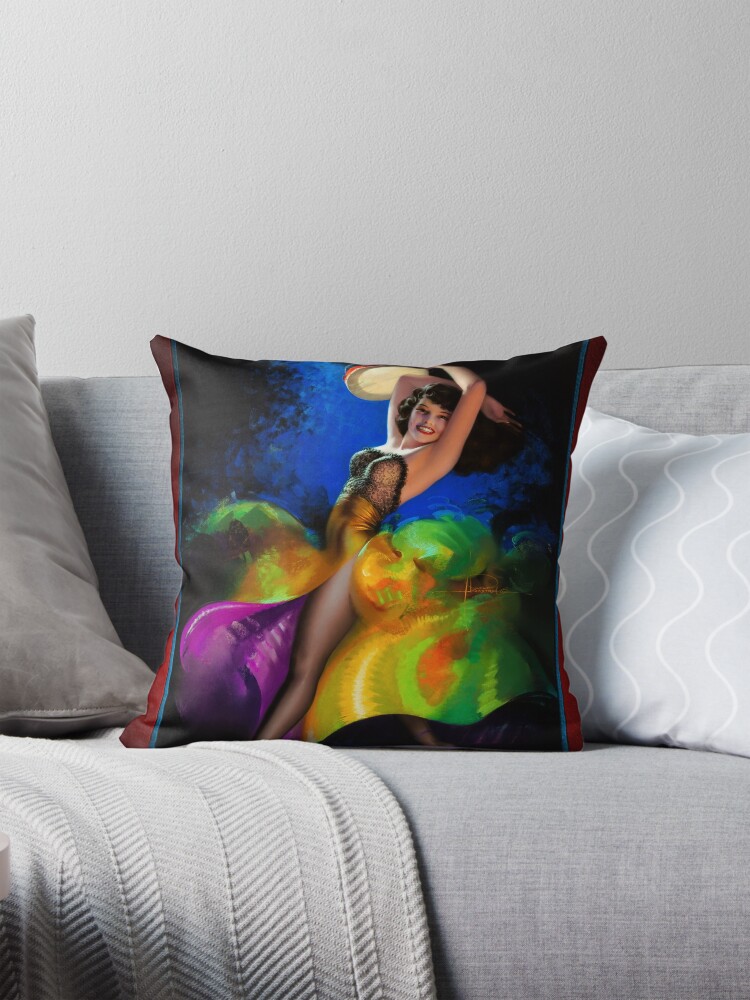
I hjärtat av “Ripplin Rhythm” is a captivating depiction of a dancer in mid-performance. The subject, a woman, exudes confidence and joy as she spins gracefully, her flowing dress rippling around her body like the waves of an ocean. The dancer’s attire is a burst of color, with swirling shades of green, gul, and purple creating a striking contrast against the deep blue background.
The woman’s posture is elegant yet exuberant, her arms raised in a celebratory gesture as she holds a tambourine above her head. Her face radiates happiness, a wide smile revealing her playful spirit. Armstrong has captured not only her motion but also her essence, making her appear as though she is alive with energy and rhythm.
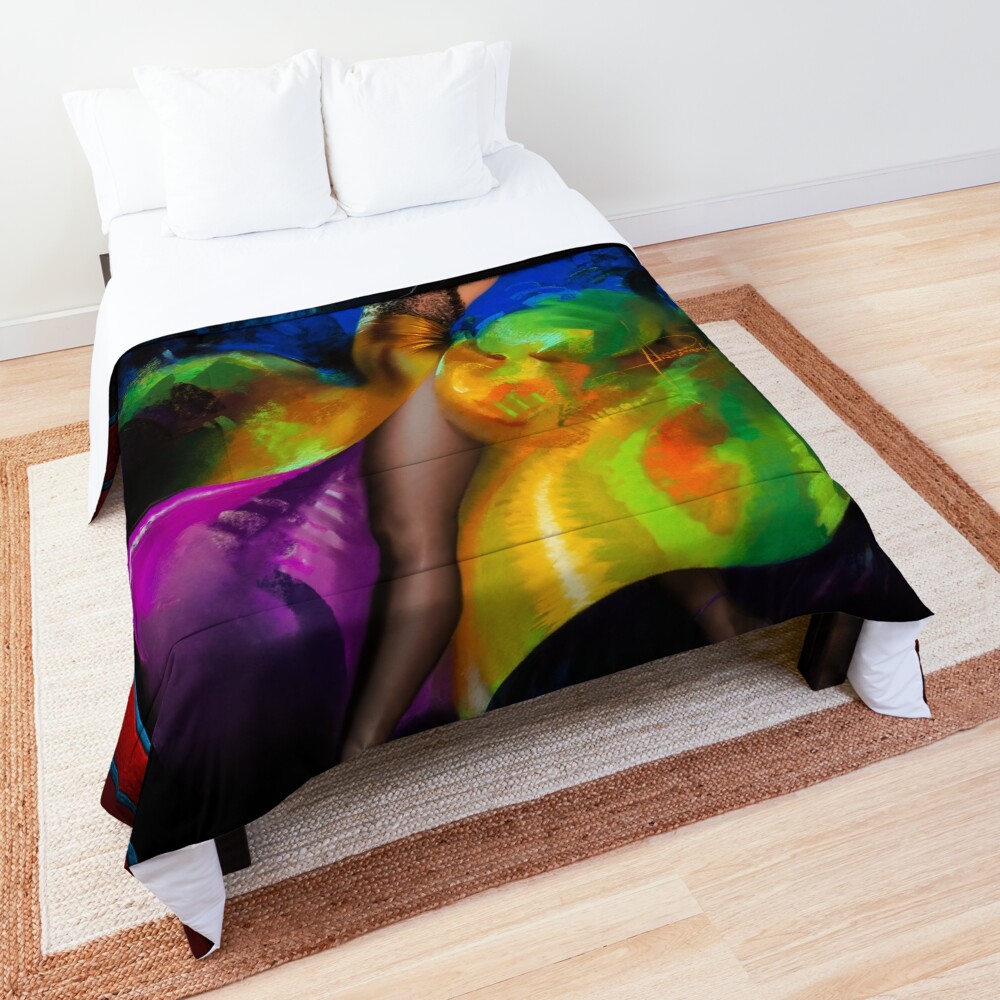
The woman’s vibrant costume, designed to reflect the rhythm of her movements, is a fusion of bold colors. The soft metallic sheen of her golden bodice catches the light, enhancing the dynamic flow of her skirt. Armstrong’s use of color in this piece is masterful, with each hue seemingly chosen to emphasize the woman’s graceful spinning and the lively atmosphere of her performance. The skirt, which flares out around her like an explosive flower, ripples with energy, suggesting the dancer’s movement and the pulse of the music she is engaged with.
Objekten: Tambourine and Flowing Garments
The tambourine held by the dancer is a key object in the painting, not only because it symbolizes the musical rhythm she embodies but also because it ties the composition together. The tambourine’s small yet intricate form contrasts the large, swirling mass of the dancer’s gown, yet it maintains a presence that complements the overall movement within the scene.
The circular shape of the tambourine subtly mirrors the curves and flow of her garments, creating a visual harmony between the two. This object, while seemingly simple, amplifies the sense of rhythm and dance in the composition.
The cascading layers of the dancer’s gown are another vital aspect of the work. Armstrong’s skillful handling of fabric and texture brings the dress to life, with each fold and curve appearing as if it is caught mid-movement. Klänningen, with its vibrant, rippling folds, seems to echo the fluidity of the dancer’s form. The luxurious colors and glossy textures of the skirt create a feeling of both elegance and freedom, enhancing the theme of lively celebration.
Terräng: The Colorful Background
Bakgrunden till “Ripplin Rhythm” is one of the key elements that contribute to the piece’s overall mood. A deep blue hue forms the backdrop, providing a striking contrast to the warm colors of the dancer’s attire. This color choice highlights the subject and makes her appear as if she is emerging from a dreamlike or fantastical environment.
Armstrong uses the swirling shapes and dark tones in the background to evoke movement and rhythm, as if the air itself is alive with the same energy that drives the dancer. The fluidity of the colors in the background suggests motion, blending with the dancer’s own movements, creating a seamless connection between subject and environment.
Stil: Art Deco and Glamour
“Ripplin Rhythm” is a quintessential example of Armstrong’s signature style, which draws heavily from Art Deco influences. The streamlined elegance of the figure, the dynamic compositions, and the use of bold, contrasting colors all reflect the Art Deco movement, which was characterized by its celebration of modernity, lyx, and glamour.
Den släta, graceful lines of the dancer’s body and the geometric shapes within the composition convey a sense of sophistication and energy that are central to the Art Deco aesthetic. Samtidigt, the work also embodies the exuberance and glamour of the pin-up style, which Armstrong helped define. His portrayal of women was not only sensual but celebratory, och “Ripplin Rhythm” is a perfect example of this, as it captures a moment of joyous self-expression.
The dancer’s radiant smile and energetic pose speak to the optimistic and carefree mood of the era. Armstrong’s work is imbued with a sense of youthful vitality, and this painting exemplifies the vibrant energy of American culture during the 1940s. It reflects a time of confidence and joy, set against the backdrop of a world on the cusp of dramatic change.
Tema och humör: Celebration of Movement and Music
Temat för “Ripplin Rhythm” is centered around the celebration of movement, musik, och kvinnlighet. Armstrong captures the essence of dance as an expression of joy and liberation, highlighting the dynamism and beauty of the human form in motion.
The artist has skillfully conveyed the idea that rhythm is not just a sound but a force that can be seen and felt in the movements of the body. The dancer’s bright smile and the lively swirl of her dress communicate a sense of freedom, playfulness, and enthusiasm, making the painting feel like an invitation to partake in the celebration.
The overall mood of the artwork is one of joy and excitement. Armstrong’s use of color and form conveys a sense of lightness and exuberance, and the dancer herself appears to be in the midst of a joyous performance, lost in the music and her own movement. The piece encapsulates a spirit of happiness, optimism, and youthful vitality, evoking a time when life seemed to be filled with endless possibilities.
Slutsats
“Ripplin Rhythm” by Rolf Armstrong is more than just a beautiful portrait of a woman in motion; it is a vibrant celebration of life, Färg, och musik. The dynamic composition, djärv användning av färg, and joyful expression of the dancer all contribute to a sense of energy and rhythm that makes the painting come alive. Armstrong’s mastery of movement and his ability to capture the spirit of an era make this work a timeless example of American art. Through the use of elegant forms, flowing garments, and vibrant hues, Armstrong successfully conveys the joy of dance, the celebration of femininity, and the power of music to inspire movement and expression.
The Enchantress är en retuscherad digital konst gammal mästare reproduktion av en offentlig egendom.
Artist Bio från Wikipedia.org
Rolf Armstrong föddes John Scott Armstrong i Bay City, Michigan i april 21, 1889, till Richard och Harriet (Scott) Armstrong. Hans far ägde Boy-Line Fire Boat Company, som inkluderade en rad passagerarfartyg. Några var utplacerade i Chicago för användning på världsmässan i Chicago där 1893.
i alla fall, pappans företag och familj kämpade, och familjen hemman förlorades till utmätning. I 1899, familjen flyttade till Detroit, Michigan. Rolfs far dog i 1903, och ett år senare flyttade han och hans mamma till Seattle, Washington, efter hans äldsta brors fotspår, William, som hade flyttat dit ett år tidigare. Vid det här laget växte Rolfs konstnärliga intressen upp till mer än ett deltidsnöje.
Han flyttade till Chicago i 1908, där han senare studerade vid Konstinstitutet. Sedan åkte han vidare till New York, där han studerade med Robert Henri. Efter en resa till Paris in 1919 att studera vid Académie Julian, han återvände till New York och etablerade en studio. I 1921 han åkte till Minneapolis för att studera kalenderproduktion på Brown & Bigelow.
Under 1920- och 1930 -talen, hans verk syntes på många noter, liksom på omslagen till många tidskrifter, mest känd för filmfläktstidningar som Photoplay och Screenland. Hans arbete består mestadels av kvinnor; Mary Pickford, Bebe Daniels, och Greta Garbo är bara några av de många han målade.
Armstrongs arbete för Pictorial Review var i stor utsträckning ansvarig för att tidningen uppnådde en upplaga på mer än två miljoner 1926. Ett år senare, han var den mest sålda kalenderartisten på Brown & Bigelow. I 1930, RCA anlitade honom för att måla pin-ups för att marknadsföra sina produkter, och i 1933 Thomas D.. Murphy Calendar Company signerade honom för att producera en serie målningar för deras linje.
I mars 1940, Juvelblommor, en tjej från Lumberton, norra Carolina, skickade en bild på sig själv till Armstrong som svar på en annons som han hade placerat i New York Times. Armstrong, 50 just då, hade varit baserad på Hotel des Artistes på West 67th Street på Manhattan sedan 1939, och letade efter nya modeller.
Han bjöd in blommor för en intervju. På marsch 25, 1940, Blommor började modellera för Armstrong. Deras professionella samarbete och vänskap varade i två decennier. Den första målningen, betitlad “Hur mår jag?”, enligt uppgift eftersom blommor, oanvänd till modellering, frågade Armstrong upprepade gånger “Hur mår jag?” under modellpasset, publicerades först efter att andra världskriget hade börjat.
Det var Brown & Bigelows bästsäljande kalender för 1942 i en tid då företaget sålde miljontals kalendrar i Amerika, och det blev en av Armstrongs mest återgivna bilder. Blommor var populär bland amerikanska soldater under andra världskriget, några av dem skickade hennes brev med förslag om äktenskap. Armstrongs kalendrar och silhuetter av blommor kopierades till bombplan och andra plan som näskonst och målades på tanktorn.
Hon blev så känd under kriget, fast mer som ett känt ansikte än vid namn, som en serviceman brev adresserade helt enkelt som “Juvelblommor, New York City” levererades korrekt. För många amerikanska soldater utomlands, hon representerade “Varför vi slåss” anda. U.S. President Franklin D.. Roosevelts regering fick henne att hjälpa till att främja krigsförbindelser.
Januari 1, 1945 upplagan av TIME -tidningen inkluderade Armstrongs “Toast of the Town” målning av blommor i en artikel om kalenderkonst. Artikeln noterade att kalendrar med “tjejmålningar” var “köpt kraftigt av gjuterier, maskinaffärer, bilförsäljare.”
Blommor gifte sig i 1946. Hon och hennes man bodde på flera ställen medan han prövade ett antal affärsverksamheter, inklusive Laguna Beach, Kalifornien, Greenville, South Carolina, Reno, Nevada, där hon enligt uppgift arbetat som korthandlare en tid, och New York City. Enligt Michael Wooldridge, medförfattare till Pin up Dreams: Rolf Armstrongs glamourkonst, Armstrong ringde henne ett antal gånger under den period hon följde sin man från plats till plats, att försöka övertala henne att återvända till New York och modellera för honom.
Hennes modellkarriär slutade med Armstrongs död i 1960. Han lämnade en stor del av sin personliga förmögenhet till Flowers. Totalt, Armstrong skapade runt femtio till sextio verk med Flowers som modell.
Rolf Armstrong dog i 1960 på ön Oahu, Hawaii som en av de bästa “utvikningsbrud” konstnärer under 1900 -talets första hälft.