

Romanttinen kohtaaminen
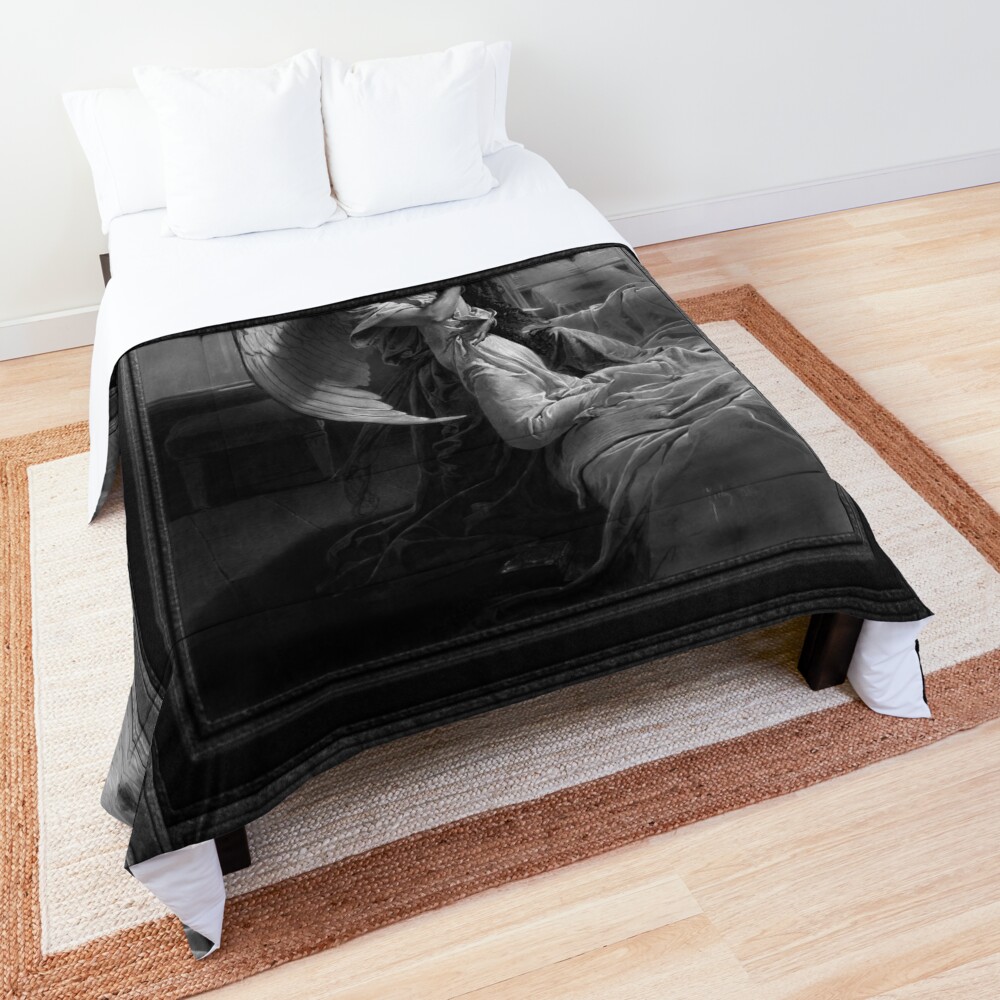
Romanttinen kohtaaminen c1864, unkarilainen taidemaalari Mihaly von Zichy (1827 – 1906), oli merkittävä romantiikan unkarilainen taidemaalari, Kuvittaja ja graafinen taiteilija.
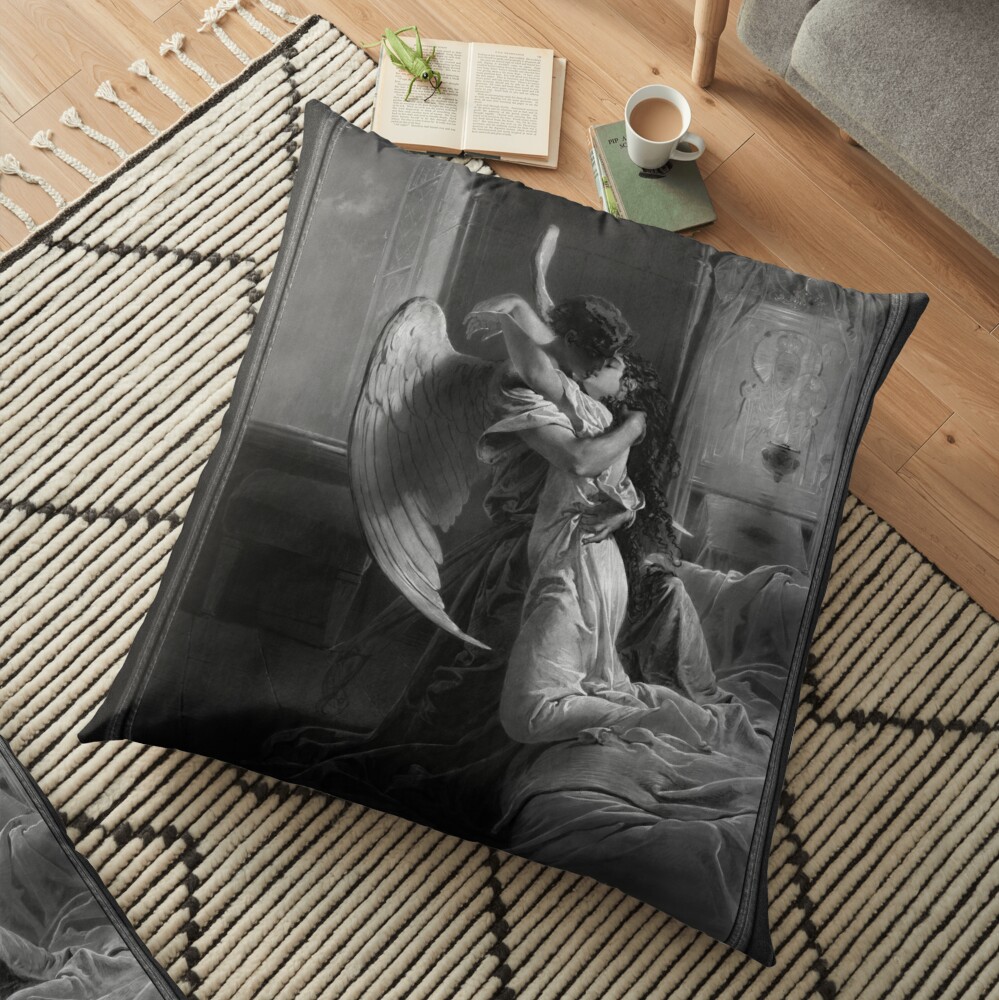
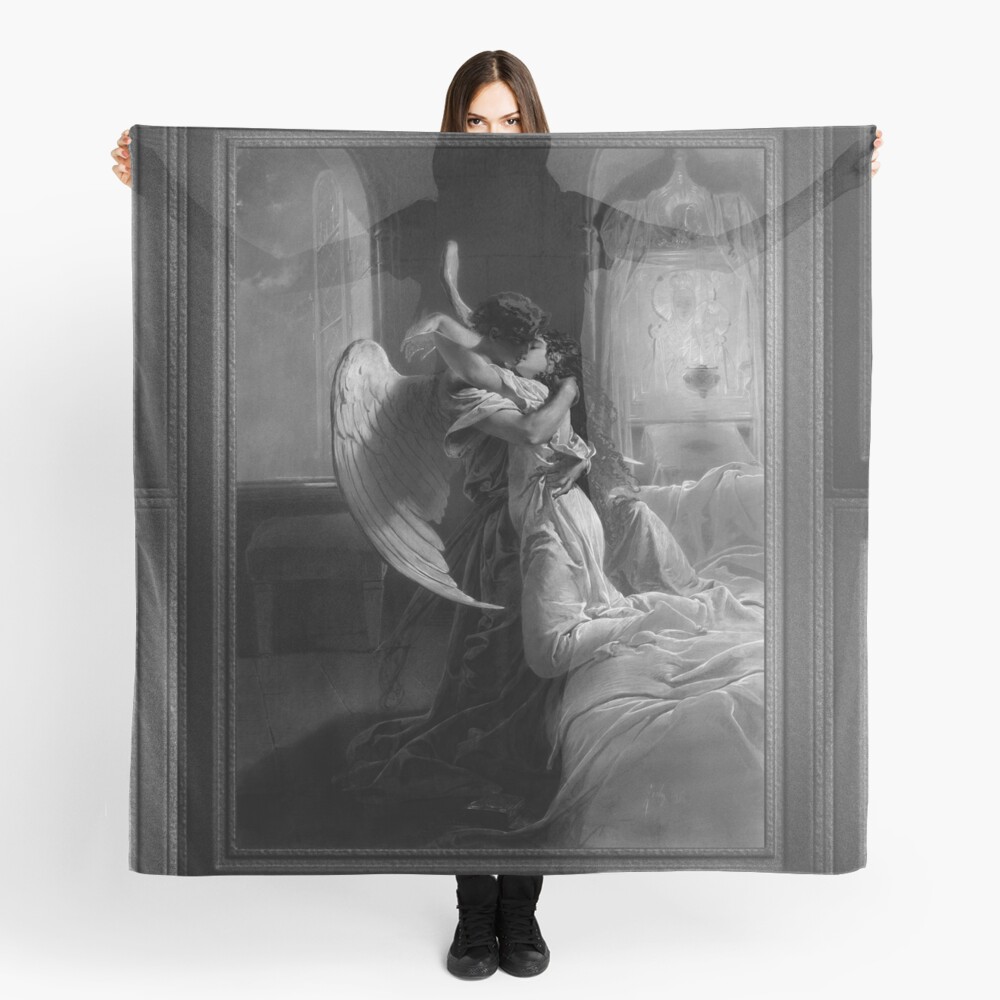
Maalaus “Romanttinen kohtaaminen” presents an evocative scene of emotional intensity and romantic passion. Tässä taideteoksessa, Zichy captures a moment of profound tenderness and longing between two figures, a male angel and a female subject, embraced in a passionate kiss. The figures are framed within a dark, atmospheric interior, which enhances the ethereal and almost otherworldly quality of the encounter.
Sisällysluettelo
Main Subjects and Composition:
At the heart of the composition are the two figures: the angel, whose soft, delicate wings stretch outward, and the woman in an intimate embrace. Their connection is immediately the focal point, as their bodies intertwine in a sensual and tender moment. The male figure, with his strong physique, is dressed simply in flowing robes that suggest a sense of purity and divinity. His muscular form is in contrast to the graceful, flowing lines of the woman’s figure. Hän, päinvastoin, is depicted with more fluidity, her dark hair cascading over her shoulders as her arms rest around the angel’s neck, fully engaged in the kiss.
Zichy has skillfully positioned these figures in a highly emotive and dramatic manner, the angel’s powerful embrace exuding both tenderness and protective strength. The figures’ gaze—whether directed toward one another or lost in the act itself—conveys a deep connection, suggesting a spiritual or transcendent nature to their love. The couple’s proximity, highlighted by their interlocked bodies, underscores a sense of unity, while the blurred background enhances the dreamlike quality of their embrace.
Setting and Environment:
The surrounding space is equally significant, as it plays a crucial role in amplifying the emotional tone of the piece. The background features a solemn, somewhat imposing structure that is clearly not meant to represent a domestic space, but rather a grand, spiritual, or mystical setting. A stone-like texture is suggested in the architecture, evoking a sense of timelessness and permanence. The openness of the space contrasts with the intimacy of the subjects, allowing the viewer to feel the emotional weight of the moment while maintaining a sense of grandeur.
To the left of the scene, a window reveals an expanse of light, which introduces a subtle contrast between the dark interior and the natural light beyond. This serves to emphasize the sense of otherworldliness present in the piece, as if the lovers are suspended between earthly existence and a celestial plane. This play between light and shadow is a key element in the painting’s composition, creating an aura of mystery and emphasizing the divine and ephemeral quality of the love shared between the angel and the woman.
Material and Technique:
The artist’s use of chiaroscuro, a technique of strong contrasts between light and dark is masterful. The interplay of light on the figures’ kasvot, particularly on the angel’s torso and the woman’s skin, enhances the texture and dimensionality of the forms, making them appear almost sculptural.
The shadows are deep and enveloping, heightening the sense of drama and intimacy, while the light sources, whether natural or mystical, seem to emanate from within the scene itself. Zichy’s brushwork is delicate, adding a softness to the figures that contrasts with the strength suggested in their embrace.
The texture of the materials and the way Zichy portrays the fabric of the angel’s robes and the woman’s gown is noteworthy. Both garments flow with an almost liquid quality, further emphasizing the graceful and otherworldly nature of the characters. The white robes of the woman, erityisesti, suggest purity and innocence, a common theme in romantic and religious iconography, yet the way they cling to her body adds a sensual and intimate undertone to the scene.
Teema ja mieliala:
The theme of the painting revolves around the concept of divine or eternal love. The angel, a symbol of spiritual and supernatural forces, is often associated with purity, opastusta, and protection. His embrace of the woman, who appears to be of earthly origin, can be interpreted as the union of the celestial and the mortal. This blending of the divine and the human suggests that their love transcends time and space, existing beyond the limitations of the physical world.
The overall mood of the piece is one of quiet intensity, as the figures are deeply absorbed in their embrace. The painting evokes feelings of longing, devotion, and passion, yet there is a sense of restraint. The soft color palette of whites, harmaat, and soft browns, combined with the muted tones of the background, creates a somber atmosphere, further amplifying the emotional depth of the scene. There is a subtle melancholy to the moment, as if the lovers are caught in a fleeting instant of time, knowing that their connection is both eternal and temporary.
Symboliikka:
The angelic figure is rich with symbolic meaning. Angels are often seen as messengers, intermediaries between the human and divine realms. Tässä taideteoksessa, the angel’s role may be interpreted as a guardian of the woman’s soul, offering her protection in this transcendent moment. Pehmeä, sweeping wings can be seen as symbols of both freedom and confinement, as they seem to envelope the figures, creating a space that is simultaneously a sanctuary and a place of surrender.
Nainen, toisaalta, could symbolize the mortal soul, longing for union with the divine. Her vulnerable yet passionate engagement in the kiss suggests a deep yearning for something greater than earthly existence. The subtle religious undertones are evident, with the suggestion of sacredness in their interaction, yet the scene remains sensual, making it not purely religious but rather an exploration of love in all its forms—human, divine, and spiritual.
Johtopäätös:
“Romanttinen kohtaaminen” by Mihály von Zichy is a poignant and evocative painting that captures a moment of ethereal love between two figures, an angel and a woman. Through his masterful use of light, rakenne, ja muoto, Zichy creates a timeless portrayal of love that transcends the physical realm. The painting speaks to the deep emotional connection between the figures, inviting the viewer to reflect on the nature of love, devotion, and the divine. The juxtaposition of the intimate moment within the grand, mysterious setting further enhances the sense of otherworldly beauty and timeless passion that resonates throughout the piece.
Romantic Encounter Painting Meaning / Story
This illustration is based on the Demon Poem by Russian Poet Mikhail Lermontov (1814 – 1841), on which a powerful demon wondering the world alone comes upon the Georgian Princess Tamara dancing at her wedding.
Upon seeing her the demon falls in love with her; and kills her husband, then begins to court her until she gives herself to him; as she can see neither a demon nor an angel. but a tortured lonely soul.
But when the two kiss, the kiss is fatal to Tamara, and as she rises to Heaven, the demon is once again left alone, to wonder the world and the universe, without love or hope.
Romantic Encounter is a retouched digital art old masters reproduction of a public domain image that is available for purchase online as a rullattu kangasprintti.
Tiedot alla Wikipedia.org
Mihaly von Zichyä pidetään merkittävänä Unkarin romanttisen maalauksen edustajana. Hän asui ja työskenteli pääasiassa St.. Pietarissa ja Pariisissa uransa aikana.
Hänet tunnetaan kuvaavan georgialaista eeppistä runoa Ritari pantterin ihossa 1881 älymystön tilauksesta. Kun hän oli valmistunut 35 kuvia, runo oli niin liikuttunut, että hän antoi teoksensa Georgian kansalle lahjaksi.
Oikeusopintojensa aikana Pestissä alkaen 1842, Zichy osallistui myös Jakab Marastonin taidekouluun. Hän meni Wieniin opiskelemaan Ferdinand Georg Waldmüllerin johdolla vuonna 1844. Pelastusvene, hänen ensimmäinen merkittävä teoksensa, maalattiin tänä aikana.
Waldmüllerin suosituksesta, Zichy palkattiin taideopettajaksi St.. Pietari. Hän vannoi uskollisuutta vapaudelle 1849 maalaamalla Lajos Batthyányin muotokuvan, ensimmäinen Unkarin pääministeri.
Alkaen 1850 eteenpäin, hän työskenteli pääasiassa retusoijana. Hän piirsi myös lyijykynäpiirustuksia, vesivärejä, ja muotokuvat öljyssä.
Hänen eroottisilla piirustuksillaan on lämmin voimakkuus, koska molemmat parin jäsenet näyttävät tasavertaisilta kumppaneilta. Sarja Gatchinan metsästyksestä, Venäjän tsaarin määräys, sai Zichyn asemaan hovitaiteilijana.
Hän perusti yhteiskunnan tukemaan hädässä olevia maalareita. Hän maalasi Autodafén (1868) ilmaista espanjalaisen inkvisition kauhuja aiemmilla vuosisatoilla. Sisään 1871 hän matkusti Euroopan halki, asettuu Pariisiin vuonna 1874.
Hän maalasi Treffortin tilauksesta kuningatar Elisabethin kukkien asettamisen Ferenc Deákin arkkuun. Henrik III: n juomiskierros hänen seuraava laajakuvansa, tuli 1875.
Tuhon tuhon voitto, maalattu Pariisin näyttelyä varten, Ranskan viranomaiset kielsivät sen rohkean anti-militaristisen viestin vuoksi.
Zichy lähti Pariisista vuonna 1881 ja palasi St.. Pietari, lyhyen oleskelun jälkeen Nizzassa, Wien ja hänen kotimaansa Zala.
Samana vuonna hän vieraili myös Tbilisissä, Kaukasian varapuheenjohtaja (tänään Georgia). Hän sai tehtäväksi kuvata Georgian eeppinen runo, Ritari pantterin ihossa, maan älymystön pyynnöstä. Hän maalasi 35 kuvia yhteensä.
Knight in the Panther's Skin -teoksen julkaisukomissio valitsi 27 julkaisuun sisällytettävät kuvat. Taidemaalari kieltäytyi maksamasta töistä, koska hän oli niin liikuttunut alkuperäisestä runosta. Sen sijaan, hän antoi teoksensa Georgian kansalle.
Tästä ajasta eteenpäin, Zichy harjoitti lähinnä kuvitusta. Esimerkkejä hänen kuvistaan teoksista ovat Imre Madáchin Ihmisen tragedia, sisään 1887, ja kaksikymmentäneljä John Goldin balladeja, 1894- 98.