

Rómantísk fundur
Rómantísk kynni c1864 eftir ungverska málarann Mihaly von Zichy (1827 – 1906), var merkur rómantískur ungverskur listmálari, Myndskreytir og grafískur listamaður.
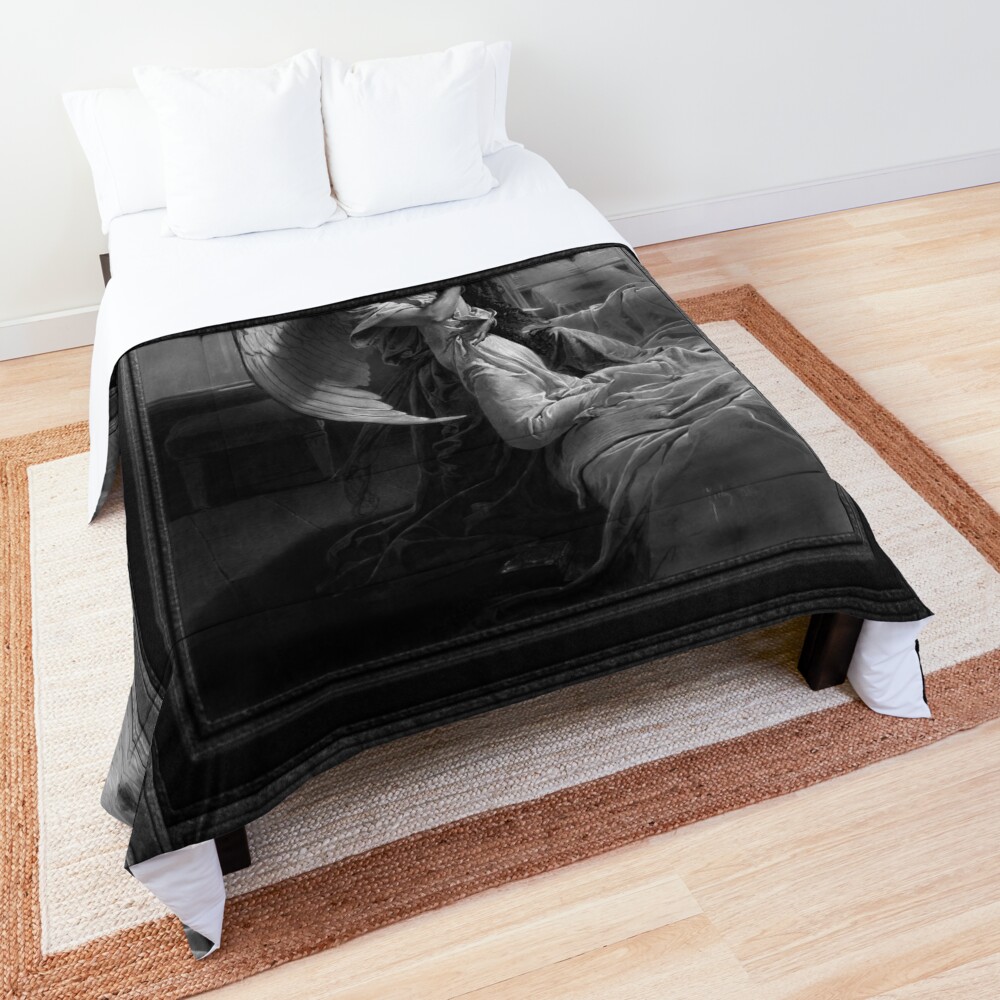
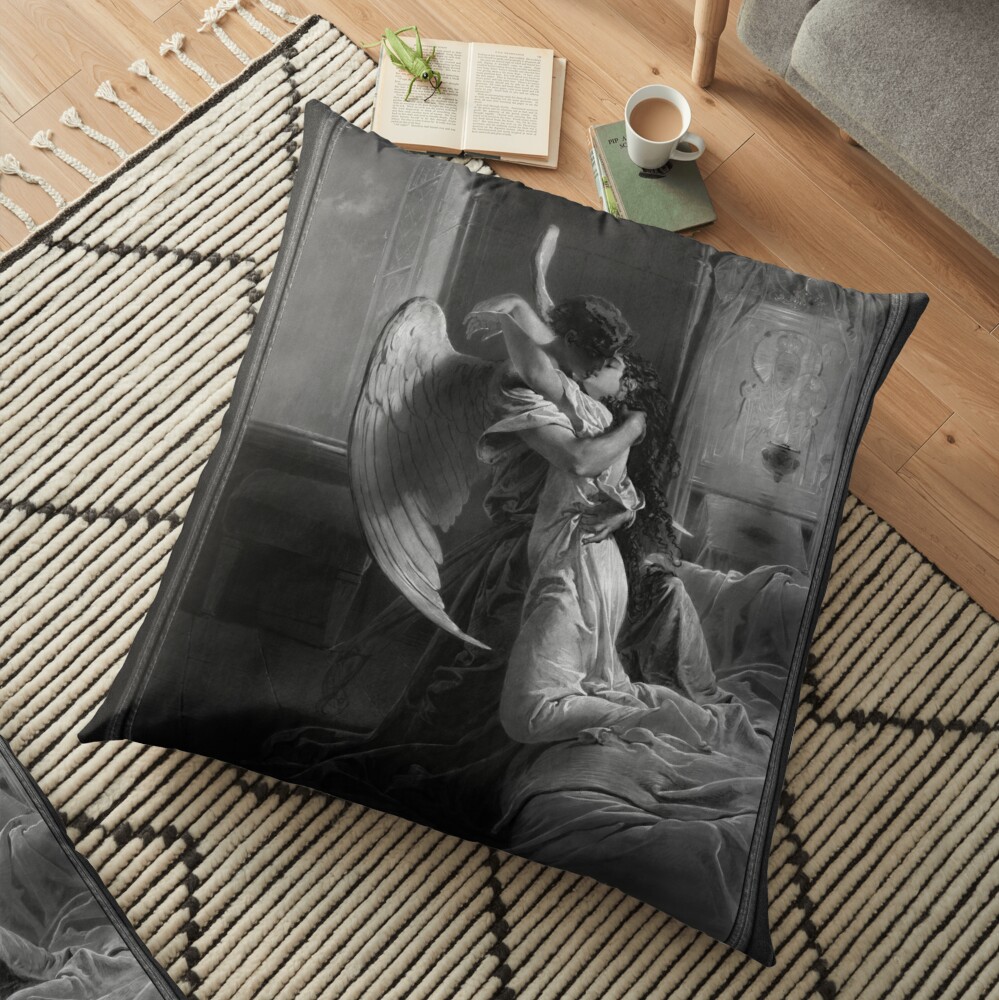
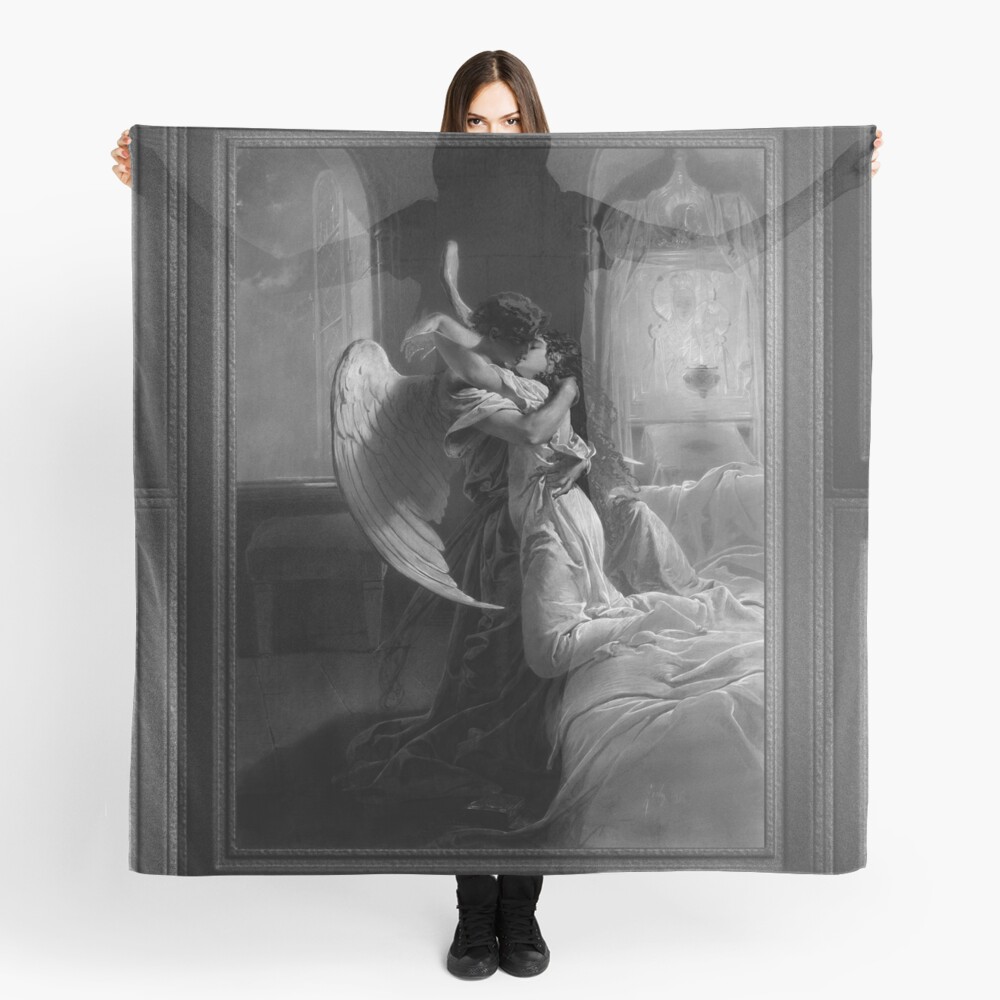
Málverkið “Rómantísk fundur” presents an evocative scene of emotional intensity and romantic passion. Í þessu listaverki, Zichy captures a moment of profound tenderness and longing between two figures, a male angel and a female subject, embraced in a passionate kiss. The figures are framed within a dark, atmospheric interior, which enhances the ethereal and almost otherworldly quality of the encounter.
Efnisyfirlit
Main Subjects and Composition:
At the heart of the composition are the two figures: the angel, whose soft, delicate wings stretch outward, and the woman in an intimate embrace. Their connection is immediately the focal point, as their bodies intertwine in a sensual and tender moment. The male figure, with his strong physique, is dressed simply in flowing robes that suggest a sense of purity and divinity. His muscular form is in contrast to the graceful, flowing lines of the woman’s figure. She, á móti, is depicted with more fluidity, her dark hair cascading over her shoulders as her arms rest around the angel’s neck, fully engaged in the kiss.
Zichy has skillfully positioned these figures in a highly emotive and dramatic manner, the angel’s powerful embrace exuding both tenderness and protective strength. The figures’ gaze—whether directed toward one another or lost in the act itself—conveys a deep connection, suggesting a spiritual or transcendent nature to their love. The couple’s proximity, highlighted by their interlocked bodies, underscores a sense of unity, while the blurred background enhances the dreamlike quality of their embrace.
Umgjörð og umhverfi:
The surrounding space is equally significant, as it plays a crucial role in amplifying the emotional tone of the piece. The background features a solemn, somewhat imposing structure that is clearly not meant to represent a domestic space, but rather a grand, spiritual, or mystical setting. A stone-like texture is suggested in the architecture, evoking a sense of timelessness and permanence. The openness of the space contrasts with the intimacy of the subjects, allowing the viewer to feel the emotional weight of the moment while maintaining a sense of grandeur.
Vinstra megin við atriðið, a window reveals an expanse of light, which introduces a subtle contrast between the dark interior and the natural light beyond. This serves to emphasize the sense of otherworldliness present in the piece, as if the lovers are suspended between earthly existence and a celestial plane. This play between light and shadow is a key element in the painting’s composition, creating an aura of mystery and emphasizing the divine and ephemeral quality of the love shared between the angel and the woman.
Material and Technique:
The artist’s use of chiaroscuro, a technique of strong contrasts between light and dark is masterful. The interplay of light on the figures’ faces, particularly on the angel’s torso and the woman’s skin, enhances the texture and dimensionality of the forms, making them appear almost sculptural.
The shadows are deep and enveloping, heightening the sense of drama and intimacy, while the light sources, whether natural or mystical, seem to emanate from within the scene itself. Zichy’s brushwork is delicate, adding a softness to the figures that contrasts with the strength suggested in their embrace.
The texture of the materials and the way Zichy portrays the fabric of the angel’s robes and the woman’s gown is noteworthy. Both garments flow with an almost liquid quality, further emphasizing the graceful and otherworldly nature of the characters. The white robes of the woman, sérstaklega, suggest purity and innocence, a common theme in romantic and religious iconography, yet the way they cling to her body adds a sensual and intimate undertone to the scene.
Þema og stemning:
The theme of the painting revolves around the concept of divine or eternal love. The angel, a symbol of spiritual and supernatural forces, is often associated with purity, guidance, and protection. His embrace of the woman, who appears to be of earthly origin, can be interpreted as the union of the celestial and the mortal. This blending of the divine and the human suggests that their love transcends time and space, existing beyond the limitations of the physical world.
The overall mood of the piece is one of quiet intensity, as the figures are deeply absorbed in their embrace. The painting evokes feelings of longing, hollustu, and passion, yet there is a sense of restraint. The soft color palette of whites, gráir, and soft browns, combined with the muted tones of the background, creates a somber atmosphere, further amplifying the emotional depth of the scene. There is a subtle melancholy to the moment, as if the lovers are caught in a fleeting instant of time, knowing that their connection is both eternal and temporary.
Táknmál:
The angelic figure is rich with symbolic meaning. Angels are often seen as messengers, intermediaries between the human and divine realms. Í þessu listaverki, the angel’s role may be interpreted as a guardian of the woman’s soul, offering her protection in this transcendent moment. Mjúkt, sweeping wings can be seen as symbols of both freedom and confinement, as they seem to envelope the figures, creating a space that is simultaneously a sanctuary and a place of surrender.
Konan, hins vegar, could symbolize the mortal soul, longing for union with the divine. Her vulnerable yet passionate engagement in the kiss suggests a deep yearning for something greater than earthly existence. The subtle religious undertones are evident, with the suggestion of sacredness in their interaction, yet the scene remains sensual, making it not purely religious but rather an exploration of love in all its forms—human, divine, and spiritual.
Niðurstaða:
“Rómantísk fundur” by Mihály von Zichy is a poignant and evocative painting that captures a moment of ethereal love between two figures, an angel and a woman. Með meistaralegri notkun sinni á ljósi, áferð, og form, Zichy creates a timeless portrayal of love that transcends the physical realm. The painting speaks to the deep emotional connection between the figures, inviting the viewer to reflect on the nature of love, hollustu, og hið guðlega. The juxtaposition of the intimate moment within the grand, mysterious setting further enhances the sense of otherworldly beauty and timeless passion that resonates throughout the piece.
Rómantísk fundur Málverk Merking / Saga
Þessi mynd er byggð á púkaljóði eftir rússneska skáldið Mikhail Lermontov (1814 – 1841), þar sem öflugur púki sem veltir fyrir sér heiminn einn kemur að georgísku prinsessunni Tamara dansandi í brúðkaupi sínu.
Þegar púkinn sá hana verður hann ástfanginn af henni; og drepur mann sinn, byrjar svo að hirða hana þangað til hún gefur sig í hann; þar sem hún getur hvorki séð púka né engil. en pínd einmana sál.
En þegar þeir tveir kyssast, kossinn er banvænn fyrir Tamara, og þegar hún rís til himna, púkinn er enn og aftur skilinn eftir í friði, að velta fyrir sér heiminum og alheiminum, án ástar eða vonar.
Romantic Encounter er lagfærð stafræn list af gömlum meistara eftirgerð af mynd sem er í almenningseign sem hægt er að kaupa á netinu sem rúllað strigaprentun.
Upplýsingar að neðan Frá Wikipedia.org
Mihaly von Zichy er talinn áberandi fulltrúi ungverskrar rómantískrar málverks. Hann bjó og starfaði fyrst og fremst í St. Pétursborg og París á ferlinum.
Hann er þekktur fyrir að myndskreyta georgíska epísku ljóðið Riddarinn í skinninu panthers á an 1881 umboði gáfumanna. Þegar hann var búinn 35 myndir, hann var svo snortinn af ljóðinu að hann gaf georgísku þjóðinni verk sín að gjöf.
Á laganámi sínu í Pest frá 1842, Zichy gekk einnig í listaskóla Jakab Marastoni. Hann fór til Vínarborgar til að læra undir Ferdinand Georg Waldmüller í 1844. Björgunarbátur, hans fyrsta stóra verk, var málað á þessu tímabili.
Að tilmælum Waldmüllers, Zichy var ráðinn myndlistarkennari í St. Pétursborg. Hann sór hollustu við frelsi inn 1849 með því að mála portrett af Lajos Batthyány, fyrsti forsætisráðherra Ungverjalands.
Frá 1850 áfram, hann starfaði fyrst og fremst sem lagfæringur. Hann gerði einnig blýantsteikningar, vatnslitir, og portrett í olíu.
Erótískar teikningar hans eru þekktar fyrir að hafa heitan styrkleika, þar sem báðir meðlimir hjónanna virðast jafnir félagar. Þættirnir um Gatchina-veiðina, skipað af rússneska keisaranum, öðlaðist Zichy stöðu sem dómlistamaður.
Hann stofnaði félag til að styðja málara í neyð. Hann málaði Autodafé (1868) til að lýsa hryllingi spænska rannsóknarréttarins fyrr á öldum. Í 1871 hann ferðaðist um Evrópu, setjast að í París í 1874.
Hann málaði Elísabetu drottningu sem leggur blóm eftir kistu Ferenc Deák sem umboð frá Treffort. Að drekka Bout of Henry III næstu stórmynd hans, kom inn 1875.
Sigur snillingsins eyðileggingarinnar, máluð fyrir Parísarsýninguna, var bannað af frönskum yfirvöldum vegna áræðis boðskapar gegn hernaðarstefnunni.
Zichy fór frá París inn 1881 og sneri aftur til St. Pétursborg, eftir stutta dvöl í Nice, Vín og heimaland hans Zala.
Það ár heimsótti hann einnig Tbilisi, Kákasus varakonungsríki (í dag Georgíu). Honum var falið að myndskreyta georgíska epísku ljóðið, Riddarinn í Panther's Skin, að beiðni gáfumanna landsins. Hann málaði 35 myndir alls.
Útgáfunefnd verksins The Knight in the Panther's Skin valdi 27 myndir sem fylgja með í ritinu. Málarinn neitaði að taka við greiðslu fyrir verkin, vegna þess að hann var svo snortinn af frumkvæðinu. Í staðinn, hann gaf georgísku þjóðinni verk sín.
Frá þessum tíma og áfram, Zichy stundaði að mestu myndskreytingarvinnu. Sem dæmi um verk sem hann myndskreytti má nefna The Tragedy of Man eftir Imre Madách, inn 1887, og tuttugu og fjórar ballöður eftir János Arany, 1894-98.