

Rough Sea with Ships c1834
Rough Sea with Ships c1834″ by Théodore Gudin (1802 – 1880)
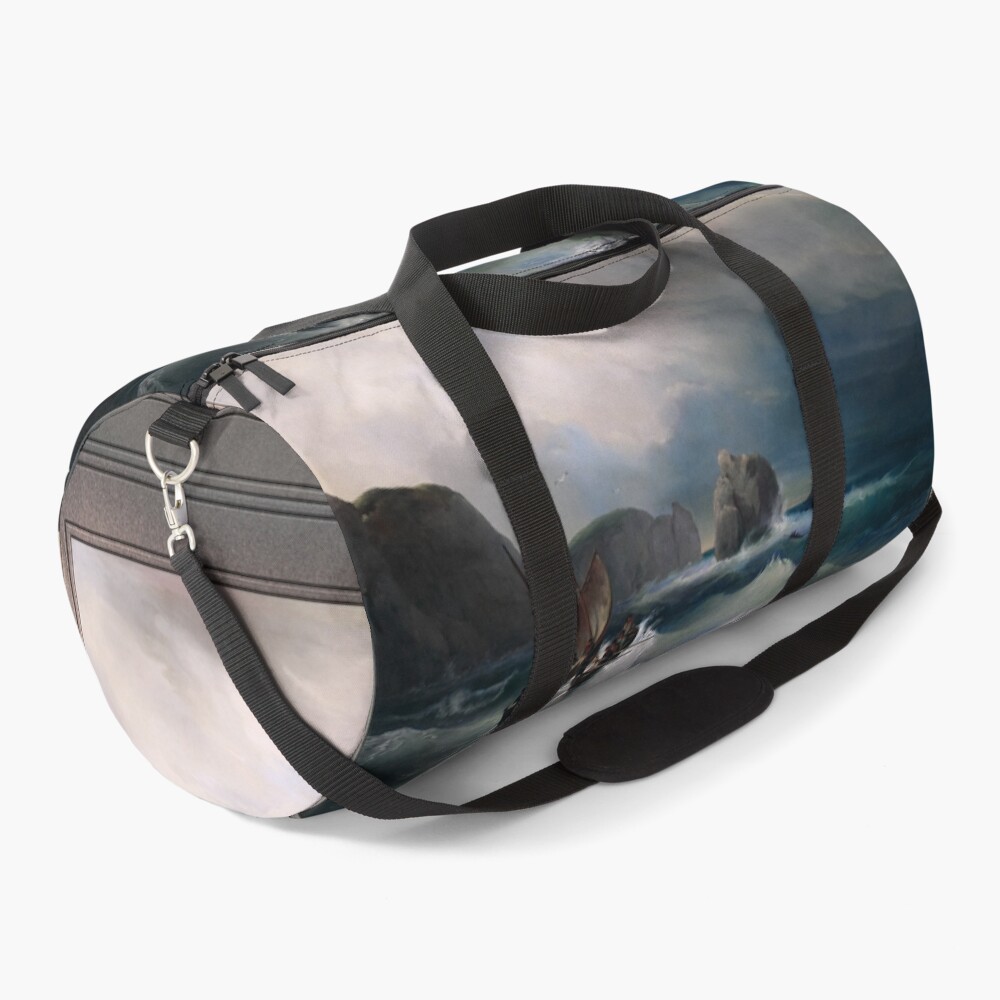
ペインティング Rough Sea with Ships, に作成されました 1834 フランスの芸術家によって Théodore Gudin, captures the raw, tumultuous nature of the sea as it crashes against ships caught in its powerful swells. Théodore Gudin, known for his marine landscapes, brings his deep understanding of seafaring life and nautical environments to life in this dramatic portrayal. 作品, painted during the early part of his career, demonstrates his mastery of capturing both the violent and serene aspects of the ocean, as well as the lives of those who navigate its unpredictable waters.
目次
主な主題: The Struggle Between Man and Nature
中心に Rough Sea with Ships is the battle between human endeavor and the untamable force of nature. A small group of sailors is depicted in a boat, braving the crashing waves with determination. Their vessel, a sturdy wooden ship, is helmed by several figures whose taut expressions and focused actions suggest the dire situation they are facing. The sailors, positioned toward the foreground, labor tirelessly to control their ship amidst the violent tides, with some of the figures rowing while others brace themselves against the ocean’s relentless pull.
The ship they are struggling to steer is not fully depicted, but the viewer can sense its looming presence as the sailors face the mighty forces of the sea. The stark contrast between the smallness of the boat and the vastness of the ocean serves as a reminder of human vulnerability in the face of nature’s immense power. 遠くに, another ship lies wrecked, its broken hull visible in the turbulent waters—a tragic casualty of the storm, illustrating the perils of seafaring life.
地形と背景要素: A Churning Ocean and Rugged Coastline
The background is dominated by a vast and churning sea. Gudin’s use of swirling waves, painted in shades of green and blue, evokes the strength and energy of the water. The sea appears to stretch endlessly into the horizon, where the sky and water merge in a seamless, stormy union. The waves are thick with motion, capturing the raw power of nature as they crest and crash down. The high waves are painted with dynamic brushwork that gives them a three-dimensional quality, as though they might leap off the canvas and engulf the viewer.
遠くに, jagged cliffs rise sharply from the ocean, serving as an imposing reminder of the rugged coastlines that often challenge sailors. The rocky outcrops, painted with muted grays and browns, loom large in the composition. The cliffs are not only symbolic of the perilous environment sailors must navigate but also act as a dramatic contrast to the violently churning sea. The sea and sky appear restless, their tension palpable, as they communicate the chaos and danger of the scene.
The sky above the sea is dominated by heavy, dark clouds, painted in a mixture of grays and whites. The atmosphere is thick and oppressive, with the storm seeming to grow ever more powerful as it rages on. A few birds can be seen flying through the storm clouds, their fragile existence an almost poetic counterpoint to the overwhelming power of the waves below.
素材と技法: Gudin’s Skillful Brushwork and Use of Light
Gudin employs a variety of techniques to bring this dramatic scene to life. His brushwork is bold and confident, especially in the rendering of the waves. The swirling movement of the water is captured with thick, swirling strokes that give the ocean a sense of dynamic motion. The texture of the waves feels palpable, almost as if the viewer could feel the spray of saltwater from the canvas.
The light in the painting plays a crucial role in heightening the mood. The painting is lit from a source beyond the horizon, with the light breaking through the dark clouds in places, ソフトをキャストする, almost ethereal glow on the surface of the water. This light serves to accentuate the contrast between the darkness of the storm and the fleeting moments of clarity that emerge during the tempest. The interplay of light and shadow on the sailors and their boat adds depth and drama, illuminating the tension of their struggle against the storm.
The material qualities of the painting are rich, with Gudin using oils to achieve a highly detailed, textured surface that allows for dramatic contrasts between light and dark. The smoothness of the sky contrasts with the rough, thick texture of the ocean’s waves. This juxtaposition adds to the sense of conflict and chaos in the scene, intensifying the mood.
テーマと雰囲気: A Struggle for Survival
The overriding theme of Rough Sea with Ships is one of struggle and survival. Gudin’s depiction of the sailors’ efforts against the raging sea emphasizes the fragility of life and the strength of the human will. The shipwreck in the distance acts as a grim reminder of the consequences of failing to overcome nature’s power. まだ, the sailors in the boat press on, rowing with determination, their perseverance symbolizing resilience in the face of overwhelming odds.
The mood of the painting is intense and fraught with tension. The violent, turbulent ocean and the oppressive sky create an atmosphere of imminent danger. 暗闇, heavy clouds above the water seem to mirror the uncertainty and peril that the sailors face. 同時に, the small, human figures in the boat evoke a sense of quiet defiance. Their struggle, though seemingly hopeless in the face of such overwhelming odds, is imbued with dignity and purpose. Gudin’s work is not merely a depiction of nature’s power but also a tribute to human endurance and the will to survive.
Rough Sea with Ships is a remastered digital art old masters reproduction of a public domain image that is available as a canvas print online.
アーティスト略歴の由来 Wikipedia.org
テオドールはフランスのパリで生まれ、彼と兄のジャン・ルイは (1799 – 1823), 未亡人だった母親に育てられた.
彼はフランスの海軍学校に在籍していましたが、, 彼は学業を放棄し、アメリカのニューヨーク市への旅に出て、そこでボナパルティストと交流した。 (保守派に積極的に参加したか、保守派を擁護した人, 君主主義者) 亡命中.
に 1819 グディンはアメリカ海軍への入隊を決意し、マンチェスター・パケットの乗組員の一員となった, a 250 あなたの営倉 (2本の四角いマストを備えた帆船).
その後、 1822 彼はパリに戻り、フランスの画家オレス・ヴェルネの弟子となった兄にインスピレーションを受けました。 (1789 – 1863); 芸術の道に進むことを決意した, そしてフランスの画家アンヌ・ルイ・ジロデのアトリエに就職することができました。 (1767 – 1824).
同年、彼はサロンにデビューしました。; しかしその翌年に 1823 物事は悲劇的な方向へ進むだろう, 彼と彼の兄弟はフランスのセーヌ川で難破船に巻き込まれた。, 彼の兄が溺れた場所. この出来事は彼の残りの人生に重大な影響を与えることになる.
に 1824 彼は米国訪問に連れて行った船の絵をサロンに出品し、後の国王ルイ・フィリップ1世の支持を得た。 (1773 – 1850).
に 1828 彼はチャールズ10世からの依頼を受けました (1754 – 1836) ヒポリット・ビッソン少尉の肖像画を描く (1796 – 1827) WHO, 前の年, 彼の船を海賊に引き渡すのではなく爆破した.
任務を終えてすぐに, グディンは友人のフランス海軍士官アベル・オベール・デュ・プティ・トゥアールと一緒に行きました。, アルジェリア遠征に参加する (1830 – 1903), 彼はそこで冒険のスケッチを数多く描きました.
アルジェリア遠征から帰国後, 彼はの称号を授与された “海軍の画家” ルイ・フィリップの宮廷で; そしてその後数年間イタリアへ絵を描く旅行をしました, スイスとロシア.
その後、彼は国王によって男爵に叙せられました, ベルサイユ宮殿のためにフランス海軍の歴史に関する90点の絵画の制作を依頼されました; 明らかに彼の健康を損なう記念碑的な任務.
に 1841 彼はレジオンドヌール勲章の士官に任命され、ベルリンでの展示会の後、 1845 彼はプール・ル・メリット十字章を受賞した.