

Sainte Jeanne d’Arc c1909
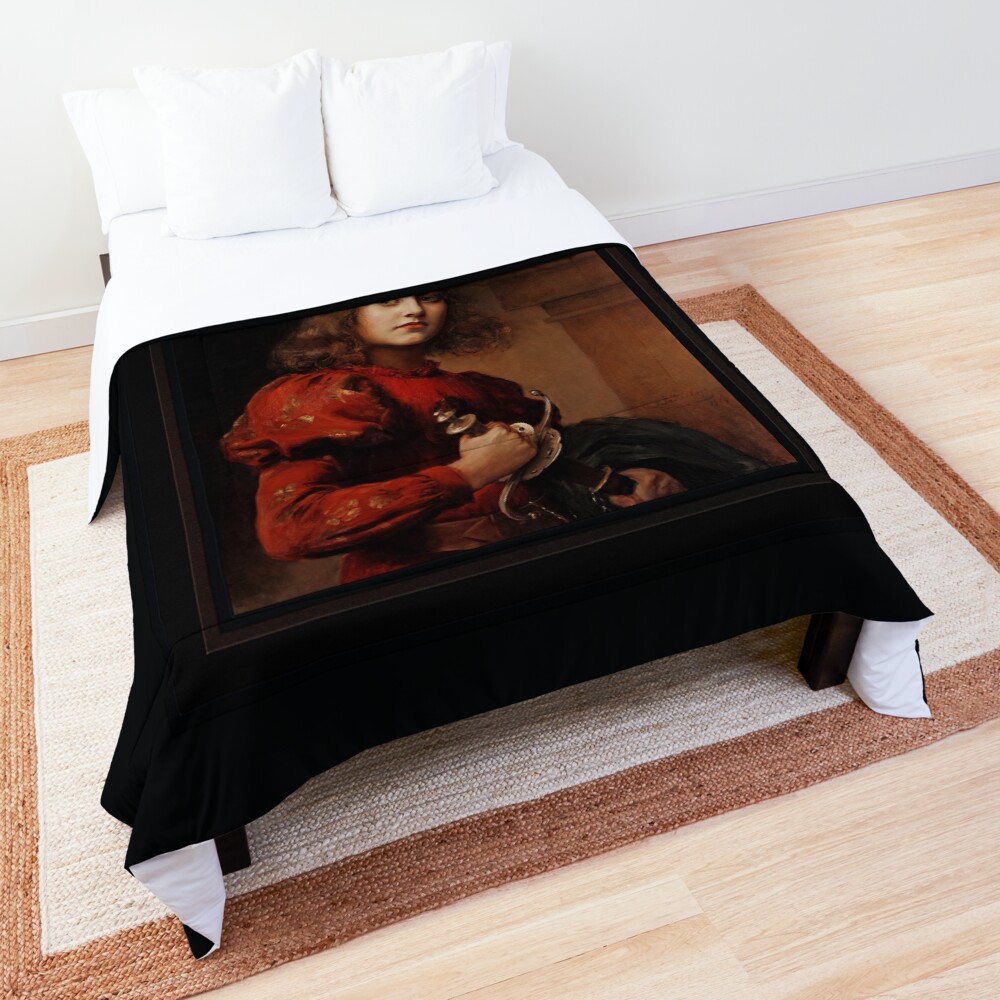
“성 잔다르크” 에서 만든 매혹적인 유화입니다 1909 by the renowned French artist Paul Antoine De La Boulaye (1849 – 1926). Known for his mastery in historical and religious depictions, De La Boulaye’s portrayal of Joan of Arc is both emotive and powerful. This piece stands as a testament to the artist’s deep connection with historical themes and his dedication to capturing the grandeur and gravitas of his subjects.
The subject of this painting is none other than Jeanne d’Arc, the Maid of Orleans, a national heroine and a symbol of courage, 믿음, and resistance during the Hundred Years’ 전쟁. She is depicted as a young, fierce woman, her face full of determination and strength, seemingly ready for battle or a decisive action, reflecting the intense emotional depth that De La Boulaye aimed to convey.
목차
주요 주제: 성 잔다르크
이 그림에서, Joan of Arc is presented as a youthful yet formidable figure, exuding both grace and authority. The artist has captured her in a moment of contemplation or preparation, with her gaze directed slightly upwards. This positioning suggests that she is deep in thought, perhaps reflecting on her divine mission or preparing for the challenges ahead. The slight tilt of her head, coupled with the intensity in her eyes, conveys a sense of inner strength and conviction, as if she is resolutely ready to face her destiny.
Joan’s face is soft yet strong, a juxtaposition that conveys her purity and youthful energy, alongside the weight of the responsibility she carries. Her facial expression is not one of fear, but rather of resolve—a key element in De La Boulaye’s attempt to humanize the iconic figure while still emphasizing her unyielding spirit. The artist uses delicate brushwork to create a soft yet textured rendering of Joan’s features, emphasizing her beauty and inner resolve.
Clothing and Details: Symbols of Strength and Spirituality
Joan’s attire in the painting is a blend of historical accuracy and artistic interpretation. She is dressed in a deep red gown with voluminous sleeves, which highlights the richness of her character and the importance of her role. The fabric’s fine detailing suggests a sense of nobility, though it also retains the simplicity that might be associated with her humble origins. 부드러운, textured fabric of the gown flows gently, contrasting with the firmness in her posture and the tight grip she holds on the sword in her hands.
The color red is a significant choice by De La Boulaye, as it symbolizes not only the passion and fire that fueled Joan’s mission but also the danger and violence that were an inevitable part of her journey. The red also signifies courage and blood, tying directly to her fate.
그녀의 손에, Joan holds a sword, another symbol of her role as a warrior and leader. The weapon is not simply a tool of war but a representation of her divine mission and the miraculous nature of her victories. Her left hand grips the hilt firmly, suggesting she is prepared for combat, while the sword’s edge rests downward, a subtle indication of her contemplative, non-violent nature in contrast to her role as a military leader.
Her head is adorned with a simple, red cap that complements her gown, reinforcing her connection to both the nobility of her mission and her personal modesty. The soft curls of her hair peek out from under the cap, further emphasizing her youth and purity.
배경과 지형: The Subtle Setting
De La Boulaye’s background is purposefully understated. The muted tones and blurred figures of the background direct all attention to the central figure of Joan. The faint shadow of a column or architectural element hints at the suggestion of a grand hall or royal space, further reinforcing her connection to both the battlefield and the court. There is no overt symbolism or dramatic setting in the background, which allows Joan’s image to dominate the painting.
The artist’s choice to avoid an elaborate background shifts the focus entirely to Joan and her emotional state. 부드러운, gradient-like transitions in the shadows surrounding her lend a sense of depth and quiet intensity to the painting, allowing her face and posture to stand out.
기술과 재료: The Mastery of Oil on Canvas
De La Boulaye’s technique is highly refined, using oil on canvas to create a texture that is both soft and highly detailed. The oil medium allows for smooth transitions in light and shadow, giving the painting a richness and depth that would be difficult to achieve with any other medium. The brushwork is fine and controlled, with De La Boulaye using light and shadow not only to add dimension to Joan’s form but also to express the psychological depth of her character.
The rich tonal contrasts between the deep reds of Joan’s gown and the darker, more neutral tones of the background allow the central figure to almost glow with a quiet power. 텍스처, both of her clothing and of her hair, are meticulously rendered, creating a tactile sensation that draws the viewer’s eye to each individual fold of fabric and curl of hair.
분위기와 테마: Heroism, 믿음, and Determination
The mood of the painting is one of reverence and quiet strength. There is no sense of drama or loud emotion in this depiction of Joan of Arc; 대신에, De La Boulaye presents her in a manner that emphasizes her calm composure and unwavering resolve. It speaks to her deep faith, her commitment to her divine mission, and her role as a beacon of hope and courage in a time of despair.
The theme of the artwork is undeniably heroic, yet it also delves into the spiritual aspects of Joan’s life and mission. This painting is not just a portrayal of a historical figure; it is an exploration of the inner resolve, the faith, and the courage that propelled Joan to accomplish what she did. There is a spiritual serenity in her expression, which contrasts beautifully with the military leader that history remembers her as.
The artist has encapsulated Joan’s essence not through grand gestures or dramatic action, but through a subtle, dignified portrayal that focuses on her humanity as much as her heroism. The soft tones and the intensity of her gaze invite the viewer to reflect on the legacy of Joan of Arc, not just as a warrior, but as a woman of deep conviction, guided by faith, and unwavering in the face of adversity.
프랑스 화가 Paul Antoine De La Boulaye의 Saint Joan of Arc c1909 (1849 – 1926); 농민 장르 장면을 만드는 데 전문, 종교적인 영감을 받은 작품, 정물 이미지, 이국적인 여성의 초상화와 묘사.
이것은 리터칭된 디지털 아트 옛 거장 복제품으로 공개 도메인 이미지로 구매할 수 있습니다. Boucher는 Guay의 작품으로 일련의 그림을 그리고 Madame de Pompadour가 조각하여 호의를 받는 궁정에게 잘 묶인 책으로 배포했습니다..
유래 된 아티스트 바이오 Wikipedia.org
Paul Antoine De La Boulaye(본명은 Charles Antoine Paul Georgette du Buisson de La Boulaye)는 프랑스 부르앙브레스(Bourg-en-Bresse)에서 태어났습니다. 1849, Eugène Georgette du Buisson de La Boulaye에게 (1810 – 1888) Adrienne de Graindorge d'Orgeville de Mesnil-Durand (1811 – 1859).
Paul은 프랑스 초상화 화가 Léon-Joseph-Florentin Bonnat의 멘토링을 받았습니다. (1833 – 1922); 그리고 1873 바울은 자신의 종교화인 다비드(David)를 전시했습니다., 순교, 살롱에서의 목자들의 숭배; 크라라바조(Craravaggio)의 스타일과 유사한 그림. 무릎을 꿇은 동정녀는 하얀 옷을 입고 아기 예수와 함께 하얀 빛의 후광 속에 나타납니다.
그의 경력이 발전함에 따라 그는 작품 Au sermon을 시작으로 점차 지역 참조를 기반으로 한 이미지로 작품을 전환했습니다., 브레스의 영향을 받은 기념품 드 라 브레스 c1879 (프랑스 동부의 Auvergne-Rhône-Alpes와 Bourgogne-Franche-Comté 지역); 그의 작품 The Baptism of the Orphan c1884도 마찬가지입니다., 부르네즈를 보여주는 (프랑스 중부의 역사적인 지역이었습니다.) 영향.