

Cerveza Sakura c1912
“Cerveza Sakura 1912” Es una obra de arte notable creada por el renombrado pintor japonés. Kitano Tsunetomi (1880 – 1947). Esta pieza personifica la maestría del artista al combinar la estética tradicional japonesa con una representación refinada de temas contemporáneos..
Kitano, conocido por sus hábiles y delicadas representaciones de mujeres hermosas y el mundo que las rodea., Capta de manera experta la esencia del Meiji., a los períodos Shōwa y Taisho en Japón a través de su obra de arte cuidadosamente compuesta. En esta pieza en particular, el tema es una mujer serena vestida con un kimono intrincadamente adornado, un tema frecuentemente explorado por Tsunetomi en su arte, con un telón de fondo de lirios en flor y suaves, tonos terrosos. La pintura ofrece un vistazo a la vida social de la época., donde la belleza tradicional y las influencias modernas se fusionaron.
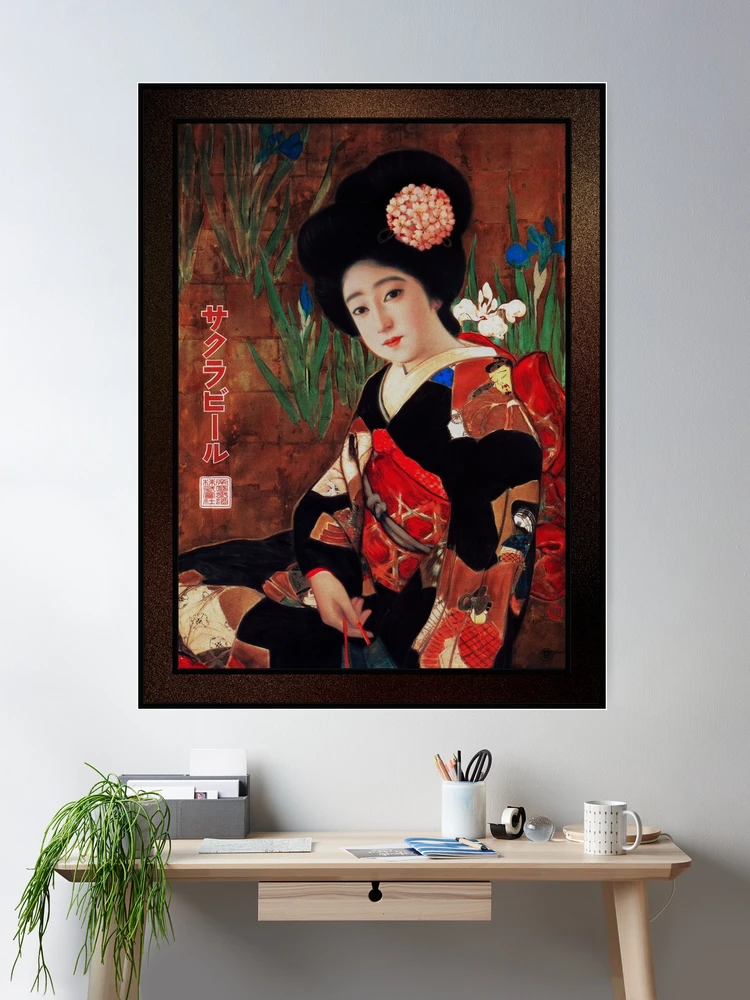
Tabla de contenido
Asunto principal: The Elegant Woman in Kimono
At the heart of the artwork stands a young woman, her poised posture and serene expression conveying a sense of grace and refinement. She is dressed in an elaborate kimono, the fabric meticulously detailed with vivid patterns of rich reds, oro, and soft blues, all of which are consistent with the traditional attire worn by women of her status during the early 20th century.
The woman’s face is painted with delicate features, su suave, fair skin, and subtle yet expressive eyes revealing a quiet elegance. Su pelo, styled in an elaborate updo, is adorned with a decorative pink sakura flower, un símbolo de fugacidad y belleza en la cultura japonesa. La colocación de la flor., justo encima de su oreja izquierda, llama la atención sobre los finos detalles de su peinado, un reflejo del cuidado meticuloso y la tradición asociados con la apariencia de una mujer durante este período.
La mujer sostiene un objeto pequeño., parcialmente visible en la pintura, sugiriendo que puede haber una narrativa más profunda o un significado simbólico en su gesto, aunque esto permanece abierto a interpretación. Su pose y vestimenta reflejan claramente su posición en la sociedad: una mujer de gracia., posiblemente de la clase alta, quien está simbólicamente ligada a la belleza natural que la rodea, representado en el fondo de la pintura.
The Floral Background: Symbolism and Setting
Detrás del tema, el fondo de la pintura presenta una exuberante escena de lirios que crecen contra una pared de color terracota.. los iris, with their deep blue and violet hues, create a striking contrast with the warm earth tones of the wall and the woman’s vibrant kimono. This combination of flowers and earthy tones serves to enhance the overall theme of natural beauty, and their prominence in the composition ties the subject to the traditional Japanese appreciation of nature. Irises often symbolize protection and faithfulness in Japanese culture, and their inclusion could be a subtle nod to the woman’s unwavering poise and dignity.
The terracotta-colored wall, gently muted and weathered, provides a sense of depth to the scene, evoking a warm, intimate setting. The natural light, evident in the soft highlights on the woman’s kimono and face, suggests that the scene is taking place in a serene, private space—perhaps a traditional Japanese home or garden, which was common for portraits of this nature.
Tema: Tradition Meets Modernity
“Cerveza Sakura 1912” does not just capture the beauty of a woman in traditional attire but also subtly integrates the influence of the era’s evolving social and cultural dynamics. El título en sí, “Cerveza Sakura,” is a clever juxtaposition of two powerful symbols, sakura, the beloved cherry blossom, and beer, a symbol of the increasing Western influence on Japanese society during the Taisho period. This period, which saw the rapid modernization of Japan, was marked by an embrace of Western technologies and ideas alongside the preservation of traditional cultural practices.
By naming the piece “Cerveza Sakura,” Kitano Tsunetomi seems to reference this cultural fusion. The sakura flower, long celebrated for its beauty and symbolic connection to fleeting moments in life, stands as a representation of Japan’s deep-rooted cultural heritage. The inclusion of beer, sin emabargo, may allude to the shifts in social gatherings and leisure activities brought on by Western influence, perhaps suggesting that the subject of the painting occupies a world where tradition and modernity coexist.
Ánimo: Serene and Reflective
El estado de ánimo de “Cerveza Sakura 1912” is one of tranquility and introspection. la mujer, seated with a composed demeanor, invites the viewer to pause and reflect on the quiet beauty of the scene. The soft colors and delicate details evoke a sense of calm, and the painting as a whole feels almost meditative. This peaceful atmosphere is enhanced by the harmonious blending of the subject and background, where both are treated with equal care and attention to detail. The overall mood is one of nostalgia, evoking the transitional period in Japan’s history, where the past and future coexisted in the hearts of its people.
The artist’s use of light and shadow adds to the contemplative tone of the painting. The light gently illuminates the subject, drawing attention to her features and the ornate details of her kimono, while the softer shadows create an atmosphere of depth and intimacy. This interplay between light and shadow serves to emphasize the fleeting, yet eternal, nature of beauty, a central theme in traditional Japanese art.
Materiales y técnica: A Masterful Blend of Tradition and Precision
Kitano Tsunetomi’s technique in “Cerveza Sakura 1912” reflects the mastery of traditional Japanese painting methods, characterized by fine lines, careful brushstrokes, and a deep understanding of color composition. La atención del artista al detalle es evidente en la textura del kimono de la mujer., que parece casi tangible, con sus patrones complejos y sutiles gradaciones de color. Los iris del fondo también están renderizados con gran cuidado., sus pétalos delicadamente pintados para evocar la suave elegancia de las flores.
El uso de tonos naturales., especialmente en el kimono y el fondo, agrega un rico, Calidad orgánica a la pieza., mientras que la fina pincelada sugiere que Kitano trabajó meticulosamente para crear el equilibrio ideal entre el realismo y la belleza estilizada inherente al arte tradicional japonés.. Su hábil uso del sombreado y el contraste le da a la obra una sensación de profundidad., hacer que la imagen parezca casi tridimensional manteniendo su estética etérea y refinada.
Conclusión
“Cerveza Sakura 1912” by Kitano Tsunetomi is a painting that beautifully captures the essence of the Taisho period in Japan, blending tradition with modern influences. The artist’s mastery in portraying the elegance of the female form, the serene beauty of nature, and the subtle interplay of cultural symbols makes this work a lasting example of the period’s aesthetic sensibilities. It is a timeless representation of an era caught between the past and the future, where tradition was both cherished and transformed.
Cerveza Sakura 1912 es una reproducción de viejos maestros de arte digital retocada de una imagen de dominio público.
Biografía del artista
Información debajo de Wikipedia.org
Kitano Tsunetomi initially made printing plates for illustrations in newspapers. En 17 he went to Osaka to become a painter.
He now designed illustrations for stories that appeared in newspapers. His large-format advertising posters with beautiful women also found recognition.
En 1910 his picture “Assembly of the Beetles” (す だ く 虫, Sudaku mushi) and the following year the picture “Sunshine in the Rain” (日照 雨, Sobae) were awarded a 3rd prize at the Bunter exhibition.
With that he had established himself as a painter in the Nihonga style.
En 1914 Kitano exhibited the picture “The Thread of Request” (願 い の 糸, Negai no ito) at the resurrected Inten exhibition .
From then on he remained connected to this series of exhibitions and belonged, together with the Tokyo Kaburagi Kiyokata and Uemura Shōen in Kyoto, to the prominent painters of beautiful women.
Since Kitano initially portrayed “magical” beautiful women, he was counted among the wing of painting that dealt with the unusual, the “Gadan no Akuma-ha” (画壇 の 悪 魔 派).
From the middle Taishō period, the picture of the Yodogimi should be emphasized, which has a new depth of representation.
With the Shōwa period, Kitano captured modern Japan in a fresh way.
Kitano was shown in 1931 at the “Exhibition of Japanese Painting” in Berlin. En 1989 the Japanese Post issued two postage stamps for 62 yen each with a dancer from the “Awa Odori”, the festive procession in Tokushima Prefecture (historically Awa Province).