

Sakura Bier c1912
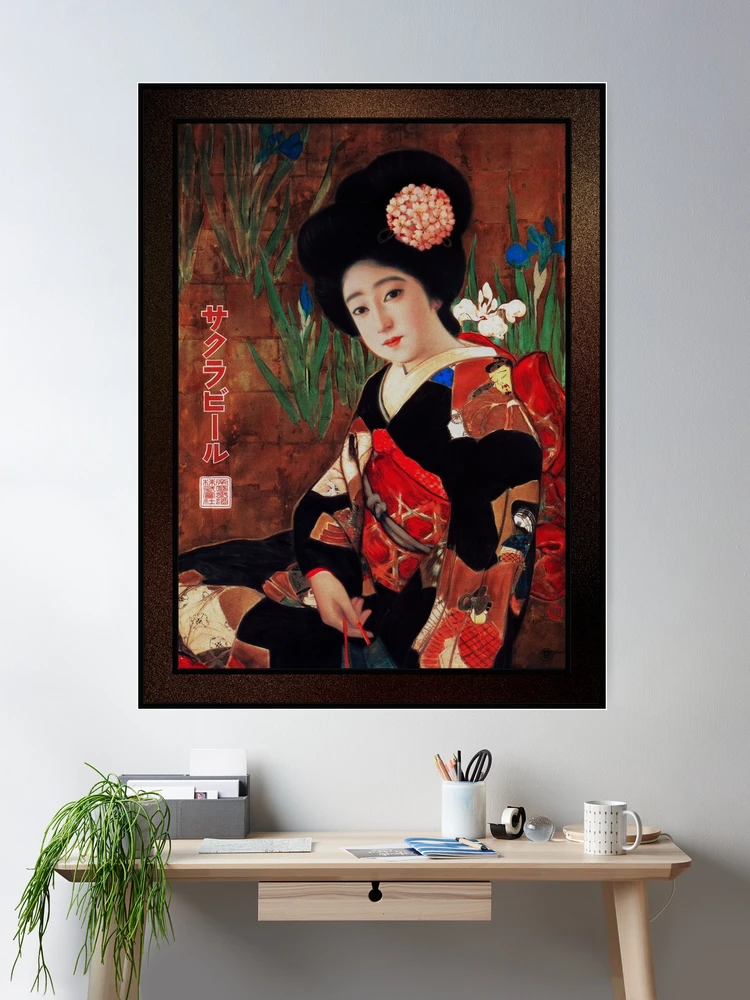
“Sakura Bier 1912” is in opmerklik keunstwurk makke troch de ferneamde Japanske skilder Kitano Tsunetomi (1880 – 1947). Dit stik toant it masterskip fan 'e keunstner yn it mingjen fan tradisjonele Japanske estetyk mei in ferfine byld fan hjoeddeistige tema's.
Kitano, bekend om syn betûfte en delikate ôfbyldings fan moaie froulju en de wrâld om har hinne, vangt saakkundich de essinsje fan de Meiji, nei de Shōwa- en Taisho-perioaden yn Japan troch syn soarchfâldich gearstalde keunstwurk. Yn dit bysûndere stik, it ûnderwerp is in poised frou klaaid yn in yngewikkeld fersierde kimono, in ûnderwerp dat faak ûndersocht wurdt troch Tsunetomi yn syn keunst, set tsjin in eftergrûn fan bloeiende irissen en sêft, ierdske toanen. It skilderij biedt in blik yn it sosjale libben fan de tiid, dêr't tradisjonele skientme en moderne ynfloeden gearfoege.
Ynhâldsopjefte
Haad ûnderwerp: De elegante frou yn Kimono
Yn it hert fan it keunstwurk stiet in jonge frou, har lykwichtige posysje en serene ekspresje dy't in gefoel fan genede en ferfining oerbringe. Se is klaaid yn in útwurke kimono, de stof sekuer detaillearre mei libbene patroanen fan rike readen, goud, en sêfte blues, dy't allegear oerienkomme mei de tradisjonele klean droegen troch froulju fan har status yn 'e iere 20e ieu.
It gesicht fan 'e frou is skildere mei delikate funksjes, har sêft, earlike hûd, en subtile noch ekspressive eagen dy't in stille elegânsje sjen litte. Har hier, stylearre yn in útwurke updo, is fersierd mei in dekorative rôze sakura blom, a symbol of transience and beauty in Japanese culture. The flower’s placement, just above her left ear, draws attention to the fine details of her hairstyle, a reflection of the meticulous care and tradition associated with a woman’s appearance during this period.
The woman holds a small object, partially visible in the painting, suggesting that there may be a deeper narrative or symbolic meaning in her gesture, though this remains open to interpretation. Her pose and attire clearly reflect her position in society—a woman of grace, possibly from the upper class, who is symbolically tied to the natural beauty around her, depicted in the background of the painting.
De Floral Eftergrûn: Symbolyk en ynstelling
Achter it ûnderwerp, the backdrop of the painting features a lush scene of irises growing against a terracotta-colored wall. The irises, with their deep blue and violet hues, create a striking contrast with the warm earth tones of the wall and the woman’s vibrant kimono. This combination of flowers and earthy tones serves to enhance the overall theme of natural beauty, and their prominence in the composition ties the subject to the traditional Japanese appreciation of nature. Irises often symbolize protection and faithfulness in Japanese culture, and their inclusion could be a subtle nod to the woman’s unwavering poise and dignity.
The terracotta-colored wall, gently muted and weathered, provides a sense of depth to the scene, evoking a warm, intimate setting. The natural light, evident in the soft highlights on the woman’s kimono and face, suggests that the scene is taking place in a serene, private space—perhaps a traditional Japanese home or garden, which was common for portraits of this nature.
Tema: Tradysje moetet moderniteit
“Sakura Bier 1912” does not just capture the beauty of a woman in traditional attire but also subtly integrates the influence of the era’s evolving social and cultural dynamics. The title itself, “Sakura Bier,” is a clever juxtaposition of two powerful symbols, sakura, the beloved cherry blossom, and beer, a symbol of the increasing Western influence on Japanese society during the Taisho period. This period, which saw the rapid modernization of Japan, was marked by an embrace of Western technologies and ideas alongside the preservation of traditional cultural practices.
By naming the piece “Sakura Bier,” Kitano Tsunetomi seems to reference this cultural fusion. The sakura flower, long celebrated for its beauty and symbolic connection to fleeting moments in life, stands as a representation of Japan’s deep-rooted cultural heritage. The inclusion of beer, lykwols, may allude to the shifts in social gatherings and leisure activities brought on by Western influence, perhaps suggesting that the subject of the painting occupies a world where tradition and modernity coexist.
Stimming: Serene en reflektyf
De stimming fan “Sakura Bier 1912” is one of tranquility and introspection. De frou, seated with a composed demeanor, invites the viewer to pause and reflect on the quiet beauty of the scene. The soft colors and delicate details evoke a sense of calm, and the painting as a whole feels almost meditative. This peaceful atmosphere is enhanced by the harmonious blending of the subject and background, where both are treated with equal care and attention to detail. The overall mood is one of nostalgia, evoking the transitional period in Japan’s history, where the past and future coexisted in the hearts of its people.
The artist’s use of light and shadow adds to the contemplative tone of the painting. The light gently illuminates the subject, drawing attention to her features and the ornate details of her kimono, while the softer shadows create an atmosphere of depth and intimacy. This interplay between light and shadow serves to emphasize the fleeting, yet eternal, nature of beauty, a central theme in traditional Japanese art.
Materiaal en technyk: In masterlike blend fan tradysje en presyzje
Kitano Tsunetomi’s technique in “Sakura Bier 1912” reflects the mastery of traditional Japanese painting methods, characterized by fine lines, careful brushstrokes, and a deep understanding of color composition. The artist’s attention to detail is evident in the texture of the woman’s kimono, which seems almost tangible, with its complex patterns and subtle gradations of color. The irises in the background are similarly rendered with great care, their petals delicately painted to evoke the soft elegance of the flowers.
The use of natural tones, especially in the kimono and background, adds a rich, organic quality to the piece, while the fine brushwork throughout suggests that Kitano worked meticulously to create the ideal balance between realism and the stylized beauty inherent in traditional Japanese art. His skillful use of shading and contrast lends the work a sense of depth, making the image appear almost three-dimensional while maintaining its ethereal and refined aesthetic.
Konklúzje
“Sakura Bier 1912” troch Kitano Tsunetomi is in skilderij dat de essinsje fan 'e Taisho-perioade yn Japan prachtich fange., tradysje kombinearret mei moderne ynfloeden. De masterskip fan 'e keunstner yn it skilderjen fan' e elegânsje fan 'e froulike foarm, de serene skientme fan de natuer, en it subtile ynteraksje fan kulturele symboalen makket dit wurk in bliuwend foarbyld fan 'e estetyske gefoelens fan' e perioade. It is in tiidleaze foarstelling fan in tiidrek fongen tusken it ferline en de takomst, dêr't tradysje sawol koestere en feroare waard.
Sakura Bier 1912 is in retouchearre digitale keunst âlde masters reproduksje fan in byld yn it iepenbier domein.
Artist Bio
Info hjirûnder Fan Wikipedia.org
Kitano Tsunetomi makke ynearsten printplaten foar yllustraasjes yn kranten. By 17 hy gie nei Osaka om skilder te wurden.
Hy ûntwurp no yllustraasjes foar ferhalen dy't yn de kranten stiene. Syn grutformaat reklameposters mei moaie froulju fûnen ek erkenning.
Yn 1910 syn foto "Assembly of the Beetles" (Sudakumushi, Sudaku paddestoel) en it folgjende jier de foto "Sunshine in the Rain" (sinneskyn rein, Sobae) waarden bekroand mei in 3e priis op de tentoanstelling Bunter.
Dêrmei hie er him fêstige as skilder yn de Nihonga-styl.
Yn 1914 Kitano eksposearre de foto "The Thread of Request" (tried fan winsken, Nea ito) by de opstanne Tentoanstelling .
Fan doe ôf bleau er ferbûn mei dizze rige útstallings en hearde er by, tegearre mei de Tokyo Kaburagi Kiyokata en Uemura Shōen yn Kyoto, oan de foaroansteande skilders fan moaie froulju.
Sûnt Kitano yn earste ynstânsje portrettearre "magyske" moaie froulju, hy waard rekkene ta de fleugel fan it skilderjen dy't omgie mei it ûngewoane, de "Gadan no Akuma-ha" (Satanyske fraksje yn 'e keunstwrâld).
Ut 'e midden Taishō perioade, it byld fan 'e Yodogimi moat beklamme wurde, dy't in nije djipte fan fertsjintwurdiging hat.
Mei de Shōwa-perioade, Kitano ferovere moderne Japan op in frisse manier.
Kitano waard toand yn 1931 op de "Exhibition of Japanese Painting" yn Berlyn. Yn 1989 de Japanske Post útjûn twa postsegels foar 62 yen elk mei in dûnseres út 'e "Awa Odori", de feestlike optocht yn Tokushima Prefecture (histoarysk Awa Provinsje).