

Red Hotline
Red Hotline: A Celebration of Glamour and Playfulness
The Red Hotline, kirjoittanut Peter Driben (1903 – 1968), an esteemed American pin-up artist of the mid-20th century, was celebrated for his ability to infuse vitality and charm into his works; and this piece is a quintessential example of his artistry, epitomizing the flirtatious yet wholesome essence of pin-up culture. Driben‘s vibrant palette, mastery of form, and knack for storytelling through visual art are on full display in this piece.
Sisällysluettelo
Pääaihe: The Radiant Blonde in Blue
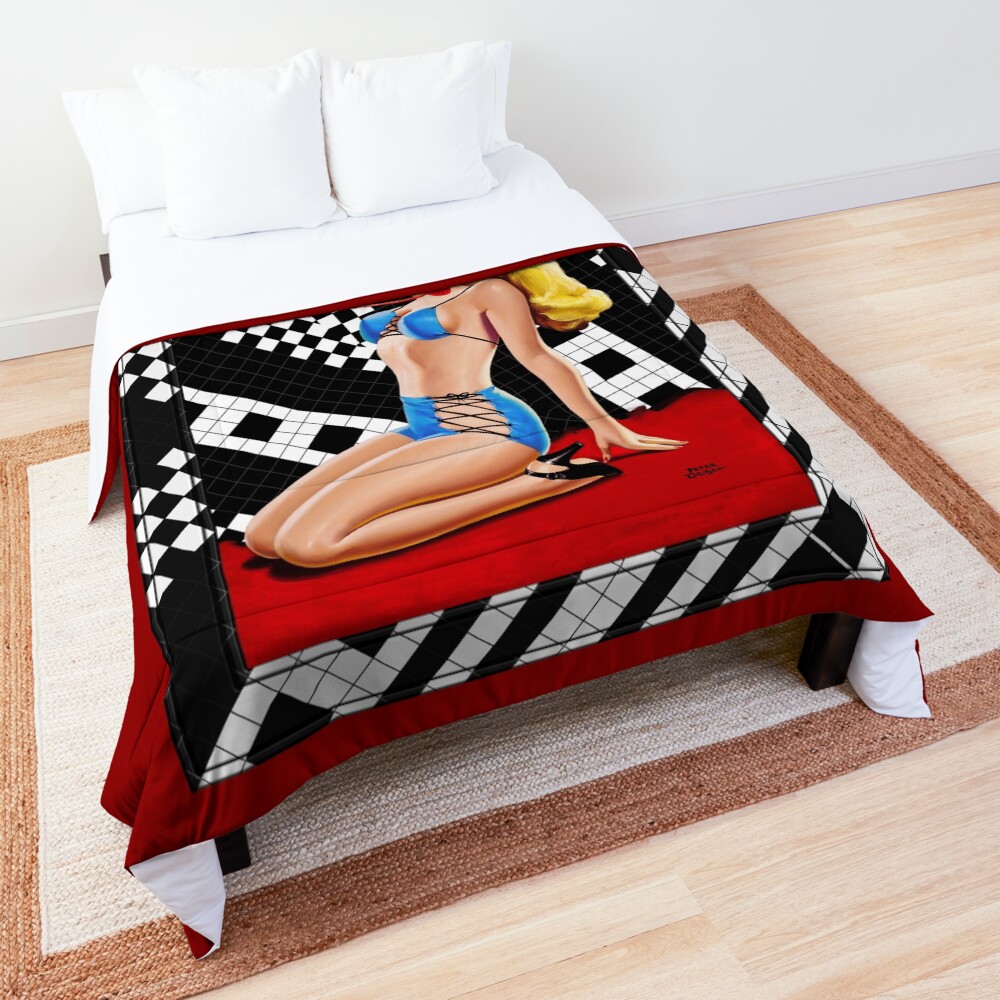
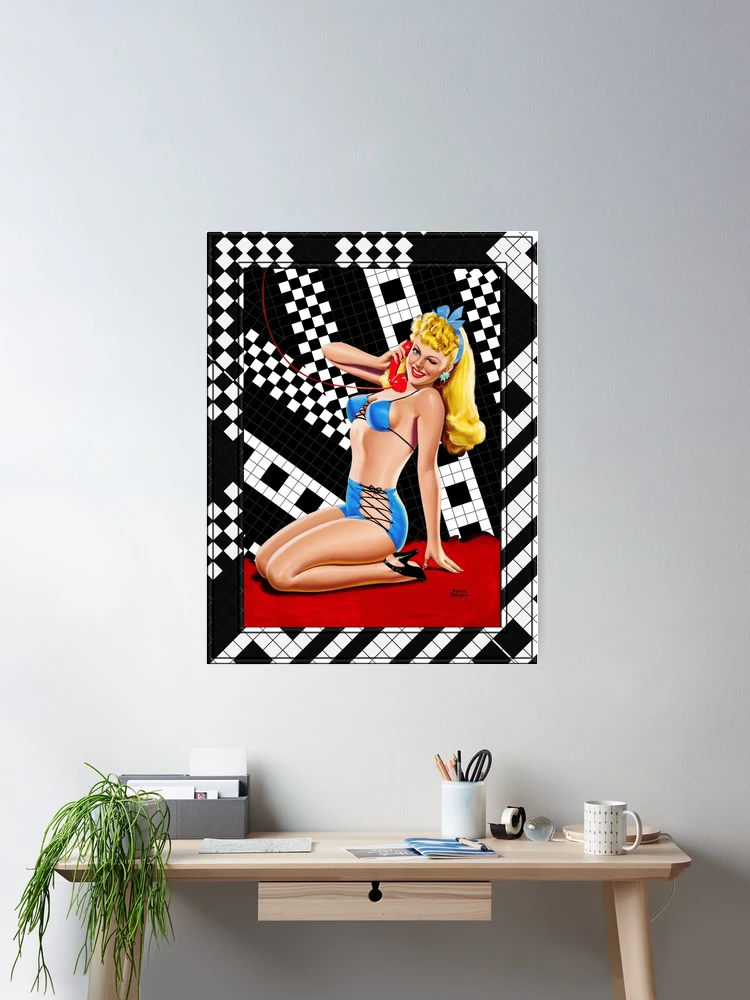
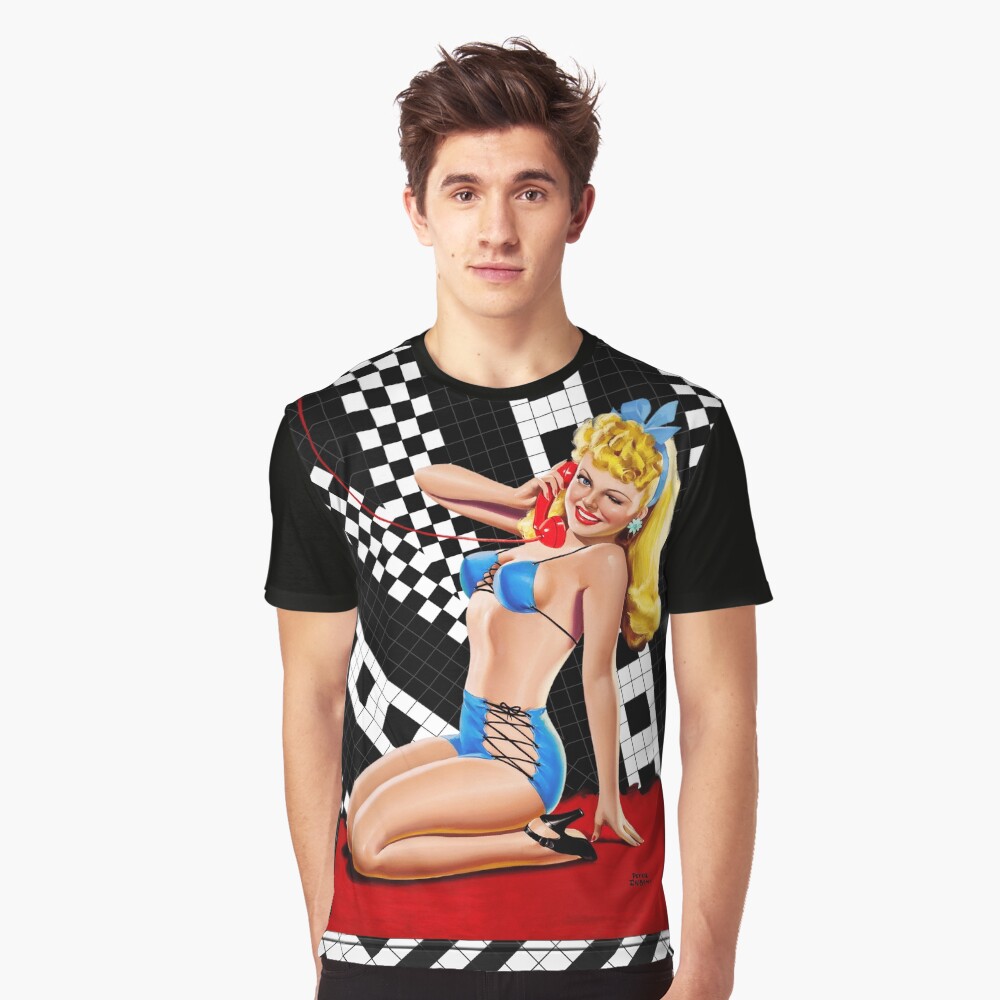
Ytimessä “Red Hotline” lies a playful and coquettish depiction of a young blonde woman. Her golden hair cascades in carefully stylized waves, adorned with a large, cheerful blue bow that complements her swimsuit. The bright smile on her face, coupled with her winking eye, exudes an inviting charm, drawing viewers into the narrative. She holds a bright red telephone receiver, which lends the artwork its name and serves as a pivotal object within the composition.
The subject is dressed in a light blue bikini with black lace detailing. The high-waisted bottoms, characteristic of 1940s and 1950s fashion, are secured with crisscrossed laces, adding a touch of suggestive allure without compromising the overall playfulness of the scene. Her slender figure, accented by the pose, kneeling on a red carpet with one hand on the ground and the other holding the phone, demonstrates Driben’s skillful portrayal of anatomy and movement.
Background and Surrounding Objects
Taustaa “Red Hotline” is a dazzling geometric checkerboard pattern, executed in stark black and white. This graphic, almost optical illusion-like design provides a modernist contrast to the soft, feminine figure in the foreground. The abstract background evokes a sense of energy and boldness, reinforcing the dynamic quality of the composition.
The red telephone cord playfully winds across the frame, connecting the subject to an unseen caller and injecting a sense of narrative intrigue. The phone itself, a vibrant red, stands out sharply against the monochrome and blue elements, acting as both a visual and thematic anchor.
The red carpet beneath the woman serves a dual purpose. It frames her pose while adding a warm, inviting tone to the composition. This patch of red balances the cooler tones of her attire and ties back to the telephone, creating a cohesive color scheme.
Tyyli ja tekniikka
Driben’s work embodies the Golden Age of pin-up art, an era when illustrators captured an idealized, often cheeky depiction of femininity. His style is defined by bold colors, clean lines, and a high level of polish that recalls the glossy advertisements and magazine covers of his time.
Sisään “Red Hotline,” Driben’s use of light and shadow is subtle but effective. The glossy sheen on the telephone and the laces of the swimsuit adds a sense of texture and realism, while the soft shadows along the figure’s curves enhance her three-dimensionality. The artist’s attention to detail—such as the precise rendering of her glossy black heels or the subtle highlights in her hair—showcases his technical prowess.
Teema ja mieliala
Teemana “Red Hotline” is lighthearted and playful, rooted in the optimism and cheeky humor that characterized mid-century pin-up art. The telephone introduces an element of storytelling, inviting viewers to imagine the conversation taking place. Is she flirting with a suitor? Sharing a laugh with a friend? The ambiguity allows for a range of interpretations, adding depth to the seemingly simple scene.
The mood is undeniably fun and flirtatious, yet it remains within the realm of innocent escapism. Driben’s pin-ups often walked the line between suggestiveness and wholesomeness, a balance that made them widely popular and accessible during their time. “Red Hotline” ei ole poikkeus, offering a playful fantasy that never veers into vulgarity.
Materiaalit ja väliaine
While the specific medium of this piece isn’t detailed here, Driben was known for his work in gouache and oil paints. These mediums allowed him to achieve the vibrant colors and smooth finishes seen in “The Red Hotline.” The level of precision in the lines and shading suggests that this artwork was originally created as an illustration, likely intended for print in a magazine, calendar, or poster.
Cultural Context and Legacy
“Red Hotline” reflects the cultural zeitgeist of its era. Created during a time when pin-up art was at its peak, it embodies the idealized femininity and playful sensuality that appealed to audiences in the mid-20th century. Driben’s works were part of a broader movement that celebrated beauty, glamouria, and the allure of the everyday woman.
As a piece of pin-up art, “Red Hotline” carries with it the legacy of a genre that influenced fashion, mainonta, and popular culture. Tänään, it stands as a nostalgic reminder of a bygone era, appreciated both for its aesthetic qualities and its historical significance.
Johtopäätös
“Red Hotline” by Peter Driben is a masterful example of mid-century pin-up art. Its captivating subject, bold design, and vibrant execution showcase the artist’s talent and creativity. Driben’s ability to combine playfulness with technical precision ensures that this artwork remains an enduring icon of its genre. It captures a moment in time when glamour and charm were celebrated, offering viewers a delightful glimpse into the world of vintage illustration.
Tämä on remasteroitu digitaalisen taiteen vanhojen mestareiden kopio julkisessa käytössä olevasta kuvasta, joka on saatavilla a metalliprintti verkossa.
Tietoja Taiteilijasta
Tiedot alla Wikipedia.org
Peter Driben syntyi Bostonissa, ja hän opiskeli Vesper George Art Schoolissa ennen kuin muutti Pariisiin vuonna 1925. Kun opiskelen Sorbonnessa 1925, hän aloitti sarjan erittäin suosittuja kynä- ja mustepiirroksia kaupungin esitystaiteista.
Maaliskuussa 1934 Driben loi ensimmäisen tunnetun pin-upinsa, joka oli La Paree Storiesin kansi; ja mennessä 1935, hän tuotti coverit Snappylle, Pep, New Yorkin yöt, Ranskalainen yöelämä ja Caprice.
Kun Dribenin suosio jatkoi nousuaan 30 -luvun lopulla, hän loi lisää kansia muille aikakauslehdille, mukaan lukien Silk Stocking Stories., Elokuva Merry-Go-Round ja Real Screen Fun.
Dribenin ura laajeni mainontaan, kun hän muutti New Yorkiin myöhään 1936. Täällä hän loi alkuperäiset kolmiulotteiset leikkausikkunanäytöt Philco Radiosille, Cannon kylpypyyhkeet, ja Weber Baking Company.
Ehkä hänen tunnetuin teoksensa on The Maltese Falconin alkuperäiset julisteet ja julkisuus. Peter Driben oli myös kustantaja Robert Harrisonin läheinen ystävä, ja sisään 1941 hän sai sopimuksen tuottaa kansia Harrisonin uudelle Beauty Parade -lehdelle.
Sieltä Peter jatkoi maalaamaan satoja kansia kyseiselle julkaisulle ja seitsemälle muulle teokselle, jotka Harrisonin oli määrä julkaista – Flirttailla, Kuiskaus, Kurkistus, Silmänisku, Kaunis tyttö, Giggles, ja Jokeri.
Driben julkaisi usein jopa kuusi tai seitsemän hänen kansiaan joka kuukausi. Dribenin työ Harrisonille vahvisti hänet yhdeksi Amerikan tunnetuimmista ja menestyneimmistä pin-up- ja glamour-taiteilijoista. Juuri ennen kuin hän aloitti Harrisonin palveluksessa, Driben meni naimisiin taiteilijan kanssa, näyttelijä ja runoilija, Louise Kirby.
Sisään 1944 hänelle tarjottiin epätavallinen mahdollisuus, pin-up-taiteilijalle; siitä tuli New York Sunin taiteellinen johtaja, virkaan, jonka hän säilytti kunnes 1946. Sodan aikana, hänen suosittu maalauksensa amerikkalaisista sotilaista, jotka nostivat lippua Iwo Jimalla, herätti huomattavaa mediahuomiota.
Sisään 1956, Driben ja Louise muuttivat Miami Beachille, jossa hän vietti eläkevuosia maalaamalla muotokuvia (mukaan lukien yksi Dwight D.. Eisenhower) ja muita taideteoksia, jotka hänen vaimonsa järjesti onnistuneiksi näyttelyiksi. Driben kuoli vuonna 1968, Louise sisään 1984.