

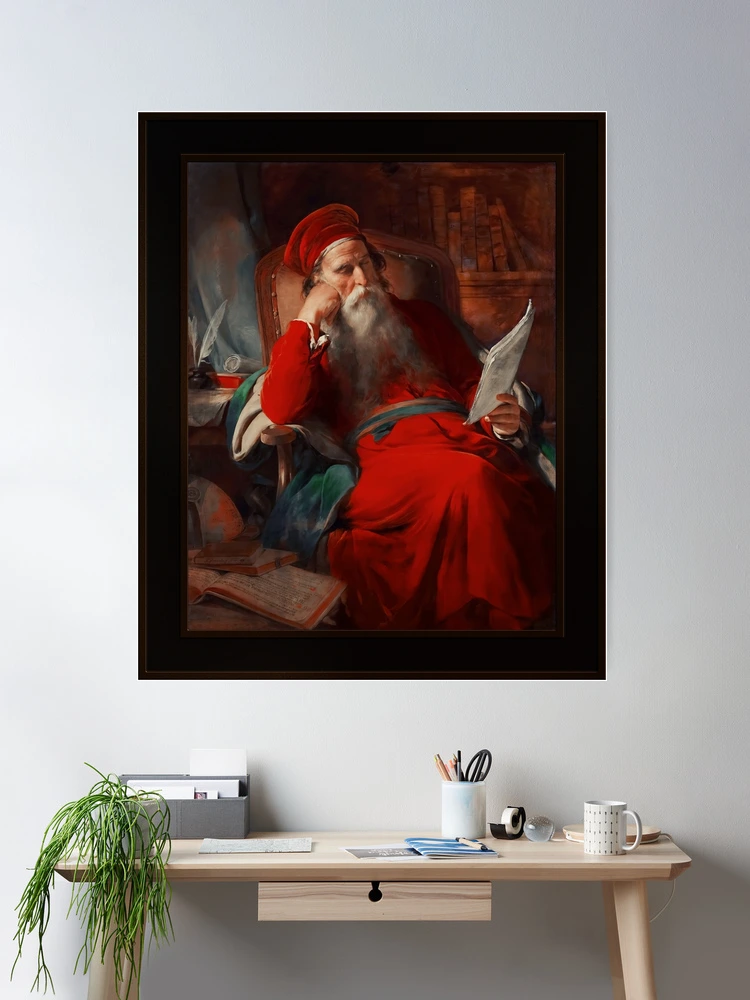
Uczony w swoim gabinecie ok. 1876 r
Obraz pt “Uczony w swoim studium” powstał w 1876 autorstwa znanego austriackiego artysty Friedricha von Amerlinga, z którego mieszkał 1803 do 1887. Ten konkretny utwór prezentuje mistrzostwo portret starszego uczonego, głęboko pochłoniętego lekturą. Amerlinga, ceniony za dbałość o szczegóły i głębię psychologiczną, przedstawia postać w zrelaksowanym, ale kontemplacyjnym nastroju.
Uczony, ubrani w tradycyjne czerwone szaty, siedzi w pluszowym fotelu, jego postawa wskazywała zarówno na zmęczenie, jak i koncentrację. Zastosowanie miękkiego światła, Bogata paleta kolorów, a delikatne tekstury odzwierciedlają biegłość Amerlinga w łączeniu realizmu z głębią narracji. Scena wywołuje poczucie spokoju i introspekcji, charakterystyczne dla środowiska akademickiego końca XIX wieku.
Spis treści
Główny temat: Uczony
Sercem obrazu jest sam uczony. Z długim, powiewająca biała broda i kontemplacyjny wyraz twarzy, ucieleśnia archetyp mądrego starszego. Strój uczonego jest wyrazisty, bogata czerwona szata, obszyty czarnym, co oznacza zarówno autorytet, jak i tradycję. Jego postawa, jedną rękę oparł na twarzy, a w drugiej trzymał kartkę papieru, sugeruje, że jest on głęboko zamyślony i nieco zmęczony swoimi intelektualnymi zajęciami.
Szaty, choć proste, są udrapowane z wielką starannością, ich fałdy nadają obrazowi poczucie ruchu i życia. Jego głęboka koncentracja, jednak, pozostawia go odsuniętego od otaczającego go świata, prawie tak, jakby zatracił się w słowach pisanych, które trzyma. Uczony jawi się jako postać o ogromnej wadze intelektualnej, człowiekiem, który całe swoje lata poświęcił pogoni za wiedzą.
Przedmioty i materiały
Wokół uczonego rozsiane są różne przedmioty, które dodają warstwom narracji do sceny. Na jego biurku, widać kałamarz i pióro, symbole życia akademickiego i pisarstwa naukowego. Te narzędzia, przypominające minioną epokę, zanim dominowała prasa drukarska i nowoczesne technologie, pomagają zakotwiczyć widza w danym okresie.
W pobliżu, widać porozrzucane książki, niektóre otwarte, inne ułożone wysoko, które stanowią część tła i podkreślają środowisko intelektualne uczonego. Tekstura stron i ich gęstość, Ułożenie piętrowe podkreśla zanurzenie badacza w świecie literatury i wiedzy. Papier, który trzyma uczony, wygląda jak kartka pergaminu, być może list lub rękopis, co dodatkowo symbolizuje głębię jego zaangażowania naukowego.
Ogólna sceneria świadczy o komforcie uczonego w jego własnej przestrzeni, gdzie bałagan książek i papierów tworzy poczucie porządku w chaosie myśli. W tle widać słabo widoczny kominek, sugerując przytulną, a jednocześnie prywatną atmosferę. Meble, duże krzesło, wygląda na wykonaną z drewna i skóry, wskazywał na bogactwo i wygodę w ówczesnym środowisku akademickim.
Teren i otoczenie
Środowisko, w którym przebywa uczony, jest jego nauką, przestrzeń, która może być zarówno sanktuarium, jak i więzieniem dla intelektualistów. Miękkie, warm light in the room accentuates the rich textures of the furniture and materials. The bookshelves are lined with numerous volumes, indicating the wealth of knowledge housed within this private library.
The scholar’s seated position in front of these shelves suggests a connection to the world of learning and academia. The backdrop is rich in tone, with muted reds and browns that reflect both the warmth of the scholar’s environment and the seriousness of the intellectual pursuits he engages in. The light streaming through the room highlights the scholar’s deep-set features, emphasizing his age and the wisdom that comes with it.
The presence of objects like books, quills, and an ink pot not only shows the physical environment but also underscores the themes of knowledge, learning, i kontemplacja. Pokój sprawia wrażenie prywatnego, a jednocześnie wypełnionego celem, tak jakby istniała wyłącznie dla studiów i refleksji uczonego. Brak bezpośredniej interakcji z otaczającą przestrzenią sugeruje skupienie się na życiu wewnętrznym, a nie świat zewnętrzny.
Styl i technika
Friedrich von Amerling był znany ze swojego niezwykłego talentu do uchwycenia ludzkiej postaci, i “Uczony w swoim studium” nie jest wyjątkiem. Obraz jest doskonałym przykładem realizmu, z bardzo szczegółowymi teksturami, precyzyjne prace pędzlem, i dokładne przedstawienia zarówno uczonego, jak i jego otoczenia. Uwaga Amerlinga na subtelności światła, zwłaszcza w przedstawieniu twarzy uczonego i fałdach jego ubrania, pokazuje swoje głębokie zrozumienie ludzkiej anatomii i tkanki. The shadows and light in the painting are used not only to create a sense of depth but also to reinforce the mood of introspection and quiet contemplation.
The use of vibrant red in the scholar’s robe contrasts beautifully with the darker, more muted tones of the background. This use of color draws attention to the central figure while maintaining a harmonious balance with the surrounding objects and setting. Praca pędzla, soft yet defined, gives the painting a textured, Prawie jakość dotykowa, which adds to its emotional resonance. The painter’s emphasis on capturing the details of the scholar’s facial expression, with every line and crease of his age visible, evokes a sense of wisdom, while the room itself, although somewhat indistinct, frames the figure in a way that heightens his intellectual solitude.
Nastrój i motyw
Nastrój “Uczony w swoim studium” is one of quiet introspection and scholarly devotion. The scholar appears absorbed in his work, disconnected from the outside world as he contemplates the document in his hands. The tranquil setting and the warmth of the room suggest a peaceful life dedicated to learning, free from the distractions of modern life.
The theme of intellectual pursuit, represented by the figure of the scholar and his environment, speaks to the value placed on knowledge during the 19th century. The scholar’s red robes evoke a sense of tradition, while the objects around him remind the viewer of the painstaking effort that goes into scholarship.
The choice to depict the scholar in a moment of stillness and reflection aligns with the themes of the painting—dedication, wiedza, and the solitary pursuit of wisdom. The juxtaposition of the scholar’s concentration against the cozy, scholarly environment reflects the often isolating nature of intellectual work, where the mind is always engaged in deep thought, even in the quietest of spaces.
Wniosek
“Uczony w swoim studium” by Friedrich von Amerling stands as a testament to the artist’s skill in capturing the essence of scholarly life in the 19th century. Poprzez skrupulatną dbałość o szczegóły, expert use of color and light, and the thoughtful depiction of both the scholar and his environment, Amerling creates an intimate and contemplative portrait. The painting invites the viewer into the world of the scholar, offering a glimpse into the solitude and dedication required for a life devoted to learning and reflection.
Jest to zremasterowana cyfrowa reprodukcja starych mistrzów obrazu z domeny publicznej, która jest dostępna jako druk na płótnie online.