

Sette Putti che portano una ghirlanda di frutta
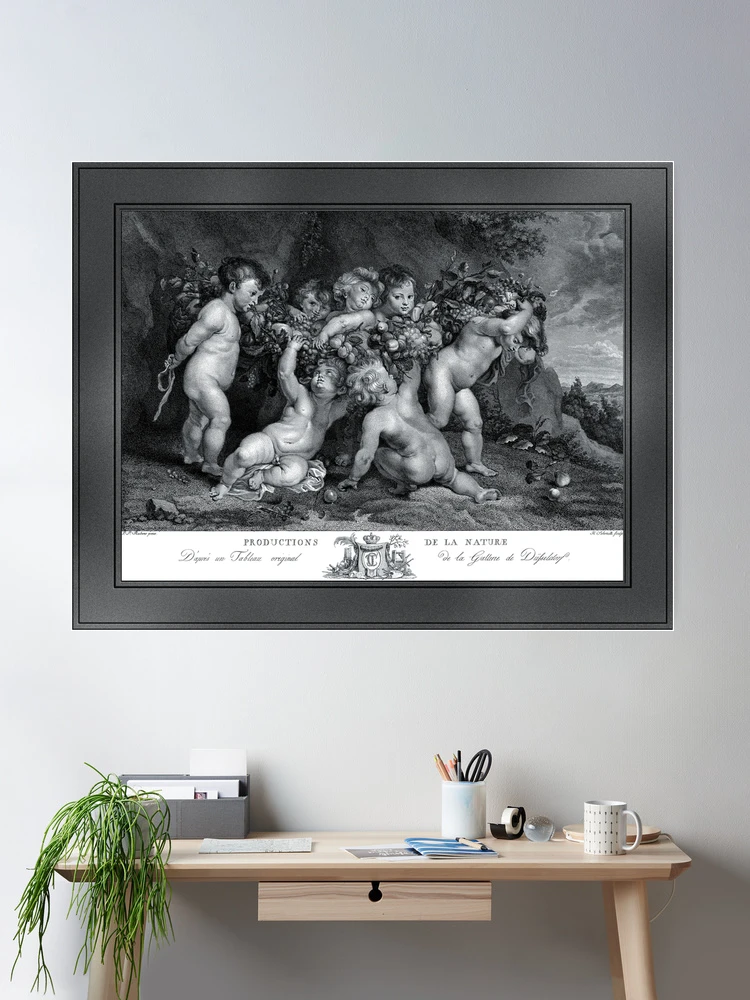
L'opera intitolata “Sette Putti che portano una ghirlanda di frutta,” creato tra 1780 e 1787 dall'incisore tedesco William Dickinson (1758 – 1787), è un notevole esempio della tradizione classica barocca. Il pezzo trae origine da un dipinto del maestro fiammingo Peter Paul Rubens (1577 – 1640), noto per la sua maestria nel colore, movimento, e la sua rappresentazione della sensualità e della vitalità nelle sue opere. Questa incisione, che faceva parte di una più ampia collezione di opere realizzate da Dickinson, tenta di catturare la grandiosità del dipinto originale di Rubens in un mezzo che si presta alla precisione e al dettaglio.
L'immagine si concentra sulla figura di sette putti, ciascuno porta una ghirlanda di frutti maturi, incarnando il tema dell'abbondanza e dei piaceri della natura. Queste figure cherubiche, spesso associato all'amore e all'innocenza giovanile nella mitologia classica, sono raffigurati forti ed energici mentre portano il peso delle sontuose ghirlande di frutta.
I putti sono nudi, le loro forme morbide sottolineano la purezza e il vigore della giovinezza, con i loro corpi contorti in varie posizioni mentre lottano sotto il peso della generosità che trasportano. Queste figure simboleggiano non solo i temi della fertilità e dell'abbondanza naturale, ma anche le complesse relazioni tra l'innocenza, lavoro, e il piacere derivato dalla ricchezza della natura.
Sommario
Il soggetto principale e le figure
I sette putti sono le figure centrali di questo incisione. Sono posizionati in dinamica, pose fluide, trasmettendo un senso di movimento e fatica. Each child is shown with a garland of fruit that they carry with apparent effort, creating a sense of weight and abundance. Their cherubic faces are filled with expressions of determination, reflecting the labor of carrying the heavy garlands.
The putti are not simply decorative; they play a critical role in bringing the theme of nature’s generosity to the forefront. Their movements are graceful, yet each figure bears its own unique posture that suggests the strain of carrying the weight of nature’s bounty. Some are bent over, while others hold the garland overhead, and some are even balancing precariously on one leg, emphasizing the tension between ease and effort.
The fine detailing of the putti’s figures, especially their limbs and facial expressions, cattura la sensualità per cui Rubens era noto. I corpi dei bambini sono resi con una morbidezza che evoca la vitalità giovanile, mentre le loro espressioni trasmettono un'innocenza venata di sforzo, sottolineando il contrasto tra gioco giovanile e lavoro. Le ghirlande stesse, ricco di frutta matura come mele e uva, sono ricchi di consistenza e appaiono quasi tangibili, aggiungendo all'aspetto naturalistico dell'incisione.
Oggetti e simbolismo
L'oggetto più significativo dell'incisione, oltre i putti stessi, è la ghirlanda di frutti. Le ghirlande sono simbolo di fertilità, prosperità, e i piaceri del mondo naturale. L’abbondanza di frutta parla del tema della generosità della natura, a common motif in baroque art that emphasizes both the joy and the labor that come from cultivating and living in harmony with nature. The fruit, depicted in rich, fine detail, emphasizes the luxurious and sensual nature of Rubens’s work, creating a feeling of indulgence and festivity.
In addition to the fruit, the landscape in the background adds to the sense of depth and context. The figures of the putti are placed within a rural, rocky terrain, with undulating hills and distant mountains. The landscape serves to ground the figures in a natural environment, while the distant horizon, softened by a gentle mist, suggests an endless abundance. This timeless backdrop complements the theme of nature’s eternal bounty and connects the putti’s labor to the broader cycles of growth and harvest.
Il terreno e il paesaggio
The background of the engraving portrays a rocky, pastoral scene typical of many baroque works. The putti are placed on a gentle incline, surrounded by foliage and boulders, creating a sense of harmony between the figures and their environment. This landscape not only grounds the figures but also highlights the classical ideals of human interaction with nature. The rocky outcroppings contrast with the soft forms of the children, creating a dynamic tension between the natural elements and the human figures.
Beyond the hills, the soft contours of the distant mountains suggest the vastness of the world in which the putti reside. The light that bathes the landscape seems to glow from an unseen source, a characteristic often employed by Rubens to emphasize the ethereal quality of his subjects. The mood of the terrain is one of serenity and quiet, underscoring the peaceful coexistence of man and nature, while still conveying the idea of hard work that is rewarded by the richness of the harvest.
Stile, Tema, e umore
The engraving adopts the classical baroque style, with its focus on movement, vitalità, and exuberance. Rubens’s influence is unmistakable, as the figures are imbued with a sense of dynamic energy and sensuality that was characteristic of his work. The garlands of fruit, the soft rendering of the figures, and the lush landscapes are all components of Rubens’s stylistic hallmarks, filtered through Dickinson’s engraving technique. The overall mood of the piece is one of youthful exuberance mixed with the labor and effort required to harvest the fruits of the earth.
The theme of abundance, coupled with the figures of the putti, invokes a sense of joy and celebration. The scene is not one of mere labor but of a joyous and festive gathering of nature’s gifts. The work embodies the baroque tendency to celebrate the fullness of life, with an emphasis on sensual pleasures, fertilità, and the interconnectedness of humanity and nature.
Materiali e Tecnica
Come un'incisione, this artwork reflects the technical skill of William Dickinson, who was known for his ability to capture the detailed textures of the original paintings. The precise lines of the engraving give the figures a sense of three-dimensionality and depth, making them appear lifelike despite the two-dimensional nature of the medium. The fine details of the fruit, the folds in the figures’ pelle, and the textured surfaces of the rocks in the background are all rendered with remarkable clarity. The technique used by Dickinson to reproduce Rubens’s work allows for an intense focus on detail, which brings out the richness of the original painting while maintaining the integrity of its design.
Questa è una riproduzione ritoccata di arte digitale dei vecchi maestri di un'immagine di pubblico dominio.
La biografia dell'artista è derivata da Wikipedia.org
William was born in London, England on 1746, and began his career as an engraver using the Mezzotint engraving technique that was developed in the 17th century; and which allows for the creation of prints with soft gradations of tone and rich blacks.
The Mezzotint monochrome printmaking process of the intaglio family, was the to produce half tone without using lines or dot based techniques like hatching, cross-hatching or stipple (Ref: https://en.wikipedia.org/wiki/Mezzotint).
Utilizzando il metodo dell'incisione a mezzatinta, lo applicò alla creazione di caricature e ritratti ispirati alle opere del pittore storico e ritrattista britannico Robert Edge Pine (1730 – 1788); essendo parzialmente coperto dal puro scialle verde e blu che guarda in lontananza 21 ha ricevuto un premio dalla Society of Arts.
Da questo momento in poi William iniziò a pubblicare le proprie opere e 12 anni dopo avrebbe collaborato con Thomas Watson (1750 – 1781); un incisore di entrambi i metodi meaaotint e stipple.
A volte tra l'inizio e la metà degli anni 1790, William si sarebbe trasferito a Parigi, Francia dove realizzò incisioni per il nuovo regime e poi per Napoleone.