

Shepherds Idyll
Shepherds Idyll c1768 by French Painter François Boucher (1703 – 1770), chì era ancu un disegnatore è incisore. Hà travagliatu in u stile rococò è hè cunnisciutu per i so temi classici idilliachi, scene pastorali e allegorie decorative.
François Boucher, one of the most influential French Rococo painters of the 18th century, created the exquisite work “Shepherd’s Idyll” around 1768. This painting encapsulates the light-hearted and pastoral spirit of the Rococo period, known for its playful, sensual, and idealized portrayal of nature and rural life. With soft, flowing lines and a romantic atmosphere, Boucher’s approach brings forth a harmonious blend of natural beauty, innocenza, and intimacy.
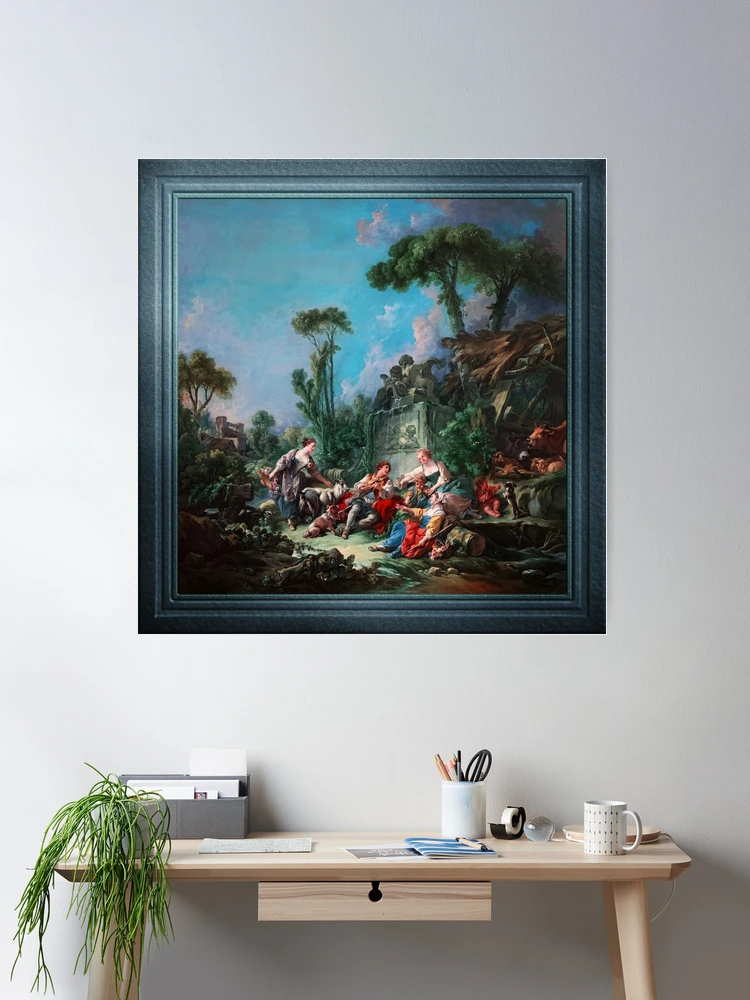
Table of Contents
The Main Subject and Composition
À u core di “Shepherds Idyll” lies a group of shepherds and shepherdesses captured in an idyllic, pastoral scene. The composition is carefully structured, showcasing the innocence of rural life in a way that elevates it from mere rusticity to a realm of artful elegance. The scene is set in a lush, rolling landscape with a softly flowing stream. The shepherds, dressed in vibrant, yet soft-colored costumes typical of the period, are seated or reclining in a carefree manner. There is an easy, relaxed posture among the figures, creating a sense of tranquility and ease.
The group is mostly engaged in lighthearted activities — some play music, while others interact with animals. A young woman with a graceful, almost ethereal appearance is in the foreground, playing a flute, while a man, dressed in a richly colored red and gold jacket, is seated nearby, holding a shepherd’s crook. Some of the figures are in close conversation, others appear to be gazing into the distance, while a few are simply lost in their enjoyment of the natural surroundings.
In u fondu, two horses graze near a fountain, while a goat and dog are positioned around the group of figures, further enriching the pastoral scene with the vitality of life. The figures themselves, while youthful, are imbued with an air of sophistication, making the pastoral setting seem almost like a stage for a private social gathering among the country gentry.
Oggetti è Simbuli
A striking feature of the painting is the natural elements, which are treated with delicate reverence. The foliage surrounding the group is lush and abundant, with grand, towering trees that fill the upper part of the canvas. The figures seem almost dwarfed by the massive trunks and sweeping branches that provide a sense of both protection and serenity. Their presence also speaks to the Rococo love of nature as a decorative and idealized space, meant to reflect human grace and beauty.
The fountain in the background, designed with classical motifs, symbolizes the theme of purity and the eternal flow of life. The gentle stream that flows from it winds its way through the scene, adding to the tranquil atmosphere. The animals, especially the goat and the cows on the right side of the painting, lend a touch of realism to the otherwise idealized scene. They are almost anthropomorphized, existing in harmony with the human figures. The goat, in particulare, is a common symbol of fertility, while the dog signifies loyalty and companionship, subtle yet deliberate symbols that further enhance the narrative of simplicity and pastoral bliss.
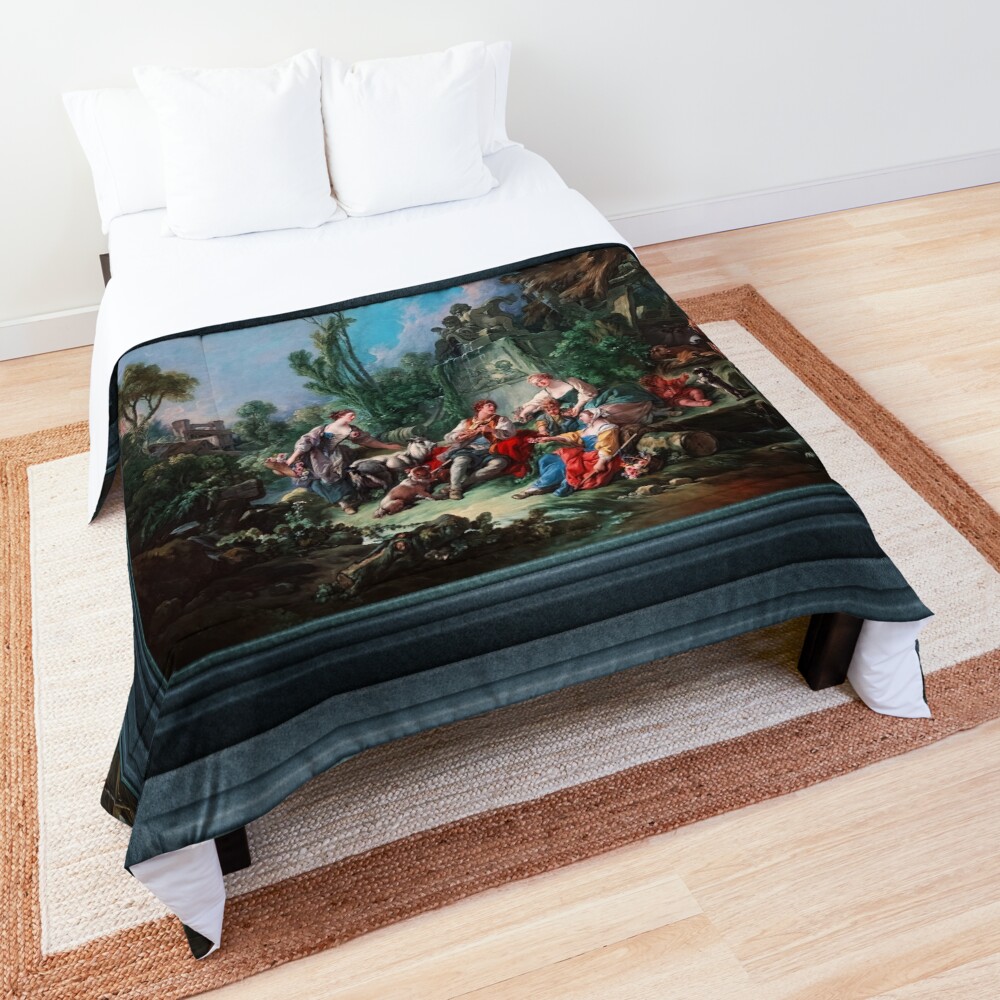
The shepherd’s crook, a tool of the pastoral life, is another symbol within the scene, symbolizing the connection of humanity to nature. The pastoral life is not merely an aesthetic experience in this context but one that is firmly rooted in the traditions and labors of the countryside.
Terrain and Background Details
The background of the painting is dominated by a mixture of lush greens and deep blues. The sky is painted with a soft, pastel blue that merges seamlessly into the rolling hills and trees in the distance. The light is diffused gently across the landscape, giving the entire scene a warm, harmonious glow. The figures in the foreground bask in this light, which creates a soft halo around them.
The trees and foliage are painted with a sense of romantic idealism, where nature is exaggerated to appear in its most serene and refined form. There are no sharp, harsh angles or barren spaces in the landscape. Invece, the rolling hills, expansive sky, and dotted animals create a lush, fertile environment.
In contrast to the vibrancy of the figures and natural elements, the architecture in the background remains modest but significant. The distant ruins of a classical structure — perhaps a Roman-style temple or an overgrown villa — add a touch of antiquity to the work. I palazzi, though not the central focus, provide historical context to the otherwise timeless nature of the landscape, indicating that the scene could exist in any golden age of human civilization.
The Rococo Style
Boucher’s “Shepherd’s Idyll” is quintessentially Rococo, a style that arose in France in the early 18th century. Rococo is known for its lightness, grazia, and delicate ornamentation, and these characteristics are evident throughout the work. U molle, pastel palette employed by Boucher enhances the dreamlike, almost fairy-tale quality of the scene. The figures are depicted with soft, forme arrotondate, and the fluid brushstrokes give a sense of movement and fluidity to the scene.
The sensuality that pervades the Rococo style is also present in this painting, though it is more understated. I figuri, although idealized, exude a softness and grace that suggests the easy pleasures of rural life — where love, musica, and beauty coexist in a world free of societal constraints. In many ways, Boucher’s use of light, culore, and subject matter elevates the pastoral to an art of fantasy, making it an escape from the rigid realities of court life.
Umore è Atmosfera
L'umore di “Shepherd’s Idyll” hè unu di serenità, joy, and contentment. I figuri’ relaxed postures and the gentle interplay between the humans and animals reflect an idyllic existence where human connection to nature is at its purest. The natural world around them, lush and vibrant, complements their youthful, carefree demeanor. There is no urgency in the painting; piuttostu, it conveys a sense of eternal, peaceful enjoyment.
Boucher’s use of light, culore, and subject matter invites the viewer into a dreamlike world of pastoral bliss, where time slows, and the concerns of the outside world seem far away. The lush environment and the harmonious interactions of the figures suggest a utopian existence, where the beauty of nature and human companionship create a perfect balance.
Cunclusione
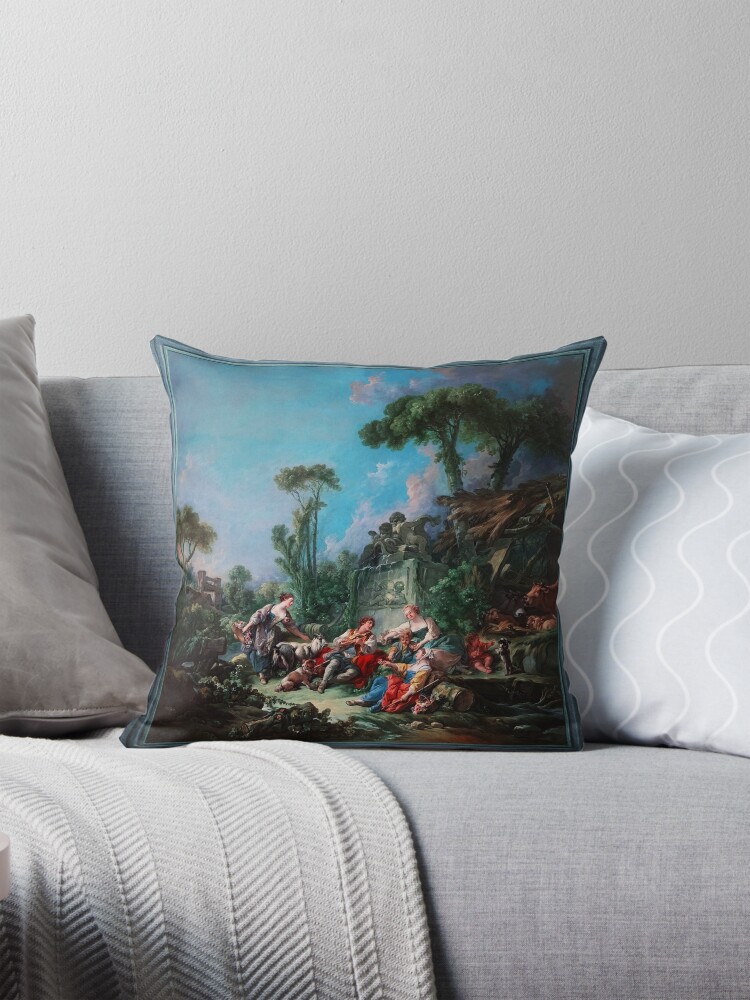
François Boucher’s “Shepherd’s Idyll” encapsulates the charm and grace of the Rococo period through its serene portrayal of pastoral life. With its idyllic depiction of rural pleasures, the painting invites the viewer to escape into a world of beauty, simplicity, è serenità. The rich colors, delicate figures, and romanticized landscape create a timeless piece that remains a hallmark of the Rococo style.
Shepherd’s Idyll is a retouched digital art old masters reproduction of a public domain image.
À propositu di l'artista
Info sottu Derivatu da Wikipedia.org
Nativu di Parigi, Boucher era u figliolu di un pittore pocu cunnisciutu Nicolas Boucher, chì li dete a so prima furmazione artistica. À l'età di diciassette anni, un dipintu di Boucher era ammiratu da u pittore François Lemoyne. Lemoyne dopu hà numinatu Boucher cum'è u so apprendista, ma dopu solu trè mesi, andò à travaglià pè l'incisore Jean-François Cars.
In 1720, vincìu l'élite Grand Prix de Rome per a pittura, ma ùn hà pigliatu l'oppurtunità di studià in Italia finu à cinque anni dopu, per via di prublemi finanziarii à l'Accademia Reale di Pittura è Scultura.[1] Al suo ritorno dai suoi studi in Italia fu ammesso alla rifondata Académie de peinture et de sculpture on 24 Nuvembre 1731. U so pezzu di ricezione (pezza di ricezione) era u so Rinaldu è Armida di 1734.
Boucher sposò Marie-Jeanne Buzeau in 1733. A coppia avia trè figlioli inseme. Boucher hè diventatu un membru di a facultà in 1734 è a so carriera s'accelerà da questu puntu chì hè statu prumuvutu Prufessore dopu Rettore di l'Accademia, diventendu ispettore à a Royal Gobelins Manufactory è infine Premier Peintre du Roi (Primu Pittore di u Re) in 1765. Ritrattu di Marie-Louise O'Murphy c. 1752
Boucher hè mortu 30 Maghju 1770 in a so Parigi natale. U so nome, cù quellu di a so patrona Madame de Pompadour, era diventatu sinonimu di u stilu rococò francese, guidà i fratelli Goncourt à scrive: “Boucher hè unu di quelli omi chì rapprisentanu u gustu di un seculu, qui s'expriment, personificà è incarna.”
Boucher hè famosu per dì chì a natura hè “troppu verde è pocu illuminatu” (troppu verde è mal illuminatu).
Boucher era assuciatu cù l'incisore di pietre preziose Jacques Guay, à qui il a enseigné à dessiner. Il a également encadré le peintre moravo-austriaque Martin Ferdinand Quadal ainsi que le peintre néoclassique Jacques-Louis David en 1767.[4] Più tardi, Boucher hà fattu una serie di disegni di l'opere di Guay chì Madame de Pompadour hà poi incisu è distribuitu cum'è un voluminu bellu rilegatu à i cortigiani favuriti.