

Shepherds Idyll
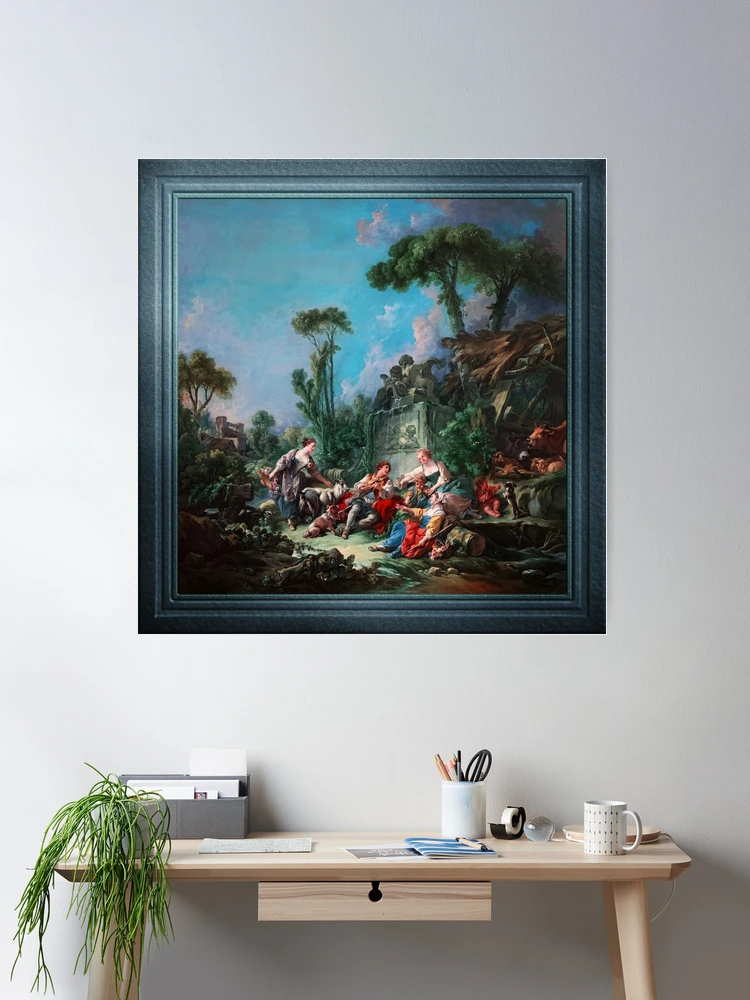
Shepherds Idyll c1768 by French Painter פרנסואה בושר (1703 – 1770), שהיה גם צייר ואוצר. הוא עבד בסגנון הרוקוקו וידוע בנושאים הקלאסיים האידיליים שלו, סצנות פסטורליות ואלגוריות דקורטיביות.
פרנסואה בושר, one of the most influential French Rococo painters of the 18th century, created the exquisite work “האידיליה של הרועה” סְבִיב 1768. This painting encapsulates the light-hearted and pastoral spirit of the Rococo period, known for its playful, sensual, and idealized portrayal of nature and rural life. With soft, flowing lines and a romantic atmosphere, Boucher’s approach brings forth a harmonious blend of natural beauty, תְמִימוּת, and intimacy.
תוכן העניינים
הנושא וההרכב העיקריים
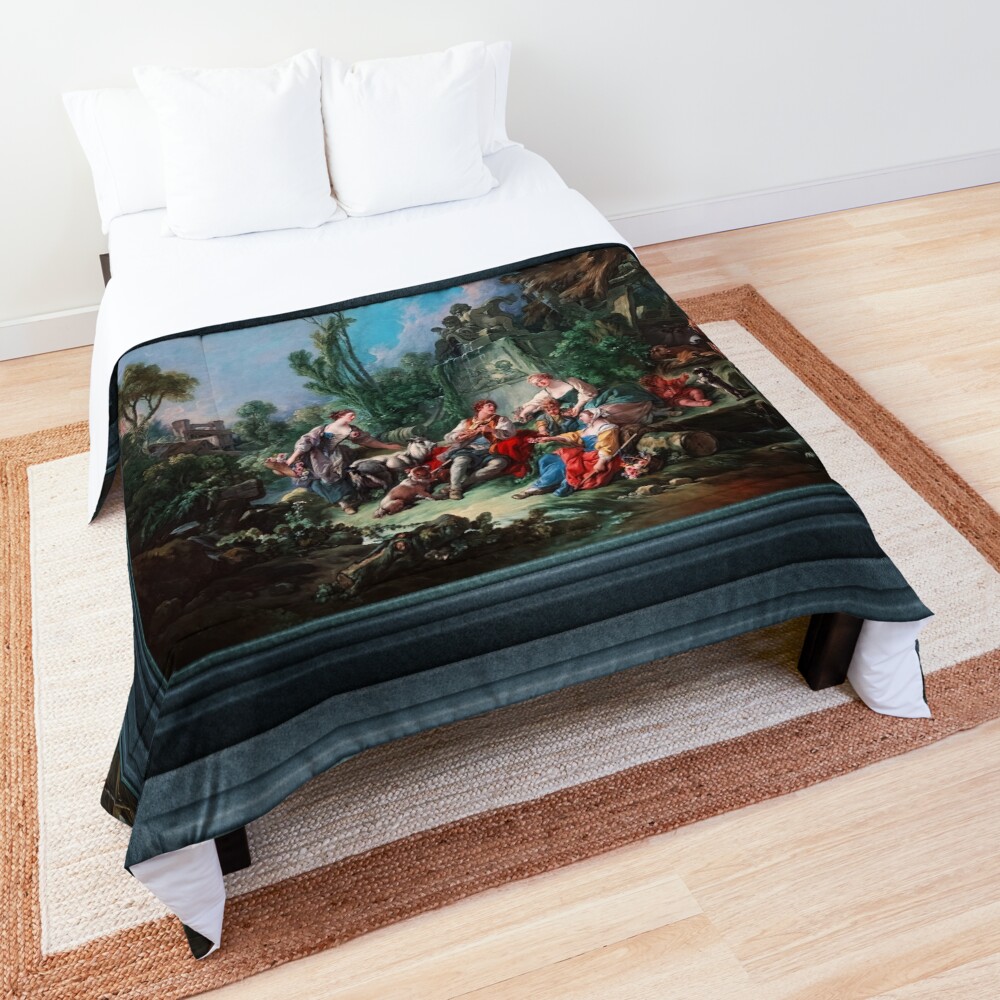
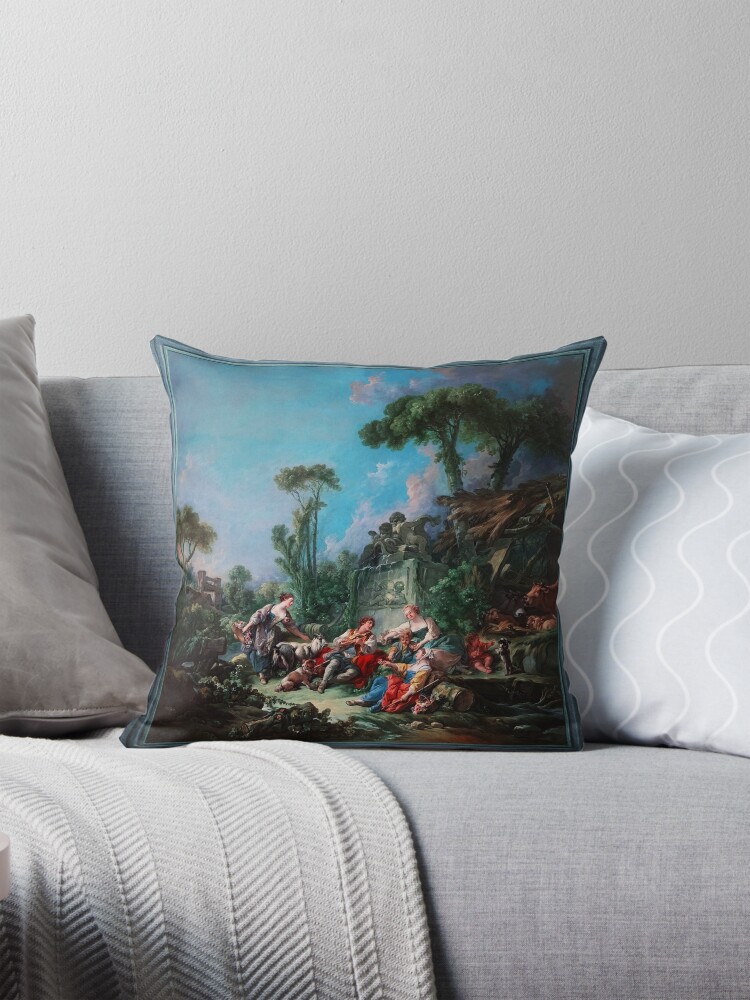
בְּבוֹעַסִים “Shepherds Idyll” lies a group of shepherds and shepherdesses captured in an idyllic, pastoral scene. The composition is carefully structured, showcasing the innocence of rural life in a way that elevates it from mere rusticity to a realm of artful elegance. The scene is set in a lush, rolling landscape with a softly flowing stream. הרועים, dressed in vibrant, yet soft-colored costumes typical of the period, are seated or reclining in a carefree manner. There is an easy, relaxed posture among the figures, creating a sense of tranquility and ease.
The group is mostly engaged in lighthearted activities — some play music, while others interact with animals. A young woman with a graceful, almost ethereal appearance is in the foreground, playing a flute, while a man, dressed in a richly colored red and gold jacket, is seated nearby, holding a shepherd’s crook. Some of the figures are in close conversation, others appear to be gazing into the distance, while a few are simply lost in their enjoyment of the natural surroundings.
ברקע, two horses graze near a fountain, while a goat and dog are positioned around the group of figures, further enriching the pastoral scene with the vitality of life. The figures themselves, while youthful, are imbued with an air of sophistication, making the pastoral setting seem almost like a stage for a private social gathering among the country gentry.
חפצים וסמלים
A striking feature of the painting is the natural elements, which are treated with delicate reverence. The foliage surrounding the group is lush and abundant, with grand, towering trees that fill the upper part of the canvas. The figures seem almost dwarfed by the massive trunks and sweeping branches that provide a sense of both protection and serenity. Their presence also speaks to the Rococo love of nature as a decorative and idealized space, meant to reflect human grace and beauty.
The fountain in the background, designed with classical motifs, symbolizes the theme of purity and the eternal flow of life. The gentle stream that flows from it winds its way through the scene, adding to the tranquil atmosphere. The animals, especially the goat and the cows on the right side of the painting, lend a touch of realism to the otherwise idealized scene. They are almost anthropomorphized, existing in harmony with the human figures. The goat, בִּפְרָט, is a common symbol of fertility, while the dog signifies loyalty and companionship, subtle yet deliberate symbols that further enhance the narrative of simplicity and pastoral bliss.
The shepherd’s crook, a tool of the pastoral life, is another symbol within the scene, symbolizing the connection of humanity to nature. The pastoral life is not merely an aesthetic experience in this context but one that is firmly rooted in the traditions and labors of the countryside.
Terrain and Background Details
The background of the painting is dominated by a mixture of lush greens and deep blues. The sky is painted with a soft, pastel blue that merges seamlessly into the rolling hills and trees in the distance. The light is diffused gently across the landscape, giving the entire scene a warm, harmonious glow. The figures in the foreground bask in this light, which creates a soft halo around them.
The trees and foliage are painted with a sense of romantic idealism, where nature is exaggerated to appear in its most serene and refined form. There are no sharp, harsh angles or barren spaces in the landscape. במקום זאת, the rolling hills, expansive sky, and dotted animals create a lush, fertile environment.
In contrast to the vibrancy of the figures and natural elements, the architecture in the background remains modest but significant. The distant ruins of a classical structure — perhaps a Roman-style temple or an overgrown villa — add a touch of antiquity to the work. הבניינים, though not the central focus, provide historical context to the otherwise timeless nature of the landscape, indicating that the scene could exist in any golden age of human civilization.
The Rococo Style
Boucher’s “האידיליה של הרועה” is quintessentially Rococo, a style that arose in France in the early 18th century. Rococo is known for its lightness, חן, and delicate ornamentation, and these characteristics are evident throughout the work. הרך, pastel palette employed by Boucher enhances the dreamlike, almost fairy-tale quality of the scene. The figures are depicted with soft, צורות מעוגלות, and the fluid brushstrokes give a sense of movement and fluidity to the scene.
The sensuality that pervades the Rococo style is also present in this painting, though it is more understated. הדמויות, although idealized, exude a softness and grace that suggests the easy pleasures of rural life — where love, מוּסִיקָה, and beauty coexist in a world free of societal constraints. In many ways, Boucher’s use of light, צֶבַע, and subject matter elevates the pastoral to an art of fantasy, making it an escape from the rigid realities of court life.
מצב רוח ואווירה
מצב הרוח של “האידיליה של הרועה” is one of serenity, שִׂמְחָה, and contentment. הדמויות’ relaxed postures and the gentle interplay between the humans and animals reflect an idyllic existence where human connection to nature is at its purest. The natural world around them, lush and vibrant, complements their youthful, carefree demeanor. There is no urgency in the painting; אלא, it conveys a sense of eternal, peaceful enjoyment.
Boucher’s use of light, צֶבַע, and subject matter invites the viewer into a dreamlike world of pastoral bliss, where time slows, and the concerns of the outside world seem far away. The lush environment and the harmonious interactions of the figures suggest a utopian existence, where the beauty of nature and human companionship create a perfect balance.
מַסְקָנָה
של פרנסואה בוצ'ר “האידיליה של הרועה” encapsulates the charm and grace of the Rococo period through its serene portrayal of pastoral life. With its idyllic depiction of rural pleasures, the painting invites the viewer to escape into a world of beauty, פַּשְׁטוּת, ושלווה. The rich colors, delicate figures, and romanticized landscape create a timeless piece that remains a hallmark of the Rococo style.
אידילי הרועה היא רפרודוקציה של אמנות דיגיטלית עתיקת יומין של תמונה ברשות הרבים.
על האמן
מידע למטה נגזר Wikipedia.org
יליד פריז, בוצ'ר היה בנו של צייר פחות מוכר ניקולא בושר, שנתן לו את הכשרתו האמנותית הראשונה. בגיל שבע עשרה, ציור של בוצ'ר נערץ על ידי הצייר פרנסואה למוין. למויין מינה מאוחר יותר את בוצ'ר כשוליה שלו, אך לאחר שלושה חודשים בלבד, הוא הלך לעבוד אצל החרטה ז'אן פרנסואה מכוניות.
ב 1720, הוא זכה בגרנד פרי דה רומא העילית על ציור, אך לא ניצל את ההזדמנות כתוצאה מכך ללמוד באיטליה אלא כעבור חמש שנים, בגלל בעיות כלכליות באקדמיה המלכותית לציור ופיסול.[1] בשובו מלימודיו באיטליה הוא התקבל לפסל האקדמי המחודש והמחודש של 24 נוֹבֶמבֶּר 1731. קטע הקבלה שלו (חתיכת קבלה) היה רינאלדו וארמידה שלו 1734.
בושה התחתן עם מארי-ז'אן בוזו בשנת 1733. לזוג נולדו שלושה ילדים יחד. בוצ'ר הפך לחבר סגל ב 1734 והקריירה שלו הואצה מנקודה זו כשהוא הועלה לפרופסור אז לרקטור האקדמיה, להיות מפקח במפעל רויאל גובלינס ולבסוף ראש הממשלה פיינטרה דו רועי (צייר המלך הראשון) ב 1765. דיוקנה של מארי לואיז או'מורפי ג. 1752
בוצ'ר מת ביום 30 מאי 1770 במולדתו פריז. השם שלו, יחד עם זו של פטרונו מאדאם דה פומפדור, הפך לשם נרדף לסגנון הרוקוקו הצרפתי, מה שהוביל את האחים גונקורט לכתוב: “בוצ'ר הוא אחד מאותם גברים המייצגים את טעם המאה, שמבטאים, לגלם ולגלם אותו.”
בוצ'ר מפורסם באומרו כי הטבע הוא “ירוק מדי ולא מואר” (ירוק מדי ותאורה גרועה).
בוצ'ר היה מזוהה עם חרט אבן החן ז'אק גואי, את מי הוא לימד לצייר. הוא גם הדריך את הצייר המורבי-אוסטרי מרטין פרדיננד קוודל כמו גם את הצייר הניאו-קלאסי ז'אק לואי דייויד 1767.[4] מאוחר יותר, בוצ'ר ערך סדרת רישומים של יצירות מאת גואי שאותם חרטה מאדאם דה פומפדור והפיצה בהיקף כרוך היטב לחצרות מועדפות.