

She’s Got Her Wings
“She’s Got Her Wings” przez peruwiański artysta Alberto Vargas, known for his iconic pin-up style illustrations, created in the mid-20th century. Alberto born in 1896 i odejście w 1982, became synonymous with the alluring and glamorous portrayal of women. Ta grafika, which features a woman with an almost ethereal beauty, showcases his mastery of light, Formularz, and the art of capturing a moment that is both timeless and deeply romantic. Vargas, who worked as a commercial artist and pin-up illustrator, created works that have continued to resonate with audiences for their elegance, łaska, and captivating sensuality. “She’s Got Her Wings” nie jest wyjątkiem, evoking the spirit of classic beauty and feminine allure that defined his career.
Spis treści
Subject and Theme
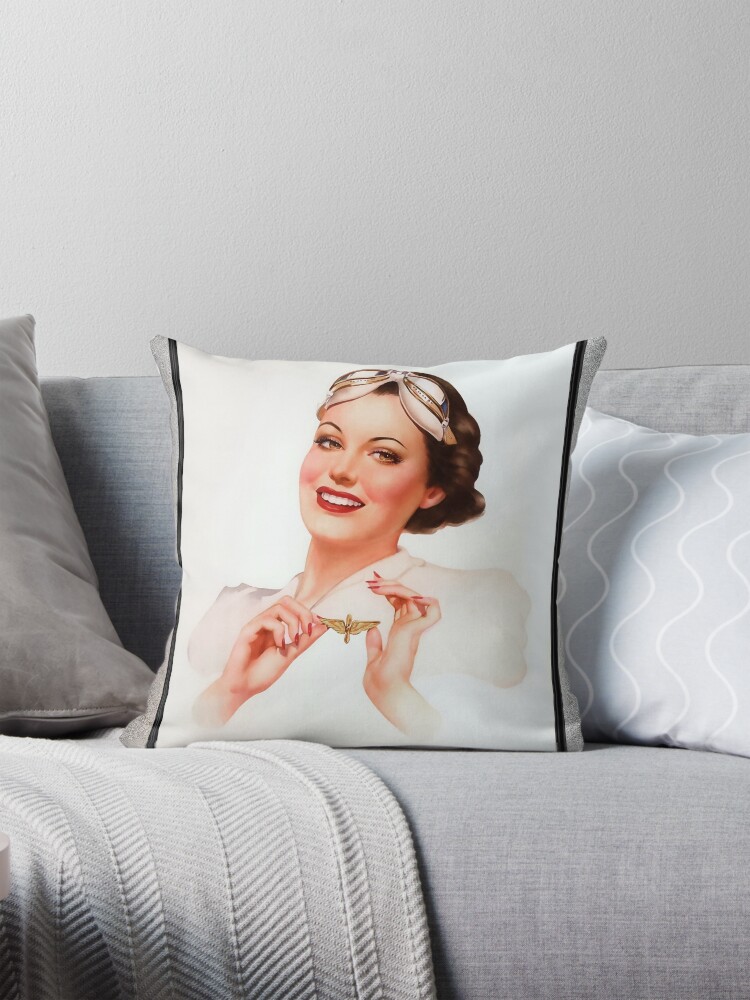
Centralna postać w “She’s Got Her Wings” is a woman with a radiant, pewny siebie uśmiech. She gazes directly at the viewer with a warm, engaging expression, embodying both joy and self-assurance. The woman’s light skin tone, czerwone usta, and sparkling eyes contribute to her vibrant and dynamic presence. The artist skillfully captures her sense of freedom, symbolized by the small gold wing-like brooch she holds delicately between her fingers. This seemingly subtle accessory is a powerful motif, suggesting flight, liberation, or transcendence, which aligns with the artwork’s title, “She’s Got Her Wings.”
The woman’s hairstyle is soft and elegant, with her dark hair styled in waves, reminiscent of the glamour of the 1930s or 1940s Hollywood. The vintage appeal of her attire further reinforces this sense of timelessness. She wears a high-collared blouse, the fabric of which drapes gently, suggesting the soft flow of wind or the movement of a free spirit. The delicate folds of the blouse, combined with her elegant posture, convey a sense of grace, while also implying an effortless, almost dreamlike quality to her presence.
Tytuł, “She’s Got Her Wings,” implies not just a literal interpretation of the brooch but also evokes a metaphorical sense of flight. It suggests that the woman is not confined by any earthly boundaries, symbolizing empowerment, łaska, and independence. The mood of the artwork, with its soft lighting and the woman’s confident yet serene expression, creates an atmosphere of calm and optimism, giving the viewer a sense of hope and aspiration.
Kompozycja i styl
Vargas’s style is well known for its precision and attention to detail, with an emphasis on the female form. His use of smooth, flowing lines and an ability to bring texture and life to fabric and skin is apparent in “She’s Got Her Wings.” The subject’s soft, realistic skin contrasts with the delicate folds and contours of her blouse, bringing the two elements of the composition together in harmony. The lighting is warm and soft, highlighting the face of the woman while leaving the background in a subtle blur, ensuring that the viewer’s attention remains solely on her.
Vargas’s technique also shines through in the smooth rendering of the woman’s features. Gładka, almost porcelain-like skin is emphasized by the soft shadowing around the cheekbones and jawline. The artist’s careful attention to these details adds to the lifelike quality of the figure, making her appear as if she could step out of the frame. Kompozycja, with its delicate balance of light and shadow, gives the subject a three-dimensional quality that feels both natural and captivating.
The background of the painting is simple, with a smooth, light-colored wash that keeps the focus on the subject. The lack of a detailed setting speaks to the artist’s desire to elevate the woman herself, placing her in a timeless, almost celestial realm. There is no need for extraneous details, as the beauty and grace of the woman take center stage.
Materiały i techniki
Alberto Vargas’s work is known for its meticulous technique, i “She’s Got Her Wings” is a prime example of his ability to use traditional materials to create an idealized image of beauty. He employed a combination of watercolor and airbrush techniques to achieve the smooth, glossy finish that defines his work. The rich textures he applied to the woman’s skin, odzież, and the gold wings of the brooch give the image a sense of luxury and refinement. Vargas’s use of light and shadow also enhances the depth of the piece, making the subject appear almost lifelike.
The brooch, a key symbol in the artwork, is rendered with fine details that reflect the light, making it the focal point of the viewer’s gaze. The contrast between the simplicity of the background and the detailed rendering of the figure and her accessories is a hallmark of Vargas’s style. His attention to the fine details—whether it is the reflection of light on the gold wings, the contours of the woman’s face, or the delicate folds of her blouse—demonstrates his exceptional skill as a visual storyteller.
Mood and Impact
Nastrój “She’s Got Her Wings” is one of quiet confidence and timeless beauty. Łagodny uśmiech kobiety, combined with the symbolic wings, suggests that she has achieved a sense of freedom and grace. The work evokes a sense of aspiration, encouraging the viewer to admire not only the beauty of the woman but also the deeper message of empowerment and liberation.
The softness of the painting, paired with the symbolism of the wings, gives the artwork a transcendent quality, elevating it beyond the realm of typical pin-up art into something more profound and meaningful. The piece encapsulates the essence of beauty, wytrzymałość, and independence in a way that is both graceful and powerful, making it a quintessential example of Vargas’s talent and artistic vision.
Ona ma swoje skrzydła autorstwa peruwiańskiego artysty Symbol zastępczy dla Alberto Vargas (1896 – 1982); za jego ponętną i wykwintną sztukę pin-up girl i uważany za najsłynniejszy z gatunku artystów pin-up.
She’s Got Her Wings to żywy i jasny portret młodej damy w białym mundurze lotniczym, z goglami pilota nad głową, trzymającą w dłoniach emblemat ze złotymi skrzydłami pilota i ze słodkim uśmiechem radości na twarzy.
She’s Got Her Wings to wyretuszowana cyfrowa reprodukcja starych mistrzów obrazu z domeny publicznej.
Biografia artysty
Informacje poniżej od Wikipedia.org
Urodzony w Arequipie, Peru, był synem znanego peruwiańskiego fotografa Maxa T. Vargas. Alberto Vargas przeniósł się do Stanów Zjednoczonych w 1916 po studiach artystycznych w Europie, Zurych, i Genewa przed I wojną światową.
Będąc w Europie natknął się na francuski magazyn La Vie Parisienne, z okładką Raphaela Kirchnera, co, jak powiedział, miało ogromny wpływ na jego pracę.
Jego wczesna kariera w Nowym Jorku obejmowała pracę jako artysta dla Ziegfeld Follies i dla wielu hollywoodzkich studiów. Ziegfeld powiesił swój obraz Olive Thomas w teatrze, i była uważana za jedną z pierwszych Vargas Girls.
Vargas’ najsłynniejszym dziełem filmowym był plakat filmu 1933 film Grzech Nory Moran, który przedstawia prawie nagą Zitę Johann w pozie desperacji. Plakat jest często nazywany jednym z najlepszych plakatów filmowych, jakie kiedykolwiek powstały.
W latach 40. stał się powszechnie znany jako twórca kultowych pin-upów z czasów II wojny światowej dla magazynu Esquire znanego jako “Dziewczyny Vargasa.” Między 1940 i 1946 Wyprodukowano Vargas 180 obrazy dla magazynu.
Rysunki na nosie wielu amerykańskich i alianckich samolotów z okresu II wojny światowej zostały zainspirowane i zaadaptowane z tych pin-upów Esquire, jak również te George'a Petty, i innych artystów.