

Ela tem asas
“Ela tem asas” do artista peruano Alberto Vargas, conhecido por suas ilustrações icônicas em estilo pin-up, criado em meados do século XX. Alberto nasceu em 1896 e falecendo em 1982, tornou-se sinônimo do retrato atraente e glamoroso das mulheres. Esta obra de arte, que apresenta uma mulher com uma beleza quase etérea, mostra seu domínio da luz, Formato, e a arte de capturar um momento que é ao mesmo tempo atemporal e profundamente romântico. Vargas, que trabalhou como artista comercial e ilustrador de pin-up, criou obras que continuaram a ressoar com o público por sua elegância, graça, e sensualidade cativante. “Ela tem asas” não é exceção, evocando o espírito de beleza clássica e fascínio feminino que definiu sua carreira.
Índice
Assunto e Tema
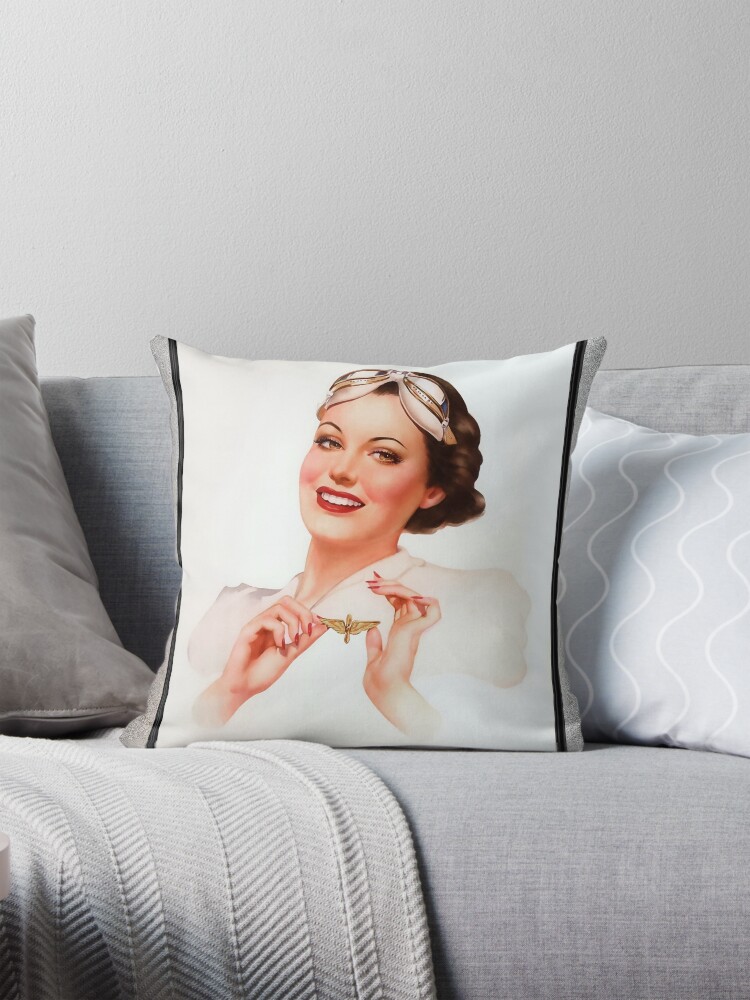
A figura central em “Ela tem asas” is a woman with a radiant, confident smile. She gazes directly at the viewer with a warm, engaging expression, embodying both joy and self-assurance. The woman’s light skin tone, red lips, and sparkling eyes contribute to her vibrant and dynamic presence. The artist skillfully captures her sense of freedom, symbolized by the small gold wing-like brooch she holds delicately between her fingers. This seemingly subtle accessory is a powerful motif, suggesting flight, liberation, or transcendence, which aligns with the artwork’s title, “She’s Got Her Wings.”
The woman’s hairstyle is soft and elegant, with her dark hair styled in waves, reminiscent of the glamour of the 1930s or 1940s Hollywood. The vintage appeal of her attire further reinforces this sense of timelessness. She wears a high-collared blouse, the fabric of which drapes gently, suggesting the soft flow of wind or the movement of a free spirit. The delicate folds of the blouse, combined with her elegant posture, convey a sense of grace, while also implying an effortless, almost dreamlike quality to her presence.
O título, “Ela tem asas,” implies not just a literal interpretation of the brooch but also evokes a metaphorical sense of flight. It suggests that the woman is not confined by any earthly boundaries, symbolizing empowerment, graça, and independence. The mood of the artwork, with its soft lighting and the woman’s confident yet serene expression, creates an atmosphere of calm and optimism, giving the viewer a sense of hope and aspiration.
Composição e Estilo
Vargas’s style is well known for its precision and attention to detail, with an emphasis on the female form. His use of smooth, flowing lines and an ability to bring texture and life to fabric and skin is apparent in “She’s Got Her Wings.” The subject’s soft, realistic skin contrasts with the delicate folds and contours of her blouse, bringing the two elements of the composition together in harmony. The lighting is warm and soft, highlighting the face of the woman while leaving the background in a subtle blur, ensuring that the viewer’s attention remains solely on her.
Vargas’s technique also shines through in the smooth rendering of the woman’s features. O liso, almost porcelain-like skin is emphasized by the soft shadowing around the cheekbones and jawline. The artist’s careful attention to these details adds to the lifelike quality of the figure, making her appear as if she could step out of the frame. The composition, with its delicate balance of light and shadow, gives the subject a three-dimensional quality that feels both natural and captivating.
The background of the painting is simple, with a smooth, light-colored wash that keeps the focus on the subject. The lack of a detailed setting speaks to the artist’s desire to elevate the woman herself, placing her in a timeless, almost celestial realm. There is no need for extraneous details, as the beauty and grace of the woman take center stage.
Materiais e Técnicas
Alberto Vargas’s work is known for its meticulous technique, e “Ela tem asas” is a prime example of his ability to use traditional materials to create an idealized image of beauty. He employed a combination of watercolor and airbrush techniques to achieve the smooth, glossy finish that defines his work. As ricas texturas que ele aplicou na pele da mulher, roupas, e as asas douradas do broche dão à imagem uma sensação de luxo e requinte. O uso de luz e sombra por Vargas também aumenta a profundidade da peça, fazendo o assunto parecer quase real.
O broche, um símbolo chave na obra de arte, é renderizado com detalhes finos que refletem a luz, tornando-o o ponto focal do olhar do espectador. O contraste entre a simplicidade do fundo e a representação detalhada da figura e seus acessórios é uma marca registrada do estilo de Vargas.. Sua atenção aos detalhes – seja o reflexo da luz nas asas douradas, os contornos do rosto da mulher, or the delicate folds of her blouse—demonstrates his exceptional skill as a visual storyteller.
Humor e Impacto
O humor de “Ela tem asas” is one of quiet confidence and timeless beauty. The woman’s gentle smile, combined with the symbolic wings, suggests that she has achieved a sense of freedom and grace. The work evokes a sense of aspiration, encouraging the viewer to admire not only the beauty of the woman but also the deeper message of empowerment and liberation.
The softness of the painting, paired with the symbolism of the wings, gives the artwork a transcendent quality, elevating it beyond the realm of typical pin-up art into something more profound and meaningful. The piece encapsulates the essence of beauty, força, and independence in a way that is both graceful and powerful, tornando-o um exemplo por excelência do talento e da visão artística de Vargas.
Ela tem asas, de artista peruano Alberto Vargas (1896 – 1982); por sua arte de pin-up atraente e requintada e considerada a mais famosa do gênero de artista pin-up.
Ela tem suas asas é um retrato animado e brilhante de uma jovem em um uniforme de voo branco com seus óculos de piloto sobre a cabeça segurando entre as mãos seu emblema dourado de asas de piloto e com um doce sorriso de alegria no rosto.
She’s Got Her Wings é uma reprodução retocada de arte digital de antigos mestres de uma imagem de domínio público.
Biografia do artista
Informações abaixo de Wikipedia.org
Nasceu em Arequipa, Peru, ele era filho do famoso fotógrafo peruano Max T. Vargas. Alberto Vargas mudou-se para os Estados Unidos em 1916 depois de estudar arte na Europa, Zurique, e Genebra antes da Primeira Guerra Mundial.
Enquanto ele estava na Europa, ele encontrou a revista francesa La Vie Parisienne, com capa de Raphael Kirchner, que ele disse ter sido uma grande influência em seu trabalho.
Seu início de carreira em Nova York incluiu trabalho como artista para o Ziegfeld Follies e para muitos estúdios de Hollywood. Ziegfeld pendurou sua pintura de Olive Thomas no teatro, e ela foi considerada uma das primeiras Vargas Girls.
Vargas’ o trabalho cinematográfico mais famoso foi para o pôster do 1933 filme O Pecado de Nora Moran, que mostra Zita Johann quase nua em uma pose de desespero. O pôster é frequentemente considerado um dos melhores pôsteres de filmes já feitos.
Ele se tornou amplamente conhecido na década de 1940 como o criador das icônicas pin-ups da era da Segunda Guerra Mundial para a revista Esquire, conhecidas como “Vargas Girls.” Entre 1940 e 1946 Vargas produziu 180 pinturas para a revista.
A arte do nariz de muitas aeronaves americanas e aliadas da Segunda Guerra Mundial foi inspirada e adaptada dessas pin-ups da Esquire, bem como as de George Petty, e outros artistas.