

Schepen in nood voor een rotsachtige kust
“Schepen in nood Off A Rocky Coast” is a remarkable piece of marine art created in 1667 by the German-born Dutch painter Ludolf Bakhuizen (1630 – 1708). Known for his seascapes, Bakhuizen’s works are a blend of technical mastery and emotive narrative, capturing the power and unpredictability of the sea. Dit schilderij, executed in oil on canvas, showcases his signature style, which emphasizes dramatic weather conditions and the complex interplay of light, water, and ships in perilous circumstances. The viewer is transported to a tumultuous moment in maritime history, evoking the treacherous environment that sailors often faced on the open sea.
Inhoudsopgave
Onderwerp en compositie
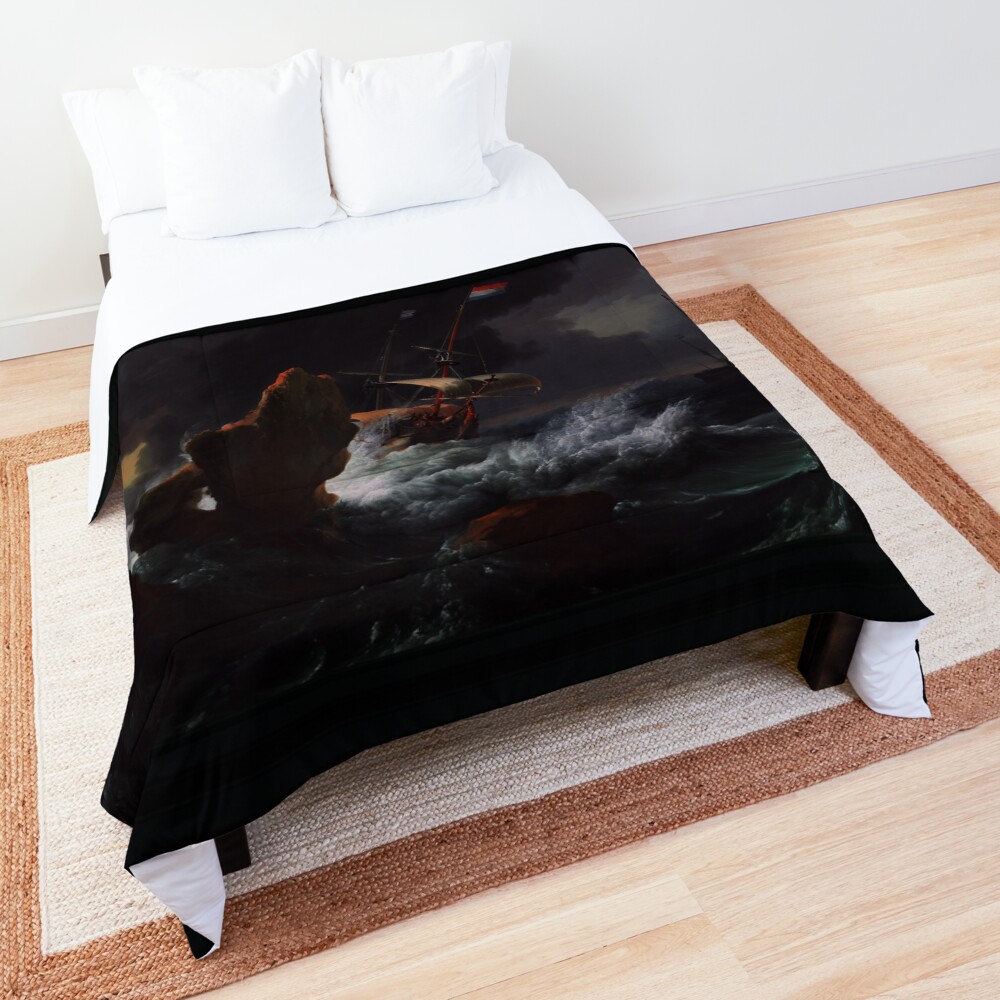
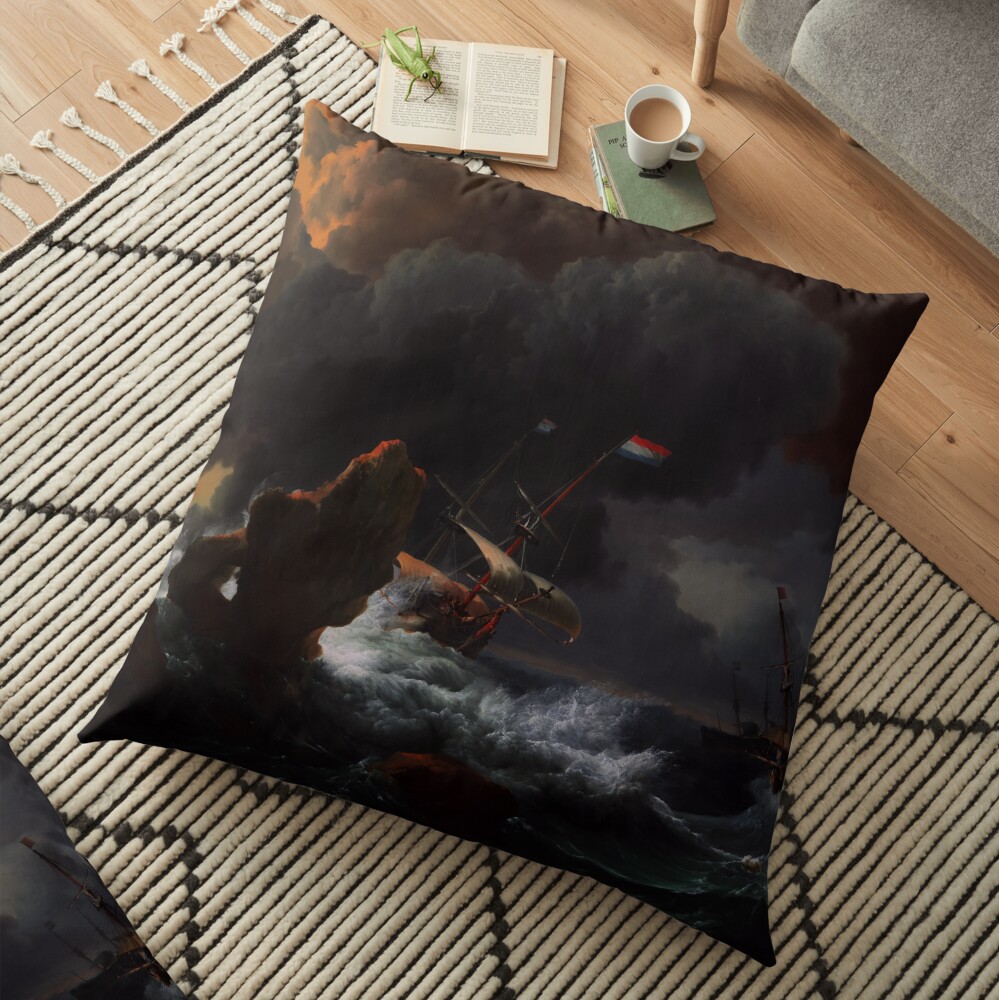
Het centrale thema van “Schepen in nood voor een rotsachtige kust” revolves around two ships caught in a violent storm. The ships, one seemingly in the process of sinking and the other struggling to remain afloat, are surrounded by sharp, jagged rocks that threaten to crush them. The rocky terrain on the coast serves as a stark contrast to the vast expanse of the wild ocean, and the fierce crashing waves create an immediate sense of chaos and danger. The distressed vessels are depicted in mid-crisis, their sails caught in the wind, and their fragile structures seem to be at the mercy of the waves.
Op de voorgrond, the artist captures a highly detailed depiction of the waves, with foam surging around the rocks and cascading down from the towering swells. The sea appears both beautiful and dangerous, its dark waters reflecting the turbulent skies above. The ships’ crew is not shown in detail, but their presence is implied through the dramatic actions of the vessels and the desperate atmosphere that permeates the scene.
Bakhuizen’s skillful use of perspective gives the viewer a sense of being an observer of this moment in time. The ships seem to be caught between the forces of nature and their imminent fate. The use of space within the painting makes the viewer feel small and insignificant in the face of the grandeur of the natural world. It is as though the viewer is witnessing a battle between human craftsmanship and the raw, untamable power of nature.
Stemming en sfeer
The mood of the painting is one of impending doom and tension, underscored by the stormy atmosphere. The dark clouds that dominate the sky create a sense of foreboding, casting an almost apocalyptic tone over the scene. The intensity of the storm is conveyed not only through the movement of the waves and the ships but also through the deep contrasts of light and shadow that Bakhuizen employs. The violent winds and the threatening sea suggest a struggle between man and nature, an eternal theme that was particularly resonant in the age of exploration and naval power.
The dramatic lighting that Bakhuizen uses intensifies the emotional impact of the painting. While the skies remain heavily clouded, a faint light from an unseen source is evident in the reflections on the turbulent water. This subtle illumination serves to highlight the vulnerable nature of the ships and their precarious position against the power of the storm. It is as though the viewer is witnessing a moment frozen in time, a dramatic event unfolding before their eyes.
Stijl en techniek
Bakhuizen’s style reflects the Baroque period’s emphasis on realism and dramatic contrasts. His technical skill in rendering the natural elements, such as the turbulent ocean and the billowing sails, demonstrates his ability to capture the dynamic qualities of the scene. The precision in his depiction of the waves and the jagged rocks shows his meticulous attention to detail, which was a hallmark of Dutch Golden Age painters. The texture of the painting, with its thick layers of paint in certain areas, adds to the sense of realism and depth, especially in the portrayal of the foamy waves crashing against the ships.
In addition to his meticulous attention to detail, Bakhuizen’s use of light and shadow is essential to the painting’s emotional depth. The contrast between the stormy sky and the illuminated water below enhances the feeling of drama, terwijl het donker is, ominous clouds overhead suggest that the situation is dire. This interplay of light and dark in the composition enhances the tumultuous mood of the painting and highlights the artist’s technical mastery.
The Importance of the Scene
“Schepen in nood voor een rotsachtige kust” is more than just a depiction of a storm at sea; it represents the vulnerability and struggle of the ships and their crews, as well as the power of nature that could overwhelm even the most skilled sailors and the most advanced ships of the time. In the 17th century, the Netherlands was a dominant naval power, and the painting reflects both the pride of the Dutch maritime industry and the ever-present dangers faced by those who worked at sea. During this period, sailors frequently encountered perilous storms and unpredictable seas, and Bakhuizen’s artwork captures this theme with both drama and realism.
Verder, the painting is a testament to the Baroque interest in dynamic compositions and emotional intensity. By depicting a moment of extreme distress, Bakhuizen emphasizes the power of nature and the fragility of human endeavors. The artwork serves as a reminder of the tumultuous nature of life during the Age of Sail, where danger was a constant companion on the high seas.
Conclusie
Ludolf Bakhuizen’s “Schepen in nood voor een rotsachtige kust” is an exemplary piece of 17th-century Dutch marine painting. Through his masterful use of light, textuur, and dramatic composition, Bakhuizen invites the viewer to witness the turmoil of a storm at sea and the fragility of ships caught in its grip. The painting not only captures the beauty and danger of the natural world but also reflects the uncertainties and challenges faced by those who ventured into the ocean during the Golden Age of Dutch naval power.
Schepen in nood voor een rotsachtige kust is een geretoucheerde digitale kunst oude meesters reproductie van een openbaar domeinafbeelding die online beschikbaar is als een opgerolde afdruk.
Deze digitale kunstcreatie, zoals bij alle kunstwerken die op de Xzendor7-website te vinden zijn, is deze online te koop in verschillende materiaalformaten, waaronder canvasafdrukken, acryl afdrukken, metalen prints, hout prints, ingelijste afdrukken, affiches, en zoals opgerolde canvasafdrukken in verschillende maten uit 12 inch tot 72 inch, afhankelijk van de grootte van het daadwerkelijke kunstwerk en de print on demand-winkel waar je de kunst wilt kopen.
Het artwork is ook beschikbaar op een breed scala aan heren- en dameskleding, mokken, bakken, sjaals, notitieboekjes en tijdschriften en veel woondecoratieproducten.
Bio -kunstenaar
Info hieronder van Wikipedia.org
Ludolf Bakhuizen werd geboren in Emden, Oost-Friesland, en kwam ongeveer in Amsterdam 1650, werken als klerk van een koopman en een kalligraaf.
Hij ontdekte zo'n sterk genie voor het schilderen dat hij afstand deed van het bedrijf en zich vanaf het einde van de jaren 1650 wijdde aan kunst, aanvankelijk in pentekeningen.
Hij studeerde eerst bij Allart van Everdingen en daarna bij Hendrik Dubbels, twee eminente meesters van die tijd, en werd al snel gevierd voor zijn zeestukken, die vaak ruwe zeeën hadden.
Hij was een fervent student van de natuur, en stelde zich vaak bloot op zee in een open boot om de effecten van stormen te bestuderen.
zijn composities, die talrijk zijn, zijn bijna alle variaties van één onderwerp, de zee, en in een eigen stijl, gekenmerkt door intens realisme of getrouwe imitatie van de natuur.
In zijn latere jaren gebruikte Bakhuizen zijn vaardigheden in het etsen; hij schilderde ook een paar voorbeelden van elk van verschillende andere schildergenres, zoals portretten, landschappen en genrestukken.
Tijdens zijn leven kreeg Bakhuizen bezoek van Cosimo III de’ Medici, Peter de Grote en werkte ook voor verschillende Duitse prinsen. In 1699 hij opende een galerie op de bovenste verdieping van het beroemde Amsterdamse stadhuis. Na een bezoek aan Engeland stierf hij in Amsterdam op 17 november 1708.
Bakhuizen schilderde portretten van zijn grote vriendenkring. Deze zijn van minder artistieke waarde, maar geven inzicht in zijn goede relaties met hedendaagse geleerden en literaire figuren.