

Showgirl
Showgirl by American Artist Rolf Armstrong (1889 – 1960); Pinup Artisto, Pentristo kaj Ilustristo, kaj kiu estas konsiderita kiel la baptopatro de la amerika Pin-up Art.
This is flashy flowing form pinup girl illustration of an attractive brunette in a pink one piece bathing suit, with attached white and pink flowers attached to the straps of the suit, and a matching high heel pink lace up shoes that is a showgirl.
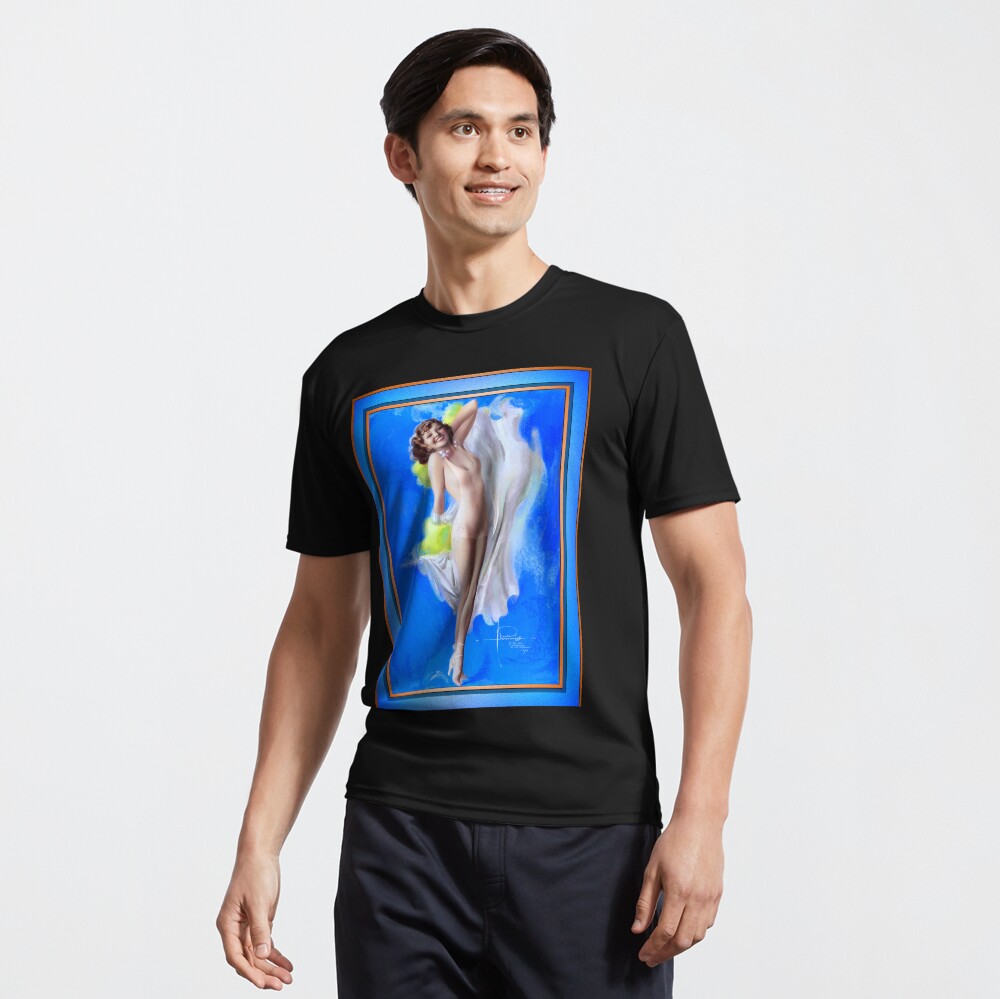
She is standing with her legs crossed, by, and leaning on a white table with blue accents along the perimeter with her right hand; she is also wearing a silver band on her right forearm with a bright yellow cloth wrapped around it.
She has her left hand behind her head and we can see more of the same yellow cloth with some feathers protruding from it; and then there is a large white cloth or drape off to her left side that is also on the table that blends into the background of various shades of abstract blue.
Showgirl is a remastered digital art old masters reproduction of a public domain image that is available as an acrylic, canvas and metala presaĵo interrete.
Informoj Malsupre De Vikipedio.org
Rolf Armstrong estis naskita John Scott Armstrong en Bay City, Miĉigano en aprilo 21, 1889, al Rikardo kaj Harriet (Scott) Armstrong. Lia patro posedis la Boy-Line Fire Boat Company, kiu inkludis vicon de pasaĝerŝipoj. Kelkaj estis deplojitaj en Ĉikago por uzo ĉe la Ĉikaga Monda Foiro tie en 1893.
Tamen, la komerco kaj familio de la patro luktis, kaj la familia bieneto estis perdita al ekzekucio. En 1899, la familio translokiĝis al Detrojto, Miĉigano. La patro de Rolf mortis en 1903, kaj jaron poste li kaj lia patrino translokiĝis al Seatlo, Vaŝingtono, sekvante la paŝojn de sia plej maljuna frato, Vilhelmo, kiu translokiĝis tien unu jaron pli frue. Nuntempe la artaj interesoj de Rolf aperis al pli ol partatempa plezuro.

Li moviĝis al Ĉikago en 1908, kie li poste studis ĉe la Artinstituto. Li tiam daŭriĝis al New York, kie li studis kun Robert Henri. Post vojaĝo al Parizo en 1919 studi ĉe la Académie Julian, li revenis al New York kaj establis studion. En 1921 li iris al Minneapolis por studi kalendarproduktadon ĉe Brown & Bigelow.
Dum la 1920-aj kaj 1930-aj jaroj, lia laboro aperis sur multaj partituro, same kiel sur la kovriloj de multaj revuoj, plej fame por filmfanrevuoj kiel Photoplay kaj Screenland. Lia laboro plejparte konsistas el virinoj; Mary Pickford, beboj danieloj, kaj Greta Garbo estas nur kelkaj el la multnombraj kiujn li pentris.
La laboro de Armstrong por la Bilda Revizio estis plejparte respondeca por tiu revuo atingante eldonkvanton de pli ol du milionoj de 1926. Unu jaron poste, li estis la plej bone vendata kalendarartisto ĉe Brown & Bigelow. En 1930, RCA dungis lin por pentri pin-ups por reklami iliajn produktojn, kaj en 1933 la Thomas D. Murphy Calendar Company subskribis lin por produkti serion de pentraĵoj por ilia linio.
En marto 1940, Juvelaj Floroj, knabino el Lumberton, Norda Karolino, sendis bildon de ŝi al Armstrong en respondo al anonco kiun li metis en la New York Times. Armstrong, 50 tiutempe, estis bazita ĉe la Hotelo des Artistoj sur Okcidenta 67-a Strato en Manhatano poste 1939, kaj serĉis novajn modelojn.
Li invitis Florojn por intervjuo. En marto 25, 1940, Floroj komencis modeligi por Armstrong. Ilia profesia kunlaboro kaj amikeco daŭris dum du jardekoj. La unua pentraĵo, titolita “Kiel mi fartas?”, laŭdire ĉar Floroj, nekutima al modelado, plurfoje demandis Armstrong “Kiel mi fartas?” dum la modeliga sesio, unue estis publikigita post kiam 2-a Mondmilito komenciĝis.
Ĝi estis Bruna & La plej vendita kalendaro de Bigelow por 1942 en tempo kiam la firmao vendis milionojn da kalendaroj en Ameriko, kaj ĝi iĝis unu el la plej reproduktitaj bildoj de Armstrong. Floroj estis popularaj ĉe amerikaj soldatoj dum 2-a Mondmilito, el kiuj kelkaj sendis al ŝi leterojn proponante geedziĝon. La kalendaroj kaj siluetoj de Armstrong de Floroj estis kopiitaj sur bombaviadiloj kaj aliaj aviadiloj kiel nazartaĵo kaj pentritaj sur tankgvatturetoj..
Ŝi fariĝis tiel konata dum la milito, kvankam pli kiel fama vizaĝo ol laŭnome, ke letero de soldato adresita simple kiel “Juvelaj Floroj, Novjorko” estis transdonita ĝuste. Por multaj usonaj soldatoj eksterlande, ŝi reprezentis la “Kial Ni Batalas” spirito. U.S. Prezidanto Franklin D. La registaro de Roosevelt rekrutis ŝin por helpi antaŭenigi militobligaciojn.
La januaro 1, 1945 eldono de TIME revuo inkludis Armstrong's “Tosto de la Urbo” pentraĵo de Floroj en artikolo pri Kalendara Arto. La artikolo notis ke kalendaroj kun “knabinaj pentraĵoj” estis “multe aĉetite de fandejoj, maŝinbutikoj, komercistoj de aŭtomataj provizoj.”
Floroj edziĝis en 1946. Ŝi kaj ŝia edzo vivis en pluraj lokoj dum li provis kelkajn komercajn entreprenojn, inkluzive de Laguna Beach, Kalifornio, Greenville, Suda Karolino, Reno, Nevado, kie ŝi laŭdire laboris kiel kartkomercisto por tempo, kaj Novjorko. Laŭ Michael Wooldridge, kunaŭtoro de Pin up Dreams: La Ŝikeca Arto de Rolf Armstrong, Armstrong vokis ŝin kelkajn fojojn dum la periodo kiam ŝi sekvis sian edzon de loko al loko, por provi persvadi ŝin reveni al Novjorko kaj modelo por li.
Ŝia modeliga kariero finiĝis kun la morto de Armstrong en 1960. Li lasis grandan parton de sia persona riĉaĵo al Floroj. Entute, Armstrong kreis ĉirkaŭ kvindek ĝis sesdek verkojn uzante Florojn kiel la modelon.
Rolf Armstrong mortis en 1960 sur la insulo Oahuo, Havajo kiel unu el la plej bonaj “pin-up” artistoj de la unua duono de la dudeka jarcento.