

Natura morta amb ostres i raïm c1653
Jan Davidsz de Heem's “Natura morta amb ostres i raïm,” pintat al voltant 1653, constitueix un bon exemple del domini de l'artista dins del gènere barroc. Nascut a 1606 i passant-hi 1684, de Heem es va fer conegut per la seva capacitat excepcional per representar la riquesa de la vida la natura morta funciona, utilitzant colors vius i detalls complexos per crear representacions realistes.
L'estat d'ànim d'aquesta pintura és d'abundància, capturant un moment d'elegància i sensualitat en els detalls més fins de la seva composició. Els objectes representats, que van des de les fruites exòtiques fins a les delicades ostres i la copa de cristall, són símbols de la riquesa, opulència, and the fleeting pleasures of life that were prevalent in the 17th century Dutch Golden Age.
Taula de continguts
Composition and Subject Matter
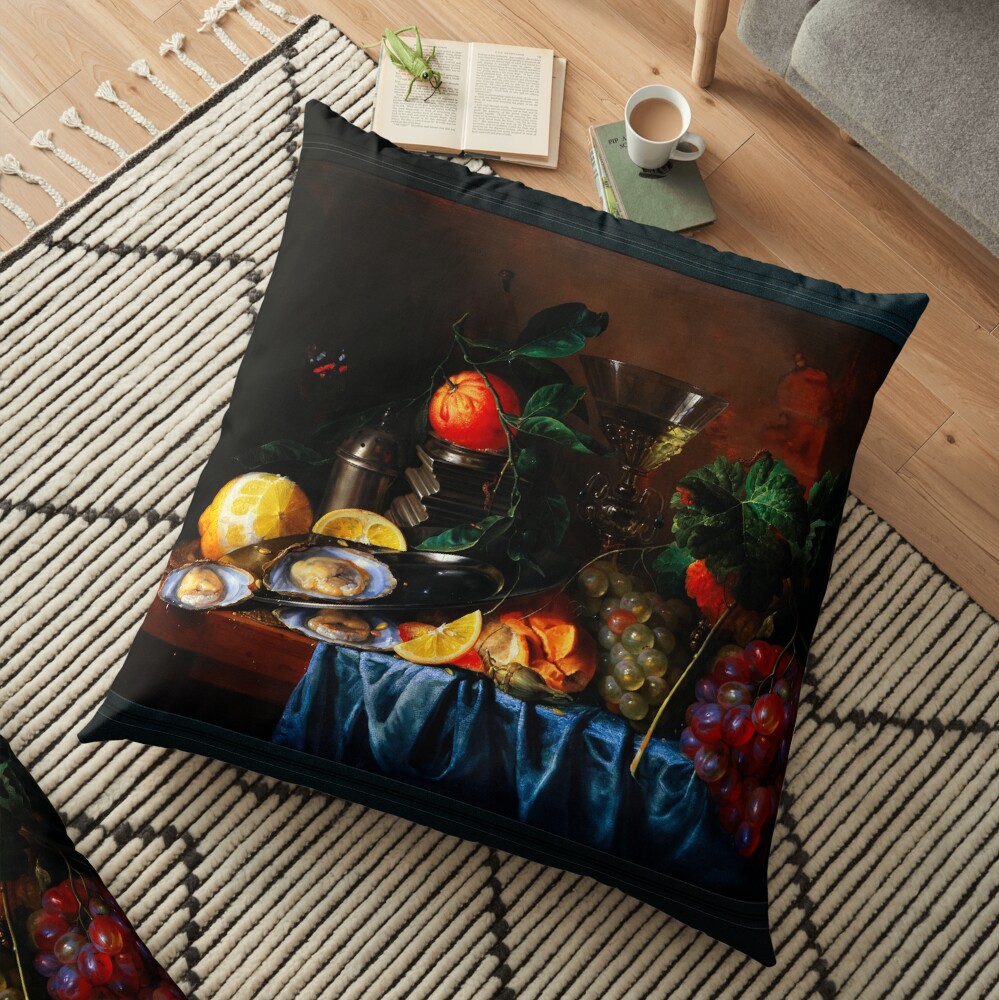
The central subject of the painting is a carefully arranged still life, focusing on the juxtaposition of delicacies and fine objects. The arrangement of fruits, oysters, and other materials speaks to the artist’s deep interest in showcasing the material wealth and sumptuousness enjoyed by the wealthy class during the period. A cluster of grapes, both red and white, lies at the forefront, exuding a sense of ripeness and freshness.
The oysters, gleaming with a natural sheen, are laid open beside slices of lemon, a combination of sensual delights and a visual play on the contrast between the softness of the oyster flesh and the sharp, tangy zest of the citrus fruit. Their glistening surfaces reflect the light with such detail that they appear almost edible to the viewer.
The background features a deep shadowed space, where dim light seems to illuminate the objects, adding an air of mystery. The reflective surfaces of glassware, along with the fine texture of cloth draped underneath the displayed food, help emphasize the tactile quality of the items.
A crystal goblet filled with a drink, perhaps wine or water, sits on a wooden table, catching a glint of light that plays off its facets and amplifies its clarity. This touch of luxury is heightened by the presence of a silver shaker or salt cellar, subratllant encara més la noció de riquesa i el refinament de l'entorn.
Lighting and Mood
L'ús de la llum de De Heem juga un paper vital a l'hora de definir l'estat d'ànim general de la pintura. Els objectes en primer pla estan clarament il·luminats, les seves textures i superfícies accentuades per un maneig magistral de la llum i l'ombra. Les ombres profundes del fons contrasten amb els reflexos brillants del raïm i les ostres, creant una sensació de profunditat i tridimensionalitat dins de l'escena.
Aquesta tècnica del clarobscur, o l'ús dramàtic de la llum i la foscor, va ser un segell distintiu de l'art barroc, pretenia evocar una resposta emocional de l'espectador destacant la fugacitat de la vida i la fràgil bellesa dels objectes representats..
The soft illumination of the still life objects conveys a serene yet indulgent atmosphere, evoking a sense of quiet contemplation and enjoyment. It is as if time has been momentarily suspended, and the viewer is invited into a private, intimate moment. The viewer can almost hear the soft clink of glass or the subtle crunch of a lemon’s zest, contributing to the tactile and sensory experience that de Heem is able to evoke through his paintbrush.
Simbolisme i interpretació
“Natura morta amb ostres i raïm” can be interpreted as a meditation on the fleeting nature of pleasure and material wealth. In the 17th century, still life paintings often carried symbolic weight, subtly commenting on themes of mortality and the ephemeral nature of life.
The oysters, which were once considered a delicacy of the upper class, could symbolize indulgence, while the grapes, associated with both luxury and the harvest, might evoke a sense of abundance but also remind viewers of their seasonal limitations. The presence of citrus fruits, with their sharp tang, might allude to the duality of pleasure, sweet yet fleeting, much like life itself.
A més, the fine glassware and silver objects hint at a world of luxury and refinement, while the underlying table, adorned with a rich blue cloth, suggests wealth without overtly stating it. The delicate balance between the organic (the fruit, the oysters) and the refined (the glassware, the tablecloth) also reflects the balance between nature’s abundance and human ingenuity in transforming that bounty into something of value and beauty. The artist’s ability to blend these elements together creates a harmonious vision of the Dutch Golden Age, where wealth and sensory pleasures were celebrated but also recognized as transient and ultimately ephemeral.
Materials i Tècnica
Jan Davidsz de Heem’s technique is highly regarded for its attention to detail and the incredible realism he achieved. En aquesta pintura, he uses oil paints to create rich, luminous surfaces that seem almost tangible. The gleaming textures of the glass goblet, the rough texture of the lemon peels, and the smooth, translucent quality of the oysters all speak to the artist’s mastery in capturing both the light and the physicality of the objects. The cloth, a luxurious blue, drapes naturally across the table, and the artist’s brushwork is so precise that it brings an almost sculptural quality to the fabric, showcasing the fine detail of each fold.
The careful rendering of each object, whether it’s the translucent skin of the grapes or the polished surface of the goblet, speaks to the artist’s dedication to realism. This meticulous attention to detail was a hallmark of Dutch Baroque painters, who sought to elevate everyday objects to the level of fine art by emphasizing their beauty and intricacies.
Conclusió
En “Natura morta amb ostres i raïm,” Jan Davidsz de Heem presents a vivid portrayal of wealth, luxe, and the transient nature of earthly pleasures. Through his careful arrangement of objects, his exquisite use of light, and his mastery of technique, de Heem creates a still life that invites both admiration and reflection. La pintura, like many of its genre, not only serves as a celebration of material beauty but also as a reminder of life’s impermanence, un sentiment que es transmet a través del delicat equilibri d'un menjar sumptuós, cristalleria refinada, i el pas del temps representat en el joc de llums i ombres.
Still Life with Oysters and Grapes és una reproducció d'antics mestres d'art digital remasteritzada d'una imatge de domini públic que està disponible com a Impressió de tela en línia.
Biografia de l'artista derivada de Wikipedia.org
Jan va néixer a David de Heem el Vell (1570 – 1631), i va estudiar per primera vegada amb el seu pare abans d'estudiar amb el pintor holandès de bodegons de l'edat d'or Balthasar van der Ast (1593-94 – 1657); després a 1629 a l'edat de 23 Va estudiar amb el pintor holandès del Segle d'Or David Bailly (1584 – 1657).
Quan ell era 29 es va traslladar als Països Baixos del Sud i es va unir al Gremi de Sant Lluc burgher (individu de classe mitjana alta) d'aquesta ciutat a 1637.
Sovint considerat com un dels més grans pintors de la seva època, he was always in great demand and was well paid for the artwork which he produced during the Dutch Golden Age.