

Still Life mat Austern an Drauwe c1653
Jan Davidsz de Heem “Still Life mat Austern an Drauwe,” ronderëm gemoolt 1653, steet als prime Beispill vum Kënschtler seng Meeschterschaft am Barock Genre. Gebuer zu 1606 a passéiert an 1684, de Heem gouf bekannt fir seng aussergewéinlech Fäegkeet fir de Räichtum vum Liewen duerch ze weisen Still Liewen Wierker, liewege Faarf a komplizéiert Detailer benotzt fir lieweg Representatioune ze kreéieren.
D'Stëmmung vun dësem Bild ass eng vun iwwerflësseg Iwwerfloss, e Moment vun Eleganz a Sensualitéit an de feinsten Detailer vu senger Kompositioun erfaasst. D'Objete duergestallt, rangéiert vun den exoteschen Friichten iwwer déi delikat Austern an de Kristallbecher, sinn symbolesch vu Räichtum, Opulentung, an déi flüchteg Genoss vum Liewen, déi am hollännesche Golden Age vum 17..
Inhaltsverzeechnes
Kompositioun a Sujet
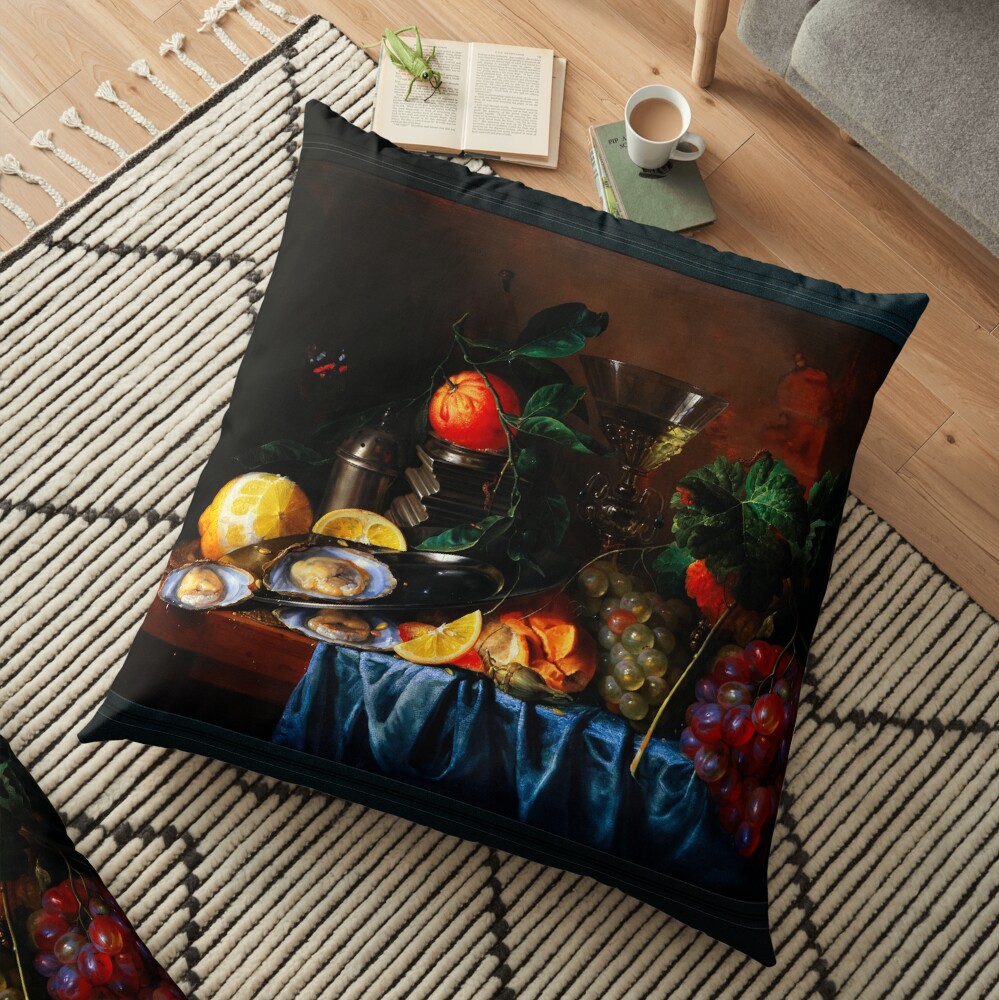
Den zentrale Sujet vum Bild ass e suergfälteg arrangéiert Stilleben, konzentréiert sech op d'Juxtaposition vu Köstlechkeeten a feinen Objeten. D'Arrangement vun Uebst, Austern, an aner Materialien schwätzt dem Kënschtler säin déiwe Interesse fir de materielle Räichtum an Iwwerfloss ze weisen, déi vun der räicher Klass während der Period genoss gouf. E Cluster vun Drauwe, souwuel rout a wäiss, läit am Virdergrond, exudéiert e Gefill vu Reife a Frëschheet.
D'Austern, glänzend mat engem natierleche Glanz, ginn nieft Zitrouneschnëss opgemaach, eng Kombinatioun vu sensuelle Genoss an engem visuellen Spill um Kontrast tëscht der Weichheet vum Austerfleesch an dem schaarfen, tangy Zest vun der Zitrusfrucht. Hir glänzend Flächen reflektéieren d'Liicht esou Detail, datt se dem Betrachter bal essbar schéngen.
Den Hannergrond weist en déif schatteg Raum, wou däischter Liicht schéngt d'Objeten ze beliichten, derbäi eng Loft vu Geheimnis. Déi reflektiv Flächen vu Glaswaren, zesumme mat der feiner Textur vum Stoff, deen ënner dem ugewisenen Iessen draperéiert ass, hëlleft déi taktile Qualitéit vun den Artikelen ze ënnersträichen.
E Kristallbecher gefëllt mat engem Gedrénks, vläicht Wäin oder Waasser, setzt sech op engem hëlzenen Dësch, e Glanz vu Liicht opfänken, déi seng Facetten ofspillt a seng Kloerheet verstäerkt. Dësen Touch vu Luxus gëtt erhéicht duerch d'Präsenz vun engem Sëlwer Shaker oder Salzkeller, weider ënnersträicht d'Notioun vu Räichtum an d'Verfeinerung vum Kader.
Beliichtung a Stëmmung
Dem De Heem säi Gebrauch vu Liicht spillt eng vital Roll bei der Definitioun vun der Gesamtstëmmung vum Bild. D'Objeten am Virdergrond si schaarf beliicht, hir Texturen an Flächen ënnersträichen duerch eng Meeschterleeschtung vu Liicht a Schied. Déi déif Schatten am Hannergrond kontrastéieren mat de glänzenden Reflexiounen vun den Drauwen an Austern, e Gefill vun Déift an Dräidimensionalitéit an der Szen ze kreéieren.
Dës Technik vu Chiaroscuro, oder déi dramatesch Notzung vu Liicht an Däischtert, war e Markenzeechen vun der barocker Konscht, geduecht fir eng emotional Äntwert vum Betrachter z'erwächen andeems se d'Vergänglechkeet vum Liewen an déi fragil Schéinheet vun den Objeten ervirhiewt.
Déi mëll Beliichtung vun de Still Life Objete vermëttelt eng seriö awer agreabel Atmosphär, e Gefill vu roueger Iwwerleeung a Genoss opruffen. Et ass wéi wann d'Zäit momentan suspendéiert gouf, an de Betrachter gëtt an e private invitéiert, intim Moment. De Betrachter kann bal de mëlle Klink aus Glas héieren oder de subtile Crunch vun enger Zitrouneschuel, bäidroe fir déi taktile a sensibel Erfahrung déi de Heem duerch säi Pinsel evocéiere kann.
Symbolismus an Interpretatioun
“Still Life mat Austern an Drauwe” kann als Meditatioun iwwer déi flüchteg Natur vu Genoss a materielle Räichtum interpretéiert ginn. Am 17. Joerhonnert, Still Liewen Biller hunn dacks symbolesch Gewiicht gedroen, subtil kommentéiert Themen vun der Mortalitéit an der ephemerescher Natur vum Liewen.
D'Austern, déi eemol als Delikatesse vun der ieweschter Klass ugesi goufen, kéint Genoss symboliséieren, während der Drauwe, mat Luxus an der Ernte assoziéiert, kéint e Gefill vu Iwwerfloss opruffen, awer och d'Zuschauer un hir saisonal Aschränkungen erënneren. D'Präsenz vun Zitrusfrüchte, mat hirem schaarfen Tang, kéint op d'Dualitéit vum Genoss hänken, séiss awer flott, vill wéi d'Liewen selwer.
Zousätzlech, déi fein Glaswueren a Sëlwerobjekter weisen op eng Welt vu Luxus a Verfeinerung, während der Basisdaten Dësch, mat engem räiche bloe Stoff dekoréiert, proposéiert Räichtum ouni et offen ze soen. Déi delikat Gläichgewiicht tëscht der Bio (d'Fruucht, d'Austern) an déi raffinéiert (d'Glaswaren, den Dëschduch) reflektéiert och d'Gläichgewiicht tëscht dem Iwwerfloss vun der Natur a mënschlecher Erfindung beim Ëmwandelen vun dëser Bounty an eppes vu Wäert a Schéinheet. D'Fäegkeet vum Kënschtler fir dës Elementer zesummen ze vermëschen kreéiert eng harmonesch Visioun vum hollännesche Golden Age, wou Räichtum a sensoresch Genoss gefeiert goufen awer och als transient a schlussendlech ephemeral unerkannt goufen.
Materialien an Technik
Dem Jan Davidsz de Heem seng Technik ass héich ugesinn fir seng Opmierksamkeet op Detailer an den onheemlechen Realismus deen hien erreecht huet. An dëser Molerei, hie benotzt Ueleg Faarwen ze schafen räich, hell Flächen déi bal konkret schéngen. Déi glänzend Texturen vum Glasbecher, déi rau Textur vun den Zitrouneschielen, an déi glat, translucent Qualitéit vun den Austern schwätzt all zum Kënschtler seng Meeschterschaft beim Erfaassung souwuel d'Liicht an d'Physikalitéit vun den Objeten. Den Stoff, e luxuriéise blo, drapes natierlech iwwer den Dësch, an dem Kënschtler seng Pinselwierk ass sou präzis datt et eng bal skulptural Qualitéit un de Stoff bréngt, déi fein Detailer vun all Fal ze weisen.
Déi virsiichteg Rendering vun all Objet, ob et d'translucent Haut vun den Drauwe oder déi poléiert Uewerfläch vum Becher ass, schwätzt dem Kënschtler seng Engagement fir de Realismus. Dës virsiichteg Opmierksamkeet op Detailer war e Markenzeechen vun hollännesche Barockmoler, déi probéiert alldeeglechen Objeten op den Niveau vun der Konscht z'erhéijen andeems se hir Schéinheet an d'Komplexitéit ënnersträichen.
Conclusioun
An “Still Life mat Austern an Drauwe,” Jan Davidsz de Heem presents a vivid portrayal of wealth, luxe, an déi transient Natur vun ierdesche Genoss. Duerch seng virsiichteg Arrangement vun Objeten, seng exquisite Notzung vu Liicht, a seng Meeschterleeschtung vun der Technik, de Heem schaaft e Stilleben, dat souwuel Bewonnerung wéi och zur Reflexioun invitéiert. D'Molerei, wéi vill vu sengem Genre, déngt net nëmmen als Feier vun der materieller Schéinheet, awer och als Erënnerung un d'Vergänglechkeet vum Liewen, e Gefill vermëttelt duerch déi delikat Gläichgewiicht vun iwwergräifend Iessen, raffinéiert Glaswaren, an d'Vergaangenheet vun der Zäit representéiert am Spill vu Liicht a Schied.
Still Life with Oysters and Grapes ass eng remastered digital Konscht al Master Reproduktioun vun engem Public Domain Bild dat als verfügbar ass Leinwandprint online.
Kënschtler Bio ofgeleet vun Wikipedia.org
De Jan gouf vum David de Heem den Eelere gebuer (1570 – 1631), a studéiert fir d'éischt mat sengem Papp ier hien ënner dem hollännesche Golden Age Still Life Moler Balthasar van der Ast studéiert huet (1593-94 – 1657); dann an 1629 am Alter vun 23 studéiert ënner dem hollännesche Golden Age Moler David Bailly (1584 – 1657).
Wéi hien war 29 hien ass an d'Südnidderlanden geplënnert an ass an d'Guild of Saint Luke burgher ugeschloss (ieweschte Mëttelschicht individuell) vun där Stad an 1637.
Oft als ee vun de gréisste Moler vu senger Zäit ugesinn, hie war ëmmer grouss gefuerdert a gouf gutt bezuelt fir d'Konschtwierk, déi hien am hollännesche Golden Age produzéiert huet.