

Study of a Female Nude c.1840
Henri Lehmann’s (1814 – 1882) 여성 누드 연구 c.1840 presents an evocative portrayal of the human form in its purest, most vulnerable state. This remarkable painting encapsulates the artist’s mastery in capturing anatomical precision and a subtle expression of human emotion. Lehmann, a French painter known for his skillful renderings of the nude form, infused this work with not only technical expertise but also a delicate sensibility to the human experience, characteristic of Romanticism. His work as a teacher and artist during the 19th century was influenced by both classical art traditions and the emerging Romantic ideals that sought to explore human emotion, 숭고한, and the complex relationship between nature and humanity.
목차
여성 누드: Central Theme and Subject
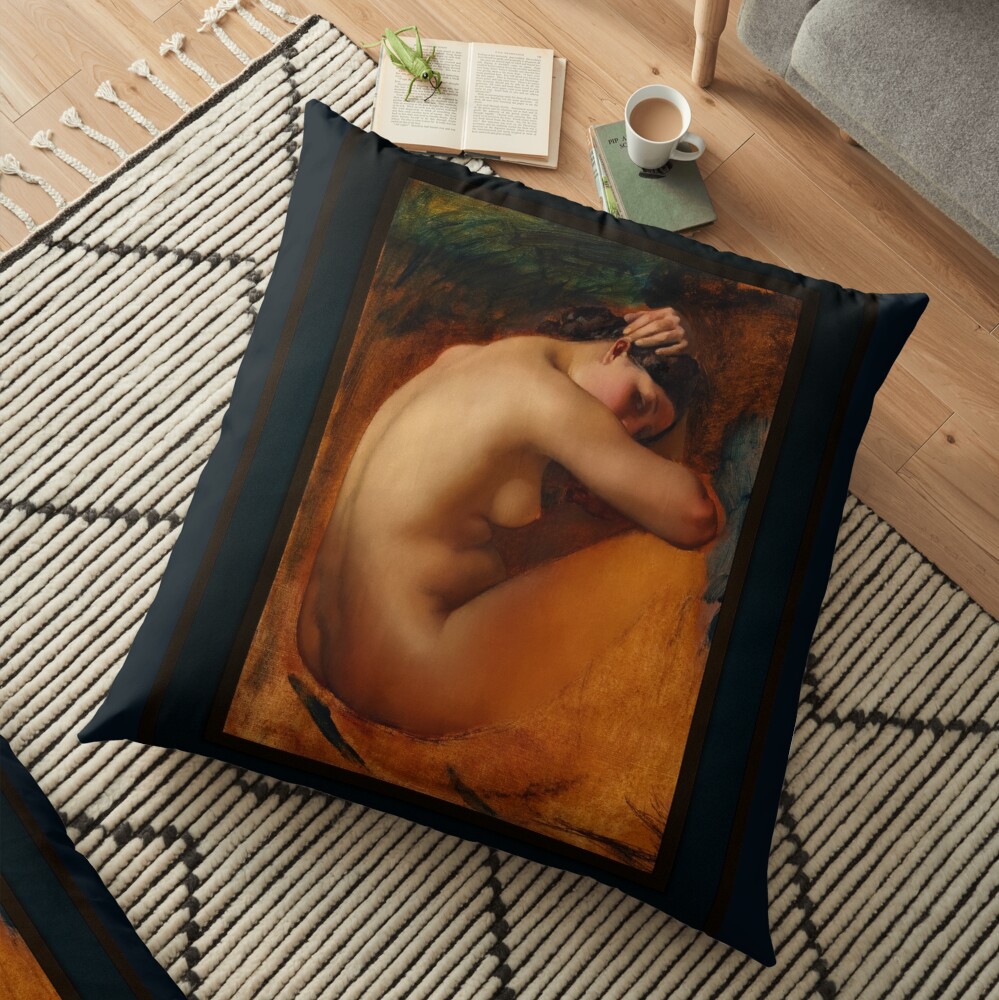
The central subject of the artwork is a solitary female figure, her body positioned in a state of repose. The woman’s pose is naturalistic yet intimate, as she curls into herself, resting on her side. The portrayal of the female nude is neither exaggerated nor idealized but rather grounded in a sense of realism that brings the human form to life. Her body is rendered with careful attention to anatomy, highlighting the delicate curves of her shoulders, 무기, and back. The focus on the natural form of the female body emphasizes the beauty of the human physique without exaggeration or stylization, demonstrating Lehmann’s skill in balancing idealization with anatomical accuracy.
The figure is presented in a vulnerable, introspective posture, with her arms wrapped around her body in a protective manner, suggesting a moment of introspection or contemplation. Her head rests on her bent arm, with her hair flowing gently, creating an impression of softness and tranquility. The closed eyes and downturned expression reinforce the mood of serenity and quiet introspection, allowing the viewer to appreciate the subtleties of human emotion through her repose.
Use of Color and Lighting
이 작품에서, Lehmann employs a warm, rich palette dominated by ochre, 호박색, and burnt orange tones. The color choices evoke a sense of warmth and intimacy, inviting the viewer to engage with the emotional quality of the work. The soft glow of these tones contrasts with the muted greens and blues that subtly appear in the background, adding depth and grounding the figure within its environment. The background’s colors blend seamlessly with the skin tones of the model, highlighting the natural harmony of the human body within the larger scope of nature.
The lighting in the painting is also particularly notable. It illuminates the figure with a soft, diffuse quality that emphasizes the model’s curves and contours without harsh contrast. The careful treatment of light allows the texture of the skin and the folds of the body to emerge subtly, creating a sense of lifelike warmth and depth. This gentle lighting enhances the feeling of calm and quiet, contributing to the overall mood of the piece.
The Emotional Tone and Mood of the Painting
분위기 여성 누드 연구 is one of quiet contemplation and stillness. Lehmann avoids any overtly dramatic elements in the composition, instead focusing on the internal world of the female figure. The painting does not evoke sensuality or eroticism, but rather presents the subject in a state of repose, unburdened by external influence. The calmness of the figure suggests a moment of peace, and the viewer is invited into the intimacy of this tranquil scene.
While the female nude is traditionally seen in art as a subject of desire or objectification, Lehmann’s approach is different. He creates a mood that is more akin to admiration for the natural beauty and complexity of the human form. The peaceful pose and serene facial expression further reinforce the sense of personal introspection, encouraging the viewer to appreciate the subject in a more reflective, contemplative way rather than through a lens of lust or objectification.
Composition and Texture
The composition of the painting is quite simple, yet profoundly effective. The female figure is placed off-center in the painting, creating a natural balance with the surrounding background. The viewer’s eye is drawn to the curves of the body and the delicate folds of skin that add texture and life to the figure. Lehmann’s brushwork is smooth and refined, allowing the skin to appear soft and the light to flow gently across the body.
The texture of the work is especially notable in the way the artist blends his paint to create a tactile, almost tangible quality. The play of light on the skin, the slight ripple of the fabric at the woman’s side, and the way her hair flows naturally all contribute to an overall sense of realism. Lehmann’s ability to render texture—whether in the soft sheen of the skin or the contrast between the smoothness of the figure and the textured background—is part of what elevates this work to a higher level of artistic mastery.
Influence of Romanticism and the Classical Tradition
Lehmann’s 여성 누드 연구 reflects the Romantic ideals of the 19th century while also paying homage to the classical tradition. The restrained expression of the figure, the naturalism in the body’s depiction, 그리고 부드러운, harmonious palette are all elements that recall classical art.
하지만, there is also an undercurrent of Romantic sensibility in the emotional depth conveyed through the subject’s introspective pose and the overall quiet tone of the piece. The absence of an overt narrative or dramatic backdrop allows the viewer to focus entirely on the figure itself, making the emotional depth of the piece all the more powerful.
This fusion of classical realism with Romantic introspection results in a work that is timeless in its appeal. It allows the viewer to appreciate the beauty of the human form while simultaneously exploring the subtleties of human emotion and inner life. Lehmann’s ability to evoke a sense of calm contemplation without relying on grand gestures or dramatic themes reflects the Romantic emphasis on individual experience and inner truth.
결론
Henri Lehmann’s Study of a 여성 누드 (씨. 1840) stands as a testament to his skill as a painter and his deep understanding of the human form. The work presents a simple yet emotionally resonant image of the female body, rendered with great sensitivity to both anatomy and expression.
It combines the classical approach to the nude with the emerging emotional depth of Romanticism, resulting in a piece that speaks not only to the viewer’s aesthetic sensibilities but also to their emotional core. The warm palette, 부드러운 조명, and intimate mood invite the viewer to engage with the painting on a personal level, appreciating not just the beauty of the body, but the quiet, reflective state of the figure within it.
이것은 퍼블릭 도메인 이미지의 리마스터링된 디지털 아트 올드 마스터스 복제본으로 구매가 가능합니다. 캔버스 프린트 온라인.
이 디지털 아트 창작, Xzendor7 웹사이트에서 찾을 수 있는 모든 예술 작품과 마찬가지로 캔버스 인쇄를 포함한 다양한 재료 형식으로 온라인에서 구매할 수 있습니다., 아크릴 프린트, 금속 지문, 목판화, 액자 인쇄, 포스터, 그리고 압연 캔버스로 다양한 크기로 인쇄됩니다. 12 인치에 72 실제 작품의 크기와 작품을 구매하기로 선택한 주문형 인쇄소에 따라 인치.
이 작품은 다양한 남성복과 여성복에서도 볼 수 있습니다., 머그, 토트백, 스카프, 노트북, 저널 및 다양한 홈 데코 제품.
아티스트 약력
아래에서 파생된 정보 Wikipedia.org
Henri는 4월 독일에서 Heinrich Salem Lehmann으로 태어났습니다. 14, 1814 그의 아버지 Leo Lehmann에게 처음으로 개인지도를 받았습니다. (1782 – 1859) 화가이기도 했던, 나중에 함부르크의 다른 화가들에 의해.
그가 있을 때 17 그는 파리로 이사하기로 결정한 나이, 프랑스 화가 Jean-Auguste-Dominique Ingres 밑에서 공부하는 프랑스 (1780 – 1867) 신고전주의와 동양주의 예술가; 그의 가장 성공적인 학생 중 한 명이자 가까운 동료가되었습니다..
Henri는 처음으로 Salon에서 자신의 작품을 전시했습니다. 1835, 2등 메달을 획득할 수 있었습니다., 그 시점부터 정기적으로 그의 작품을 전시했습니다.; 에서 1등 메달 획득 1840, 1848 과 1855.
에 1842 Henri는 파리에 영구적으로 정착하여 대규모 공공 작업을 위한 커미션을 받았습니다., 여기에는 Ste-Clothilde 교회가 포함되었습니다., 팔레 드 저스티스, 팔레 뒤 룩셈부르크와 호텔 드 빌, 뿐만 아니라 다른 많은.
4년 후 1846 그는 Légion d' honneur를 받았으며 다음 해에 프랑스 시민이되었습니다.; 같은 해에 그의 아트 스튜디오를 열었습니다..
14년 후 그는 유명한 에콜 데 보자르(École des Beaux-Arts)의 강사로 임명되었습니다. 1875 교수로 임용되었다..
Henri는 또한 당시 잘 알려진 인물의 초상화를 그렸습니다., 이탈리아 공주 Cristina Trivulzio Belgiojoso 포함 (1808 – 1871), 프랑스 작가 마리 앙리 베일 (스탕달 1783 – 1842), 폴란드 작곡가이자 거장 피아니스트 Frédéric François Chopin (1810 – 1849), 헝가리 작곡가 프란츠 리스트 (1811 – 1886), 프랑스 철학자 빅토르 커즌 (1792 – 1867), 프랑스 작곡가 Charles Gounod (1818 – 1893) 그리고 많은 다른 사람들.