

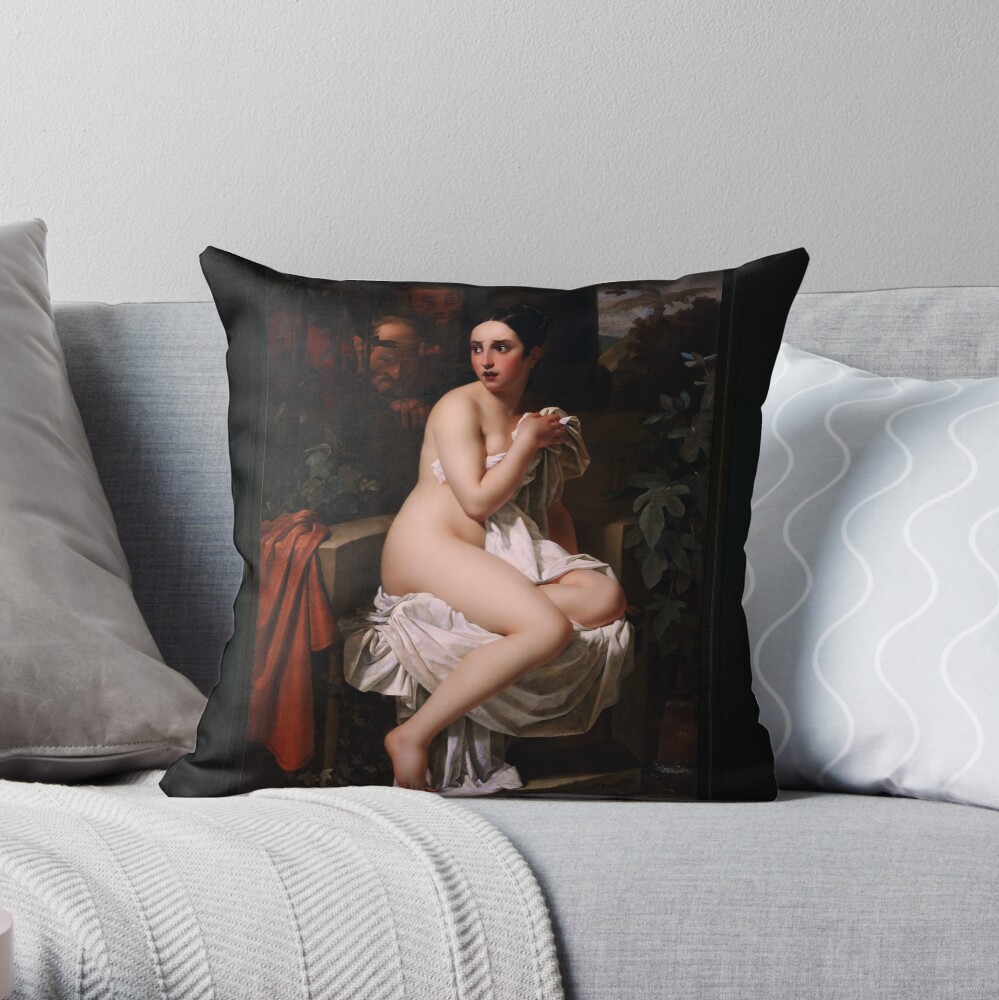
スザンナと長老たち (スザンナと長老たち) 1820年ごろ
“スザンナと長老たち” (スザンナと長老たち), に作成されました 1820 ベルギーの画家ピエール・ヴァン・ハンセラーレによる (1786 – 1862), 新古典主義芸術の注目すべき作品です. この作品は以下からインスピレーションを得ています。 聖書的な スザンナと長老たちの物語, ダニエル書に登場. この作品は美徳のテーマを探求しています, 誘惑, そして盗撮, 人間の状態を語る感情的かつ物語的な緊張感をカプセル化. アーティストは、古典的な理想とドラマチックなストーリーテリングを融合させた構図を視聴者に提示します。, アーティストのキャリアとより広範な新古典主義運動の両方において重要な瞬間を迎えた.
目次
主な主題
絵の中心にいるのはスザンナです, 中心の女性像, 弱さと苦悩の瞬間を描いた. 彼女は石造りの建造物に座っている若い女性として描かれています。, 白い布に覆われた. 彼女の体は滑らかにレンダリングされています, 新古典主義の人物画に特有の繊細な柔らかさ, 彼女の若々しい美しさと優雅さを強調する. スザンナの視線は視聴者に向けられています, 彼女の表情には驚きと不快感が入り交じっていた, まるで監視されている瞬間に捕らえられたかのように. この描写は彼女の無邪気さと差し迫った脅威の感覚の両方を呼び起こします.
白い布は, 彼女はそれを胸に抱きしめた, 彼女と背景にいる二人の長老の覗き見的な目との間の象徴的な障壁として機能する. アーティストはスザンナの肌の色を注意深く描きました, より落ち着いた背景とは対照的な自然主義的な外観を彼女に与えます. 彼女の体の配置と表情豊かな顔は、彼女の内なる混乱と彼女が直面している道徳的ジレンマを伝えています。.
長老たち
The two male figures lurking in the background are the elders, WHO, in the biblical narrative, attempt to blackmail Susanna after spying on her while she bathes. この作業で, they are partially hidden, obscured by foliage and shadow. This visual concealment adds to their sinister nature and reinforces the voyeuristic theme. One of the men has an almost comical appearance, with exaggerated facial features that suggest malice and lecherous intent. His beady eyes, peering from behind the thick leaves, emphasize the power dynamic between the vulnerable woman and these corrupt figures of authority. The other elder is less visible but equally ominous, his posture suggesting he’s complicit in the illicit act.
Their position in the painting, in the shadows, plays a crucial role in highlighting their morally dubious actions. While Susanna is illuminated and placed centrally in the foreground, the elders are subtly hidden within the darker recesses of the scene, creating a visual contrast between purity and corruption.
オブジェクトと資料
The physical elements of the painting, from the stone bench Susanna sits on to the soft folds of her cloth, contribute to the sense of realism that is characteristic of neoclassical art. The stone is painted with a careful attention to texture, giving it a cold and unyielding feel, contrasting sharply with the softness of Susanna’s form. The cloth she holds is depicted in a flowing, almost ethereal manner, giving a sense of movement that contrasts with the stillness of the stone structure.
バックグラウンドで, foliage and trees frame the scene, their dark green tones creating a lush, almost suffocating atmosphere. These elements add to the sense of entrapment, with nature itself becoming a part of the voyeuristic drama unfolding. The elder’s presence behind the foliage reinforces the notion that Susanna’s sanctity is being encroached upon by a corrupt and secretive force.
地形と設定
地形の “スザンナと長老たち” is set in a lush, 緑豊かな庭, これ, 美しいが, also conveys a sense of confinement and entrapment. The use of foliage and the setting against an enclosed space creates a mood of isolation for Susanna. This makes her an object of desire, trapped not just physically in the scene, but also morally and emotionally, caught between her virtue and the predatory elders.
The setting speaks to the neoclassical interest in combining natural beauty with human emotion, where the surroundings are not just decorative, but integral to the narrative. The mix of light and shadow across the scene evokes the emotional complexity of the moment, as Susanna is both exposed to the viewer and surrounded by the shadows of the two elders.
気分とテーマ
The mood of the painting is one of tension and vulnerability. Susanna’s exposure, 肉体的にも感情的にも, becomes a powerful symbol of virtue under threat. The presence of the elders in the shadows adds a dark, unsettling quality to the work. The voyeuristic gaze of the elders, as well as their attempt to manipulate Susanna’s virtue for their own gain, serves as a critique of power dynamics and the objectification of women. The theme of moral and physical vulnerability is starkly portrayed through the interplay of light, 影, and the placement of the figures.
The neoclassical style, with its emphasis on rationality, 明瞭さ, そして感情的な抑制, この罪と美徳の物語を高めるために使用されます, それを単純な聖書の物語から人間の本性についての深い解説に変える. スザンナ, 純粋さの体現として, 略奪的な長老たちとはまったく対照的に示されている, 彼女の揺るぎない道徳的姿勢が、背後にいる悪意のある人物たちによって脅かされている.
全体的な雰囲気は劇的な緊張感に満ちています, 絵の物語のためだけではありません, しかし、ハンゼレアがスザンナの無実と隠された感情を巧みに並べたおかげで、, 彼女を取り囲む悪意のある勢力. 緊張感のあるシーンが視聴者の注意を引き、道徳のテーマについての考察を促します。, 力, そして社会における女性の脆弱性.
結論
“スザンナと長老たち” is a masterful example of Pierre van Hanselaere’s ability to combine classical ideals with dramatic narrative. Through his careful attention to detail and composition, he brings the biblical story to life with an emotional depth that invites the viewer to contemplate not only the figures in the painting but also the broader themes of human vulnerability, 力, and moral righteousness. The contrast between the illuminated figure of Susanna and the dark, shadowy figures of the elders underscores the timeless nature of the story, and the painting continues to resonate with modern viewers for its evocative portrayal of virtue under threat.
スザンナと長老たち c1820 作: ベルギーの画家ピエール・ヴァン・ハンセラーレ (1786 – 1862); 肖像画を専門とする, 宗教的および歴史的な芸術作品.
This remastered classical art digital recreation, Xzendor7 Web サイトにあるすべてのアートワークと同様に、キャンバス プリントを含むさまざまな素材形式でオンラインで購入できます。, アクリルプリント, メタルプリント, 木版, 額入りプリント, ポスター, そしてとして ロール状のキャンバスプリント さまざまなサイズから 12 インチから 72 インチは、実際のアートワークのサイズと、アートを購入するために選択したオンデマンド プリント ショップによって異なります。.