

Að sverja af Fernando VII sem prins af Asturias
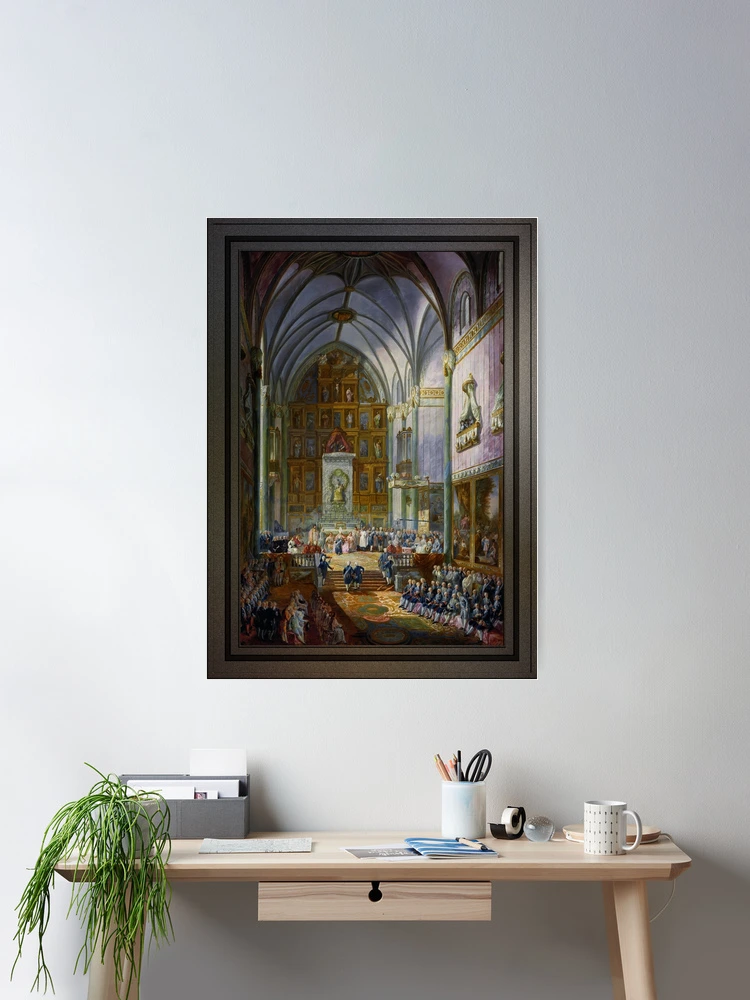
Málverkið sem heitir Að sverja af Fernando VII sem prins af Asturias (Eið Ferdinand VII sem prins af Asturias), búið til í kring 1791 eftir spænska málarann Luis Paret y Alcázar (1746 – 1799), fangar mikilvægt sögulegt augnablik í konungsgarði Spánar. Þetta listaverk gerir athöfnina ódauðlega þar sem Fernando VII sver hollustu sem prinsinn af Asturias, atburður sem er óaðskiljanlegur í sögu spænska konungdæmisins og arftaka þess.
Efnisyfirlit
Stíll og listræn nálgun
Luis Paret og Alcázar, áberandi listamaður seint á 18. öld, var frægur fyrir ítarleg og lífleg verk sín sem gáfu jafnvægi á raunsæi og hæfileika til að fanga glæsileika og glæsileika dómslífsins.. His distinctive style is characterized by a keen eye for intricate detail and a sophisticated color palette, which is clearly evident in this artwork.
The composition of the painting displays both the grandeur of the moment and the exquisite details of the surroundings, such as the ornate architecture, the opulent clothing of the nobility, and the carefully arranged figures that convey a sense of ceremony and reverence.
The painting follows the Rococo style, with its focus on lightness, glæsileiki, and the lavishness of courtly life. The sweeping curves and intricate detailing of the architecture, combined with the soft lighting, create a sense of both movement and stability.
Paret’s use of soft, yet rich, litum, such as the vibrant reds, blús, og gull, adds to the sense of aristocratic splendor. The royal garments, with their intricate embroidery, and the decorative elements in the background, such as the gilded frames and columns, highlight the wealth and power of the Spanish monarchy at the time.
Aðalviðfangsefni og lykiltölur
At the center of the composition is Fernando VII, portrayed as a young man in the process of taking his oath as Prince of Asturias. He is seen standing solemnly before the altar, his right hand raised in oath, while his left hand rests upon the ceremonial Bible. His posture and expression convey the gravity of the moment, with his youthful features embodying the weight of responsibility he is about to shoulder.
The prince is dressed in ceremonial attire, including a richly decorated coat, velvet breeches, and a sash, reflecting the formal nature of the occasion and his elevated status in the Spanish royal family.
The figures surrounding Fernando VII represent various members of the royal court and nobility, as well as clergy who would have been present for such a significant occasion. They are all depicted in fine detail, showcasing a range of richly adorned clothing, including embroidered coats, wigs, and ruffled collars, all common attire for the Spanish elite during the period.
The men in the scene, from the bishops to the courtiers, seem to be in various states of attentiveness, emphasizing the solemnity of the event. Some of the individuals look directly at the prince, while others observe the scene in a more detached manner, perhaps reflecting their respective social positions.
The presence of women in the background adds an additional layer of context to the ceremony, as they observe the event from a distance, standa í sundur frá karlkyns persónum sem eru beinlínis þátttakendur. Þessar konur, álíka klæddur í vandaða sloppa og mikið efni, stuðla enn frekar að göfgi og stöðu sem ríkir í listaverkinu.
Byggingar- og efnisþættir
Umgjörð málverksins er vandaður og íburðarmikill salur, líklega í konungshöll eða svipaðri stórbyggingu, með háu hvelfðu lofti, flóknar dálkar, og glæsileg veggteppi og málverk á veggjum. Arkitektúrinn skapar lotningu, glæsileiki þess sem vekur upp kraft konungsveldisins og þunga athöfnarinnar sem lýst er.
Rýmið er vandlega útfært, með áherslu á gæði efnanna: gyllta tréverkið, marmaragólf, og glæsileg veggteppi sem skreyta veggi herbergisins. Athygli Paret á áferð þessara efna, such as the smoothness of the marble, the richness of the velvet fabrics, and the shimmer of the gold leaf, adds depth to the scene and invites the viewer to appreciate the opulence surrounding the figures.
Í bakgrunni, we can see a towering altarpiece, with a religious figure depicted at the center, likely symbolizing divine oversight over the ceremony. This placement reinforces the idea that Fernando VII’s ascension is not only a political act but also one with religious significance. The reverence of the event is underlined by the elaborate altarpiece, while the architecture itself appears to be a manifestation of the divine and royal authority that the prince will soon inherit.
Þema og stemning
The theme of the painting revolves around the transition of power and the formal recognition of Fernando VII as the rightful heir to the Spanish throne. This ceremonial moment, full of ritual and solemnity, reflects the political and social order of the time, where the monarchy was the central figure of Spanish authority.
The mood of the painting is both serious and grand, as the subjects are depicted with solemn expressions and in a setting that evokes respect and awe. The placement of the figures, their postures, and the overall composition of the scene create a sense of harmony, highlighting the importance of the occasion.
Despite the solemn nature of the event, the painting is also one of celebration and pride. The intricate details and vibrant colors imbue the work with a sense of joy and hope, as the prince swears his allegiance to the kingdom and to the future of Spain. The juxtaposition of reverence and elegance creates a mood that is both reflective and celebratory, emphasizing the significance of the event for the future of the monarchy.
Niðurstaða
Luis Paret y Alcázar’s Að sverja af Fernando VII sem prins af Asturias is a remarkable depiction of a pivotal moment in Spanish history. Through his meticulous attention to detail, the artist brings to life not only the grandeur of the event but also the gravity of the political and religious significance of the ceremony. The composition, with its rich colors, intricate architecture, and dignified figures, captures both the ceremonial nature of the occasion and the larger-than-life presence of the Spanish monarchy at the time.
The artwork offers a glimpse into the political and cultural life of late 18th-century Spain, while also showcasing Paret’s masterful technique and his ability to portray both the emotional weight and the aesthetic beauty of the moment. The painting stands as both a historical record and a work of art, combining storytelling with visual elegance to immortalize a defining moment in the Spanish royal lineage.
Listaverk Backstory
This is a painting of Ferdinand VII (1784 – 1833) taking the oath as the future Prince of Asturias as it was held in the Church of the Royal Monastery of San Jerónimo de Madrid, Spain on September 23, 1789; will all the nobility and aristocracy in attendance.
Swearing In Of Fernando VII is a retouched digital art old masters reproduction of a public domain image that is available as a custom canvas print online.
Artist Backstory Is Derived From Wikipedia.org
Luis was a Spanish painter of the Late Baroque or Rococo Period who began his artistic training Antonio González Velázquez (1723 -1793) as well as attending the Academia Real de San Fernando, located on the Calle de Alcalá in the heart of Madrid, Spánn.
While at the Academy during 1760 he won second prize in a painting contest, og svo 6 years later garnered first prize.
He would later work at the studio of the French painter Charles de la Traverse (1726 – 1787), who worked for the Marchese of Ossun, the ambassador of France in Spain.
Í 1779 he became an instructor at the Academia Real de San Fernando and was also a royal commission artist, doing paintings and engraving vistas of ports.