

tamoto
tamoto (mangas), creado por el japonés pintor Tatsumi Shimura (1907 – 1980), es un ejemplo notable de arte japonés que profundiza en la intrincada belleza y gracia de la cultura tradicional japonesa.. La obra de arte presenta un delicado retrato de una figura femenina., encarnando la esencia de la feminidad japonesa a través del arte de usar kimonos, como lo capturan las meticulosas y elegantes pinceladas de Shimura. Esta pieza refleja no sólo el atractivo estético del tema sino que también ofrece una visión de la cultura., la importancia de la tradición, y la contemplación tranquila que a menudo acompaña el acto de ponerse el kimono.
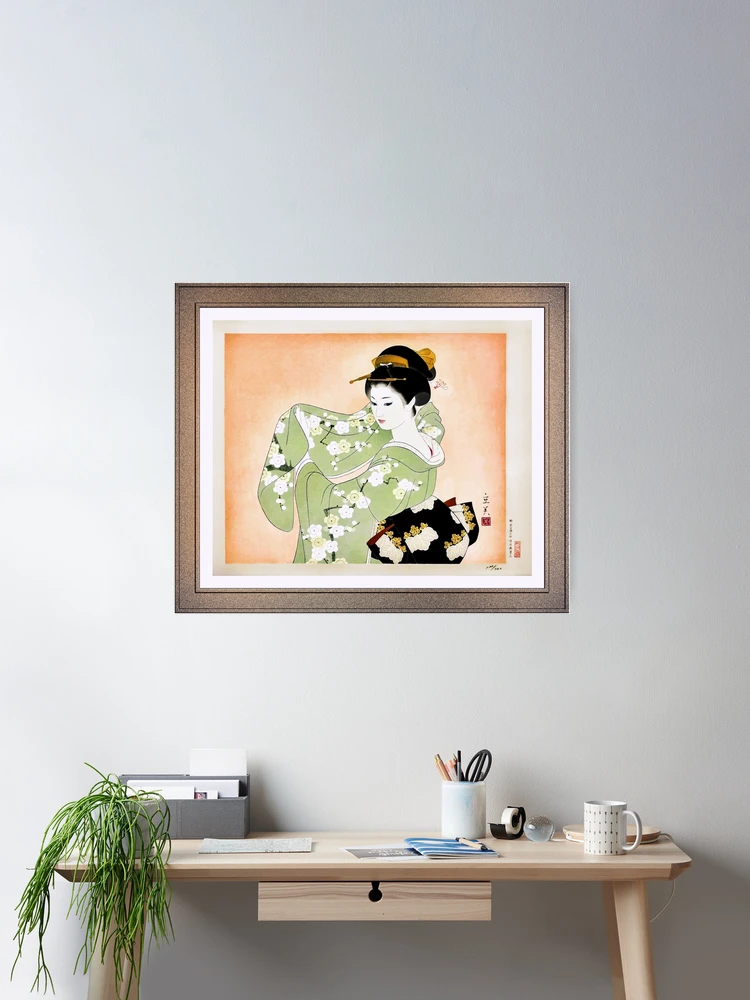
Tabla de contenido
Asunto principal: La mujer del kimono
En el corazón de tamoto (mangas) Se encuentra una elegante mujer vestida con un exquisito kimono.. Su postura es de elegancia y serenidad mientras inclina ligeramente la cabeza hacia abajo., sugiriendo un momento de reflexión o reposo. La mujer aparece representada con la mano izquierda sujetando las mangas de su kimono., permitiendo al espectador apreciar los finos detalles del patrón floral que adorna la prenda.
Este acto de sujetar las mangas, referido como “tamoto” en japonés, es simbólico en la cultura tradicional, significando tanto la belleza de la prenda como la delicadeza, naturaleza casi etérea de la mujer que lo lleva. el largo, las mangas fluidas del kimono parecen descansar suavemente, que encarna la gracia de la mujer mientras se encuentra contra un suave, fondo color durazno. lo sutil, expresión casi de ensueño en su rostro, combinado con los tonos apagados de su ropa, realza aún más la atmósfera contemplativa de la pieza.
El kimono: Una obra maestra de la artesanía
El kimono que lleva la mujer en esta pintura es un punto focal de la obra de arte., Destacado a través del elaborado diseño de los motivos florales bordados en su tejido.. Estas delicadas flores blancas, posiblemente representando las flores de cerezo simbólicas u otros elementos florales tradicionales de la cultura japonesa, están ambientados en un relajante telón de fondo verde, lo que realza su contraste visual.
El kimono en sí es una muestra magistral de artesanía., y la representación de su textura y diseño intrincado se presenta con extraordinaria atención al detalle., reflejando la admiración del artista por la vestimenta y la cultura tradicionales japonesas.. La elección de suave, colores naturales, particularmente el verde del kimono, Imbuye la figura con un aura de tranquilidad., al mismo tiempo que permite al espectador apreciar la belleza de la mujer en relación con su prenda..
El kimono sirve como poderosa metáfora visual en la pieza., Representando no sólo la belleza externa de la mujer sino también las ricas tradiciones culturales asociadas con el uso de tales prendas en la sociedad japonesa.. A través de este atuendo, El sujeto no es simplemente una persona sino una representación de la identidad cultural y la gracia..
Antecedentes y entorno: La tranquila serenidad
El trasfondo de tamoto (mangas) es un suave, light peach hue that creates a tranquil atmosphere. The simplicity of the background allows the viewer’s focus to remain on the woman and her kimono, while the gentle gradient of color evokes a sense of calmness and peace.
This minimalistic approach to the background is characteristic of much Japanese art, where the interplay between subject and background often emphasizes the serenity of the scene rather than distracting from it. The artist has intentionally avoided busy or complex backgrounds, ensuring that the viewer remains anchored to the subject, allowing the delicate expressions and gestures of the figure to take center stage.
This sense of quietude is reinforced by the woman’s subdued expression and the soft brushwork of the piece, which creates an almost ethereal quality. The absence of strong, sharp lines lends a gentle, flowing sense of motion to the piece, as if the subject herself is a part of the tranquil landscape.
Estilo y técnica artística: Tradicional y Refinado
Tatsumi Shimura, in creating tamoto (mangas), employed the traditional Japanese painting style, which emphasizes delicate brushwork and harmonious color palettes. Shimura was known for his precise yet flowing lines, capturing not just the external appearance of his subjects but also their inner essence and emotions.
The style of the painting draws from nihonga, the traditional Japanese painting style that integrates natural materials such as mineral pigments, ground shells, and gold leaf. Although the medium used by the artist in this piece remains unspecified, the finely tuned details of the floral design and the soft shading of the woman’s features suggest that Shimura’s techniques were rooted in the classic methods of nihonga, which prioritize refined beauty, naturalism, and deep symbolism.
The artist’s use of clean, unembellished lines complements the restrained mood of the painting. The brushwork in the figure’s face is tender and smooth, evoking a sense of realism while preserving the ethereal quality of the subject. The floral design on the kimono is rendered with the utmost care, allowing each petal and leaf to come alive with the gentleness that defines Shimura’s style. His mastery of space and balance within the composition emphasizes the refined simplicity of the subject and her surroundings, aligning with the Japanese aesthetic of “wabi-sabi,” which appreciates the beauty in imperfection and quiet elegance.
Temas culturales y simbólicos: La gracia eterna del kimono
En tamoto (mangas), Shimura explores themes of beauty, gracia, and femininity within the context of traditional Japanese culture. The depiction of the woman in her kimono is a reflection of the timeless nature of Japanese customs, where clothing and appearance carry deep cultural and emotional significance. The act of holding the kimono’s sleeves is a symbol of modesty and refinement, suggesting that the woman is not only adhering to cultural norms but also embodying the essence of Japanese femininity. This serene portrayal of the woman suggests that her role within the piece is to represent the quiet strength, elegancia, and grace that the kimono embodies in the larger cultural context.
es más, the artwork can be seen as a tribute to traditional Japanese customs, in which women often wore kimonos as symbols of their status, belleza, y gracia. The painter’s choice to focus on a single moment in time—capturing the woman in her moment of reverie—allows the viewer to reflect on the deeper cultural significance of the kimono and the role of women in Japanese society.
Conclusión: Un reflejo de tradición y belleza
tamoto (mangas) by Tatsumi Shimura is a captivating portrayal of both the beauty of the kimono and the quiet, graceful demeanor of the woman who wears it. Through careful use of color, composición, y textura, Shimura’s painting invites the viewer to pause and contemplate the refined elegance that pervades traditional Japanese culture. This work serves as a tribute to the timeless tradition of the kimono, y por extensión, El papel de la mujer en la preservación y encarnación de estos valores culturales.. La interpretación magistral del tema por parte de Shimura y su atuendo muestran el legado perdurable del arte japonés y el profundo respeto por la tradición que continúa inspirando..
Esta es una reproducción de maestros antiguos de arte digital remasterizada de una imagen de dominio público que está disponible como Esta es una elegante chica de glamour art deco vintage..
Biografía del artista
Tatsumi Shimura nació en Takasaki, en la prefectura de Gunma, Japón, en 1907, con el nombre de pila os Sentaro. Cuando estaba a punto 14 A los años comenzó a estudiar arte con el ilustrador japonés Bijin-ga Yamakawa Saiho y luego tres años después con su hijo Yamakawa Shuho. (1898 – 1944), quien también fue un artista Bijin-ga.
En su juventud, como muchos artistas jóvenes de la época, Tatsumi trabajó como ilustrador para periódicos y revistas., más notablemente para la revista japonesa “El mundo de la mujer.” (Fujokai); y también trabajó como pintor en el estilo Bijin-ga.; which is an art genre that depicts beautiful women.
Later in his when he was about 60 years of age Tatsumi devoted all his artistic energies to the style of Japanese painting termed Nihonga or traditional Japanese painting; which date back to about 1900 adelante, and are created in accordance with traditional Japanese artistic conventions, techniques and materials.