

타모토
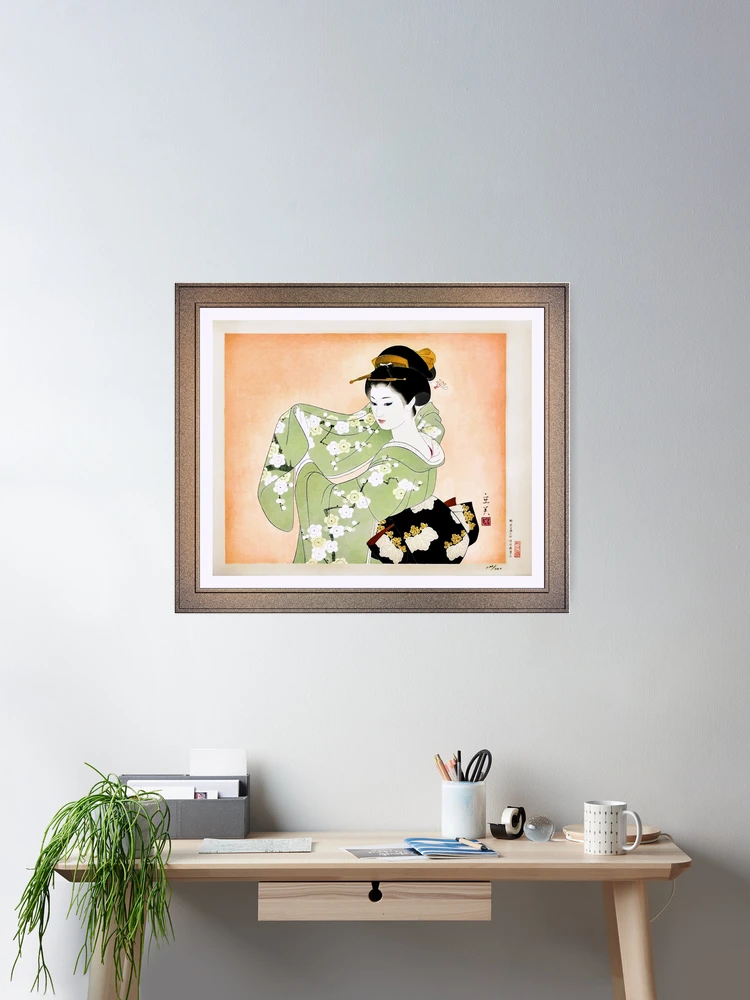
타모토 (소매), 에 의해 생성된 일본어 화가 타츠미 시무라 (1907 – 1980), 일본 전통 문화의 복잡한 아름다움과 우아함을 탐구하는 일본 미술의 놀라운 예입니다.. 여성의 모습을 섬세하게 묘사한 작품, 기모노 착용 기술을 통해 일본 여성성의 본질을 구현합니다., 시무라의 꼼꼼하고 우아한 붓터치가 포착한 그대로. 이 작품은 주제의 미적 매력을 반영할 뿐만 아니라 문화에 대한 통찰력도 제공합니다., 전통의 중요성, 그리고 기모노를 입는 행위에 종종 수반되는 조용한 사색.
목차
주제: The Woman in Kimono
의 핵심 타모토 (소매) stands a graceful woman wearing an exquisite kimono. Her posture is one of elegance and serenity as she slightly tilts her head downward, suggesting a moment of reflection or repose. The woman is depicted with her left hand holding the sleeves of her kimono, allowing the viewer to appreciate the fine detailing of the floral pattern that adorns the garment.
This act of holding the sleeves, referred to as “tamoto” in Japanese, is symbolic in traditional culture, 의복의 아름다움과 섬세함을 모두 의미합니다., 그것을 입는 여성의 천상의 성격. 긴, 기모노의 흐르는 소매가 부드럽게 쉬고 있는 것 같습니다., 부드러움에 맞서는 여성의 우아함을 구현합니다., 복숭아색 배경. 미묘한, 그녀의 얼굴에는 거의 꿈같은 표정이, 그녀의 옷의 차분한 톤과 결합되어, 작품의 명상적인 분위기를 더욱 고조시킵니다..
기모노: A Masterpiece of Craftsmanship
이 그림 속 여성이 입고 있는 기모노는 작품의 핵심이다., 패브릭 전체에 자수로 장식된 꽃 모티브의 정교한 디자인을 통해 강조됨. 이 섬세한 하얀 꽃은, 아마도 상징적인 벚꽃이나 일본 문화의 다른 전통 꽃 요소를 나타낼 수 있습니다., 차분한 녹색 배경을 배경으로 설정되어 있습니다., 시각적 대비를 향상시킵니다..
기모노 자체는 장인정신의 탁월한 표현입니다., 질감과 복잡한 디자인의 묘사는 디테일에 특별한 관심을 기울여 표현되었습니다., 일본의 전통 의상과 문화에 대한 작가의 존경심을 반영. 소프트의 선택, 자연스러운 색상, 특히 기모노의 녹색, 그림에 평온한 아우라를 불어넣는다, 동시에 시청자가 의상과 관련된 여성의 아름다움을 감상할 수 있도록 해줍니다..
기모노는 작품에서 강력한 시각적 은유 역할을 합니다., 여성의 외적인 아름다움뿐만 아니라 일본 사회에서 그러한 의복 착용과 관련된 풍부한 문화적 전통을 나타냅니다.. 이 옷차림을 통해서, 주제는 단순한 사람이 아니라 문화적 정체성과 우아함의 표현입니다..
배경과 설정: The Quiet Serenity
의 배경 타모토 (소매) 부드럽다, 차분한 분위기를 연출하는 은은한 피치 컬러. 배경이 단순하기 때문에 보는 사람의 초점이 여성과 기모노에 집중됩니다., 부드러운 그라데이션 컬러가 차분함과 평화로움을 불러일으킵니다..
배경에 대한 이러한 최소한의 접근 방식은 많은 일본 미술의 특징입니다., 피사체와 배경 사이의 상호작용이 장면을 산만하게 하기보다는 장면의 평온함을 강조하는 경우가 많습니다.. 작가는 의도적으로 복잡하거나 복잡한 배경을 피했습니다., 시청자가 주제에 고정되어 있는지 확인, 인물의 섬세한 표정과 몸짓을 중심으로 삼는다..
이러한 고요함은 여성의 차분한 표정과 작품의 부드러운 붓놀림으로 더욱 강화됩니다., 거의 천상의 품질을 만들어냅니다.. The absence of strong, sharp lines lends a gentle, flowing sense of motion to the piece, as if the subject herself is a part of the tranquil landscape.
예술적 스타일과 기술: Traditional and Refined
타츠미 시무라, in creating 타모토 (소매), employed the traditional Japanese painting style, which emphasizes delicate brushwork and harmonious color palettes. Shimura was known for his precise yet flowing lines, capturing not just the external appearance of his subjects but also their inner essence and emotions.
The style of the painting draws from nihonga, the traditional Japanese painting style that integrates natural materials such as mineral pigments, ground shells, and gold leaf. Although the medium used by the artist in this piece remains unspecified, 정교하게 조율된 꽃무늬 디테일과 여성의 이목구비에 나타나는 부드러운 음영은 시무라의 기술이 고전적인 방법에 뿌리를 두고 있음을 암시합니다. nihonga, 세련된 아름다움을 최우선으로 생각하는, 자연주의, 그리고 깊은 상징성.
작가의 깨끗한 사용, 꾸밈없는 선은 그림의 절제된 분위기를 보완합니다.. 인물 얼굴의 붓놀림이 부드럽고 매끄 럽습니다., 피사체의 천상의 품질을 유지하면서 현실감을 불러일으킵니다.. 기모노의 꽃무늬는 세심하게 디자인되었습니다., 꽃잎과 잎사귀 하나하나가 시무라의 스타일을 정의하는 부드러움으로 생생하게 살아나게 합니다.. 구도 내에서의 공간과 균형에 대한 그의 숙달은 주제와 주변 환경의 세련된 단순성을 강조합니다., aligning with the Japanese aesthetic of “wabi-sabi,” which appreciates the beauty in imperfection and quiet elegance.
Cultural and Symbolic Themes: The Timeless Grace of the Kimono
에 타모토 (소매), Shimura explores themes of beauty, 우아함, and femininity within the context of traditional Japanese culture. The depiction of the woman in her kimono is a reflection of the timeless nature of Japanese customs, where clothing and appearance carry deep cultural and emotional significance. The act of holding the kimono’s sleeves is a symbol of modesty and refinement, suggesting that the woman is not only adhering to cultural norms but also embodying the essence of Japanese femininity. This serene portrayal of the woman suggests that her role within the piece is to represent the quiet strength, 우아, and grace that the kimono embodies in the larger cultural context.
더구나, the artwork can be seen as a tribute to traditional Japanese customs, in which women often wore kimonos as symbols of their status, 아름다움, 그리고 은혜. The painter’s choice to focus on a single moment in time—capturing the woman in her moment of reverie—allows the viewer to reflect on the deeper cultural significance of the kimono and the role of women in Japanese society.
결론: A Reflection of Tradition and Beauty
타모토 (소매) by Tatsumi Shimura is a captivating portrayal of both the beauty of the kimono and the quiet, graceful demeanor of the woman who wears it. Through careful use of color, 구성, 그리고 질감, Shimura’s painting invites the viewer to pause and contemplate the refined elegance that pervades traditional Japanese culture. This work serves as a tribute to the timeless tradition of the kimono, and by extension, the role of women in preserving and embodying these cultural values. Shimura’s masterful rendering of the subject and her attire showcases the enduring legacy of Japanese art and the deep respect for tradition that it continues to inspire.
이것은 공개 도메인 이미지의 리마스터링된 디지털 아트 올드 마스터 복제입니다. Boucher는 Guay의 작품으로 일련의 그림을 그리고 Madame de Pompadour가 조각하여 호의를 받는 궁정에게 잘 묶인 책으로 배포했습니다..
아티스트 약력
Tatsumi Shimura was born in Takasaki in Gunma prefecture Japan in 1907, with the given name os Sentaro. When he was about 14 years old he began studing art with the Japanese Bijin-ga Illustrator Yamakawa Saiho and then three years later with is son Yamakawa Shuho (1898 – 1944), who was also a Bijin-ga artist.
In his younger years as with many young artist of the time Tatsumi worked as an illustrator for newspapers and magazine, most notably for the Japanese magazine “Woman’s world” (Fujokai); and also worked as a painter in the Bijin-ga style; which is an art genre that depicts beautiful women.
Later in his when he was about 60 years of age Tatsumi devoted all his artistic energies to the style of Japanese painting termed Nihonga or traditional Japanese painting; which date back to about 1900 앞으로, and are created in accordance with traditional Japanese artistic conventions, techniques and materials.