

Tender Doves (היונים; רוֹך)
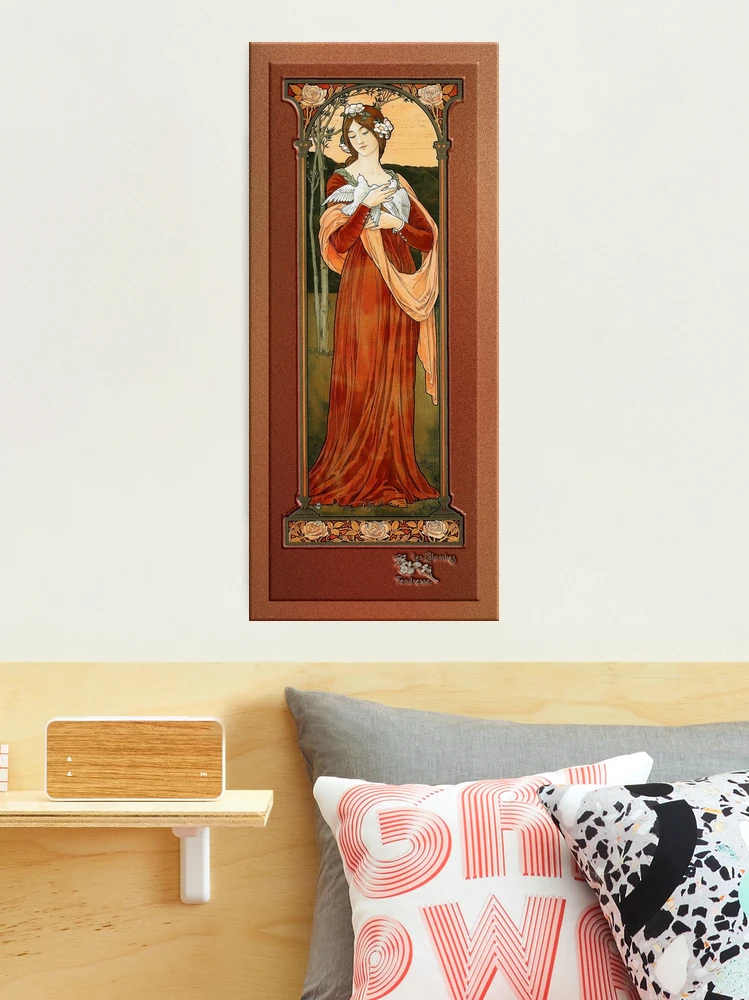
“Tender Doves (היונים; רוֹך)” is a beautiful work by אליזבת סונרל, created around the turn of the 20th century. Sonrel, a French artist born in 1874 and who passed away in 1953, is renowned for her symbolic and highly decorative approach to painting. This particular piece exemplifies her delicate mastery of Art Nouveau and her affinity for portraying women in idealized, ethereal settings. The work features a woman holding two doves, a motif rich with symbolism, conveying themes of peace, תְמִימוּת, and tenderness.
תוכן העניינים
The Main Subject and Composition
הנושא המרכזי של “Tender Doves” is a graceful woman standing in a serene, slightly blurred landscape. She exudes a sense of tranquility, gazing downward as she gently holds two white doves in her arms. Her face is calm and introspective, radiating both innocence and grace. The woman’s long flowing red gown, which cascades dramatically down her body, is meticulously painted in rich, warm tones. The folds of the fabric are carefully rendered, highlighting the artist’s sensitivity to the nuances of texture and light. The gown is the focal point of her form, elegantly sweeping down to the ground, enhancing her ethereal presence.
Her pose and the way she holds the doves emphasize softness and fragility. הציפורים, symbols of peace and love, are cradled delicately in her arms, their white feathers providing a sharp contrast to the warm, earthy tones of her clothing and the background. The composition emphasizes the connection between the woman and the birds, evoking a sense of harmony and a bond with nature. The doves are not merely ornamental but serve as an integral part of the narrative, reinforcing the peaceful mood of the piece.
ההגדרה והרקע
ברקע הציור, the artist has chosen a soft and somewhat indistinct landscape, which allows the figure of the woman to dominate the scene. The soft colors of the sky and the trees in the distance create an almost dreamlike atmosphere, as though the figure exists in an idealized, otherworldly space. The muted tones of the environment, composed mainly of light greens, חומים, and yellows, complement the warm tones of the woman’s gown, creating a sense of unity in the composition. This choice of background adds to the sense of serenity, offering the viewer a quiet, reflective space.
העצים, faintly visible in the background, stand tall but not imposing, blending into the soft, hazy light of the horizon. The use of nature as the setting is an integral part of the work, highlighting the peaceful, harmonious relationship between the human form and the natural world. The distant trees and rolling hills suggest a timeless, natural world, where the viewer can imagine the woman being one with the environment, adding to the calm and gentle mood of the piece.
The Symbolism of the Doves
The doves in the painting are a significant element in the overall composition. In Western art, doves are widely recognized as symbols of peace, טוֹהַר, ואהבה. Their presence in this piece is not only symbolic of the artist’s theme of tenderness but also reflects broader themes of femininity and grace. The fact that the woman is holding the doves so gently suggests a nurturing quality, reinforcing the motif of caring and peace. Doves are often associated with mythological and religious symbolism, and their presence here may also invoke ideas of spirituality and transcendence.
The white color of the doves further emphasizes purity and innocence, qualities often attributed to the feminine ideal. The doves in “Tender Doves” act as a counterbalance to the earthy tones of the woman’s attire and the landscape, providing a moment of lightness and transcendence. This balance between the earthiness of the scene and the purity of the birds reinforces the peaceful, harmonious atmosphere that is central to the painting’s mood.
Art Nouveau Style and Influence
Sonrel’s work is a classic example of the Art Nouveau movement, which emerged in the late 19th century and reached its peak in the early 20th century. Art Nouveau is characterized by flowing lines, צורות אורגניות, and a focus on the decorative and ornamental. “Tender Doves” embraces these stylistic elements, particularly in the intricate design of the borders and the floral motifs surrounding the woman’s figure. The sinuous, curving lines of the composition, particularly in the background and in the woman’s gown, are hallmarks of Art Nouveau’s influence.
The elegant framing of the piece, with its decorative borders adorned with roses and tendrils, reflects the movement’s focus on integrating art into daily life and its reverence for nature. הרך, flowing forms and the rhythmic repetition of organic shapes also point to the influence of Art Nouveau, which often sought to harmonize the human figure with the natural world.
מצב רוח והשפעה רגשית
מצב הרוח של “Tender Doves” is one of calmness, introspection, וטהרה. The delicate handling of the subject matter, along with the soft color palette and harmonious composition, creates a serene atmosphere. The viewer is invited to pause and reflect upon the symbolic message of peace, רוֹך, and harmony that the piece conveys. The emotional impact of the artwork is subtle but powerful, מעורר תחושות של שלום, רוֹגַע, וקשר לטבע. There is an air of gentle reverence in the way the woman is depicted, as though she is a guardian of peace, holding the doves as symbols of the fragility and beauty of life itself.
Sonrel’s work captures a moment of serene beauty, מושעה בזמן. The attention to detail in the woman’s expression, the folds of her gown, and the delicate handling of the doves invites the viewer to engage with the artwork on a deeply emotional level. The piece conveys a sense of timelessness, allowing the viewer to experience a moment of peaceful contemplation, much like the woman herself, standing in quiet communion with nature and the symbols of love and peace.
Tender Doves is a retouched digital art old masters reproduction of a public domain image.
האמן ביו באדיבות Wikipedia.org
אליזבת סונרל (1874 סיורים - 1953 כלבי ים) היה צייר ומאייר צרפתי בסגנון אר -נובו. עבודותיה כללו נושאים אלגוריים, מיסטיקה וסמליות, דיוקנאות ונופים.
היא הייתה בתו של ניקולא סטפן סונרל, צייר מטורס, וקיבלה ממנו את ההכשרה המוקדמת שלה. להמשך לימודיה המשיכה לפריז כסטודנטית של ז'ול לפבר בבית הספר לאמנויות.
ב 1892 היא ציירה את עבודות הדיפלומה שלה, 'Pax et Labor', יצירה שניתן לראות במוזיאון לאמנויות דה טורס. מכאן ואילך הציגה בסלון דה ארטס פרנסאי בין 1893 ו 1941, יצירות החתימה שלה הן צבעי מים גדולים באופן טרום רפאלי, אותו אימצה לאחר טיול בפירנצה ורומא, לגלות את ציירי הרנסנס – חלק מעבודותיה בעלות צללים ברורים של בוטיצ'לי. הציורים שלה היו לעתים קרובות בהשראת רומנטיקה ארתורית, הקומדיה האלוהית של דנטה אליגיירי’ ו"החיים החדשים ", נושאים מקראיים, ואגדות מימי הביניים. עבודותיה המיסטיות כוללות את 'איימס errantes'’ (סלון של 1894) ו'רוחות התהום '’ (סלון של 1899) ו"צעירה עם השטיח ".
ב- Universelle התערוכה של 1900, הנושא העיקרי שלו היה ארט נובו, שֶׁלָה 1895 ציור "שנת הבתולה"’ (שינה של הבתולה), זכתה במדליית ארד, ופרס אנרי להמן של 3000 פרנק על ידי האקדמיה לאמנויות יפות.[3] מ 1900 ואילך הגבילה את ציוריה לדיוקנאות, נופי בריטני מרהיבים, ומחקר פרחים מדי פעם.
היא ערכה טיולי ציור קבועים לבריטני, בהשראת היער ברוסליאנדה, ומ 1910 למקומות שונים בחוף כגון קונקרנו, פלוגסטל, Pont-l'Abbé ו- Loctudy, מתארחים לעתים קרובות בפונדקים ומלווים על ידי סטודנט אחד או שניים. היא ציירה מספר עבודות בלה פאואה לפני שבנתה וילה בלה באולה בשנות השלושים. עובד בעיקר בצבעי מים וגואש, היא גילתה היצע מוכן של דוגמניות בקרב נערות צעירות באזור, ומצאו שברטונים בדרך כלל ידידותיים, כנה ובטוחה בעצמה.
התערוכה האחרונה שלה בסלון הייתה ב 1941 בגיל 67. יש גם תיעוד שהיא הציגה בליברפול. בשנותיה הראשונות ייצרה סונר כרזות, גלויות ואיורים, בסגנון ארט נובו.