

Flowers Of Mountains
Flowers Of Mountains c1900 by French Painter אליזבת סונרל (1874 – 1953); ומאייר בסגנון הארט נובו; מי עבודותיו כללו נושאים אלגוריים, מיסטיקה וסמליות, דיוקנאות ונופים.
This exquisite artwork, Sonrel draws upon the allure of both mythology and nature, bringing together the two elements with a delicate balance of beauty, חן, and introspective solitude.
תוכן העניינים
הנושא העיקרי
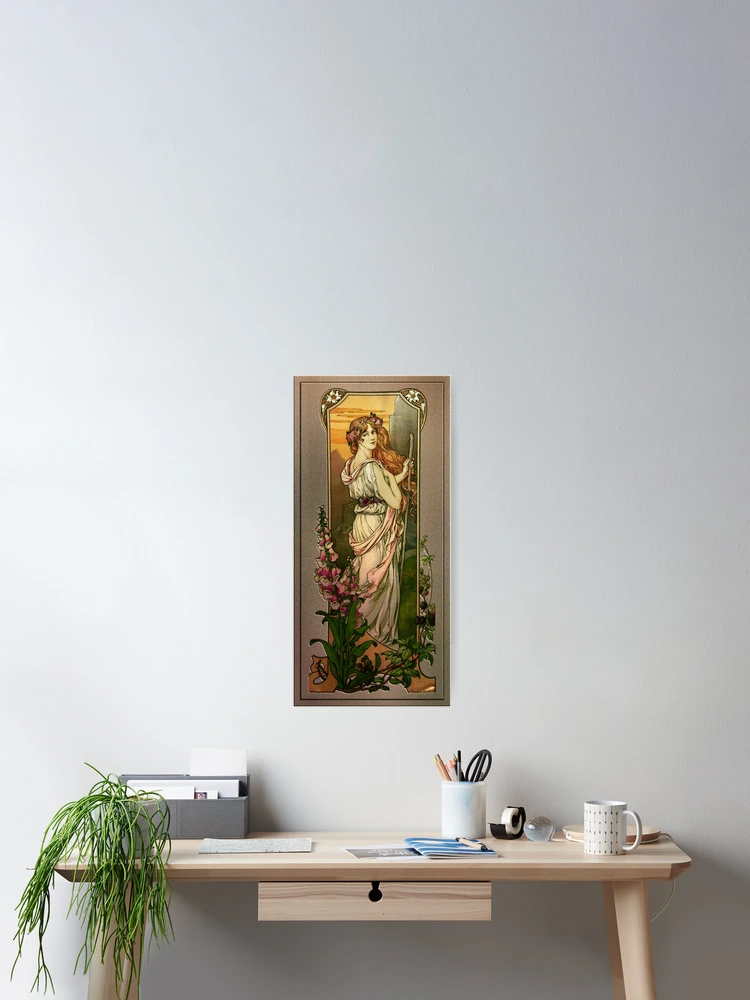
The central figure in this painting is a female figure of ethereal beauty, who stands tall and poised against a backdrop of towering mountains and a soft, warm sky. The figure is a young woman, draped in a flowing white gown that billows gently in the breeze, the fabric rendered with soft folds that add texture and depth. השמלה, cinched at the waist with a simple yet elegant belt, enhances the fluidity of her form, emphasizing the harmony between the figure and nature.
שערה, a cascade of rich auburn locks, tumbles loosely over her shoulders, further evoking the timeless quality of her beauty. A wreath of flowers rests atop her head, creating a delicate coronet that brings an air of wildness to her femininity. The flowers in the wreath are small and vibrant, suggesting a connection to the natural world, as though the woman is an embodiment of the flora around her. This crown of blossoms enhances her ethereal, almost divine presence.
בידה הימנית, she holds a long, slender staff, which could be interpreted as a symbol of wisdom or guidance. The staff is simple yet dignified, acting as a subtle reminder of the woman’s authority and connection to the surrounding terrain. The gentle grip and relaxed posture suggest that the figure is at ease within her environment, exuding a calm confidence in her role.
חפצים ופרטים
Flanking the woman on either side are two prominent floral elements, one of foxglove flowers (Digitalis) on the left and a rich array of blackberry vines and leaves on the right. These plants serve to frame the central figure, drawing the viewer’s eye toward her while enhancing the narrative of nature’s embrace. The foxgloves, with their tall spires of bell-shaped flowers, are vibrant and reach towards the sky, creating a visual contrast to the woman’s grounded, earthbound posture. The blackberry vines, full of lush green leaves and dark, ripening berries, offer a sense of wildness and fertility, reinforcing the theme of the woman’s natural connection to the land.
The mountains in the background, though not dominant in their portrayal, provide a sense of scale and depth. They rise majestically in the distance, their peaks partially obscured by mist, giving them a mysterious and timeless quality. The sky above is awash in warm, golden tones, with hints of soft pink and orange, מרמז על שחר או בין ערביים, times of transition and introspection. This choice of color palette infuses the work with a sense of tranquility and quiet contemplation.
שטח וחומרים
The terrain is rugged and unyielding, yet it complements the softness of the woman’s figure. It is a place where life flourishes despite its harshness, as seen in the surrounding flora. The colors used for the terrain and flowers are earthy and natural, suggesting that Sonrel was inspired by the rugged landscapes of the French countryside or perhaps the mythical landscapes of ancient Greece. The artist’s careful attention to detail in the plants and the mountains shows her deep understanding of both nature and the human form, blending them seamlessly in this piece.
סגנון ונושא
The style of this artwork is deeply rooted in the Art Nouveau movement, which flourished in the late 19th and early 20th centuries. Characterized by its emphasis on organic forms, קווים זורמים, and harmonious integration of nature and human figures, the Art Nouveau style is exemplified here through the graceful curvature of the woman’s pose and the intricate floral details surrounding her. Sonrel’s use of soft, blended colors and flowing lines imbues the piece with a dreamlike quality, inviting the viewer into a world where nature and humanity coexist in perfect balance.
מבחינה נושאית, Flowers of the Mountains explores the connection between the human figure and the natural world. The woman in the painting is not just a figure of beauty but also a symbol of nature itself. Her presence among the flowers, her wreath, and the connection to the mountains all suggest a deeper bond between humanity and the earth, perhaps drawing from ancient mythologies where women often represented the earth, פִּריוֹן, or nature’s vitality. השימוש בפרחים, especially those associated with healing and growth like foxglove, suggests that the figure is not just passive in her environment but an active participant in the life force of nature.
מצב רוח ואווירה
The mood of the painting is one of serene contemplation. There is no rush in the figure’s posture, no urgency in her gaze, which is directed off to the side, as if she is lost in thought or in quiet communion with the natural world around her. לוח הצבעים, with its soft pinks, סגולים, וירוקים, further contributes to the tranquil atmosphere. The mountains, while present, are distant and unobtrusive, further adding to the sense of solitude and peace. The entire piece invites the viewer to pause and reflect, offering a moment of stillness in the midst of a busy world.
מַסְקָנָה
ב Flowers of the Mountains, Elisabeth Sonrel has created not just a portrait of a woman but a celebration of nature’s beauty and its eternal connection to the human spirit. The blending of the figure with the flowers, the gentle, flowing lines of her form, and the serene landscape all convey a message of harmony, רוֹגַע, and reverence for the natural world. Through her delicate use of color, אוֹר, והרכב, Sonrel has produced a work that stands as a timeless reflection of the beauty of nature and the human soul’s connection to it.
Flowers Of Mountains is a retouched digital art old masters reproduction of a public domain image.
מידע למטה באדיבות Wikipedia.org
אליזבת סונרל (1874 סיורים - 1953 כלבי ים) היה צייר ומאייר צרפתי בסגנון אר -נובו. עבודותיה כללו נושאים אלגוריים, מיסטיקה וסמליות, דיוקנאות ונופים.
היא הייתה בתו של ניקולא סטפן סונרל, צייר מטורס, וקיבלה ממנו את ההכשרה המוקדמת שלה. להמשך לימודיה המשיכה לפריז כסטודנטית של ז'ול לפבר בבית הספר לאמנויות.
ב 1892 היא ציירה את עבודות הדיפלומה שלה, 'Pax et Labor', יצירה שניתן לראות במוזיאון לאמנויות דה טורס. מכאן ואילך הציגה בסלון דה ארטס פרנסאי בין 1893 ו 1941, יצירות החתימה שלה הן צבעי מים גדולים באופן טרום רפאלי, אותו אימצה לאחר טיול בפירנצה ורומא, לגלות את ציירי הרנסנס – חלק מעבודותיה בעלות צללים ברורים של בוטיצ'לי. הציורים שלה היו לעתים קרובות בהשראת רומנטיקה ארתורית, הקומדיה האלוהית של דנטה אליגיירי’ ו"החיים החדשים ", נושאים מקראיים, ואגדות מימי הביניים. עבודותיה המיסטיות כוללות את 'איימס errantes'’ (סלון של 1894) ו'רוחות התהום '’ (סלון של 1899) ו"צעירה עם השטיח ".
ב- Universelle התערוכה של 1900, הנושא העיקרי שלו היה ארט נובו, שֶׁלָה 1895 ציור "שנת הבתולה"’ (שינה של הבתולה), זכתה במדליית ארד, ופרס אנרי להמן של 3000 פרנק על ידי האקדמיה לאמנויות יפות.[3] מ 1900 ואילך הגבילה את ציוריה לדיוקנאות, נופי בריטני מרהיבים, ומחקר פרחים מדי פעם.
היא ערכה טיולי ציור קבועים לבריטני, בהשראת היער ברוסליאנדה, ומ 1910 למקומות שונים בחוף כגון קונקרנו, פלוגסטל, Pont-l'Abbé ו- Loctudy, מתארחים לעתים קרובות בפונדקים ומלווים על ידי סטודנט אחד או שניים. היא ציירה מספר עבודות בלה פאואה לפני שבנתה וילה בלה באולה בשנות השלושים. עובד בעיקר בצבעי מים וגואש, היא גילתה היצע מוכן של דוגמניות בקרב נערות צעירות באזור, ומצאו שברטונים בדרך כלל ידידותיים, כנה ובטוחה בעצמה.
התערוכה האחרונה שלה בסלון הייתה ב 1941 בגיל 67. יש גם תיעוד שהיא הציגה בליברפול. בשנותיה הראשונות ייצרה סונר כרזות, גלויות ואיורים, בסגנון ארט נובו.