

L'allégorie de la renommée et de l'histoire
L'allégorie de la renommée et de l'histoire: Un examen détaillé
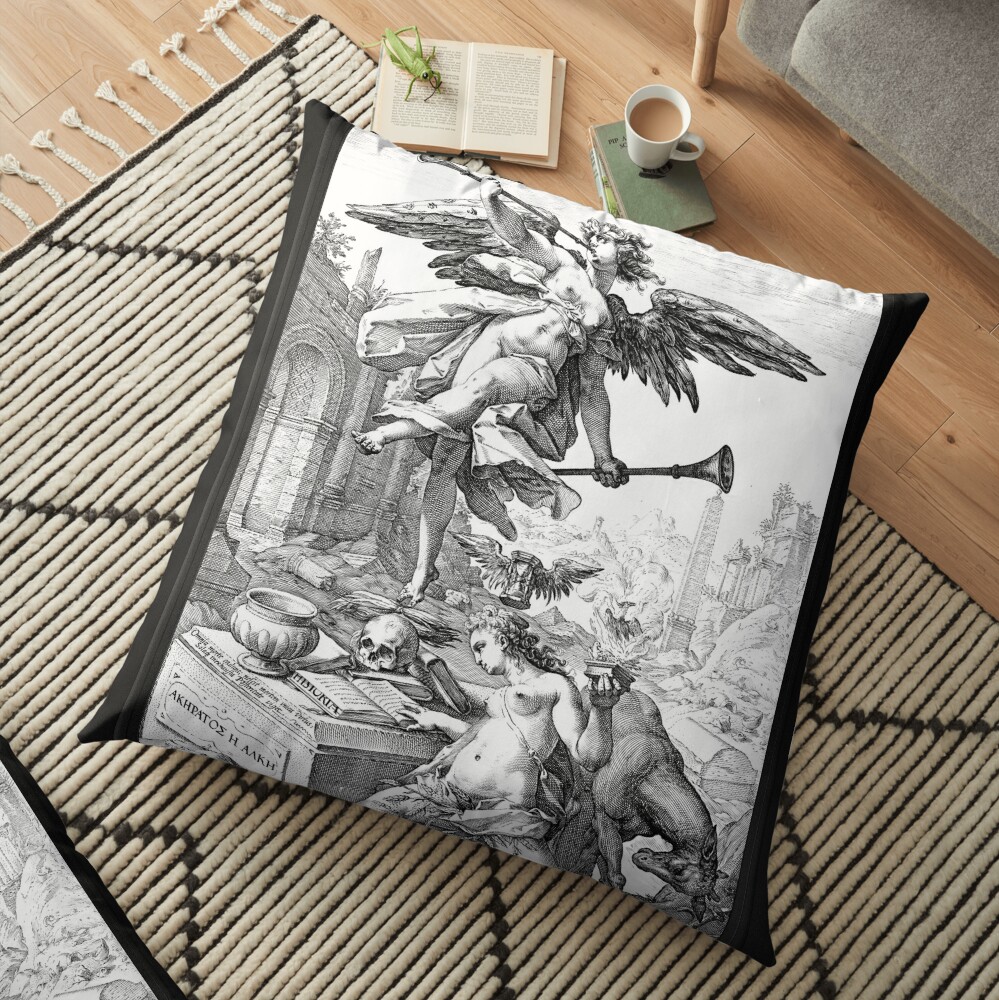
Hendrick Goltziusla gravure, L'allégorie de la renommée et de l'histoire, créé autour 1586, est une œuvre complexe et méticuleusement rendue qui illustre le style maniériste répandu aux Pays-Bas à la fin du XVIe siècle.. Cette pièce n'est pas qu'une simple illustration; c'est un traité visuel sur la nature éphémère de l'effort humain et le pouvoir durable des archives historiques. La force de la gravure réside non seulement dans sa virtuosité technique mais aussi dans sa symbolique en couches., s'appuyant sur la mythologie classique et les idéaux humanistes pour transmettre un message profond sur l'héritage et le souvenir.
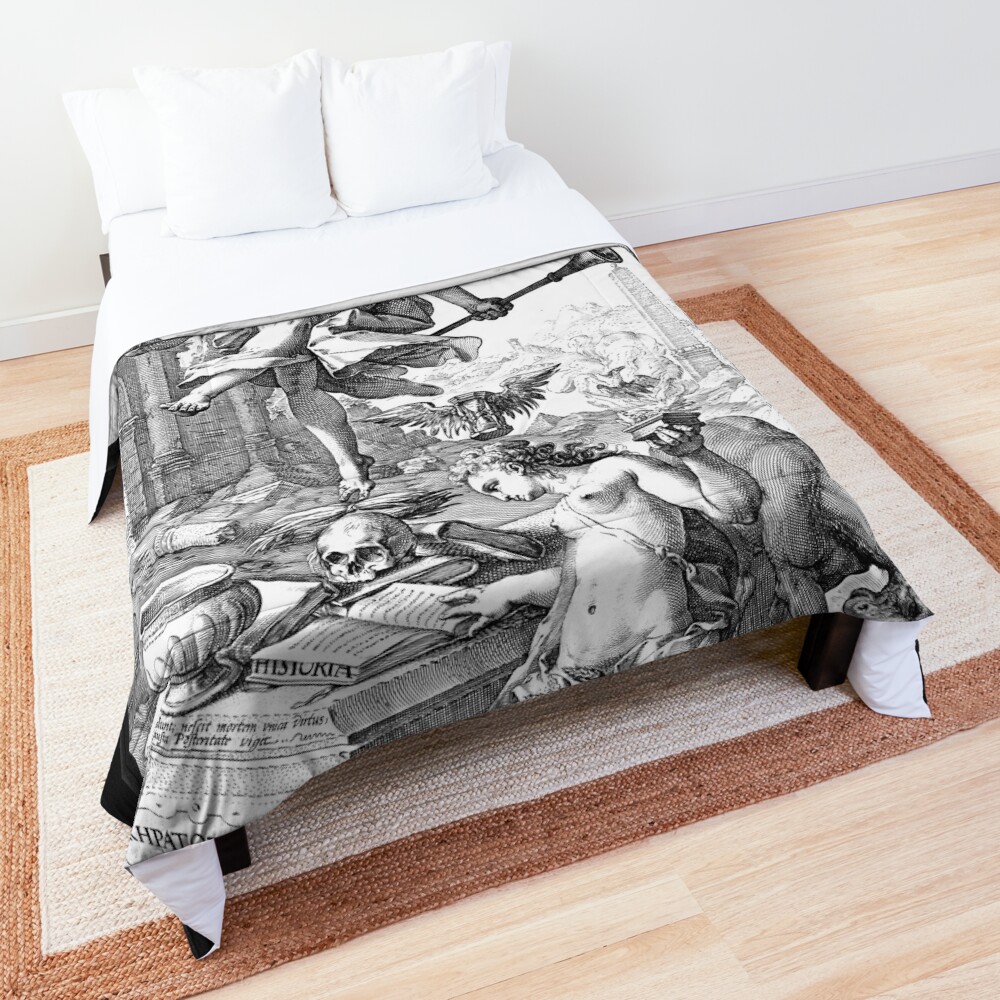
Table des matières
Structure de composition & Compétence technique
La composition est densément remplie de personnages et d'objets disposés dans un cadre architectural théâtral.. Goltzius démontre une maîtrise exceptionnelle du travail en ligne, utiliser différents degrés de pression pour créer des contrastes spectaculaires d’ombre et de lumière – une caractéristique de la gravure maniériste. La perspective est quelque peu déformée, caractéristique du style, contribuant à un sentiment de dynamisme et de complexité visuelle plutôt qu'à un réalisme strict. L’effet global est celui d’un chaos contrôlé; un arrangement soigneusement orchestré qui attire le regard du spectateur à travers la scène.
Personnages centraux: Notoriété & Histoire
Au sommet de la composition flotte la figure de la Renommée, représenté comme un être angélique aux ailes expansives. Elle brandit une trompette, son son semble se répercuter dans toute la scène. Sa posture est dynamique et gracieuse, suggérant le mouvement et la proclamation. En dessous d'elle, une figure féminine représentant l'Histoire est allongée sur un socle en pierre. Elle est drapée dans des robes fluides et soutient un livre – le référentiel des événements enregistrés – tout en regardant attentivement l'annonce de Fame.. Le contraste entre le vol éthéré de la renommée et la présence au sol de l’histoire souligne leurs rôles distincts.: un qui donne des nouvelles, l'autre le préservant pour la postérité.
Chiffres à l’appui & Objets symboliques
La scène est peuplée de plusieurs personnages secondaires qui contribuent au récit allégorique. Une créature semblable à un satyre, mi-humain et mi-chèvre, se prosterne aux pieds de l’Histoire, symbolisant la nature éphémère des plaisirs et des désirs terrestres. Un hibou, perché au sommet d'un crâne, renforce encore ce thème de la mortalité et de l’inévitabilité de la décadence. Un chaudron se trouve à proximité, représentant peut-être l'alchimie ou la transformation - peut-être faisant allusion au processus par lequel les événements sont transformés en récits historiques. Une tablette sur laquelle sont inscrits les mots “AKME DE HAAH” (la hauteur/pic des cheveux) est placé près du chaudron; sa signification reste sujette à interprétation mais est probablement liée au summum de la réussite ou de la reconnaissance.
Toile de fond architecturale & Atmosphère
L'arrière-plan présente une structure architecturale en ruine, représentant peut-être des ruines ou un palais en décomposition. Cela sert de métaphore visuelle pour la fugacité du pouvoir et de la gloire terrestres.. L'atmosphère générale est celle d'une tension dramatique et d'une réflexion solennelle.. L’utilisation par Goltzius du clair-obscur – l’interaction de la lumière et de l’obscurité – intensifie l’impact émotionnel de la scène., mettre en valeur les personnages et les objets clés tout en enveloppant les autres dans l'ombre.
Caractéristiques maniéristes & Influences
L'allégorie de la renommée et de l'histoire illustre plusieurs caractéristiques du style maniériste. Les figures allongées, perspective déformée, et composition complexe sont toutes les caractéristiques de ce mouvement artistique, qui a émergé en réaction contre l’accent mis par la Haute Renaissance sur l’équilibre et l’harmonie. Goltzius a été influencé par les maniéristes italiens tels que Parmigianino et Bronzino., évident dans ses poses élégantes et son travail de ligne raffiné. La gravure reflète également le climat intellectuel humaniste de l'époque., en mettant l'accent sur la mythologie classique et les thèmes philosophiques.
Éléments textuels & Interprétation
Sous l'image, Goltzius comprend une longue inscription latine qui fournit un contexte supplémentaire à l'allégorie. Bien qu'une traduction complète dépasse le cadre de cette description, il est clair que le texte développe la relation entre la renommée et l'histoire, souligner l’importance d’enregistrer les événements avec précision et impartialité pour garantir leur signification durable. L'inscription fait partie intégrante de l'œuvre d'art, enrichir son sens et inviter les spectateurs à s'engager dans sa profondeur intellectuelle.
Conclusion
Celui d'Hendrick Goltzius L'allégorie de la renommée et de l'histoire est une réalisation remarquable en gravure qui met en valeur sa compétence technique et sa vision artistique. Par sa composition complexe, imagerie symbolique, et thèmes humanistes, l'œuvre propose une profonde méditation sur la nature de la célébrité, histoire, et le désir humain persistant de laisser un héritage durable. Il reste un exemple significatif de l’art maniériste et un témoignage de la maîtrise de Goltzius dans son métier..
Biographie de l'artiste dérivée de Wikipedia.org
Hendrick est né près de Venlo à Bracht ou Millebrecht, un village alors dans le Duché de Julich, sa famille a déménagé à Duisbourg quand il était 3 ans et quand il est devenu majeur a étudié la peinture sur verre sous son père pendant un certain nombre d'années.
Il a ensuite étudié auprès du mathématicien néerlandais Dirck Volckertszoon Coornhert (1522 – 1590), avec qui il a étudié la gravure.
Dans 1577 il a ensuite déménagé avec Coornhert à Haarlem en République néerlandaise, où il resterait pour le reste de sa vie; et pendant un certain temps à Haarlem, il travaillera avec Philip Galle (1537 – 1612), graver un ensemble d'estampes de l'histoire de Lucrèce.
Note latérale: Lucrèce; anglicisé comme Lucrèce, était une femme noble dans la Rome antique, dont le viol par Sextus Tarquinius (Tarquin) et le suicide qui a suivi a précipité une rébellion qui a renversé la monarchie romaine et a conduit à la transition du gouvernement romain d'un royaume à une république.
En raison d'un incendie à la main droite, que Hendrick a souffert comme un bébé l'amenant à être malformé, il est devenu habile en raison de cette blessure à tenir le burin (outil de gravure pointu) comme il était obligé de dessiner avec les gros muscles de son bras et de son épaule.
Hendrick était un maître de la “ligne de gonflement” et aussi un pionnier de la “point et losange” technique, où des points sont placés au milieu d'espaces en forme de losange créés par des hachures croisées pour affiner davantage l'ombrage des tons.
L'Allégorie de la renommée et de l'histoire est une reproduction remasterisée de maîtres anciens d'art numérique d'une image du domaine public disponible sous forme de impression sur toile.